Twenty years ago, Dennis DiNoia taught middle school math in typical classrooms, in typical Florida public schools. Now his classroom is a local church, or bookstore, or online. Students come from public schools, private schools, and homeschooling co-ops. Lessons are based on a curriculum he designed and put on video.
 DiNoia even has a toehold in the growing market of charter school consulting, explaining math and test-taking skills to students and teachers at a conversion charter school in Hawaii.
School choice has opened up a whole new career track for DiNoia, allowing the business school graduate to earn enough money to remain in a profession he loves while giving him the satisfaction of helping students master his favorite subject.
“A lot of people don’t go into teaching because they don’t think they can make a living at it,’’ said DiNoia, a father of three who lives in Sarasota, Fla. “If you go into it with that mindset, you’ll be right.’’
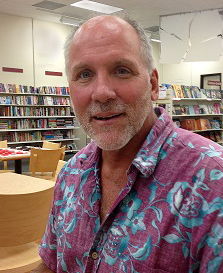
Dennis DiNoia
DiNoia went into the field thinking that one day he would have a successful business. Apparently, he was right, eventually figuring out how to grow his tutoring company from a sideline that supplemented his district paycheck to a full-time endeavor to support his family.
It serves as yet another example of how having more education options not only meets the different needs of children, but can benefit educators, as well.
“Everybody has different vehicles to educate students,’’ said Clayton Snare, a former principal who worked with DiNoia in the Pinellas County, Fla., school district. “Some people are good in a classroom. Some people are better online. Others are better one on one.’’
DiNoia “defined what I thought a successful teacher was all about and it truly starts with developing a rapport with your students,’’ Snare said. (more…)
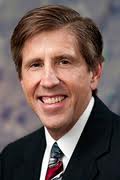
Tuthill
For practical reasons, many Florida private schools are rolling up their sleeves and getting ready for the new Common Core State Standards for math and English/language arts. This fall, our nonprofit, Step Up For Students, will help about 140 private schools and their parents implement these new standards, and based on the dialogue we’re having with other schools, we’ll be helping many more next year.
Some observers believe common standards will undermine school choice. I disagree.
In the context of school choice, common standards serve the same function as the operating systems in computers or smart phones. Just as common operating systems (e.g., Apple or Microsoft) allow software developers worldwide to create an endless supply of innovative software applications, common academic standards are allowing teachers nationwide to create and share innovative curriculum, instructional materials, teaching activities and online lesson plans. We are already seeing a plethora of websites where teachers are posting open source lessons plans and instructional strategies aligned to Common Core. Innovative, free and Common Core-related professional development opportunities are also becoming ubiquitous online.
Common standards are helpful in this emerging new era of customized learning, where students are increasingly accessing content and taking courses from multiple providers simultaneously and/or sequentially. Parents want the freedom to continuously match their children with the learning options that best meet their needs, but they also want to know their children will not be disadvantaged as they move in and out of charter, virtual, home, magnet, private and neighborhood schools. Knowing that many schools are using the same operating system (i.e., the same standards) can help reassure parents that their children are able to receive a seamless, high quality education from diverse providers.
This is particularly important to low-income families. (more…)

