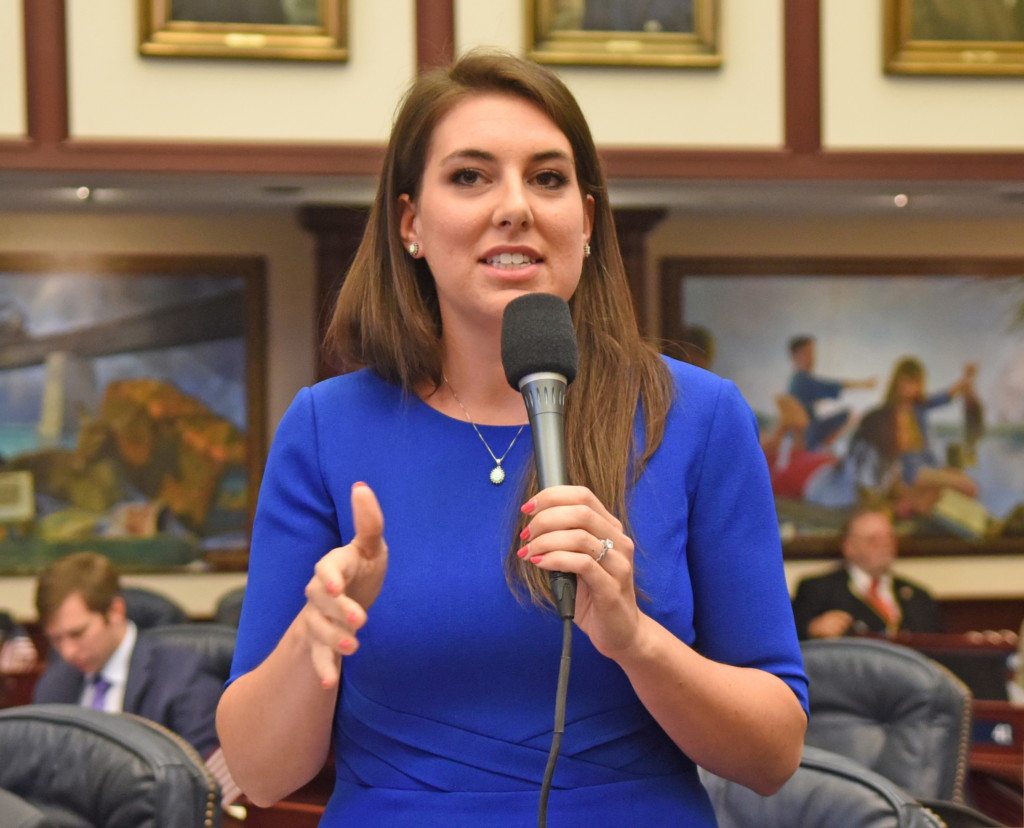
State Rep. Jennifer Sullivan, R-Mt. Dora sits down with redefinED in the returning edition of podcastED.
Arguably no state in America has redefined public education more than Florida. So how fitting that the latest lawmaker to rise to one of the key policy making slots is a former homeschooler.
State Rep. Jennifer Sullivan, R-Mt. Dora, said being homeschooled gives her unique insights into parental choice and personalized learning that will inform her world view as new chair of the House Education Committee.
In this redefinED podcast, she points out she struggled to read as a child. Had she been educated in a Florida public school rather than at home – where her mom had more flexibility to try different approaches – she said she may have fallen short on Florida’s third-grade reading test and been retained.
“As we did life, she read to me a lot. And we would work on it. But not in a way where I even knew we were working on it,” Sullivan said. “So when I was nine, it completely clicked for me. And I haven’t put down a book since.”
Sullivan, a conservative Republican, is all in for ed choice. But it may surprise some, given the caricatures of choice supporters, how much she emphasizes the equity and opportunity arguments – in part because of her own life experience.
Her family, she said, “wouldn’t have had the money to move into the really nice neighborhoods to go to the really nice public schools.” In a similar vein, students assigned to district schools that are not working for them “deserve better.”
Sullivan also makes clear that, in her view, expanding choice and strengthening public schools isn’t either/or. “I’m all for school choice. But I am not against our public schools,” she said. “Public schools are where the significant portion of students go to school. And if that’s where our students are, maybe that’s where the reform needs to take place.”
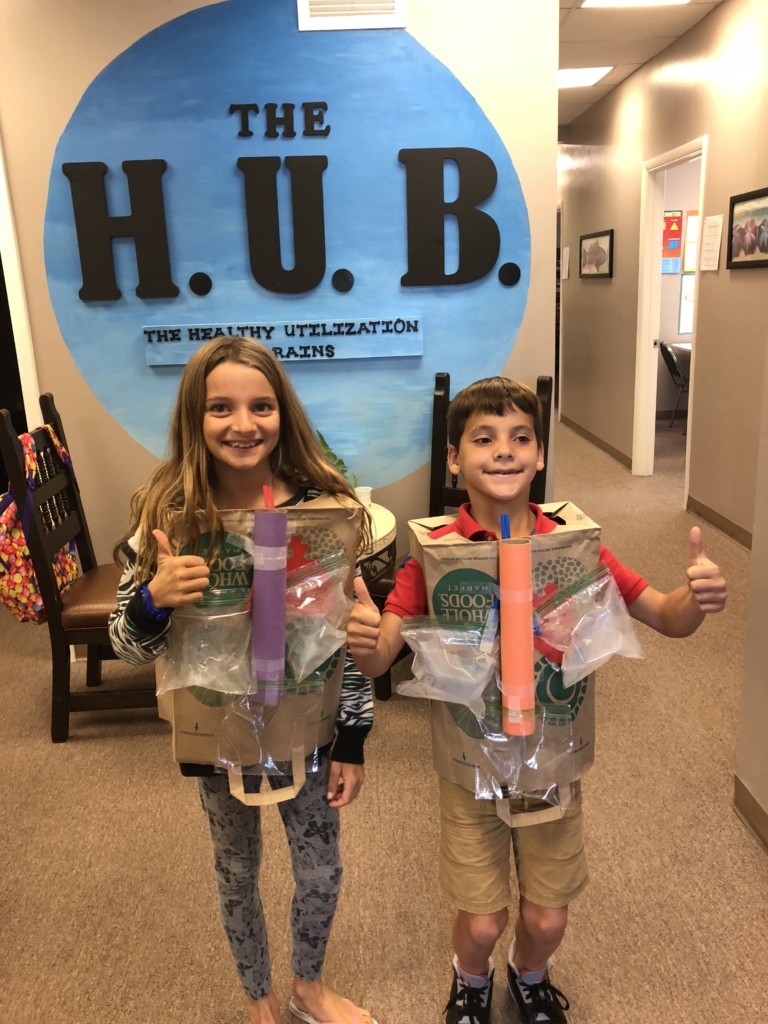
Homeschooling is becoming more accessible to families in Florida because of a growing network of support and tools. In addition to programs that offer curriculum and instructors, there are support groups for parents and other services such as a guidance counselor and a coach offering an accredited physical education program.
Patricia Anthony immigrated to the United States from Colombia 12 years ago.
Settling in Lake Worth, Florida, Anthony decided to homeschool her daughter after their school didn’t meet up with her expectations.
“You can tailor the education for your child according to what they need,” she said of home education.
Because English is not her first language, Anthony wanted to ensure her two high school daughters, Vanessa and Emily, received English instruction from a teacher specializing in the subject. Now, as it turns out, Vanessa, 17, wants to major in English.
Anthony enrolled her children in Home Education Enrichment Day, (HEED), a Christian university model program in South Florida that assists homeschool parents by providing classes once a week from instructors in varied fields. The instructors include high school teachers, engineers, scientists, lawyers and pastors.
Anthony’s story is just one example of how homeschooling is growing and becoming more accessible to families in Florida because of a growing network of support and tools. No homeschool family is an island. In addition to programs that offer curriculum and instructors, there are support groups for parents and other services such as a guidance counselor and a coach offering an accredited physical education program.
The number of home education students in Florida grew by 2.7 percent last year, continuing a steady upward trend over the past decade, according to the latest annual report released by the state Department of Education. In the 2017-18 school year, 89,817 students participated in home education programs, an increase of 2,355 from the previous year. Over the past decade, enrollment has increased nearly by half, from 60,913, with increases in nine of the 10 years.
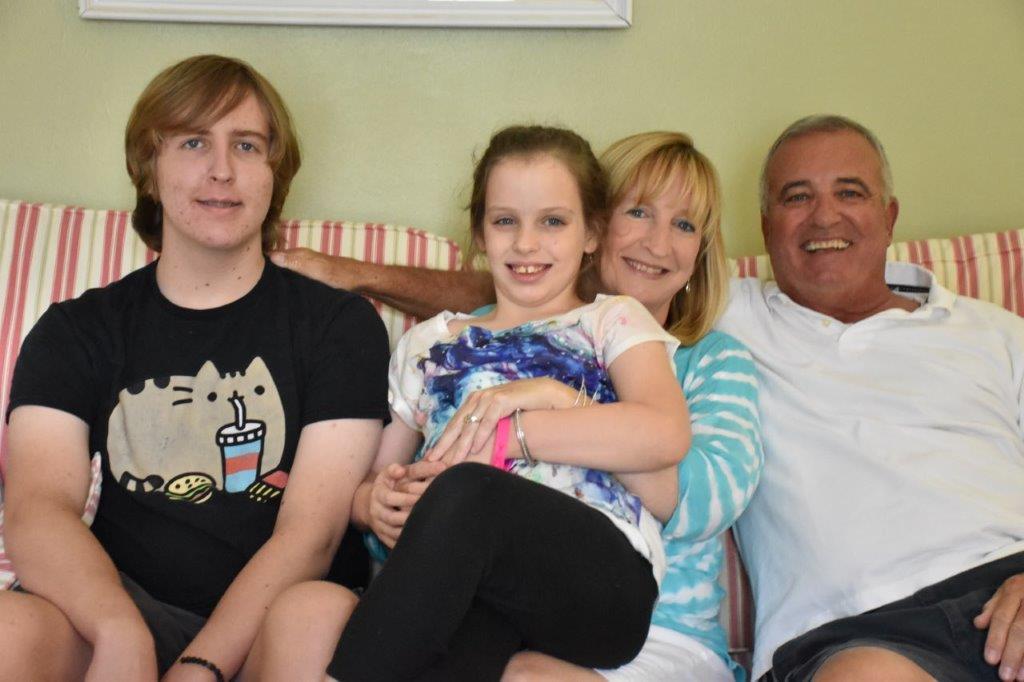
From left: Emily’s brother Joey, Emily, mother Barbara Beasley and father Doug Beasley.
Emily Beasley was a typical 6-year-old. Precocious yet shy, she was learning to read, loved to dance and enjoyed playing with friends.
Everything changed suddenly one night, as she stood in her family’s kitchen.
Her parents noticed her staring with a blank expression. Her lips moved, but she wasn’t speaking. She didn’t move and lost control of her bladder.
“That was the exact moment when everything changed,” said Doug Beasley, her father.
Emily recuperated over summer vacation, but when school started again, there more problems. She had a “rather large” seizure at school one day, her mother said, leading to a brief hospital stay.
Unfortunately, the seizures kept coming and medication wasn’t working. She suffered brain damage and severe cognitive impairments.
“She was perfectly normal, then she went from being a 6-year-old to basically a 3-year-old, practically overnight,” Doug Beasley said. (more…)
Sen. Dennis Baxley
A state lawmaker has once again has filed legislation that would rein in district inquiries to parents who register home education programs.
The bill comes in response to concerns among parents that districts add hurdles for homeschool registration. That has likely contributed to a decline in home schooling in some districts, even though state statistics show its popularity is growing statewide.
Florida law requires home schoolers to register with their local school districts. They have to send a signed notice of intent to the school district superintendent with the students’ names, birthdates and addresses. The bill would bar districts from requiring other information from parents. It would also clarify that a home education program is not a school district program.
The statute does not ask that parents provide proof of residency and a birth certificate. However, the Miami-Dade School Board adopted a policy requiring parents to provide those documents. And parents have complained of similar practices in other counties, including Broward, Hillsborough and St. Lucie.
“For that individual family to be supported in their decision to choose a different path when today we have so many more resources for home school curriculums they should not be impeded in the pursuit of what is best for each and every child,” said Sen. Dennis Baxley, R-Ocala, who filed the legislation.
Legal advocates say districts like Miami-Dade began requesting extra documentation from home schoolers after the death of 10-year-old Nubia Barahona, whose body was found in the back of a pickup truck in 2011. An investigation by the Department of Children and Families concluded she was a victim of child abuse. Investigators also noted that, in 2010, Nubia’s parents pulled her out of school system and homeschooled her. (more…)
Recent data released about the number of home school students in Florida reveals a mystery.
The number of home education students in the state continues to increase. State data show it reached 87,462 during the 2016-17 school year — roughly a 5 percent increase from the previous year. Miami-Dade County, however, saw a decline in enrollment by 11 percent.
Homeschool parents and legal advocates say there is a reason behind Miami-Dade's declining numbers. When some parents file a notice of intent to homeschool with the district, they say, the district asks for additional documentation such as proof of residency or a birth certificate. These requests go beyond what the law requires.
This creates a new barrier to home schooling, legal advocates and parents say. Some parents are finding new ways around that barrier, such as forming umbrella schools. Others have prevailed in disputes with the district after getting home education advocates involved.
Miami-Dade school officials declined to comment for this story. Audrey Walden, a spokeswoman for the Florida Department of Education, said the department was “looking into it.” (more…)
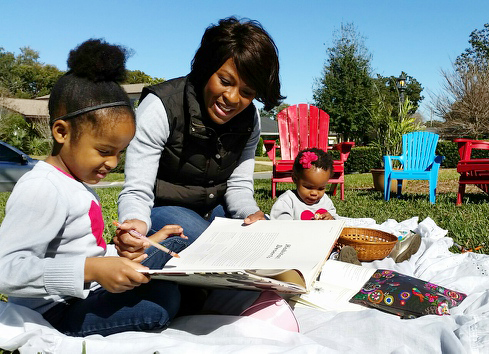
Tamsin Thomas homeschools her daughter Olivia, 5, while sister Ona, 1, sits close by. “I don’t want my daughter to be short-changed because of the color of her skin,” Thomas said of Olivia. “I feel like I’m the only one who has her best interests at heart.” (Photo courtesy of Tamsin Thomas)
Tamsin Thomas of Orlando, Fla. said when she was in high school, public school officials determined her younger brother, a bright-but-shy fifth grader, should be in special education classes. She was horrified. She feared her brother was being shifted, for no good reason, into less-challenging classes and onto a lesser track in life. She urged her mother to fight it.
Mom won. Now Thomas’s brother is set to graduate with a standard diploma, and planning to enlist in the Marines. But that experience and others convinced Thomas that when it comes to public schools, African-American parents are rolling the dice with their children’s futures.
So, she homeschools.
“I don’t want my daughter to be short-changed because of the color of her skin,” Thomas said of Olivia, 5. “I feel like I’m the only one who has her best interests at heart.”
Thomas isn’t alone.
Although the evidence is mostly anecdotal, a flurry of recent stories (like this, this and this) note a growing number of African-American parents turning to homeschooling.
Researchers estimate 200,000 of the 2.4 million homeschoolers nationwide are African-American. Their parents are largely motivated by the same reasons that propel other homeschool parents. But a significant number also want to shield their children from schools they believe will shortchange them, leading to outcomes that are beyond troubling.
In this respect, the rise in black homeschoolers isn’t a trend on the fringe, but another thread in the educational freedom story that has always been part of the black experience in America. As a new report from the Black Alliance for Educational Options put it, “Black people’s struggle to obtain an education in America is older than the Declaration of Independence.”
It wouldn’t be surprising if the homeschool chapter was especially telling in Florida.
The state with the second-highest number of black students in the nation (after Texas), and arguably the most robust array of choice options, had 84,096 home-schooled students in 2014-15, up 21 percent in five years. The state doesn’t track the students by race, but many homeschool parents, both white and black, say the increase in African-American homeschooling families is clear.
Thomas said when she began homeschooling Olivia several years ago, she was the only African-American parent in her homeschooling networks. But now there are several, and she expects to see more.
“It’s the way things are going in society,” Thomas said. “We say we think racism is behind us, but … “ (more…)