
Go down, Moses
Way down in Egypt's land
Tell old Pharaoh
Let my people go
The Texas House of Representatives closed out the 3rd special session by filing a deeply flawed ESA bill but never held a hearing on it. Stay tuned for further developments. Meanwhile, the Texas Tribune filed a fantastic piece featuring three Dallas Black mothers who support a choice program in order to allow themselves and others in their communities to run and sustain their own schools. This is an amazing piece of journalism that looks past spokespeople with dueling sets of talking points in Austin to talk to real people and explore their concerns. You should read it and share it widely.
An earlier post on this blog described the era of peonage, whereby private interests availed themselves of convict labor at below-market rates. Described by some as “neo-slavery” this was a morally repugnant institution but one which benefited powerful interests. It lasted far longer than it should have, but eventually earned a well-deserved spot in the dustbin of history.
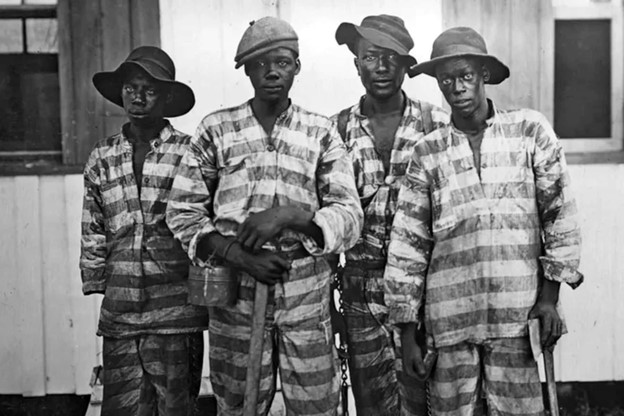
The parallel here is not to public schooling per se but rather to ZIP code assignment. ZIP code assignment to schools effectively reduces children into indentured funding units. Powerful interests in today’s society financially benefit reducing children into indentured funding units. Like southern plantation owners and railroad magnates from a bygone era, they are not going to let peonage go away without a fight.
The Tribune piece can be understood in this light: a struggle for a more humane system, one that acknowledges and respects the need for pluralism and variety in schooling. My heart sang when the story of these heroic women included a description of the aid they had received from their fellows in Arizona:
"In Arizona, 40 Black moms gathered in 2016 with the same worries for their children, ready to dismantle what they call the school-to-prison pipeline. Their kids were bullied in school and did not feel supported by the teachers. The moms started by pushing school districts to form a re-entry-after-suspension plan and find alternatives to suspension as a disciplinary measure.
By 2021, they had opened their own microschool, also known as outsourced home schooling. The Arizona microschools depend on the state’s education savings account program for sustainability.
“The public school system that was in place was not doing what it was supposed to do. Our children were not reaping the benefits,” said Janelle Wood, the founder of Black Mothers Forum in Arizona. “And so we needed a tool to help us fuel our vehicle of the microschool in order for us to grow."
Choice provides families with the tools to chart their own path and determine their own future. It gives teachers like those featured in the Tribune the opportunity to create their own schools. Choice gives families the opportunity to find a school that is a good fit for their children. Texas legislators must decide between clinging to an antiquated past or embracing a brighter future.
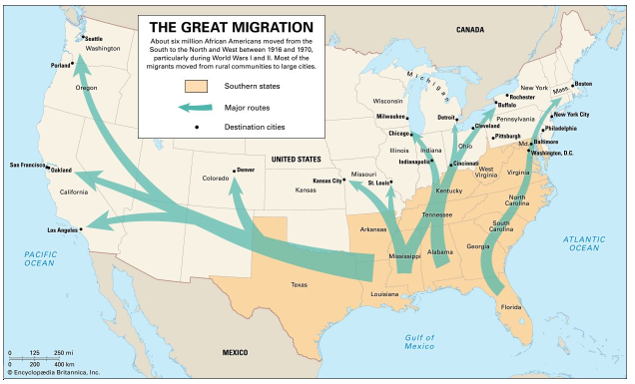 Don’t look now, but the Great Migration is back; it’s just in reverse.
Here is the National Archives definition of the Great Migration:
The Great Migration was one of the largest movements of people in United States history. Approximately six million Black people moved from the American South to Northern, Midwestern, and Western states roughly from the 1910s until the 1970s. The driving force behind the mass movement was to escape racial violence, pursue economic and educational opportunities, and obtain freedom from the oppression of Jim Crow.
The original Great Migration had both push and pull aspects. Jim Crow served as the push of the Great Migration, while industrial employment opportunities related to war materiel production in World Wars I and II served pulls.
Note that many of the same people who would have been share-croppers or even peons in the South went on to drive a surge in industrial production which crushed global fascism.
The Brookings Institution provided the following maps of the 1965 to 1970 period (left), 1995 to 2000 (middle) and 2015 to 2020 (right). For those squinting at their phones, yellow denotes top 10 states for net Black outmigration, dark green denotes top 10 states in Black in-migration. Things. Have. CHANGED.
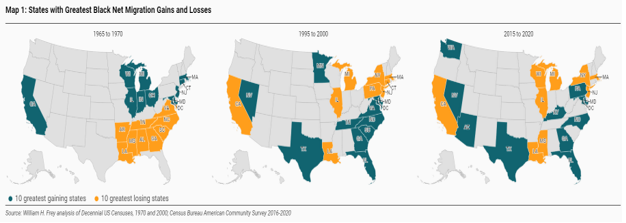
Daniel Henninger wrote about the reversal in the pages of the Wall Street Journal, noting Census Bureau data showing 566,476 people moved to Florida from different states in 2017, while 661,026 Californians moved to other states during the same year. Both figures were the largest in the nation, respectively. 28,628 of the Californians who moved out to other states in 2017 moved to Florida. Henninger quotes Brookings demographer William Frey, who notes that:
Daniel Brookings Institution demographer William Frey details this in a September report. Describing what he calls “a virtual evacuation from many northern areas,” Mr. Frey writes the “movement is largely driven by younger, college-educated Black Americans, from both northern and western places of origin…But an undeniable reality, emphasized by Gov. DeSantis, is that this movement is overwhelmingly driven by the prospect of greater economic opportunity.
Economic opportunity bolstered by education opportunity represents a potent combination for growth. Arizona, Florida, and North Carolina are not only top 10 states for Black migration (see right map) but have relatively advanced opportunities for families to choose schools for their children.
The rise of Black homeschooling and Arizona’s Black Mother’s Forum leadership in micro-schooling shows the current Great Migration is not merely between states, but a broader quest for opportunity and self-determination.

