 Editor's note: This post originally appeared in recent days as an op-ed in Context Florida and the Gainesville Sun in response to this piece. Since the draft was submitted to both publications, a rare bipartisan majority in the U.S. House of Representatives voted 360-45, over the objections of teachers unions, to support a major bill expanding charter schools.
Joe Trippi, the legendary Democratic consultant, is not part of any right-wing cabal. So it’s noteworthy that when it comes to private school vouchers and charter schools and other forms of parental choice, he says, “We should try them all.”
Trippi told me this in a recent interview, after describing how he grew up on the wrong side of a school zone, on the side where too many kids joined gangs and dropped out of school. The school board made an exception for him, but only because his mom raised hell. Now he’s haunted by those left behind.
I relay Trippi’s story in response to Daniel Tilson’s column, “Fight public school privatization.” A dominant thread in the piece is a common myth: that parental choice is the brainchild of the radical right.
The truth is, practical concerns of parents are driving the movement, not ideology. But because ideology is warping so much of the debate, I want to address that first.
Tilson is right that many conservatives like parental choice. He references George W. Bush, Jeb Bush, Neil Bush, “shadowy business interests” and the Republican Party of Florida. At least he didn’t throw in the Koch Brothers! But the inconvenient truth for this line of argument is growing numbers of progressives like parental choice, too.
President Obama loves charter schools. So does former President Clinton. A few weeks ago, Howard Dean told college students he was now a die-hard for charters because they’re “transforming inner city education.”
New Jersey’s new U.S. Senator, Democrat Cory Booker, unapologetically supports vouchers. So does Mike MCurry, Clinton’s former press secretary. U.S. Sen. Elizabeth Warren may not, yet, but here is what she said about a universal system of public school choice: “An all-voucher system would be a shock to the educational system. But the shakeout might be just what the system needs.”
In these polarized times, it’s nice to see folks from across the political spectrum agreeing on anything. But contrary to Tilson’s characterization, progressives have long supported expansion of learning options.
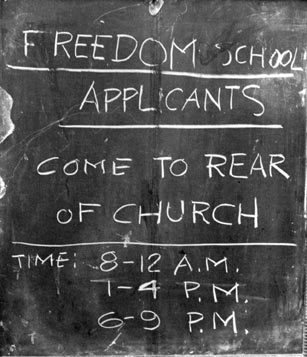
During the civil rights movement, activists established alternatives to segregated, second-rate schools. In the 1960s, liberal intellectuals at Berkeley led the “voucher left.” The late Democratic Sen. Daniel Patrick Moynihan once crafted a tuition tax credit measure that garnered 50 co-sponsors, including Sen. George McGovern and 23 other Democrats. In a fortuitous twist, parental choice dovetails as much with progressive values of equal opportunity as with conservative values of limited government.
But again, it’s not ideology that’s changing the education landscape. It’s parents.
Over the past 15 years, arguably no state has made more academic progress than Florida. In 1998, Florida’s low-income fourth-graders ranked No. 35 among states in reading. In 2013, they ranked No. 1. Yet being No. 1 still means only 27 percent are proficient.
Studies show, again contrary to Tilson’s characterization, that the students who access tax credit scholarships in Florida are the ones who struggled the most in public schools. Their parents are desperate. That’s why they’re lining up in droves.
There are fair questions about school choice. But I hope people will take a clear-eyed view, and not make snap judgments based on political labels that aren’t accurate.
Before the scholarship bill passed last week, Sen. Jeremy Ring, D-Broward, reminded fellow lawmakers that he once opposed the scholarships, but changed his mind after visiting schools that served children from “terribly impoverished backgrounds.” What he saw, he said, were kids thriving.
“So,” he continued, “I for one am going to ignore the politics of this.”
It's not new news that progressive icon Howard Dean likes charter schools. Or that another big-name Democrat likes charter schools. Or that another big-name Democrat is all aboard with school choice (Cory Booker, Joe Trippi, Mike McCurry ... ). But until that expanding list starts to dent the narrative that parental school choice is a Koch Brothers scheme, well, we'll keep highlighting them. 🙂
The latest is what Dean said at a recent appearance at a college in Vermont. He told the audience his son taught for Teach for America in New Orleans, then continued:
“And his kids that he was teaching in the 9th grade … were essentially illiterate. Now this is 40 years after the civil rights movement, 40 years after African Americans and whites were supposed to have equal opportunity under the law. These kids had no equal opportunity. They were being starved by a corrupt school board, and a culture that had never valued them as much as they valued white kids. I was furious. I was so angry, in a moment I converted my whole philosophy of education, to we had to try anything we could to get inner city schools better."
"And inner city schools are being reformed by people in your generation who are joining Teach for America. There are principals … tons of them, all over the country, who are not yet 30 years old. It’s the charter school movement. There’s some things I don’t like about the charter school movement. They’re not all created equal. For profit charters are clearly worse than non profit charters. But the charter school movement is transforming inner city education. It is getting kids through high school with diplomas that never would have had a chance even five years ago."
Plenty of thoughtful folks would disagree with Dean about for-profits in education. And we can only hope his eye-opening led him to revisit his opposition to vouchers, too. But in the big picture, it's clear Dean is representative of a trend: growing bipartisan support for a growing array of options. (more…)

