 Editor’s note: The following is the text of a news release issued Monday by the Institute for Justice.
ARLINGTON, Va.—Today, the Institute for Justice (IJ) sent a letter to officials in Cobb County, Georgia, calling on them to stop weaponizing building and fire safety code laws to crack down on learning pods and other hybrid education setups.
During the pandemic, learning pods became a reliable way for parents to educate their children while traditional schools were closed. These pods are typically groups of children, organized by parents, who come together for instruction in a location such as a church or a home school setup to supplement either traditional schooling or home schooling.
The programs are so popular that the Georgia Legislature, with help from the Georgia Public Policy Foundation, passed a law in March of 2021 protecting these pods from overly burdensome regulations, including certain building codes and fire safety codes. Despite that, Cobb County’s fire marshal recently informed several different hybrid learning co-ops that if the buildings they were using did not reapply for a different certificate of occupancy by Aug. 8 they would be saddled with daily fines of $1,000.
“Cobb County’s proposed crackdown is a direct violation of the law protecting learning pods,” said IJ Attorney Suranjan Sen, one of the authors of the letter. “Officials should not be using building code laws to deny families the education they feel best fits their children’s needs.”
These pods are all currently using classroom space in different churches, and the churches each have certificates of occupancy for “assembly.” Yet the fire marshal is using a burdensome building code law to say these churches must also receive certificates of occupancy for “education” if they offer more than four hours of instruction per day. At the same time, the marshal is not demanding this of church preschool programs—further suggesting that the requirement is in fact unnecessary.
In order to reapply for the new permit, the churches would need to get an architect and submit site plans to the fire marshal, who would then inspect the buildings. After the inspection, the fire marshal could require the churches to make upgrades to their buildings that could total thousands or even tens of thousands of dollars. One pod, Arrows Academy, already shut down because of the crackdown last week.
“Learning pods provide families with flexible, quality education. Local governments should be making it easier for parents to find these educational options, not trying to regulate them out of existence,” said IJ Senior Attorney Erica Smith Ewing. “If these buildings are safe for mass and Sunday school, they’re also safe for learning pods.”
St. John the Baptist Hybrid School is another school that has come under threat by the fire marshal. The school, which serves 97 students, offers supplemental instruction for home schoolers Monday through Wednesday in Christ Episcopal Church in Kennesaw.
"St. John the Baptist Hybrid is an 'accredited with quality' educational program for Catholic home school families. We are a group of home school parents who came together with the primary goal of providing exceptional classes to supplement our home school experiences,” said Sharon Masinelli, the school’s administrator. “Our facility has passed all standards for a certificate of occupancy for assembly and was inspected by the fire marshal, who deemed this appropriate one year ago. Our hybrid program and facility have undergone rigorous evaluation by our accreditation agency. We sincerely hope the regulations which are newly imposed on facilities hosting home school groups will not deprive our families of school choice."
IJ is the nation’s leading advocate for educational choice. Earlier this year, IJ won a landmark 6-3 ruling before the U.S. Supreme Court which held that states may not prohibit families that participate in educational choice programs from selecting schools that provide religious instruction. Two years prior, IJ won another massive school choice case before the nation’s highest court.
 Editor’s note: This article from Kerry McDonald, senior education fellow at the Foundation for Economic Education, appeared recently on the foundation’s website.
They’re not exactly schools, but they’re not homeschools either. They have elements of structured curriculum and institutional learning, while offering maximum educational freedom and flexibility.
They provide a consistent, off-site community of teachers and learners, and prioritize abundant time at home with family. They are not cheap but they are also not exorbitant, with annual tuition costs typically half that of traditional private schools.
Hybrid schools are, in the words of Kennesaw State University Professor Eric Wearne, the “best of both worlds,” drawing out the top elements of both schooling and homeschooling while not being tied too tightly to either learning model. Wearne studies hybrid schools and is the director of the National Hybrid Schools Project, which seeks to better understand this educational approach and why it’s been gaining popularity in recent years.
Hybrid schools are as diverse as the people who launch them and the communities they serve. Some of these schools think of themselves as a group of homeschoolers that comes together in a physical building for formal learning several times a week, while other hybrid schools think of themselves as formal private schools that meet on a part-time basis.
The ability of these schools to emerge in varied and spontaneous ways to meet local learning needs, and to define their communities however they see fit, exemplifies the promise of free-market education solutions and the process of voluntary exchange.
The unique structure of hybrid schools makes it easier for entrepreneurial parents and educators to open one, and often enables them to avoid government regulation and oversight that can limit innovation and experimentation.
To continue reading, click here.
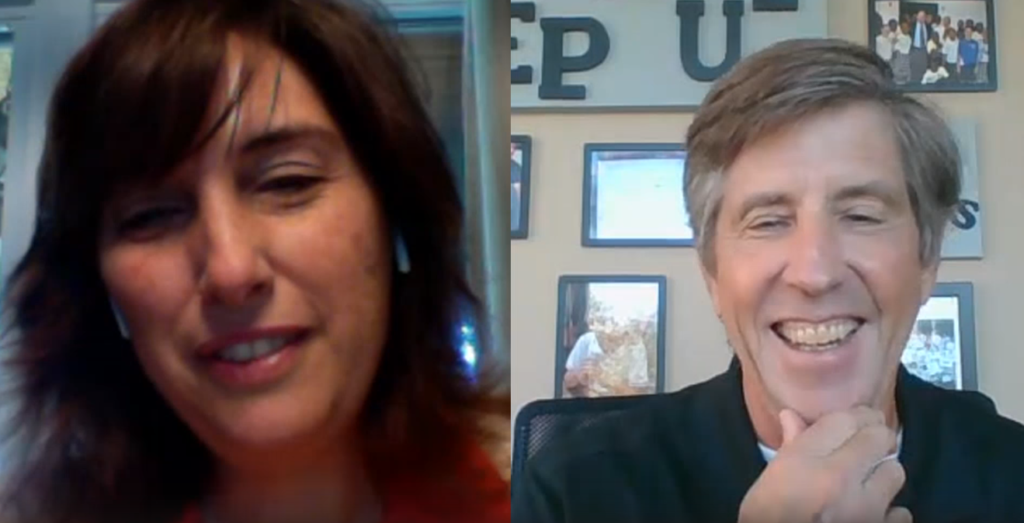 On this episode, Tuthill talks with the principal of Wellmont Academy, a faith-based private school in St. Petersburg, Florida, that serves traditional grade levels – with a twist. While some students participate in in-person instruction two or three days a week, others attend in person five days a week, depending on the needs and preferences of each family.
Marolf discusses how her experience with her son’s dyslexia led her to start an untraditional school of the type now growing in popularity in Florida and nationwide. She and Tuthill also discuss the day-to-day management of a hybrid school like Wellmont, how longtime homeschool families have adjusted to a different schedule, and policy changes that are needed to give families more flexibility in spending their education dollars.
"As many negative things have come from the pandemic, I think this has definitely been a positive. It is blowing wide open the concept of how we educate our children best. Not everybody fits the same mold."
EPISODE DETAILS:
· How a small homeschooling group grew into a popular hybrid school
· How scheduling and curriculum work for students at the same grade level but on different schedules
· The concept of “assisted learning rooms” where students operate in small groups with teachers present to guide them
· How Florida’s education policy needs to change to accommodate expansion of innovative school models like Wellmont Academy

