The Covid-19 pandemic exposed a contradiction.
On one hand, remote learning and school closures were devastating to students and their learning. Partial reopening or "hybrid" schedules may have been even worse. Aggressive actions by some state and district leaders to reopen schools and return students to classrooms are looking smarter in hindsight.
At the same time, the pandemic accelerated a trend that had already been picking up steam. Some families are eschewing full-time school, choosing new options that blur the lines between schooling and homeschooling. A growing number of hybrid schools have begun catering directly to their needs, offering part-time schedules where students meet on campus a few days a week, or a few hours a day, and spend the remaining time learning at home (or in the woods, on the water, at the museum, on the farm, or other places).
For some families, this is the best of both worlds. They combine the flexibility of homeschooling with the socialization, childcare and pedagogical guidance offered by schools.
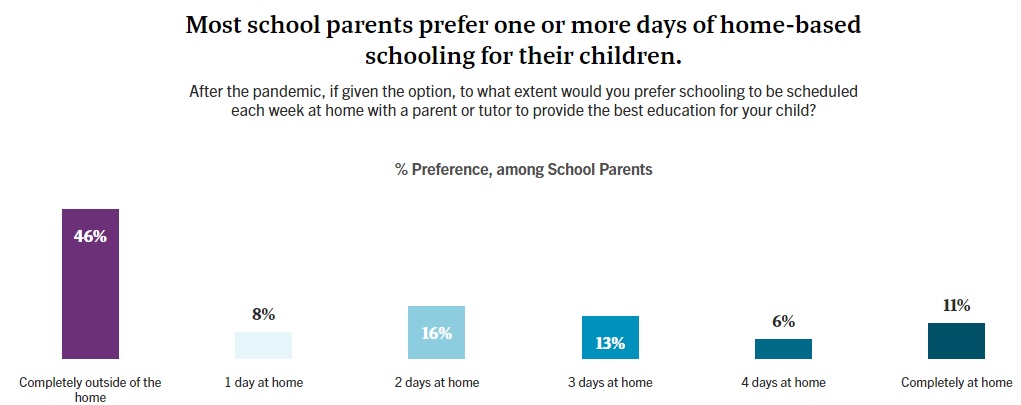
Surveys by EdChoice show a surprisingly large number of families like having their children at home for at least one day during the school week, and the National Hybrid Schools Project has documented the proliferation of learning environments that match their preferences.
In theory, hybrid and part-time schools could be a natural fit for education savings accounts that allow families to direct publicly funded scholarships to a mix of education-related goods and services of their choice. Hybrid schools' less-than-five-day schedules often mean tuition is lower than at typical private schools, and ESAs allow families to use any remaining funds on curriculum, tutoring, enrichment activities or supplies to supplement their schools' programming.
In other words, hybrid schools jibe with two key features of ESAs: Giving families the flexibility to tailor a mix of learning opportunities to individual children and giving them an incentive to economize and put their limited scholarship funding to the most effective use.
In practice, however, learning environments that straddle the boundaries between schooling and homeschooling bump into policy barriers. Many states, for example, require schools to deliver a certain number of hours of instruction per year, or to meet students on campus a certain number of days per year.
As a result, hybrid schools may not be eligible for tuition payments through ESA programs in many states. According to a new policy report published last week by ExcelinEd, of the 16 states with active ESA programs, only seven afford some avenue for hybrid schools to qualify for private school tuition funded through ESAs. And even some of those fall short of the potential. Several states require eligible private schools to be accredited, which could pose a barrier to some hybrid schools. Utah's program does not allow parents to roll over any leftover ESA funds for future school years. This "use-it-or-lose-it" design limits some incentives to economize.
Hybrid schools may qualify for funding by other means. For example, they may meet requirements to bill parents as part-time tutoring providers or through provisions in some state laws that allow Department of Education officials to approve expenses that meet the intent of scholarship programs but aren't expressly authorized.
This is a next-generation question for states that have enacted ambitious education choice programs that allow families to direct public education funding to providers of their choice. What appropriate regulations will ensure all students have access to the instruction and support they need, while accommodating the proliferation of innovative models that blur the lines between schooling and homeschooling and allow parents to assemble education from multiple providers?
It's a safe bet that in the coming years, state policymakers around the country will look for new ways to strike the right balance.
Go deeper: ExcelinEd's Ben DeGrow explains how hybrid schools could help meet the demand in many states for new options that cater to families who use ESAs. The National Hybrid Schools Project's annual surveys provide insight into the growing movement.
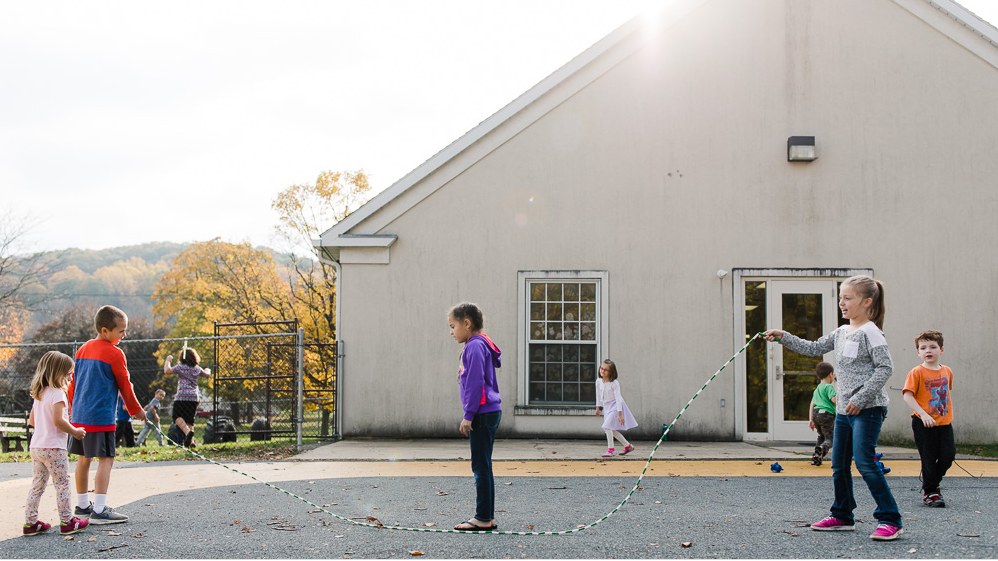
Providence Hybrid Academy, serving Pennsylvania’s Lehigh Valley, offers outdoor play, meaningful friendships, and a supportive community of like-minded parents influenced by the work of Charlotte Mason, a 19th century British educator and strong Christian believer.
Editor’s note: This commentary from Colleen Hroncich, a policy analyst at the Cato Institute’s Center for Educational Freedom, and Sharon Sedlar, founder and president of PA Families for Education Choice, appeared last week on realclearpennsylvania.com.
Enrollment in Pennsylvania district schools has fallen slightly more than 3% since 2019-20 – a drop of nearly 51,000 students. At the same time, homeschooling and private school enrollment have risen 53% and 5%, respectively.
There has clearly been an uptick in parents selecting options beyond their local district school, and the trends don’t show any signs of slowing as another school year wraps up.
Two increasingly popular options are microschools and hybrid schools. Unfortunately, these are often choices that seem foreign and complicated to many parents, keeping families who would likely thrive in one of these options from taking the leap.
The models don’t necessarily have strict definitions, and the terms aren’t mutually exclusive. A microschool can be a hybrid school, and vice versa. All of this can add to the confusion for parents exploring their options.
Microschools, as the name implies, are small – sometimes consisting of fewer than 10 children in a close age range. A larger microschool might serve 100 or so students in small, multiage groups, like ages 7-9, 10-13, and so on.
Microschools often place students based on where they currently are in a subject area rather than relying solely on their age. They also tend to be more student-directed compared to a conventional classroom, with learning coaches, tutors, or guides there to help the kids learn. There may or may not be a formal curriculum.
Hybrid schools utilize a combination of at-school and at-home learning, but there can be much variety in how they are structured. Students may meet in person two days and learn at home three days, or the other way around. Some hybrids meet half days in person, while the rest of the time is spent at home.
Parents, students, and teachers often call it the “best of both worlds,” as their children get the support of in-person instruction and the flexibility of homeschooling. No wonder recent polling shows 55% of Pennsylvania parents are interested in some level of hybrid schooling.
To continue reading, click here.
 Editor’s note: This commentary from Colleen Hroncich, a policy analyst with Cato's Center for Educational Freedom, appeared Sunday on the center's website.
My oldest child is graduating from college tomorrow, so it has me thinking about our educational journey—which could best be described as eclectic. At various times, we used private school, district school, and cyber charter school. But we ultimately landed on homeschooling.
That doesn’t mean they were literally learning at home every day. My kids participated in co‐ops, hybrid classes, dual enrollment, athletics, and more. This gave them access to experts and plenty of social time.
It can be scary taking charge of your children’s education—I remember feeling very relieved when my oldest received her first college acceptance. But today there are more resources than you can imagine to help you create the best education plan for your children’s individual needs and interests. And with the growth of education entrepreneurship, the situation is getting even better.
For starters, you don’t have to go it alone. The growth of microschools and hybrid schools means there are flexible learning options in many areas that previously had none. One goal of the Friday Feature is to help parents see the diversity of educational options that exist. To see what’s available in your area, you can search online, check with friends and neighbors, or connect with a local homeschool group.
If you don’t find what you’re looking for, the good news is that there’s also more support for people looking to start new learning entities.
The National Microschooling Center is a great starting place if you’re considering creating your own microschool. The National Hybrid Schools Project at Kennesaw State University is also a tremendous resource. There are businesses—like Microschool Builders and Teacher, Let Your Light Shine—whose focus is helping people navigate the path to education entrepreneurship. And grant opportunities, like VELA and Yass Prize, can help with funding.
We were fortunate to be in an area with a strong homeschool community and therefore had plenty of activities to choose from. But I’m still a bit jealous when I speak to parents and teachers each week and hear about the amazing educational environments they’ve created.
There’s also an abundance of online resources available, from full online schools to à la carte classes in every subject imaginable. If you like online classes but want an in‐person component, KaiPod Learning might be just the ticket. These are flexible learning centers where kids can bring whatever curriculum they’re using and work with support from a KaiPod learning coach. There are daily enrichment activities, like art, music, and coding, as well as social time.
One of the best parts of taking charge of your children’s education is that it puts you in the driver’s seat. If your children are advanced in particular subjects, they can push forward at their own pace. In areas where they struggle, they can take their time and be sure they understand before moving ahead. (One potential downside is that this takes extra discipline and can be challenging. But it’s tremendously beneficial overall.)
These nonconventional learning paths can be great for kids who don’t want to go to college, too. Flexible schedules free up time to pursue a trade, music, performing arts, sports, agriculture, and more. As kids get older, they can increasingly take charge of their own education. This lends itself to developing an entrepreneurial outlook, which is vitally important in a world where technology and public policy are constantly changing the workforce and economic landscapes.
“One size doesn’t fit all” is a common saying among school choice supporters. But this is more than just a slogan. It’s an acknowledgement that children are unique and should have access to learning environments that work for them. Public policy is catching up to this understanding—six states have passed some version of a universal education savings account that will let parents fund multiple education options.
If you’ve considered taking the reins when it comes to your children’s education, it’s a great time to act on it. Whether you choose a full‐time, in‐person option, a hybrid schedule, or full homeschooling, you’ll be able to customize a learning plan that works best for your kids and your family.
And you may even become an education entrepreneur yourself and end up with a fulfilling career that you never expected.
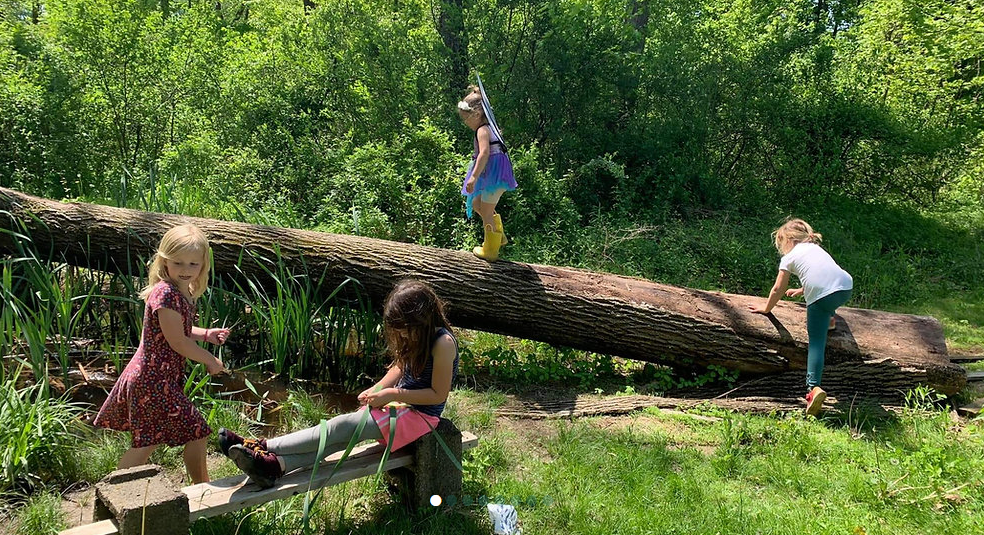
The VELA Foundation offers Bramblewood Academy, a hybrid co-op located on a farm in Hilltown, Pennsylvania, as an example of “unconventional education.” Bramblewood offers a mix of project-based learning, Socratic discussions, and real-world activities, maintaining flexibility with programs that run from two to five days a week. Parents are not expected to be teachers, but they are encouraged to volunteer to receive a nearly 50% tuition discount.
Editor’s note: This commentary from Bruno V. Manno, senior advisor for the Walton Family Foundation education program, is an exclusive to reimaginED. The Foundation provides support to VELA Education Fund, mentioned in this piece.
Many stories about COVID-19 describe its damaging effects on K-12 education, from closing schools to enrollment declines to student emotional problems and learning loss. These stories are true and should be told.
But so should another group of stories -- hopeful ones -- that describe how K-12 civic entrepreneurs in America’s communities are creating new learning opportunities for families and their children. These everyday grassroots entrepreneurs are creating a new unconventional K-12 education sector through permissionless innovation.
Here are three features of that approach.
First, these entrepreneurs want to change things, and, typically, do not ask permission from regulatory agencies to start their ventures. When they deal with bureaucracy, they curb its suffocating effects.
Second, families enroll their children in these innovative programs because they are accommodating and meeting the new learning needs of families following the pandemic.
Third, these entrepreneurs believe their ventures are adding unique value to people’s lives by creating what I call a new K-12 sector of unconventional learning opportunities. Their programs are flexible and tailored to student needs compared to the traditional K-12 system.
In short, the maxim of these K-12 civic entrepreneurs goes something like this: “Just do it. They will come. And together, we can create something new and valuable.”
A recent report from VELA Education Fund describes these new ventures. It is not a scientific sample of these programs, so we cannot draw general conclusions that apply to all types of new learning ventures. But the results are like what pollsters find in focus groups. They provide general themes and other information that offer insights into an emerging sector of new K-12 learning environments.
The Fund surveyed leaders of 801 new learning ventures outside the traditional K-12 public and private school systems that received $7.5 million in VELA support since 2019. It received 413 responses from these leaders who founded new learning models that include microschools, virtual schools, pods, homeschool coops and programs, hybrid homeschools, and private schools. More than half (54%) are microschools or homeschool coops.
Here is what we are learning about these community enterprises.
The ventures
These ventures are young in their organizational lifecycle. At the time of their first VELA grant, more than 7 in 10 (72%) were three or less years old, with 3 in 10 (30%) less than one year old.
A majority (56%) are nonprofits, almost 3 in 10 (28%) for-profits, and the rest intend to incorporate as nonprofits. Nearly all of them (95%) have plans to grow.
Only 10% own their own space, with the rest renting space from faith organizations, corporate or individual private space, and public space like libraries or schools.
Their families
These ventures are not only for affluent families. Many have a core focus serving low income or historically underserved families. Almost 4 in 10 (38%) do this, while over 9 in 10 (93%) serve some portion of these groups.
Their finances
These ventures receive minimal external funding, with over 7 in 10 (73%) receiving 2022 external support only from their VELA grant and only 1 in 10 (10%) accessing public dollars. Over 8 in 10 (84%) charge tuition and fees or sell products and services, with 7 in 10 (70%) using tuition and fees as primary revenue sources.
Families receive discounts, scholarships, and reduced or free services. Some organizations have subscription fees or membership dues. They also use sliding income scales to determine a family contribution and are willing to exchange goods or services rather than receive an actual dollar payment.
So, grassroots K-12 civic entrepreneurs are creating a new sector of unconventional learning opportunities for families and young people. Permissionless innovation is the best way to describe their approach.
To summarize:
The permissionless innovation of grassroots civic entrepreneurs at the heart of this dynamism is creating new K-12 sector of community learning options to help young people flourish as adults. K-12 stakeholders and other community leaders should support these ventures and the families that use them.
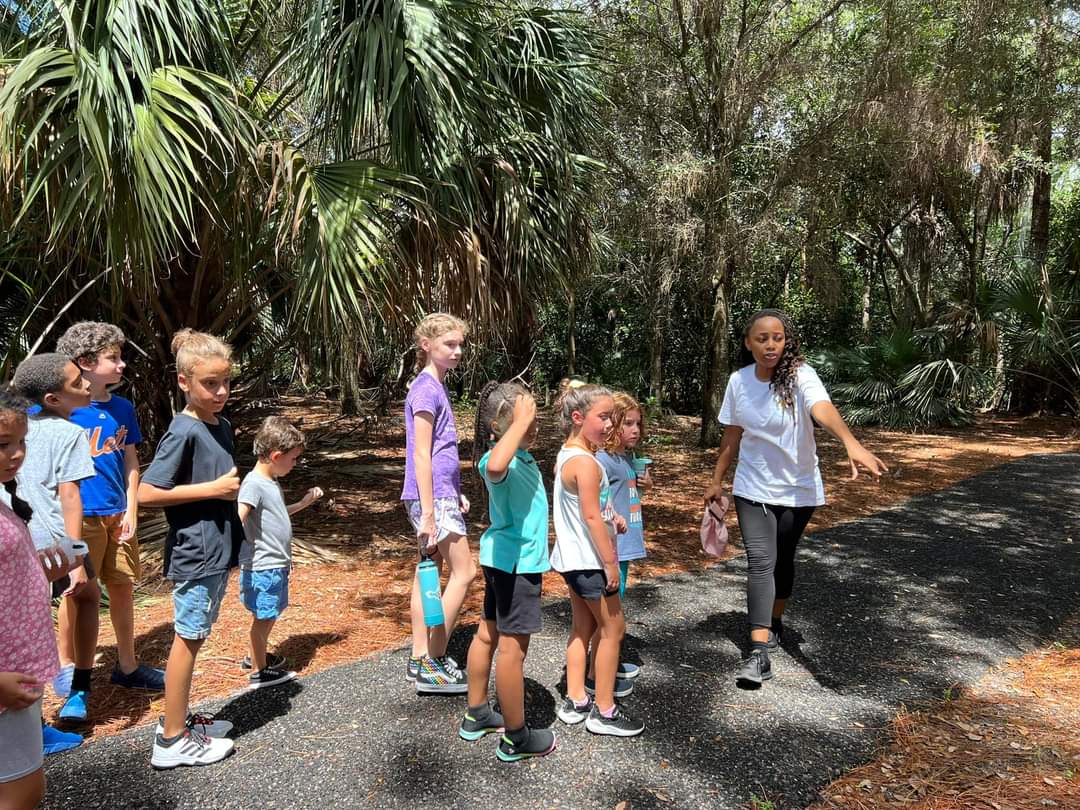
Iman Alleyne, right, launched Kind Academy in 2016 after a four-year evolution. The school offers in-person, hybrid and online options with a progressive curriculum model, project- based learning, and community focused experiences.
Editor’s note: This commentary from Mike McShane, director of national research at EdChoice, appeared last week on forbes.com.
This past weekend, I joined a couple hundred of my closest friends at the National Hybrid School Conference in Atlanta. Tempted as many may have been to instead see Taylor Swift’s Eras tour at the nearby Mercedes-Benz stadium, sessions were packed, meet-ups were hopping, and the positive energy from those starting and operating innovative schools was palpable.
There were many things that we could take away from the passionate educators who came from across the country to participate.
If you are pessimistic about the future of education, you shouldn’t be. As Mr. Rogers taught children a generation ago, when bad things are happening, look for the helpers. The Renaissance Waverly was practically overrun by helpers. The positivity and can-do spirit was infectious. Conference sessions were not spent complaining about the status quo but were devoted to solving problems.
Confident Pluralism is alive and well, as well. School leaders with vastly different missions and values sat together and supported and celebrated each other’s work. Conservative and progressive, religious and non-religious, public and private, no one was ever asked to minimize what they believed. Instead, conference participants evinced respect for people who thought differently and defended their right to do so.
That was more than enough to make for an enjoyable few days, but for some reason I kept thinking back to a press conference held in September of 2005. This grainy video on YouTube is the only reference I can find of it.
In the video, Lt. General Russel Honore is briefing reporters on preparations for the imminent landfall of Hurricane Rita, a storm that many forget because it hit Louisiana hot on the heels of Hurricane Katrina. Honore had taken command of evacuations and humanitarian relief in the weeks after the botched response to Katrina and led with a, shall we say, direct approach.
During the press conference reporters asked Honore why the work that was being done to prepare for Rita was not done in the leadup to Katrina. A fair question, but Honore had no interest in it at all. He replied, to many onlookers’ delight:
“Let’s not get stuck on the last storm. You are asking last storm questions. But people are concerned about the future storm! Don’t get stuck on stupid!”
To continue reading, click here.
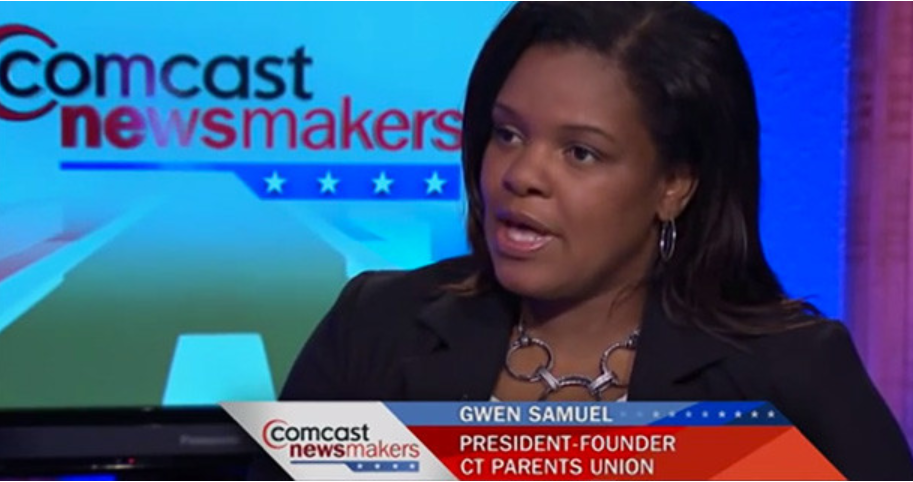 Editor’s note: redefinED is pleased to introduce our newest guest blogger, Gwen Samuel, founder and president of the Connecticut Parents Union. Samuel will be a regular contributor to redefinED.
February 3 was a very reflective day for this Black Connecticut mom.
There were virtual celebrations across the country honoring past and present Black leaders, of all ages, as part of Black History Month, a time during which President Gerald R. Ford urged Americans to “seize the opportunity to honor the too-often neglected accomplishments of Black Americans in every area of endeavor throughout our history.”
I personally rang in my double nickel birthday—55 years on this earth, much of it as a mom and grandma trying to make my home, my community, my state and my country a better place as an unapologetic activist and advocate for safe, quality educational opportunities for all children.
A few hundred miles down the road in Washington, D.C., Dr. Miguel Cardona—Connecticut’s first Latino Commissioner of Education—found himself sitting in front of the U.S. Senate Committee on Health, Education, Labor and Pensions (HELP) answering questions in a confirmation hearing to become the next U.S. Secretary of Education.
As I contemplated the past, I found myself wanting to be so excited for the future. I thought to myself, “Yes, this Senate U.S. Secretary of Education confirmation hearing could be the best birthday gift ever!”
Finally, the voices of parents, students and families will be paramount and encouraged under the new Biden-Harris administration as education decision-makers realize that “one size fits all children” schooling has never been a best practice or sustainable solution to meet the diverse learning styles and needs of the millions of America’s children.
What could demonstrate this more clearly than the deadly COVID-19 pandemic that continues to exacerbate the many inequalities that have always existed within public education throughout the United States?
That is the message I hoped to hear as I listened intently to the senators questioning Dr. Cardona. What I heard instead were more paternalistic talking points and rhetoric, the episodic, unfulfilled promises that families—especially Black families—have heard for years, from one administration to the next.
Families and parents were mentioned so infrequently during the hearing that one would think “we” are not part of the “us” Sen. Patty Murray (D-WA) kept referring to. The way they were talking, you might think our children are born to classrooms, not into actual families.
Said Sen. Murray: “We have a lot of work to do, we have an excellent candidate to help us get it done, and we have no time to waste. Any senator who has heard from a parent who wants to get their child back to the classroom safely — and I am sure everyone has — should vote to advance and confirm Dr. Cardona, without hesitation. And I’m hopeful when the time comes, they will do just that.”
Obviously, we need to place a priority on the safe reopening of schools, but that’s not a progressive agenda in itself. As a former track runner in high school, I see it more as a hurdle that we need to clear so we can get to the more important conversations about our kids:
Are we doing everything in our power to get them the quality K-12 opportunities they deserve and are legally entitled to?
Let us talk facts. The Constitution and its protections do not end at the school-house door!
It’s true that parents are concerned about their kids getting back to school, though 44% say they would like to continue a mix of school and home learning after the pandemic, according to recent polling data from EdChoice and Morning Consult. That preference jumps to 64% among private school parents.
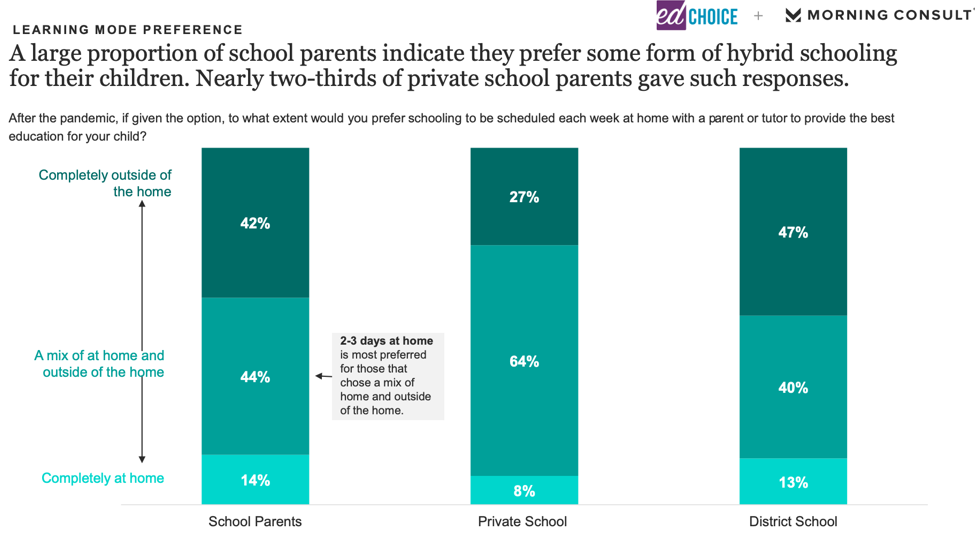
That’s a data point worth talking about in the context of how this pandemic has changed our lives forever — and why the input of parents and families matters to help ensure an equitable delivery of educational opportunities across our country — regardless of race, zip code or income level.
Instead, the politicians only seem to be able to focus on which political party is better, bickering about ideologies, quick-fix vaccinations and HVAC systems. Why are they not talking about money following each child to a school or a schooling option that best meets their academic and life needs?
Why are we not talking about a massive, nationwide tutoring effort to combat critical learning loss? Why are we not talking about whether we need all these aging school buildings or if there might be different ways or places to efficiently and effectively educate our country’s future leaders — our kids?
It has been almost one year since our country engaged in mass school closures, and we are still trying to apply pre-pandemic educational solutions to what will be a post-pandemic education landscape. This business as usual approach has resulted in millions of children across the U.S. not having received any formal education since their schools closed in March, a sobering new estimate of the havoc the coronavirus pandemic is wreaking on the country’s most vulnerable students.
If you were looking for a commitment from education decision-makers to really listen to families back in that Feb. 3 hearing, you probably were as disappointed as I was.
What I did not hear was that families that look like mine would be more than window dressing under this administration. I did not hear that diverse parents would be at the decision-making table alongside those we voted into office.
This would change the business-as-usual practice of the status quo long deciding what’s best for us even though we are supposedly free to choose. I did not hear about an education revolution that will break down barriers and upend a K-12 framework designed for the wealthy.
In the coming days, months and years, Dr. Cardona has a chance to find his own voice, transform this one size fits some educational system from the inside out, and do what’s right for all families, not just the ones who’ve been blessed with privilege and connections. Many parents like me will not stop fighting until we reach that day.
To quote Dr. Martin Luther King Jr., “Change does not roll in on the wheels of inevitability but comes through continuous struggle.”
I hope that in a year’s time, on my next birthday, I can write that our struggle for educational freedom — which is a form of justice and the persistent fight for our kids and their kids and grandkids’ future — led to change that started at the bottom and rippled out to every single family in this country.
Only then will this Black mom be satisfied. Only then will I be able to congratulate our elected officials and Dr. Cardona on a job well done.