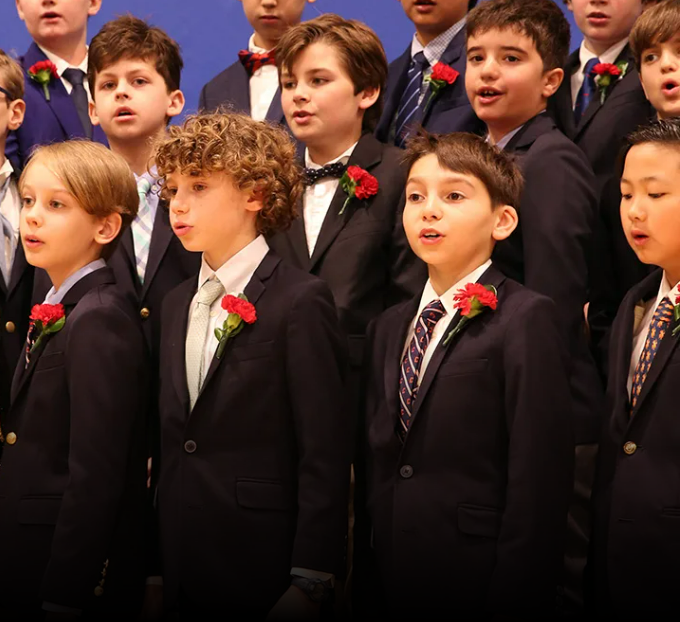
Collegiate School, founded in 1628, an independent school for boys in New York City, claims to be the oldest school in the United States. It is located on the Upper West Side of Manhattan and is a member of the New York Interschool and the Ivy Preparatory School League.
Editor’s note: This commentary from Chester E. Finn, distinguished senior fellow and president emeritus of the Thomas B. Fordham Institute, appeared Thursday on the institute’s website.
The Supreme Court’s 6-3 decision in Carson v. Makin, telling Maine it must not deny tuition assistance to families solely because the private schools they choose are religious, may not make a huge difference on the ground in the Pine Tree State, since liberal legislators had already inserted a “poison bill” into the law authorizing such aid.
They now deny “town tuitioning” payments to any private school, secular or sectarian, that discriminates on the basis of gender identity and sexual orientation. That constraint hasn’t fazed the several dozen secular private schools—mostly small and in small towns—that already participate.
It likely won’t cause indigestion for some of Maine’s religious schools. But it’s apt to prove unacceptable to the two conservative Christian schools whose religiousness is what kicked off the lawsuit. They’ve signaled that they won’t take the money if it means changing their curricula or admission standards.
Welcome to the complicated universe of private elementary-secondary schooling in America circa 2022 and the innumerable twists and turns of efforts to use public funds to help families access schools that suit them.
It’s a big universe, too: more than 30,000 schools (in 2019)—roughly one-fourth the total—enrolling some 4.7 million pupils (9 percent) and employing half a million teachers. Charter schools and homeschooling are coming on strong, but private schools still offer the most options.
This sector is far older than public education and infinitely more varied, such that bean counters have difficulty even sorting its schools into coherent categories. The latest big federal survey (2015) reported that “Sixty-seven percent of private schools, enrolling 78 percent of private school students...had a religious orientation or purpose.”
The one-third that are secular contains most of America’s big-name prep schools and upscale “independent” schools. But it also contains thousands of “special education” schools for youngsters with disabilities, with attendance often paid by their school districts, as well as thousands of “special emphasis” schools that range from Montessori to science, from agriculture to giftedness.
On the far larger sectarian side, subcategories proliferate, as do vast differences in scale. The 2015 survey reported twenty-eight different groupings plus 304 schools described as religious but fitting into none of the groups.
To continue reading, click here.
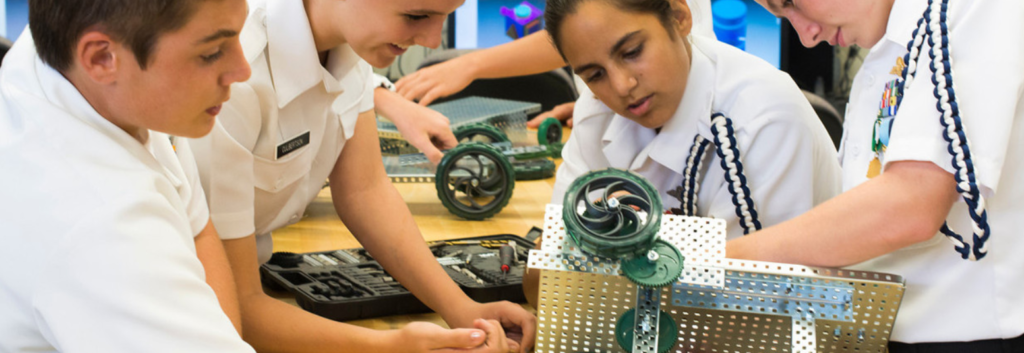
Admiral Farragut Academy in St. Petersburg, Florida, is one of 340 member schools in 18 states and the District of Columbia that benefit from assistance from Mid-South Independent School Business Officers.
Since July 2017, Damian Kavanagh has served as an officer of MISBO, a nonprofit association serving independent private schools in 18 states including Florida and the District of Columbia. He spent seven years as a vice president with the Southern Association of Independent Schools where he oversaw accreditation and membership programs and worked for 15 years as a teacher, coach and administrator at the Westminster Schools of Atlanta, a nationally recognized independent school community and the birthplace of Mid-South Independent School Business Officers. He also served as head of school at Cambridge Academy in Greenwood, S.C.
redefinED reached out to Kavanagh to learn more about his organization and the state of private schools as a result of the coronavirus pandemic. Answers have been edited for clarity and brevity.
Damian Kavanagh
Q. Tell me more about Mid-South Independent School Business Officers, how it serves independent schools and what your role involves.
A. MISBO serves independent private schools by providing relevant information and research, professional development, opportunities to grow their network, and a purchasing consortium focused on their needs. Member schools are primarily located in the southeast, but MISBO has members in 18 states and D.C.
Q. A recent survey commissioned by your organization of 160 member schools showed about 70% with higher or stable enrollment this year compared with the previous school year, with 14 of them unchanged because they were already at capacity in 2019-20. Why did MISBO commission this survey and what were the key takeaways?
A. During the MISBO annual conference in October, one of our speakers polled the audience on the mode in which they had opened: virtual, hybrid, or face-to-face. While we had anecdotal evidence of open rates, the speakers were astounded at the numbers and asked us to help with a follow-up survey to ask similar questions to our entire membership. Another piece of both the conference poll and the later survey was to overlay enrollment information and ask if enrollment had gone up, down, or was about the same. Our current work for a subsequent article overlays county data on public school open modality, county unemployment rates, and county COVID-19 rates. These data points allow us to run regression models to determine what factors are statistically most contributory to what we saw this fall in independent schools.
We are still working through the more detailed analysis, but it appears that public school virtual choice is highly correlated to private school increase in enrollment. I’m not sure we needed statistics to tell us this, but with stats, it is pretty clear. And it looks like that is the dominant variable that drove families to choose a private school for their children. Simply put, and again, something we already knew anecdotally, families wanted to be face-to-face. What I wonder is what would have happened if their public school had, like so many private schools, figured out how to provide an in-person experience to students that was safe.
Q. Given the changes in education that were hastened by the pandemic, what are the most pressing professional development needs and resource needs for educators and how will your organization adapt to meet those changing needs?
A. Two things happened so quickly it felt like a switch was thrown. The first is that schools had to purchase additional equipment for campus safety and teaching and learning. Both purchase areas represented opportunities for learning – first in how to keep people on campus safe while following appropriate guidelines of masks, cleanliness, distancing, exposure management, contact tracing, etc.
The second thing that happened was that schools helped faculty, students, and parents get up to speed quickly throughout the spring when campuses were shut down and into the fall when campuses were reopened to help continue the learning process for students. Our member listservs were very active with educators sharing what they learned and relying on each other for solutions to problems they were just starting to encounter. As an association, MISBO’s job is to provide a forum for this exchange, provide timely information to anticipate the needs of members, and help schools navigate the waters of new circumstances.
Q. As a longtime educator, in what direction do you see education moving over the next 10 years?
A. Throughout the next decade, I hope that we will learn from the pandemic just how resilient we can be. A teacher colleague of mine, whose independent school has been face-to-face since August, commented to me that her students know how to play with each other. They came back to school better equipped to listen to each other and they are very ready to learn. She attributed it to quality time over the spring and summer at home with attentive family members. I thought that was a peculiar silver lining that I hope plays out for many of our youngest students, and I wonder if more family engagement in our children’s education could be a good thing.
Economically, I do not know if that was due to work from home or unemployment, but students can pick up on the stress and the joy of parents very quickly and are more likely to be engaged when they know there are adults around them, beyond their teachers, cheering them on and helping them. If we have greater cooperation between home and school in the future, that will be a great thing for education. One of our schools in Mississippi used virtual reality throughout the spring to keep in touch with students, and although that isn’t something every school can do, the depth of commitment to find a way to stay connected is what I hope we double down on in education over the next decade.

