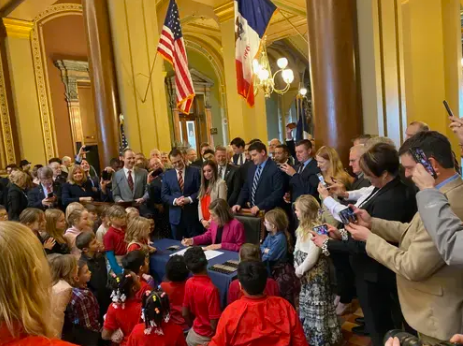
Iowa Gov. Kim Reynolds signed HF 68 into law in January, making funding available for K-12 students who choose to attend private schools. Reynolds called public schools “the foundation of our education system,” the option of choice for most families, but added that it’s not the only choice.
Editor’s note: This commentary from Jason Bedrick, a research fellow in the Center for Education Policy at The Heritage Foundation, appeared last week on the foundation’s website.
State lawmakers are often slow to act, but they can move quickly when voters make them feel the heat. Consider Iowa, where Gov. Kim Reynolds recently signed the nation’s third publicly funded education choice program for all K-12 students, following West Virginia and Arizona.
This represents a stunning reversal. A smaller proposal failed to clear the legislature last year. What changed?
The Students First Act will provide Iowa families education savings accounts that they can use for private school tuition, tutoring, textbooks, curricular materials, and a variety of other education expenses. The ESAs, funded with a portion of the state’s per-pupil spending, are worth about $7,600 annually.
That more than covers the average private elementary school tuition in Iowa (about $5,400) and nearly covers the average private high school tuition (about $9,200).
Families can also roll over unused ESA funds from year to year to save for later expenses. Initially, the ESAs will be available to low- and middle-income families; they will open to all Iowa families in the program’s third year.
The policy Reynolds signed is significantly more ambitious than her proposal last year, which was limited only to low-income students. That bill cleared the state senate but failed after a lengthy battle in the Iowa House of Representatives. Although the GOP had strong majorities in both chambers, several Republicans representing rural areas raised concerns about the effects that school choice policies might have on their local public schools.
Last spring, Reynolds took the unusual step of endorsing several primary challenges to legislators in her own party who had thwarted her school choice proposal. The governor was betting that she had a better understanding of the GOP base’s priorities than the legislators she was challenging—politicians who had already proven their popularity in their districts. If they survived their primary challenges, Reynolds’s standing in the party would be significantly diminished.
Rural Republican legislators nationwide have long posed a stumbling block to passing school choice legislation. In rural areas, public schools are often the largest employers, and the local superintendents wield significant political power. Rural legislators therefore tend to heed those superintendents’ hostility to expanding school choice.
But in the wake of the COVID-19 school shutdowns, the relationship between parents and their local schools changed. "We wouldn’t have passed the ESA bill but for COVID," explained Iowa Sen. Brad Zaun, a long-time proponent of school choice. "Groups like Moms for Liberty were down at the capitol nearly every day clamoring for school choice."
To continue reading, click here.
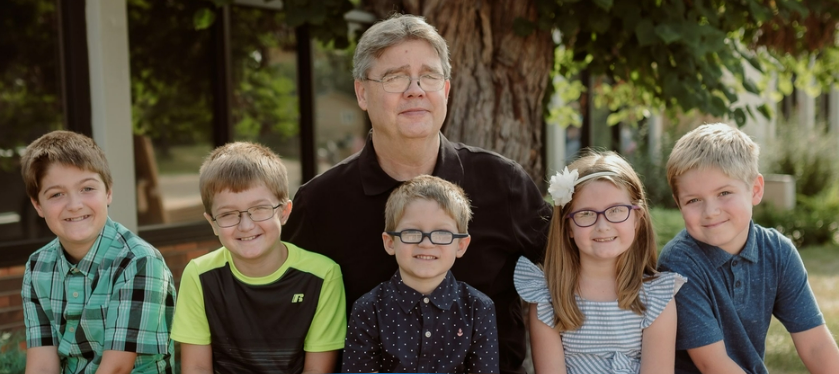
Isaac Newton Christian Academy in Cedar Rapids, Iowa, is one of 237 private schools in the state serving nearly 46,000 students. The school’s mission is to develop Christlike character and academic excellence through consistent and comprehensive incorporation of biblical principles.
Editor’s note: This commentary from Ellie Krasne, a visiting fellow at Independent Women’s Forum, appeared Sunday on desmoinesregister.com.
Gov. Kim Reynolds on Jan. 24 signed into law Iowa’s school choice bill, the Students First Act, expanding school choice for all of Iowa’s children and families.
As someone who grew up in rural Iowa and attended public elementary school, I was thrilled to see my home state make the right choice for Iowa’s students. I live far away now, but many of my friends and my extended family live in Iowa.
Prior to the bill passing, school choice debates heated up, and like with all policy debates, myths were being spread. Now that the bill passed and was signed into law, I want to debunk three harmful myths about Iowa’s Students First Act.
The first myth is that the bill “destroys rural schools” because rural areas often don’t have private schools, and rural schools could lose funding. First, this is in and of itself a contradiction. The rural areas either have private schools and risk losing students, or they have no private schools for students to attend.
Fortunately, under Iowa’s Students First Act, neither of these scenarios are likely. Iowa’s school choice bill leaves money for public schools. The bill proposes $7,630 of per-student funds for private schools, home schools, micro-schools, instructional materials, and online learning — many of which are accessible from all rural areas.
And estimates suggest that public schools will keep about $1,205 per pupil for each student who resides in their district but attends a private school. In sum, the Students First Act gives rural families more education freedom and ensures that rural schools will continue to receive taxpayer-funded financial support.
To continue reading, click here.
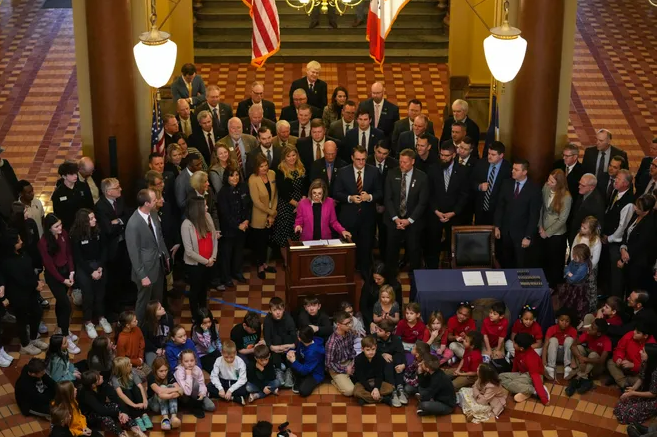
Iowa Gov. Kim Reynolds addresses supporters before signing HB 68, her private school scholarship bill, in the Capitol rotunda. PHOTO: Margaret Kispert/The Register
Editor’s note: This commentary from Jordan Zakery, legislative director for ExcelinEd In Action, appeared last week on the ExcelinED website.
Education savings accounts offer important support for families in finding the right educational fit for their child. And this week, Iowa became the tenth state in the nation to adopt an education savings account program.
While state legislators came very close to expanding education choice in 2022, it was the strong leadership of Gov. Kim Reynolds — plus the commitment of Iowa’s presiding officers and legislative champions along with a fresh crop of legislators — that took an ambitious education agenda over the finish line this year and onto the governor’s desk.
Reynolds made empowering families with education opportunity her priority, and she built a strong coalition of lawmakers and advocates to help pass the state’s first ESA program. The Students First Act also had overwhelming support from Iowans. According to a Morning Consult poll, 67% of Iowans — and 76% of Iowan parents with school-aged children — support education savings accounts.
The newly signed legislation allows eligible Iowa families to apply for an education savings account. For approved applicants, the state will then deposit nearly $7,600 (equal to the state’s annual per-pupil funding) into the account to help parents send their kids to a school of their choice and cover other educational expenses.
The ESA program will phase in over several years, initially targeting underserved families and extending eligibility to all Iowa families after three years. According to the Iowa Department of Education, a massive 485,000 public school students will be eligible for an ESA in the program’s first year alone.
Each and every child deserves access to a quality education. Iowa’s Students First Act gives parents the freedom and flexibility to customize their children’s education. As the governor said, “Every child is an individual who deserves an education tailored to their unique needs, and parents are in the best position to identify the right environment [for that education].”
Reynolds meant business as she fought to give parents more learning options to help students succeed. This week, she delivered on her promise of education reform and, especially, empowering families with school choice.
Because of this significant legislation, every Iowa student is on a path to reach their full potential.
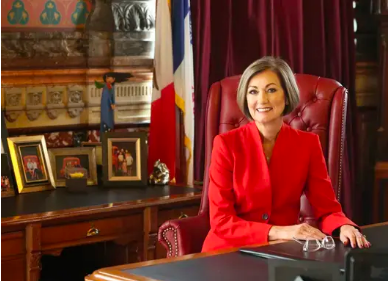
Both chambers of the Iowa Legislature passed legislation championed by Gov. Kim Reynolds to create an education savings account for all K-12 students, priming the Hawkeye State to become the second state to enact a universal school choice program.
The Iowa Legislature has passed a universal K-12 education savings account bill. Iowa Gov. Kim Reynolds is expected to sign the legislation today. This is the first broadly available choice bill to pass in the 2023 session.
Congratulations to Reynolds and to Iowa’s legislative and advocacy champions. Iowa’s choice community was quick to recognize the advantages of an account-based choice system, and they worked tirelessly over a decade in order to enact this legislation. Bravo!
Now we turn to the remainder of the map.
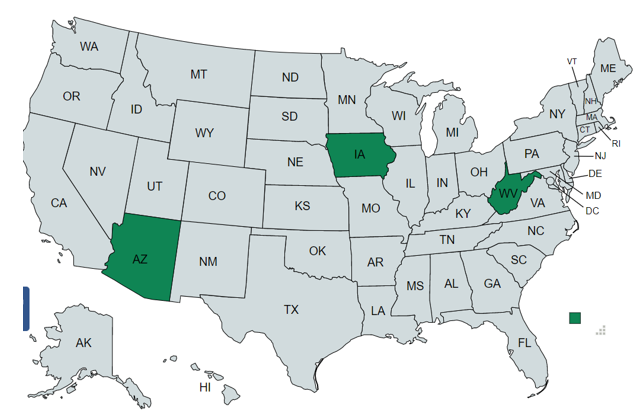
What the Greek poet Hesiod termed “good strife” has broken out among multiple states in their efforts to expand education freedom. State constitutions guarantee public K-12 funding, and districts won’t be going anywhere. It is simply absurd to have a regulatorily captured government run local monopolies as the only K-12 option, albeit status-quo sophists are desperate to have you believe otherwise.
Ben Hodges, a retired commander of the U.S. Army in Europe, describes the Ukrainian army as having “irreversible momentum” in the defense of their homeland. I hope that Hodges is correct, and that the same is true for education freedom.
Liberal and broadly available choice systems now have beachheads in the west, the east and the Midwest – a good start. The momentum is unmistakable, and 2023 is just getting warmed up.
Stay tuned to this channel to see where the next victory will be won.
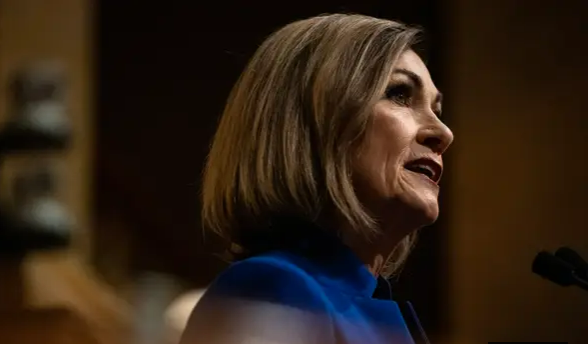
Gov. Kim Reynolds gives the Condition of the State address to members of the Iowa Legislature inside the House Chamber Jan. 10 at the Iowa State Capitol in Des Moines.
Iowa Gov. Kim Reynolds in her “Condition of the State” address proposed the creation of education savings accounts for every student in Iowa. Her mantra: “We either give every child a chance to succeed, or we don’t.”
Building on the premise that every child is an individual who deserves an education tailored to his or her unique needs, coupled with the fact that parents are in the best position to identify the right environment, Reynolds outlined a school choice bill in which the state would contribute $7,598 to each child’s education savings account, the amount the state provides for each child who attends a public school.
For students currently attending a private school, the plan would be phased in, focusing first on families with the lowest income levels. Within three years, the plan would include all students.
You can listen here to a podcast featuring a variety of reactions including a statement from education choice advocate Jason Bedrick on the impact of education choice on rural areas, a counterargument to the plan from Iowa Sen. Zach Wahls, and the views of two Iowa students.

Ankeny Christian Academy in Ankeny, Iowa, one of 240 private schools in the state, is a preschool through 12th grade college preparatory school advocating the vision that students will attain an excellent Christ-centered education that will lead them to live morally and ethically.
Editor’s note: This article appeared Monday on iowastartingline.com.
During opening day speeches on Monday, legislative leaders in the Iowa House and Senate offered a preview of their goals for education policy this year, with Republicans making it clear they intend to pass a school voucher bill.
Sen. Amy Sinclair (R-Allerton), the new Iowa senate president, set the tone about the necessity for the state to continue pursuing taxpayer-funded scholarships for students to attend nonpublic schools.
“All Iowa families should have the opportunity to send their children to the school that best meets their needs and reflects their family’s values and moral fiber,” she said. “This should not be exclusive to families with the financial means to pay for tuition or transportation or for those whose families can afford to move to a better zip code.”
Last year, Gov. Kim Reynolds listed a private school voucher program as a legislative priority. Her bill, Senate File 2369, would have diverted $55 million from public school budgets for 10,000 scholarships for students to attend private school. The policy is often called school choice.
However, the bill failed to pass in the House because about 15 Republicans representing rural districts refused to support it. Despite its failure and unpopularity with Iowans, Sinclair said it will continue being a Republican priority for this session, and repeated it was about meeting students’ needs.
Senate Majority Leader Jack Whitver (R-Ankeny/Grimes) echoed Sinclair’s words.
“Nobody knows a child better than their parents and parents deserve a say in what is being taught in the classroom and to use their tax dollars to send their children to a school that best fits their needs,” he said.
“School choice should no longer be an option only for wealthy families. Public and private schools can both prepare Iowa’s students for the next generation for great careers here in Iowa.”
To continue reading, click here.
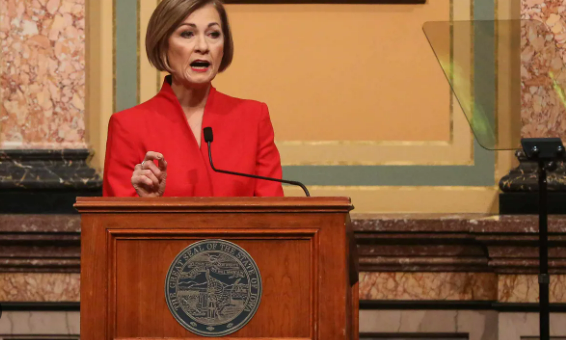
Iowa Gov. Kim Reynolds in her “Condition of the State” address in 2021 asked the Legislature for a bill that would allow open enrollment in every school district in the state.
Editor’s note: This commentary from Trish Wilger, executive director of the Iowa Alliance for Choice in Education, appeared last week on iowacapitaldispatch.com.
We’re nearly three years past the start of the COVID pandemic and life is returning to pre-pandemic times, except for one area — education. Parents got an unprecedented opportunity for an up-close view into the education their children were being provided. Awareness brought about an increased demand from parents for more educational options for their kids, demand that has only grown over time.
In Iowa, we are fortunate to have a governor and legislators who are intent on offering those parents more options.
Gov. Kim Reynolds fought hard for her Student First Scholarship program this year. School choice supporters are hopeful that a bill for an even more robust education savings account will be presented during the 2023 session.
Education savings accounts give parents control over education spending for their children. A portion of state funds are deposited into an individual account that parents use for qualified education expenses for their child. Under last session’s proposal, up to 10,000 income-qualified transfer students could use up to $5,400 in an ESA, which is considerably less than the over $7,000 the state would spend educating each of those children in the public school system.
Last session, like every session, Iowa public schools received an increase in state funding. Iowa’s public-school districts also receive funding from property taxes and local levies, as well as federal funding, which are not mainly (or all) based on enrollment numbers.
Opponents to school choice make many assertions that are an insult to the public-school districts they are supporting. Opponents argue that if an ESA takes effect there will be a mass exodus from public schools. This assumes that every parent would leave the public school if given the opportunity — not a vote of confidence in public schools.
We also hear that ESAs are harmful to rural districts with enrollment so small that if even three students transferred, the school district could not survive. That enrollment decrease could happen if just one family moved away; are we to believe that rural districts are that close to financial ruin?
To continue reading, click here.
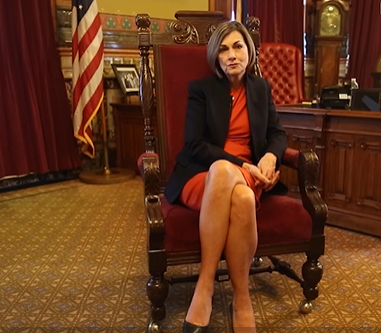
Iowa Gov. Kim Reynolds says she will continue to work to build support for school choice as the annual legislative session moves into its final weeks: “I’m going to continue to be optimistic right until the end.”
Editor’s note: This article appeared March 30 on desmoinesregister.com
The Iowa Senate has passed one of Gov. Kim Reynolds' key education priorities — a bill to give families taxpayer-funded scholarships to pay for private school expenses — in a move that puts pressure on the House to act.
Reynolds, a Republican, has made the issue one of her top legislative priorities for the year. It's also proven one of the most controversial proposals in the Legislature. Democrats are universally opposed and say the measure will harm public schools. Meanwhile, Republicans are divided, particularly in the House, with some of their members expressing similar concerns.
The Senate passed the measure, Senate File 2369, on a 31-18 vote. Every Republican voted in favor except Sen. Annette Sweeney, R-Alden, who joined every Democrat in voting no.
"There is no one size fits all when it comes to student success," said Sen. Amy Sinclair, R-Allerton, the bill's floor manager. "And only parents — only parents — should be the ones to have the opportunity to determine their child’s educational future."
To continue reading, click here.

Des Moines Christian School, one of more than 240 private schools in the state, provides kindergarten through 12th grade education programming on one campus. The school’s stated mission is to equip minds and nurture hearts to impact the world for Christ.
Editor’s note: This article appeared Tuesday in the Des Moines (Iowa) Register.
Advocates pushing for more state aid for private schools crowded into the Iowa Capitol rotunda Tuesday as Republican lawmakers determine whether they have enough support to pass Gov. Kim Reynolds' hallmark education priority.
The rally featured remarks from national proponents, including a pair of former students who used private school voucher programs in Florida and Ohio. The duo, known as the School Choice Boyz, now travels the country to lobby for similar measures.
They were joined by parents of private school students in Iowa and state Republican legislators supportive of the proposal. Many speakers talked about how access to private schooling was important to support their Christian faith.
Alana Gentosi, a parent of students at Des Moines Christian School in Urbandale, said she and her husband have been able to make it work with their careers to pay for a private school education but are passionate about expanding school options in Iowa.
To continue reading, click here.
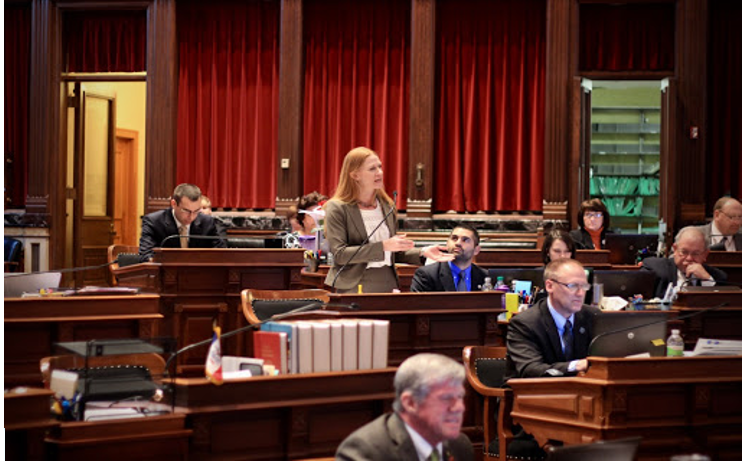
 On this episode, Tuthill talks to the chair of Iowa’s Senate Education Committee about an aggressive push during the 2021 legislative session to expand education choice options for public, private, and homeschool students.
The state failed to pass an education savings account due to concerns from rural districts and private school operators, but Iowa families counted many victories out of the session.
Tuthill and Sinclair discuss successes such as increasing tuition and textbook tax credits, expanding open enrollment options in districts that had been preventing it, and a new charter school authorization process for groups looking to serve communities of need.
“All in all, whether your student is going to public, non-public, homeschool, or charter we have robust choice in the state of Iowa that didn't exist prior to this legislative session."
EPISODE DETAILS:

