This is the latest post in our series on the center-left roots of school choice.
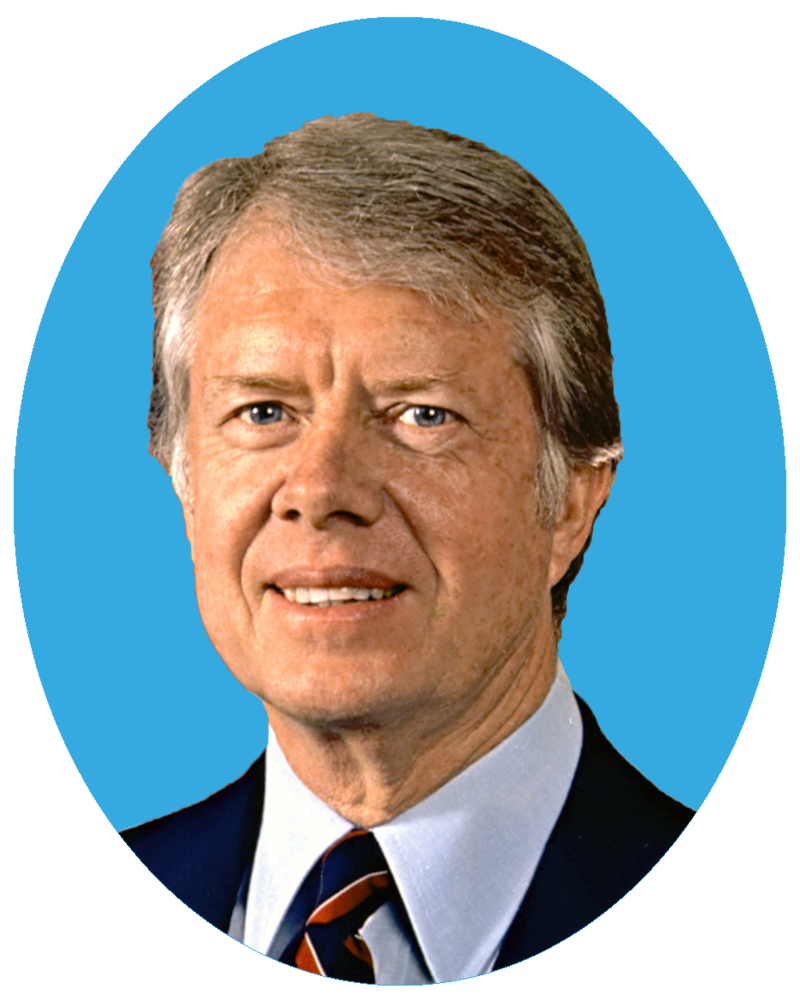
Jimmy Carter once touted school vouchers, telling readers of Today's Catholic Teacher in 1976: "While I was Governor of Georgia, voters authorized annual grants for students attending private colleges in Georgia. We must develop similar, innovative programs elsewhere for non-public elementary and secondary schools if we are to maintain a healthy diversity of educational opportunity for all our children." (Image from Wikimedia Commons)
The confirmation fight over new U.S. Education Secretary Betsy DeVos has at least temporarily pulled Congressional Democrats from the growing bipartisan consensus on school choice. But this political showdown, and the extent to which it was animated by the teacher unions, is not new.
We can probably trace its beginnings to Jimmy Carter. It was during Carter’s presidency that intraparty politics began to pry the Democratic Party from its embrace of school choice. A couple of letters from Carter to Catholic educators, four years apart, captures the shift.
 In September 1976, then-candidate Carter wrote to Today’s Catholic Teacher. (Go to page 11 here.) He praised Catholic schools; referred to the “right” of low- and middle-income Americans “to choose a religious education for their children;” and argued for school choice in terms of opportunity and diversity, as pro-choice progressives had long done. He said he was committed to finding “constitutionally acceptable” ways to provide financial assistance to parents whose children attend private schools. And, as a kicker, he gave a thumbs up to vouchers:
“While I was Governor of Georgia, voters authorized annual grants for students attending private colleges in Georgia. We must develop similar, innovative programs elsewhere for non-public elementary and secondary schools if we are to maintain a healthy diversity of educational opportunity for all our children.”
Carter’s pro-choice, pro-voucher position is fascinating for all kinds of reasons. Today’s left has no clue about its own past support for school choice. And as the Carter letter shows, choice wasn’t some fringe phenomenon on that end of the spectrum.
It’s also fascinating because Carter changed his tune at the end of his term, a turnabout that generally marked the beginning of the left’s resistance to choice (at least the white left) and a shrinking of that common ground we’re seeing again, post-Trump. As Doug Tuthill has written, that late ‘70s flip-flop has everything to do with the rise of the teachers union as a force within the Democratic Party, and little to do with progressive values.
The key point on the timeline is 1976, when the National Education Association (NEA) endorsed a presidential candidate for the first time. That would be Carter.
Four years later, his administration scrambled to write a follow-up to Today’s Catholic Teacher. Republican nominee Ronald Reagan had written a first-person letter to the magazine, and the magazine let Carter’s people know their initial response – a statement from the administration – paled in comparison. “HURRY HURRY HURRY,” one of Carter’s media liaisons urged the PR team in a memo: “This message conceivably could be in every Catholic publication in every Catholic school.”
The team shifted into high gear. But the resulting letter surely didn’t fire up undecided Catholics.
It gave Catholic schools credit for playing a “significant role” in educating “millions of low and middle income Americans.” But instead of a continuing commitment to find constitutionally acceptable ways to provide aid to private school parents – which Carter promised in 1976 – the president would only commit to supporting constitutionally appropriate steps to get Catholic schools “their equitable share of funds provided under our federal education programs.” Clearly, a far lesser goal.
Documents in the Carter Presidential Library show what was scrubbed during editing. David Rubenstein, then one of Carter’s domestic policy advisers, nixed language that said Carter reported the administration’s efforts to help private schools to the Democratic Party platform committee. He also scratched out Carter’s support for platform language that backed tax aid for private school education. “Definitely NO,” he wrote next to the strike-through. “I don’t see any advantage to getting into the Platform,” he commented in another memo.
Also removed was a description of parochial schools that said “in many areas, they provide the best education available.” And wording that said without such schools, millions of Americans “would have been denied the opportunity for a solid education.”
Caught between the Reagan Revolution and teachers unions, Democratic support for school choice faded for a decade. It began to pulse again in the 1990s, with the advent of charter schools. Then it slowly branched into other choice realms, nudged by advocacy groups that worked tirelessly to build bipartisan and nonpartisan bridges, and welcomed by Democratic constituencies who liked having options.
That middle ground has been steadily growing, and Florida is a prime example. A few months ago, the Sunshine State elected two pro-school choice Democrats to Congress. A year ago, the state Legislature expanded America’s biggest education savings account program with universal bipartisan support. For the past two and a half years, a remarkably diverse coalition battled legal efforts to kill the Florida Tax Credit Scholarship, which now serves nearly 100,000 kids. Three weeks ago, it won.
Masses of energized parents, most of them black and Hispanic, helped fuel that legal victory. That force wasn’t in place when Jimmy Carter followed the path of least resistance. But it’s here now, and Democrats can only ignore it for so long.
This is the latest in our series on school choice and the political left.

Adam Emerson
It’s amazing how many artifacts of the Voucher Left, but half buried and glinting in the sun, have been missed by so many. But not every potential archeologist has shrugged and walked on.
Writers like Matthew Miller, in this piece for The Atlantic, and Peter Schrag, in this piece for The American Prospect, have accurately characterized the school choice movement in all its eclectic glory. Today, we’d like to pause and highlight the contributions of another.
Adam Emerson was redefinED’s founding editor before moving on to first, a gig as the Fordham Institute’s “school choice czar,” and now, charter schools director at the Florida Department of Education. At the same time he was setting the bar for quality at the blog’s dawn five years ago, Adam was unearthing gems from the sprawling dig that is choice and the left. Among them:
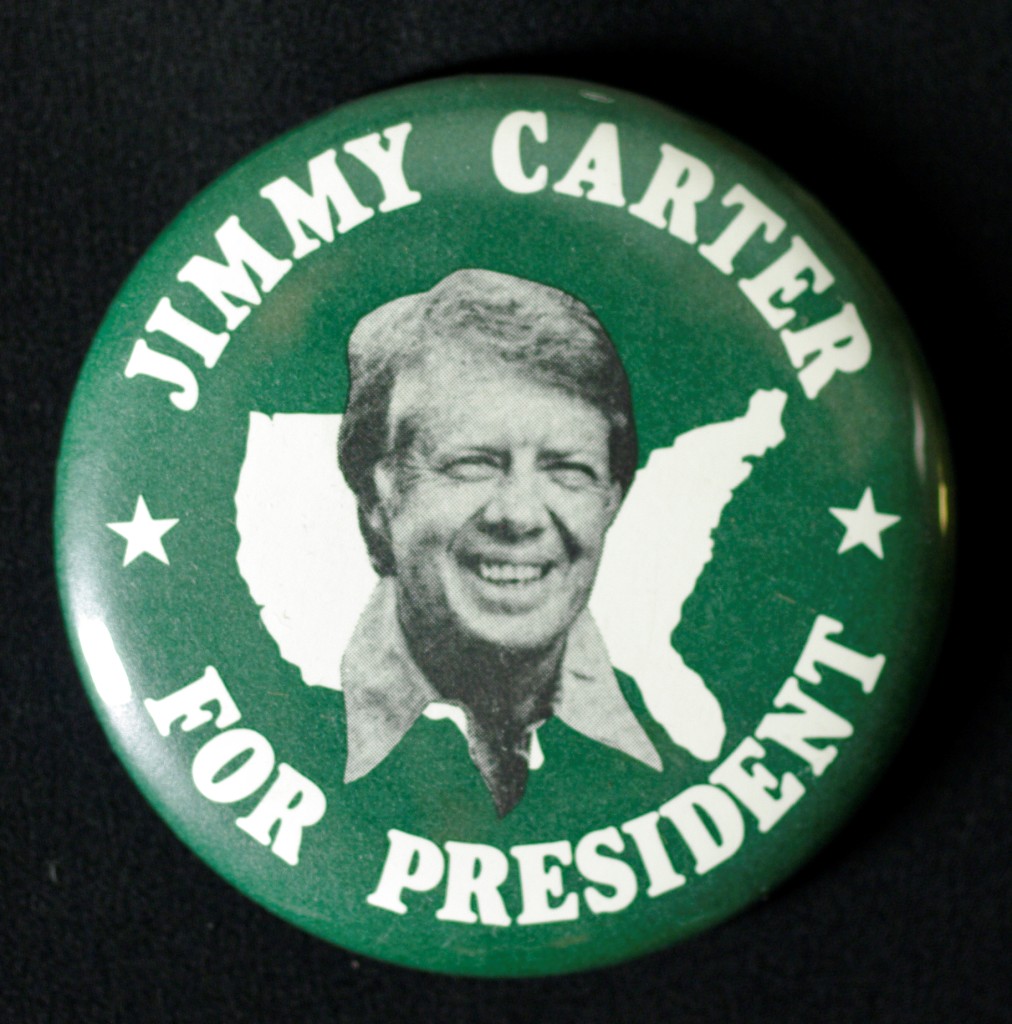
On Sept. 17, 1976, the NEA endorsed Jimmy Carter for president – the first presidential endorsement in the organization’s history. With this endorsement, it joined with the other major teachers union, the American Federation of Teachers, to become a dominant force in the Democratic Party. Image from the Schell Collection.
This is the latest post in our series of the center-left roots of school choice.
Much of the opposition to private school choice seems to emanate from the Democratic Party, but this wasn’t always the case. Just look at the party platforms.
From the 1964 to 1984, the Democrat Party formally supported the public funding of students in private schools.
The 1964 platform stated, “New methods of financial aid must be explored, including the channeling of federally collected revenues to all levels of education, and, to the extent permitted by the Constitution, to all schools.” The 1972 platform supported allocating “financial aid by a Constitutional formula to children in non-public schools.” The 1976 platform endorsed “parental freedom in choosing the best education for their children,” and “the equitable participation in federal programs of all low- and moderate-income pupils attending all the nation's schools.”
Thanks to the influence of U.S. Sen. Daniel Patrick Moynihan, a New York Democrat and devout Catholic, the party’s 1980 platform stated “private schools, particularly parochial schools,” are an important part of our country’s educational system. It committed the party to supporting “a constitutionally acceptable method of providing tax aid for the education of all pupils.” In 1984, the platform again endorsed public funding for “private schools, particularly parochial schools.”
Then the shift began. The 1988 platform was silent on the issue, and by 1992 the Democrats had formally reversed position, stating, “We oppose the Bush Administration's efforts to bankrupt the public school system — the bedrock of democracy — through private school vouchers.”
The party’s current position on school choice was formalized in 1996. That year’s platform endorsed the expansion of public school choice, including charter schools. But it also reiterated “we should not take American tax dollars from public schools and give them to private schools.”
The Democratic Party’s shift from supporting to opposing public funding for low-income and working-class students in private schools can be traced back to an event that also helped spur the growth of modern teachers unions: The 1968 teachers strike in New York City.
This strike pitted the low-income black community of Ocean Hill-Brownsville in Brooklyn against the primarily white New York City teachers union. The issue was whether local public schools would be controlled by the Ocean Hill-Brownsville community or by a city-wide bureaucracy. The union vehemently opposed decentralization since its business model was built around a one-size-fits-all collective bargaining agreement with centralized management.
The strike lasted from May to November 1968. Given school districts are usually the largest employer in most communities, union power quickly grew. (more…)
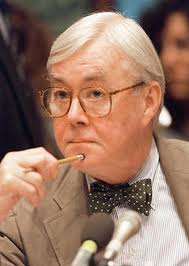
The late Democratic Sen. Daniel Patrick Moynihan once crafted a tuition tax credit measure with Republican Sen. Bob Packwood that garnered 50 co-sponsors, including Sen. George McGovern and 23 other Democrats.
Editor's note: This op-ed appeared over the weekend in the Huffington Post.
At least three more red states -- Texas, North Carolina and Tennessee -- will push for school vouchers in the coming months. But the familiar showdown between Republican lawmakers and teachers' unions masks a more intriguing political development on parental choice: Democrats are increasingly siding with parents.
Count me in the parent camp. I'm a lifelong progressive Democrat, former president of two local teacher unions, and current president of a Florida nonprofit that is the country's largest provider of tax credit scholarships for low-income students to attend qualified private schools. This year the Florida scholarship will serve more than 50,000 economically disadvantaged students who are mostly of color, and it aligns directly with the core Democratic Party values of social justice and equal opportunity.
For a host of complicated reasons, low-income kids are not generally doing well in traditional public schools. In 2011, according to the National Assessment of Educational Progress, the reading gap nationally between low-income and higher-income fourth-graders was 22 percentage points. Florida has seen encouraging progress with its disadvantaged students, yet startling gaps persist. Last year, 45 percent of low-income third graders scored at grade level or above on the Florida reading test, compared to 77 percent of higher-income students.
One way to combat the challenges faced by students in poverty is to give their parents more options. Affluent parents can buy homes in neighborhoods with preferred school zones, navigate the other public school choices, home school or pay for a private school. But low-income parents don't have these opportunities. Expanding choice is a way to help level the playing field.
This expansion is not either/or, and it's not public versus private. Educators understand that different children learn in different ways, and to that end, education is increasingly becoming customized. In Florida, we now have 1.5 million students -- about 43 percent of the total -- enrolled in something other than traditional neighborhood schools. Last year, there were 341,000 who chose through "open enrollment," 227,000 who picked choice and magnet programs, 180,000 in charter schools, 203,000 in career academies and 8,000 in full-time virtual instruction. Vouchers and tax-credit scholarships are not an invasive species on this fast-changing landscape, where lines between public and private are blurring. They're simply two more peas in a public education pod.
That's one reason the politics are changing. (more…)
 Long-time Democratic education activist Jack Jennings, in a recent Huffington Post column, argued that Republican support for private school choice is a somewhat recent (i.e., the last 45 years) phenomenon, driven by a political desire to appeal to segregationists and weaken teacher unions. Jennings writes, “The Republicans' talk about giving parents the right to choose is a politically expedient strategy ... Just beneath the surface of the education rhetoric are political motivations to thwart integration, weaken the Democratic coalition, and cripple the teachers' unions.”
Jennings is being disingenuous by not acknowledging that Democrats have also changed their position on public funding for private school choice over the years. Democrats George McGovern and Hubert Humphrey both ran for president on platforms supporting tuition tax credits for private schools, and Senator Daniel Patrick Moynihan, D-N.Y., was the U.S. Senate’s leading advocate for giving parents public funding to attend private schools. The Democratic Party reversed its support of public funding for private school choice in the late 1970s - as a political payback to the National Education Association for giving Jimmy Carter its first ever presidential endorsement.
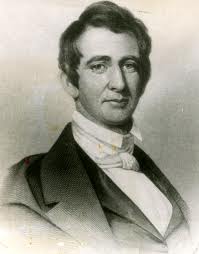
Jennings’ assertion that Republican support for publicly-funded private school choice didn’t exist prior to the 1960s would be news to the founders of the Republican Party, most notably William Henry Seward. Seward (pictured here) helped create the Republican Party and was one of Abraham Lincoln’s primary rivals for the Republican presidential nomination in 1860. After losing, Seward served as Lincoln’s Secretary of State during the Civil War.
Prior to seeking the presidency, Seward was elected governor of New York in 1838 as a member of the Whig Party. According to Doris Kearns Goodwin’s book, Team of Rivals, in his 1839 New Year’s Day inaugural address, Seward attempted to broaden his party’s political base by reaching out to “the Irish and German Catholic immigrants who formed the backbone of the state Democratic Party” (p. 82). As part of what Goodwin describes as Seward’s “progressive policies on education and immigration,” Seward “proposed to reform the school system, where the virulently anti-Catholic curriculum frightened immigrants away, dooming vast numbers to illiteracy, poverty, and vice. To get these children off the streets and provide them with opportunities to advance, Seward hoped to divert some part of the public school funds to support parochial schools where children could receive instruction from members of their own faith” (p. 83).
Seward’s attempts to give Catholic children access to more appropriate learning options drew a sharp rebuke from anti-Catholic Protestants. They accused him of tearing down the wall between church and state. At this time in U.S. history, the word “church” in the phrase separation of church and state meant the Catholic Church. (more…)
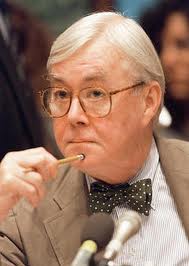 Editor's note: Adam Emerson, who writes the Choice Words blog at the Fordham Institute, wrote a lot about the progressive roots of school choice when he was editor here at redefinED. Here is his latest piece on the subject.
The 2012 Democratic Party platform released this week calls for the expansion of “public school options for low-income youth,” a position that has appeared in varying language in every Democratic platform since 1992. But as Marc Fisher of the Washington Post reported this week, the Democratic platform historically has been “a jagged series of experiments” that once made room for more than just public-school choice.
Today, the national party fervently rejects vouchers for private and parochial schools, but that wasn’t the case thirty years ago. In 1972, Democrats sought to “channel financial aid by a Constitutional formula to children in non-public schools,” a position that reflected not only the influence of the Catholic Church at the time but also the drive, the values and the persistence of the late Daniel Patrick Moynihan.
Moynihan, who also crafted education planks for the Democratic platforms of 1964 and 1976, followed the party’s (and his own) guidance. Soon after his election to the U.S. Senate in 1976, he proposed a tuition tax credit for families with children in private and parochial schools. That bill was co-sponsored by an almost even number of Republicans and Democrats, and, as Moynihan defiantly wrote in Harper’s Magazine at the time, “Why should the anti-Catholicism of the Grant era be given a seat at the Cabinet table of a twentieth-century President.” But that president, Jimmy Carter, had come into office with the support of the National Education Association, which worked with H.E.W. Secretary Joseph A. Califano, Jr. to kill the bill.
Since then, the NEA and the American Federation of Teachers have exerted ever greater influence over the Democratic Party while the Catholic Church has wielded less. Full piece here.
 After going 56 years without attending a national political convention, I’m headed to Charlotte for my second convention in a week. For school choice advocates, the Democratic National Convention will be a somewhat hostile environment, unlike last week’s Republican National Convention in Tampa, where all forms of school choice were enthusiastically embraced.
As we’ve discussed previously on redefinED, the political left, including wide swaths of the Democratic Party, was supportive of giving parents - especially low-income and minority parents - access to more diverse schooling options in the 1960s and throughout most of the 1970s. That support began eroding when the National Education Association gave Jimmy Carter its first-ever presidential endorsement in 1976, and was mostly gone by 1980.
President Clinton’s support of charter schools marked the beginning of a renewed interest in school choice within the party, and pro- and anti-school choice forces have been battling ever since. After two decades of struggle, the momentum today is clearly on the side of the pro school choice Democrats, which has caused anti-choice Dems to become more desperate and strident. American Federation of Teachers’ President Randi Weingarten’s recent attack on the new teacher/parent empowerment movie, Won’t Back Down, was so disingenuous and hyperbolic I was embarrassed for her.
Both Weingarten and NEA President Dennis Van Roekel will be participating in a town hall meeting tomorrow sponsored by Democrats for Education Reform. Four years ago, at the Democratic convention in Denver, DFER burst on the scene at a similar event, and, with close ties to the Obama Administration, immediately became a majority power center within the party. I’m anxious to see what issues predominate tomorrow, and how Weingarten and Van Roekel position themselves.

