The full Florida House is set to vote on a bill that would give private-school, virtual-school and charter-school students more access to extra-curricular activities at nearby public schools.
The bipartisan legislation has passed unanimously through three committees, and it seemed to be cruising toward a final vote without controversy. That changed on Wednesday, as the bill's supporters faced a series of tough questions from Democrats when it was introduced on the House floor.
HB 533 would broaden Florida's so-called "Tebow Law" that allows students in home education and other choice programs to compete on sports teams at nearby public schools. It would clarify that the rule also applies to other extracurricular activities, like drama or debate clubs.
It would also allow students – including those who attend traditional public schools – to participate in those activities at other schools in their district if their zoned school does not offer them.
Bill sponsor Rep. Manny Diaz, R-Hialeah, said the bill would ensure students have access to extracurricular activities as growing numbers of them choose options beyond their zoned schools.
"Students and parents have a lot of choices to make, and those schools are not bound by attendance zones, so why are we being hypocritical, and trying to keep these students out, from participating in athletics and activities?" he asked his colleagues, responding to a litany of questions from Democrats on the House floor.
"This concept bothers me a great deal," said Rep. Elaine Schwartz, D-Hollywood. Rep. Alan Williams, D-Tallahassee, asked if the bill would allow schools to "quote-unquote recruit" students to build powerhouse programs in sports or other competitions.
Rep. Dwight Dudley, D-St. Petersburg, warned about a potential "chaos factor." (more…)
The Florida parent trigger bill cleared its third committee Friday – again along party lines – and is headed to a vote by the full House.
More than 20 people signed up to speak before the House Education Committee on HB 867, with a nearly even split between supporters and opponents. They and lawmakers echoed the same arguments that have circulated since last year, when a similar bill passed the House but failed the Senate on a 20-20 tie.
“When we let these corporate interests take over the schools” it won’t empower parents, said Rep. Mark Danish, D-Tampa, a teacher and teachers union representative. “It’s going to muzzle parents and prevent them from voicing their concerns.”
“Let’s not make this a partisan discussion. Let’s not be concerned of this boogieman of phantom interests,” said Rep. Carlos Trujillo, R-Doral, the bill sponsor. Opposition is coming from “the unions and the establishment that are trying to control the debate and trying to control jobs.” (more…)
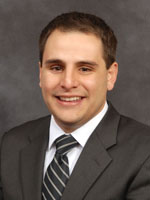
Rep. Trujillo is a co-sponsor of the House parent trigger bill
The parent trigger bill is back in the Florida Legislature this year and, judging by the spirited 8-5 party line vote it got in its first committee stop Thursday, perhaps as contentious as ever. But unlike last year, some Florida parents and child advocates not only voiced support, but drove to Tallahassee to tell lawmakers in person.
Former Marion County teacher Karen Francis-Winston trekked 200 miles from Ocala with her daughter to testify in favor of the bill sponsored by Republican Reps. Michael Bileca and Carlos Trujillo.
Pastor Alfred Johnson came from Tampa,where he said he serves a low-income community.
“I don’t understand what’s the matter with empowering parents to make a recommendation,’’ he told the Choice & Innovation Subcommittee. “We’re doing nothing but recognizing they have a voice, a say in the process.’’
House Bill 867, with an identical version filed by Sen. Kelli Stargel, R-Lakeland, allows parents with children in an F-rated school to petition the school district to consider a turnaround plan that could include bringing in a charter school operator. The petition would need signatures from a majority of parents. (more…)
 Editor's note: Another year, another legislative session, another stack of school-choice bills in Florida. Here's a roundup of choice legislation that lawmakers will consider in the annual session that begins today.
Career Academies:
SB 1076 by Sen. John Legg, R-Lutz. Expands the "Career and Professional Education Act (CAPE)," revising requirements for high school graduation and accelerated high school graduation, and allowing students to earn and substitute certain industry certifications for certain course credits. Also requires districts to make digital materials available to students and to use the Postsecondary Industry Certification Funding List in determining annual performance funding distributions to school districts and Florida College System institutions, etc.
Charter Schools:
HB 373 by Rep. Joe Saunders, D-Orlando. Provides that a contract for a charter school employee or service provider may not extend beyond the school’s charter contract, and that the employee or service provider is not entitled to compensation after the school’s closure. (Identical to SB 780 by Sen. Geraldine Thompson, D-Orlando.)
HB 453 by Rep. Victor Torres, D-Orlando. Requires the compensation and salary schedules for charter school employees to be based on school district schedules. (Identical to SB 784- Charter Schools by Sen. Geraldine Thompson, D-Orlando.)
SB 744 by Sen. David Simmons, R-Altamonte Springs. Requires charter school applications to demonstrate the applicant is financially qualified to open and maintain a high-quality charter school, requires the charter to set forth detailed reporting of the financial operations of the school to ensure employees are not paid unreasonable compensation, and requires that the term of the charter must provide for cancellation of the charter if the school becomes insolvent, fails to provide a quality education, or does not comply with applicable law. The bill also clarifies that a charter school system shall be designated a LEA solely for the purpose of receiving federal funds if certain criteria are met.
SB 828 by Sen. Rene Garcia, R-Hialeah. Grants school districts the ad valorem tax exemption given to charter schools, and restricts the use of capital outlay funds for property improvements if the property is exempt from ad valorem taxes. It restricts charter schools or technical career centers having financial problems from certain activities, and grants flexibility to high-performing school choice districts.
HB 1001 by Rep. Karen Castor Dentel, D-Maitland. Prohibits charter schools from requiring, soliciting, or accepting certain student information before student's enrollment or attendance. Also requires charter schools to submit attendance plans to the school district for students enrolled in school; provide funding to the school district in event of student transfers; and report to the school district certain student enrollment and wait-list information.
SB 1092 by Sen. Geraldine Thompson, D-Orlando. Requires charter school to submit attendance information for each student to the school district, and requires the charter school to provide a prorated portion of per-student funding to the school district if a student transfers to another public school in the school district before the last day of the school year.
SB 1164 by Sen. Kelli Stargel, R-Lakeland. Revises the eligibility criteria for extracurricular activities to include students in charter schools, and revises the criteria for bylaws, policies, or guidelines adopted by the Florida High School Athletic Association. (Compare to HB 1279 by Rep. Larry Metz, R-Groveland.) (more…)
Some members of the Florida House Choice & Innovation Subcommittee grew up attending public schools and, later, went to work for them.
Others sent their children to parochial schools and charter schools while at least one representative home-schooled his kids.
In all, 13 members of the new subcommittee said they have had first-hand experience with an array of educational options – perhaps a good sign for a group that will help shape Florida’s growing school choice movement.
During the first official meeting Tuesday in Tallahassee, members introduced themselves and listened as state education leaders explained how school choice works and what options are available.
Here’s what members revealed about their educational background:
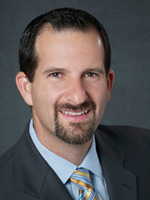
Rep. Michael Bileca

