Some of the seeds of Florida’s virtual education system were sown more than two decades ago, at a Fort Myers elementary school, where Julie Young was running an IBM Writing to Read lab.
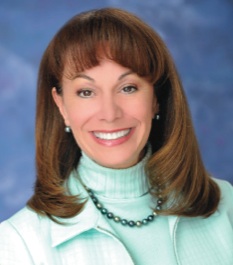
Julie Young
Students in the lab at San Carlos Park Elementary would move from one station to the next, using computers to explore concepts in different ways, tailored to different modes of learning. It was, Young said, "a blended classroom on steroids,” but years before blended learning became the hot topic it is now.
When, a few years later, the Orange County school district tapped Young to help lead the institution that became Florida Virtual School, that background had already given her an idea of what was possible.
“I had the opportunity to see the technology advancing for several years before I started to do this,” she said in an interview. "You could see a bit into the future, and know that it was coming.”
And by now, it clearly has arrived. Young said that is one reason she feels comfortable stepping down in June after 17 years at the helm of an institution that helped pave the way for online education around the country.
What started as a $200,000 grant project has grown into an award-winning juggernaut that annually serves more than 200,000 students. Students in the state are now required to take at least one of their courses online before they graduate. Last year, the full-time virtual education program bid farewell to its first graduating class, of about 275 seniors.
In other words, Florida Virtual School, like virtual education more broadly, has blossomed into maturity.
Many hands led to the creation of FLVS – from educators like Linda Hayes, a Central Florida computer science teacher who helped come up with the original concept, to state education leaders like Frank Brogan and John Winn, who helped design the policies that sustained it.
But it was Young who guided the institution that became a new model for education – one that maximizes technology to customize learning for individual students, that focuses on competency rather than “seat time,” that links funding directly to student success, and that makes more than 1,000 teachers available to students 12 hours a day.
Jeb Bush, who was governor during the school's early growth, recently called Young the "godmother of digital learning." Another early supporter, former Florida House Speaker and now U.S. Rep. Daniel Webster, R-Orlando, recognized her 30 years in public education with a statement for the congressional record.
"It was really a far-sighted option that they put in place. I think Julie had a lot do with making that (possible)," said Tom Vander Ark, an author and venture capitalist who serves with Young on the board of the International Association for K-12 Online Learning. "It's just, from top to bottom, inventing a new form of education," he added. "It's still, 17 years later, the best example in the country." (more…)
From the Tampa Bay Times:

Tony Bennett
Tony Bennett is expected to resign Thursday as Florida education commissioner following two days of raging controversy over school grading in his home state of Indiana.
Bennett is expected to hold a news conference in Tallahassee late Thursday morning to make the announcement.
Bennett, who came to Florida from the Hoosier State in January, has faced mounting calls for his resignation in the wake of revelations, first reported by the Associated Press, that he interceded on behalf of an Indiana charter school run by a prominent Republican Party donor
His resignation will be a major setback for Gov. Rick Scott and state education leaders, who are working to overhaul Florida's system of school accountability and assessment in compliance with the national Common Core standards.
Bennett came to the job in January after losing his re-election bid as Indiana superintendent of schools. He was the third permanent commissioner in Scott' 31-month tenure, following Eric Smith (who Scott pushed out) and Gerard Robinson (who resigned under pressure). Two interim commissioners — John Winn and Pam Stewart -— also have run the department under Scott.
The past two times Florida has searched for a commissioner to run what many consider one of the nation's leading education "reform" and accountability states, the pickings have been slim. Bennett only applied after losing re-election.
 The Florida Board of Education is expected this week to extend its search for a new education commissioner, marking the second time in as many years it has done so amidst mutterings that the initial pool is mediocre.
Through Friday, the board had received 16 applications to replace former Commissioner Gerard Robinson, a former head of the Black Alliance for Educational Options who left at the end of August. The deadline for applications is Thursday, but the board has scheduled an emergency conference call Tuesday to consider a new deadline.
The applications to date do not include any big names in ed reform circles, echoing what happened last year during the initial search for the previous commissioner. At that time, the board was seeking to replace highly regarded former Commissioner Eric J. Smith, who was pushed out by newly elected Gov. Rick Scott.
Robinson, then the ed commissioner in Virginia, applied after the deadline was extended. His brief tenure in Florida was dogged by problems with the state’s testing and school grading system, and by the biggest blowback to the state accountability regimen since the tenure of Gov. Jeb Bush.
Robinson’s replacement will be Florida’s fifth commissioner in eight years. Voters approved a constitutional amendment in 1998 to better insulate the position from shifting political winds, but it hasn’t worked out that way. Smith was hired in 2007 after newly elected Gov. Charlie Crist nudged out former Commissioner John Winn, a Bush ally. Scott is up for re-election in 2014.
Two of the 16 candidates have strong, obvious ties to school choice. (more…)
 As the Florida Board of Education ramped up its search this morning for a new state education commissioner, one of its board members offered a polite suggestion to Gov. Rick Scott and Florida lawmakers: Give the next commish some space.
"I think all of us, the board and the political establishment, needs to understand that we need to give that person a lot of autonomy so that they can function professionally with minimal interference from the political folks," said board member Roberto Martinez of Miami (pictured here). "I say that respectfully to our elected officials."
The board is looking to replace Gerard Robinson, who left last week after little more than a year on the job. The next commissioner will be Florida's fifth in eight years, not counting interim commissioners.
Technically, the state board of education hires the commissioner. Florida voters approved a constitutional amendment in 1998 to make the board responsible for that decision, in an attempt to keep education policy better insulated from shifting political winds. But it hasn't quite worked out that way.
After his election in 2006, former Gov. Charlie Crist nudged out former Education Commissioner John Winn, who was close to former Gov. Jeb Bush. The board replaced Winn with Eric J. Smith. But after Scott was elected in 2010, Smith was out, clearing the path for Robinson. Robinson abruptly announced his resignation July 31, saying he needed to return to his family in Virginia.
The board expects to have a list of candidates on Sept. 27. More from the Tampa Bay Times here.
Florida education officials recently posted a frank internal report about what led to the standardized testing flop that has consumed the ed reform debate for the past two months and sparked the biggest backlash yet against the state’s accountability system. Unfortunately, it received virtually no media coverage (one exception here), which is a bit head-scratching considering both the context and contents.
It essentially says, “We messed up.”
“The decision to make a significant change in scoring FCAT Writing in one year was flawed,” the report says. “Throughout the lifetime of the FCAT, there has never been such a dramatic change in scoring criteria in such a short time.”
Led by former Education Commissioner John Winn (pictured here), the just-the-facts review contrasts sharply with the bomb throwing from critics who fought change every step of the way and now deny progress, particularly for low-income and minority students. It is also, in a way, a good sign for the future – a reflection of leadership that is willing to admit mistakes and find remedies.
The report is humbling. It says the state moved too far, too fast in ramping up scoring criteria. External communication with school districts wasn’t strong enough. Internal communication with new Education Commissioner Gerard Robinson was lacking. Also, department staff didn’t move soon enough to determine potential impact of raising the bar: “Had this been done, perhaps the committee members and the Department would have changed the decision to move forward in less than a year.”
Robinson and other education officials have acknowledged some of these mistakes in general terms. But the report goes into more detail. It references confusion in a key July 5, 2011 memo to superintendents, and a year-long span in which the state Board of Education did not receive briefings about the changes. It points out that budget cuts forced the state to whittle away at a more optimal test design, and says transition at the top may have contributed to the communication problems. (After Gov. Rick Scott forced out former Commissioner Eric J. Smith, Winn stepped in as interim until the board hired Robinson.)
There’s no doubt the mistakes have undermined confidence in the state’s education system. It will require time and care to repair that. But it’s also true that many critics have gone beyond the kind of legitimate beefs soberly recounted in the report to flirt with demagoguery. (more…)

