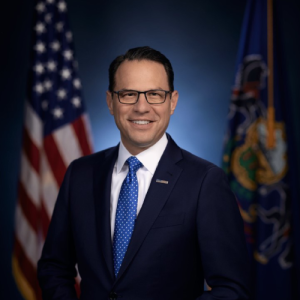
 A push by a Democratic governor and a closely divided General Assembly to expand private school choice in Pennsylvania stalled this week. But some hope remains for bipartisan expansion of educational options.
Gov. Josh Shapiro announced this week he would use his line-item veto to excise funding for a proposed private school scholarship program from the budget approved by lawmakers.
The move was designed to win support of the narrow Democratic majority in the House. It succeeded in convincing them to pass a budget. But it angered Republicans, who control the Senate.
In a statement, Shapiro made clear that approving the scholarship funding would have been pointless, because legislation creating the program had not passed. A House committee voted down a bill creating the Pennsylvania Award for Student Success Scholarship Program in a party-line vote last week.
“[House Majority Leader Matt] Bradford requested a legal memo from the Office of General Counsel, which confirmed that without enabling legislation setting up this program, my Administration legally cannot implement it," Shapiro said.
Spotlight PA reports that this might not be the last of the legislative maneuvering around school choice in the Commonwealth's budget debate. Lawmakers are already scrambling as they enter a new fiscal year without a new spending plan fully finalized. And Republicans still have leverage.
Lawmakers still have to approve code bills — complicated pieces of omnibus budget-enabling legislation that dictate state policy on things like taxing, spending, and education.
And, in a potentially more immediate problem, Pennsylvania’s Constitution requires that the presiding officers of each chamber sign off on all bills before they head to the governor’s desk. This is usually routine. However, the state Senate, now miffed by Shapiro’s reversal over vouchers, isn’t scheduled to be back in Harrisburg until September.
In a statement, Senate GOP leaders Kim Ward (R., Westmoreland) and Joe Pittman (R., Armstrong) said Shapiro had “decided to betray the good faith agreement we reached.”
They added, “the General Appropriation bill is not the final step in the budget process. The Senate will continue to await legislative action by the House on the remaining budgetary components, to see what House Democrats, with the slimmest majority, are able to advance.”
No matter how the immediate drama plays out, Shapiro's statement indicated he will continue to seek support for private school choice among his fellow Democrats, and that he had secured their commitment to revisit the issue in the future. He also noted pointedly that Republicans could play ball on other priorities, like criminal justice reform or raising the minimum wage, that passed the House but died in the Senate.

Pennsylvania Gov. Josh Shapiro—a popular swing-state Democrat—is trying his best to maintain his balance on an education choice tightrope.
On one side of the rope are supporters of a GOP-backed education choice bill that would establish a Lifeline Scholarship Program. The program would set up education savings accounts for families in areas with “low achieving” public schools to spend on private school tuition and fees. The Senate bill would allow the program to begin in the 2023-24 school year. The biggest effect would likely be felt in Philadelphia, where 100 schools meet the bill’s definition of “low achieving.”
On the other side are opponents, led by the state teachers union, who say such a program would drain money from public schools at a time when a judge ruled earlier this year that Pennsylvania’s school funding system was unconstitutional and treats students in lower-income school districts unfairly.
In trying to stay balanced on the rope, Shapiro has backed the Lifeline Scholarship bill, while at the same time saying he would not agree to take money from public schools to pay for it.
“Let me just say, in general, I believe every child of God deserves a shot here in the Commonwealth of Pennsylvania, and one of the best ways we can guarantee their success is making sure every child has a quality education," he told Fox News on June 23. "I've been very clear that I'm open to that concept that you described a moment ago, but I've also made crystal clear that I won't take a dollar out of our public schools in order to achieve that.”
In an era where education choice support comes more from the Republican ranks, the fact that Shapiro is a Democrat stands out.
He’s taken political heat from the Pennsylvania State Education Association and the Philadelphia Federation of Teachers, groups that endorsed him during the 2022 election.
However, Shapiro recently received encouragement from former U.S. Sen. Joe Lieberman of Connecticut, who served as an independent but caucused with the Democrats and who has been an education choice champion. Lieberman serves on the board of the American Federation for Children. He called Shapiro’s move “gutsy.”
Pennsylvania Gov. Josh Shapiro
“I'd say to Governor Shapiro, he's doing something absolutely right, consistent with the traditionally Democratic (capital-D) values, and small-D democratic values, and he should stay the course because I think it is what the public wants,” Lieberman told Commonwealth Foundation fellow Guy Ciarrocchi on Dave Hardy's "School Choice Report" podcast.
If the surveys are any indication, Liberman’s assertion is correct.
A survey released in January by National School Choice Awareness Foundation, showed half of the 3,820 parents of school-aged children polled wanted more options for their children’s education, and most parents wanted more information about school choice options. That included a majority of Black parents, part of the group that historically has tended to vote Democratic. According to the survey, 64.7 percent of parents, including 71.2 percent of Black parents and 75.7 percent of Hispanic parents said they wish they had more information about the schooling options available for their children.
An EdChoice survey of 1,300 parents of Black school-aged children showed strong support for parents’ ability to choose the best educational fit for their children.
The survey provided a basic explanation of various choice options. Results showed 79 percent of respondents supporting traditional choice scholarships, 74 percent supporting charter schools and 78 percent supporting open enrollment. The survey results also showed that 78 percent support education savings accounts.
Neal McCluskey, the director of the Cato Institute’s Center for Educational Freedom, said today's political climate has influenced African American families to take charge of their children's education.
“There's been this move for school choice for decades," said McCluskey. "They as a group tend to be likely to fare or to benefit, benefit from it more than other groups. But there's also something that we've seen in the last few years that's really come to a head which is sort of a feeling that public schools don't serve African American families well when it comes to teaching things that are specific to African American children.”
Pennsylvania's proposed scholarship program may be funded in the state budget, which must be approved by tonight, or it may be funded separately.
Regardless of the funding, when it comes to education choice, it appears Shapiro, who voiced support for the idea during his campaign, and handily defeated his GOP opponent, is listening as he continues his highwire balancing act.
So far, it appears to be paying off. A recent Quinnipiac University survey found 57 percent of Pennsylvania voters approve of Shapiro's job performance. He received significantly better marks from voters than his state's two U.S. senators or President Joe Biden.

