 Editor’s note: This commentary from Juan Martinez, supervisor for The LIBRE Initiative-Florida, a group that advances economic empowerment in the Hispanic community, first appeared on orlandosentinel.com.
Anyone who spends much time with children knows how different and unique every child is from another. As anyone with brothers or sisters can attest, within a single family there is often great diversity between siblings, and even twins! It makes sense, then, that children have different needs and possibilities for their futures.
Florida is leading the way in transforming educational opportunities for all learners — and now it has the chance to keep the momentum going.
The recently introduced HB1 will expand the ability for parents to make personalized decisions for their children’s education by establishing educational savings accounts that would allow families to utilize their child’s share of public schooling funds to pay for customized education options.
Rather than being limited by what school district one lives in, families would be able to use these funds for a variety of options that allow them to customize their children’s education in ways that best suit their unique gifts, talents, and needs.
These options include everything from paying for private school, paying for homeschool resources, and even covering the cost of Advanced Placement tests.
This expansion of educational choice is more important than ever in the wake of the disruption caused by COVID-19, and especially for the Hispanic community, where declines in educational attainment were worse than average.
The one-size-fits-all approach is obviously failing the Hispanic community, which in 10 years has grown almost 5% to reach 28.4% of the traditional public-school population. Given this growth and the failure of traditional public schools to address their needs, it is little wonder that nearly 56% of Hispanic parents have considered alternative educational options and overwhelmingly support school choice.
Critics of ESAs might argue that this program will defund public schools and leave them unable to teach the students that remain. However, such concerns are without merit.
For one thing, the purpose of state education policy is to best educate students, not to maintain a status quo educational system that’s outdated and doesn’t serve learners. The world has changed from when mass schooling was first instituted, and it continues to change to this day. Public education must continue to evolve along with it.
Funding students, rather than a one size fits all system, will allow for the children of Florida to get an education that will best prepare them for their own unique future.
Additionally, the students who remain in public schools will continue to receive just as much funding as before. The ESAs established by HB1 will ensure every child is entitled to their share of education funding.
At the end of the day, the reality is that the traditional model has failed to meet the needs of so many students, especially Hispanic students.
When we go to the grocery store, we have a vast amount of choice in everything from the types of bread we eat to the shampoo we wash our hair with. Yet, for decades Floridians have been limited to one single public school based on their address, unless they had the extra money for a private school.
ESAs will not only allow families with less means to attend private schools, but to build an educational experience based on their individual children’s own needs and talents. Being one of the first states in the country to establish universal ESAs will help to ensure that Florida remains at the forefront of educational innovation that keeps our students at the cutting edge of learning.
Passing HB1 will expand educational choice for Floridian families, establish the state as a leader in educational innovation, and ensure that Hispanic children have access to the resources that will best ensure their future flourishing.
Let’s support our lawmakers in seeing this bill pass this year.
 Editor’s note: This commentary from Daniel Garza, president of The LIBRE Initiative, appeared last week on RealClear Education. It provides an overview of how the organization is working in several states to build support for providing parents and educators with new educational options.
Each December we spend a lot of time thinking about gifts. We reflect on those we care most about and try to figure out what they would like, or what will make their lives better. With the holiday season now behind us, it’s a good time to remember that one of the most important gifts we can offer our young people is a chance at a better education.
When we think about how best to ensure that every child is given the educational foundation they need to thrive, we must remember that every child is unique. Children have different skills, different interests, and different learning styles. Our educational system, on the other hand, tries to teach them all in the same setting, with the same approach and curriculum, expecting them all to succeed – and knowing that too many won’t.
That’s a mistake – one we must address with innovation that makes school more flexible. This effort has gained steam in the wake of a pandemic that clearly illustrated the problem of a system built entirely on in-person classroom instruction. Some states have already adopted reforms, and more will consider them in the year ahead.
The team at The LIBRE Initiative – a nonprofit dedicated to helping the Hispanic community – is working in a number of states to build support for providing parents and educators with new educational options.
To continue reading, click here.
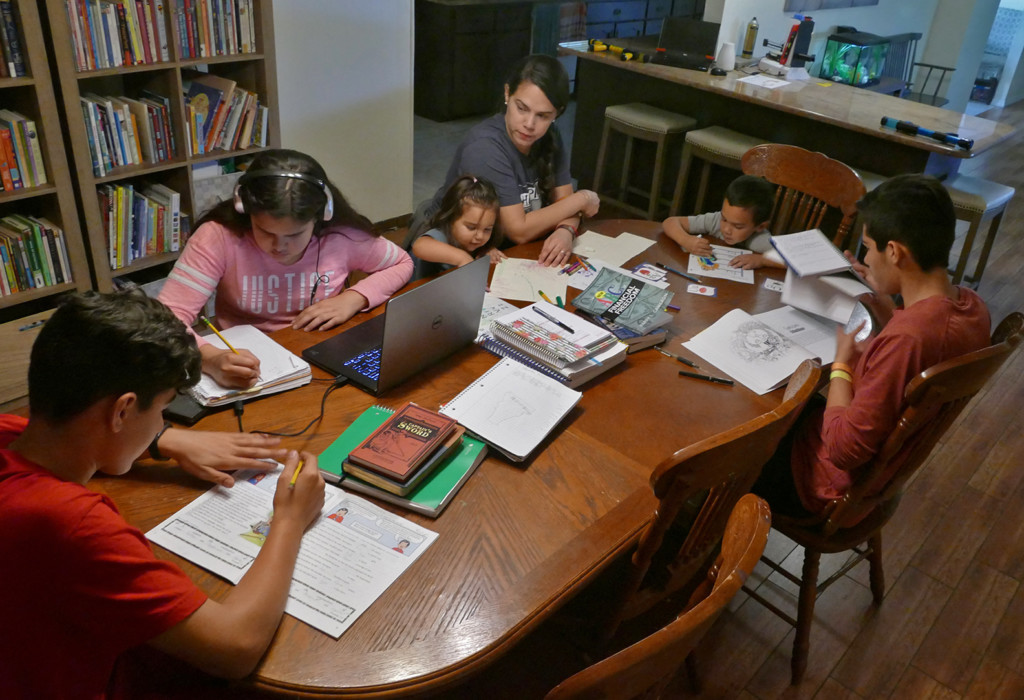
Convinced she could provide her children with all their educational needs, Evelyn Reyes of New Port Richey, Florida, turned to homeschooling eight years ago and realized she could combine education time with family time. Many states allow families to utilize education savings accounts to assist them with homeschool purchases such as curriculum and textbooks. PHOTO: Lance Rothstein
Editor’s note: With this commentary, reimaginED is pleased to introduce our readers to our newest guest blogger, Daniel Martinez, a coalitions director for The LIBRE Initiative.
Every family knows that for their children to succeed, nothing is more important than a good education. That’s certainly true of Florida’s Hispanic community, where parents work hard and sacrifice to ensure their children have the best environment in which to learn and thrive. As families across the state send their children back to classrooms – perhaps for the first time in more than a year – it’s worth considering what steps we can take to ensure all students learn and prosper.
What’s important to remember is that every child is different, and our system must recognize that. Kids learn at different paces and in different ways, and each is blessed with a unique mix of skills and interests. If the system assigns each one the same education in the same setting and with the same set of tools, there will be a broad mix of results. We need to take a different approach: one that allows families to customize the educational experience of each child.
We know that some kids learn best in a traditional classroom environment. Others excel in out-of-classroom settings, or through hands-on experience, or with a mix of approaches. Instead of focusing on how to standardize our kids’ schooling, we should seek ways to make the system more flexible.
Many families will continue to choose the traditional public school model. But kids will do better if families are able to supplement that experience with options such as online learning, tutoring, coursework at another public school, and outside lab work. For still others, the best setting may be a private or charter school.
States should look to reform the system to help families ensure that students get access to an educational environment that works for them. One way to do that is through universal educational savings accounts. These accounts permit families to use the education funding that the state has allocated for their children for any approved educational expenses.
Here in Florida, through the dedicated work of education reformers, lawmakers have created ESAs and made them available to a limited range of families who meet certain criteria. That’s a positive step, but it does not go far enough. Our state should join others that have recognized the importance of making our system more nimble.
That’s particularly true in the era of coronavirus, when it’s impossible to predict if in-person learning will continue full time, or if students may at some point be forced into remote learning. In circumstances like that, additional options will become even more valuable.
If our state continues to move toward expanded ESAs and more educational choice, Hispanic families will be among the biggest winners.
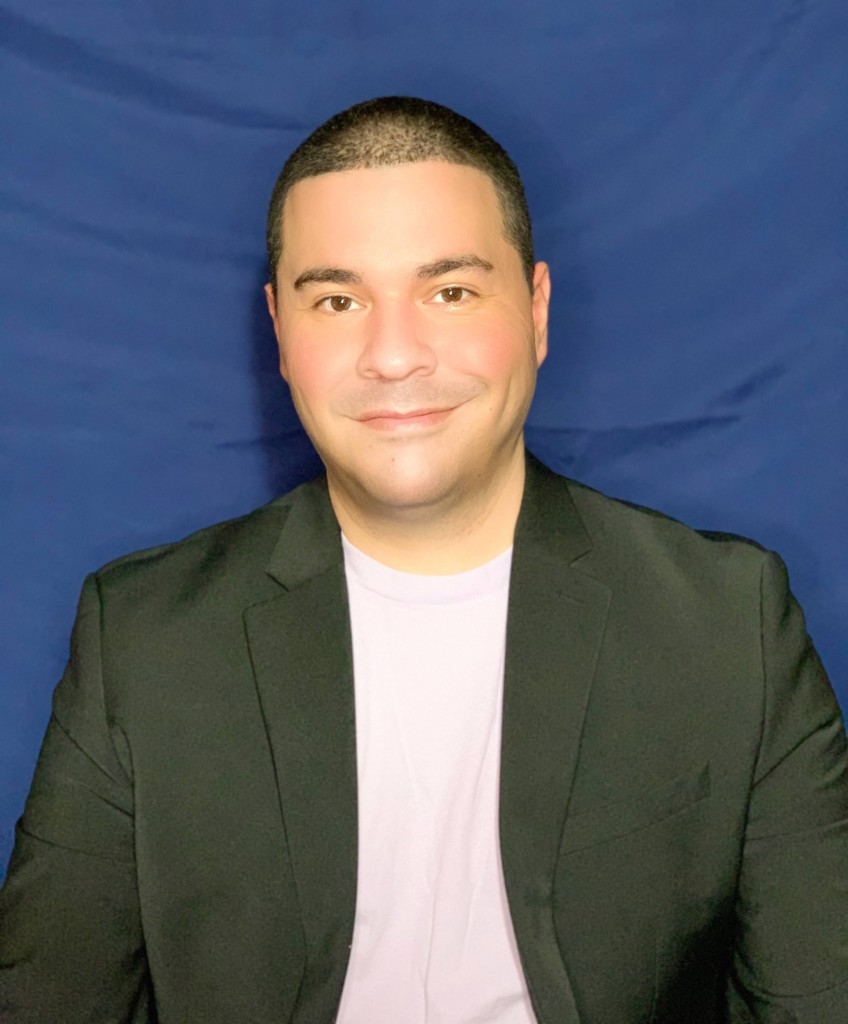
Daniel Martinez, former aide to Sen. Manny Diaz Jr., is Florida coalitions leader for the LIBRE Initiative.
As a kid whose family immigrated to the United States from Cuba in 1992, Daniel Martinez knows what it’s like to suddenly have choices after years of living without them.
He also knows it takes hard work to build the American dream from scratch.
“My mom taught herself cosmetology, and she’s a nail technician, so she would work from home to raise my brother and me,” said Martinez, a longtime legislative aide who recently was tapped to be Florida coalitions director of the LIBRE Initiative. “My mom, I believe, is the American dream.”
The LIBRE Initiative is the Hispanic-facing affiliate of Americans for Prosperity, a national grassroots activist group that espouses small government and greater individual freedom, including education choice. Earlier this year, Americans for Prosperity and LIBRE sponsored a six-figure public relations campaign to help pass the largest expansion of school choice in Florida’s history.
Martinez sees education choice as a key issue for all Floridians, but especially for the Hispanic community, whose members may not always live in the ZIP code of their dream district school.
“Too many people just send their kids there because ‘that’s where we go,’” said Martinez, who graduated from a South Florida district high school in 2000, two years before Florida Gov. Jeb Bush signed landmark legislation that established the Florida Tax Credit Scholarship Program. The program, which provides tax credits to corporate donors, funds scholarships for students who meet state income guidelines. Step Up For Students, which helps manage the scholarship program, hosts this blog.
Martinez sees his new role at LIBRE as a natural next step in his career after spending nine years working as a legislative aide for state Sen. Manny Diaz Jr., R-Hialeah.
While working at Publix, Marinez considered a career in business but discovered his passion for policy and politics while studying at Florida International University. Two of his professors, U.S. Sen. Marco Rubio, and another who worked as a pollster, held political discussions after class. Martinez rarely missed a session and devoured books on the subject.
In 2012, he found his niche as a volunteer for Diaz, who had just won his party’s primary for a House seat.
“That was like getting your master’s and your doctorate,” he said.
Martinez loved interacting with policymakers, lobbyists, parents and educators and signed on as Martinez’s aide after he won the seat. When Diaz won his state Senate seat in 2018, Martinez followed him.
“He’s like family,” he said of the former Senate education committee chairman. He said working with Diaz prepared him well for his role at LIBRE.
“While others might say, ‘Print something,’ or ‘Get me a soda,’ I was taught ‘You need to learn and be able to explain this because there is going to be a time when I can’t,’” he said. “Those are the tools that helped me so much. Leading LIBRE in Florida, my job is to create more leaders. We want more leaders for the next generation.”
For that to happen, he said, education freedom is paramount. Even in Florida, which already has one of the most robust choice programs in the United States, he said, “It’s not about whether we have school choice; it’s about how far do we want to go.”
As Martinez sees it, the goal is universal choice.
“Really, it’s about the erasing of district lines,” he said. “The money should follow the students.”
Martinez also is interested in homeschooling, learning pods and other innovative forms of education that involve unbundled services from various providers and which are made possible for all regardless of income through a choice system that uses flexible spending accounts, also known as education savings accounts or ESAs.
For him, learning doesn’t just happen in the classroom; it continues during tennis practice and music lessons and evening tutoring sessions.
“That to me is the ultimate endgame,” he said.
 Segregation and graduation: The resegregation of Florida schools, reported in a recent study, is likely to have a negative impact on graduation rates in the state. The authors of another study say dropout rates rise a percentage point for black students and 3 percentage points for Hispanics in U.S. school districts that don't require integration of schools. Education Week.
Board term limits: Erika Donalds, a member of the Collier County School Board and the Florida Constitution Revision Commission, is proposing an amendment to the state constitution that would impose term limits on school board members. She suggests no board member be allowed to serve more than eight consecutive years. If it's approved for the ballot by the commission, it would need the support of 60 percent of voters to go into effect. Gradebook.
Libre in Florida: The billionaire Koch brothers are financing a campaign called the Libre Initiative in Florida and several other states to convince Hispanic families of the merits of school choice. Included are bilingual mailings that back the law providing financial incentives for charter schools to move into areas with persistently struggling schools. The president of the Thomas B. Fordham Institute, Mike Petrilli, says the Kochs' selection of school choice as a core issue is "telling us they have good reason to believe this is an issue that’s resonating with Latino families.” Politico.
Board member investigated: An anonymous complaint prompts the Florida Department of Education to order an investigation of a Hillsborough County School Board member's actions. According to a tip, Susan Valdes used her influence to have a district department dissolved so the staff couldn't detect problems with construction work done by her friends and campaign donors. Tampa Bay Times.
Education bill: The Senate is reportedly planning to deliver the education bill to Gov. Rick Scott today. If it does, Scott will have 15 days to decide if he wants to veto the whole thing, parts of it or none of it. Tampa Bay Times. Parents rally for the bill at the offices of the Miami-Dade County School Board. Miami Herald. Hillsborough school officials are campaigning against the education bill on the grounds that it takes too much from traditional public schools to give to charter schools. But they also acknowledge the need for charter schools to help deal with growth. Nine percent of the county's students now attend charters. Tampa Bay Times.
Rocky schools future: Many school officials believe the President Trump and Florida Legislature education budget proposals signal hard times ahead for traditional public schools. The acceleration of school choice and government support for charter schools is shifting dollars away, and most officials believe further erosion of financial support for traditional public schools is inevitable. Broward school officials say they will lose $83 million for capital spending if the state education budget passes, and Palm Beach officials estimate they'll take a $230 million hit over 10 years. "In a year when the state is not in economic crisis, we should not be in this economic crisis," Pasco County superintendent Kurt Browning told his school board. Sun Sentinel. Tampa Bay Times.
Personalized learning: Increasingly, personalized learning is being seen as a way to get better educational outcomes. The concept, which revolves around children learning at their own pace, is getting attention now because it's one of the few educational concepts that draws broad support from all wings in the education reform community. redefinED.
School bus safety: A school district inspector general's investigation of Palm Beach County school buses reveals that district workers unplugged child-safety alarms on 31 buses but claimed they were working. The child alerts are in place to make sure no child is forgotten aboard the bus. The investigation also found that many buses have expired certifications and have cameras that do not work. The district says corrective measures are being taken. Palm Beach Post. WPEC. (more…)

