
This 4,468-square-foot South Tampa home, located in the A-rated Mabry Elementary School zone, is listed for sale at $1.8 million.
When my husband and I bought our first home as newlyweds, we didn’t think to ask what public schools served the area. We were young, childless, and hyper-focused on our journalism careers, so our concerns centered on ease of commuting to work and shopping.
Then there was the fact that we had chosen to work in an industry that pays its workers barely a living wage, so our search was limited to a handful of neighborhoods.
We ended up selling that home at a loss but learned a valuable lesson: Because ZIP codes for the most part dictate where kids go to school, performance and reputation of public schools affect home prices, and those prices determine for the most part who gets access to those schools.
We were still childless but wiser as we house hunted after relocating to Florida. We asked questions about the reputations of the schools where students were zoned in our prospective neighborhood. We conducted online research and gleaned information from co-workers. In the end, an important point that factored into our decision: the development we liked was located near a site earmarked for a new elementary school.
I reflected recently on the difference between what I knew 20 years ago and what I know now when a Step Up For Students colleague shared a quarterly report delivered from a South Tampa real estate firm to homeowners in high-income ZIP codes. The report broke down home prices by school zone. No hidden agenda here, as the information is available to anyone with access to the Multiple Listing Service; providing this information is a common practice of real estate firms to help potential sellers time the market.
The report was eye opening, nevertheless. The eight schools it included were in areas with median home prices ranging from $805,455 to $2.37 million. Based on data collected by the Florida Department of Education, these schools had – surprise! – “A” grades from the state for the past three years.
All the schools have white student populations of 60% or higher. The school with the highest percentage of students classified as “economically disadvantaged,” Wilson Middle School, reported 28%, while the lowest, Mabry Elementary School, reported 8.7% as meeting those criteria.
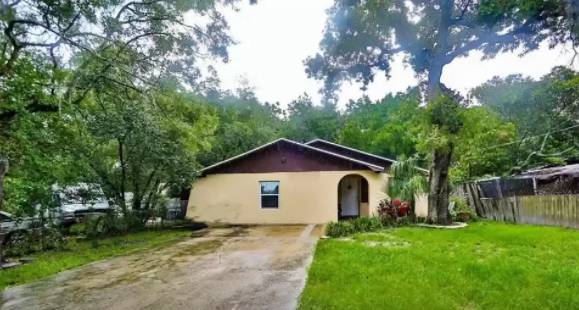
This 1,486-square-foot home, located in the F-rated Kimbrell Elementary School zone, is listed for sale at $230,000.
Compare that with F-rated Kimbrell Elementary School, which is one Hillsborough County’s 39 low-performing schools. Department of Education data show just 10.3% of Kimbrell’s students are white and nearly 95% are classified as economically disadvantaged. More than 6% are homeless. What’s more, the school attracts only 48% of its neighborhood children. The rest attend district-run charter schools, a magnet school, or some other form of education choice.
Jason Bedrick, director of policy for EdChoice, a national nonprofit organization devoted to advocating for education choice, is on the record as saying, “There’s no such thing as a ‘public’ school.” Bedrick wrote about this in an essay for the Cato Institute in which he debunked an oft-cited claim education choice critics use while trying to thwart establishment or expansion of choice programs: Private schools get to pick and choose their students, but public schools must take everyone.
Public schools, he wrote, “are more appropriately termed ‘district schools’ because they serve residents of a particular district, not the public at large. Privately owned shopping malls are more ‘public’ than district schools.”
Bedrick argued this wouldn’t be a problem if every school was of the same high quality, but sadly, that is not the case.
Not all families live in a state with access to education choice. Bedrick and Lindsey Burke, deputy director of the Johns Hopkins Institute for Education Policy, told the story of a Washington, D.C., couple, both law enforcement officers, who lied about where they lived so their three children could attend higher quality district schools.
Though the D.C. Opportunity Scholarship Program, established in 2003, has offered relief to the area’s poorest families, Bedrick and Burke wrote that education savings accounts – accounts parents can use to purchase a wide variety of educational products and services using a portion of the public funding that would have been spent on their child at his or her assigned district school – is a model that allows parents to completely customize their child’s education plan to ensure the best fit.
Eight states, including Florida, have established ESAs, though some, including Florida’s, are available only for students with certain special needs.
Universal ESAs would allow students currently zoned for F-rated Kimbrell Elementary the opportunity to attend a school with a state-designated letter grade closer to those of the south Tampa schools featured in the real estate report, as well as access to tutoring or enrichment programs now available only to families who can afford to pay for them.
Our house is now worth nearly triple what we paid in 1997. The fact that the nearby district schools are consistently A-rated no doubt has contributed to the steady climb in home values. Yet surrounded by A-rated schools, we sent our son to a private kindergarten on a state scholarship, and later to other high-performing district schools outside our zone, because those environments were the best fit for him – and because we could afford transportation.
If only everyone had those options, regardless of their ZIP code.
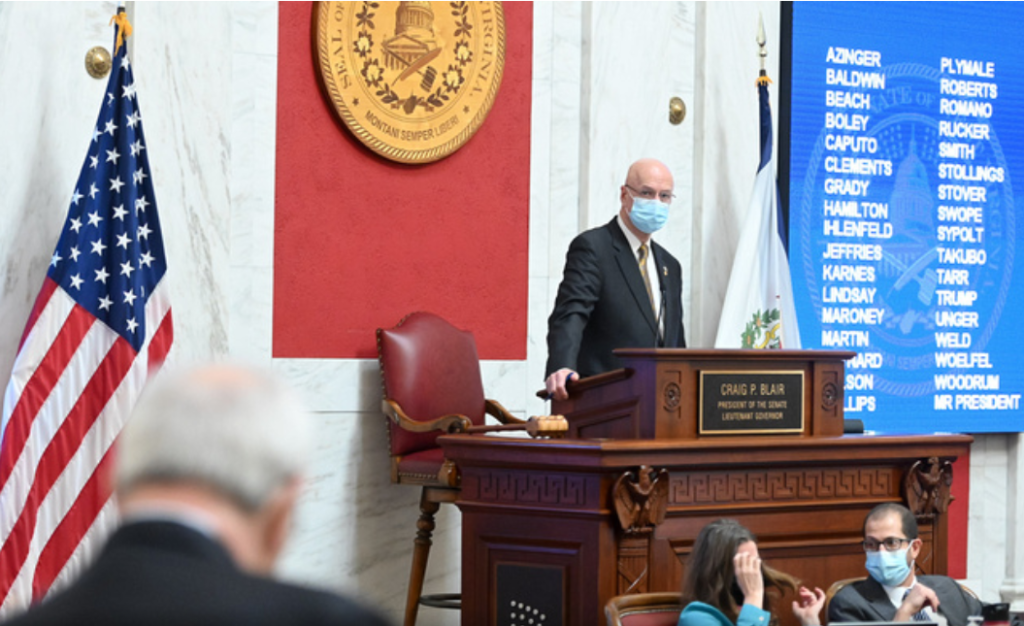
West Virginia is among a cavalcade of states that are creating additional educational opportunities for families this legislative session.
Editor’s note: This commentary from Lindsey Burke, director of the Center for Education Policy at The Heritage Foundation and a redefinED contributor, appears on The Heritage Foundation’s website.
School districts are slowly beginning to reopen in-person instruction after being closed for nearly a year – or, in many places, for over a year. While this is a wonderful development, it will never erase what parents experienced last year: uncertainty, inconsistency, and, in some cases, ineptitude from public schools.
The events of the last year have demonstrated to many families that public schools are not always the reliable institutions many thought they were. It also opened their eyes to just how powerful the teachers unions are, and revealed what many already suspected: that their modus operandiis not to support teachers who want to teach but to score political wins.
Thankfully, in response to these disappointments, multiple state legislatures are undertaking one of the biggest expansions of school choice in history. Here are some states to watch:
West Virginia
On March 29, West Virginia Gov. Jim Justice signed into law the most expansive school choice program in the country, a nearly universal option for education savings accounts.
This is monumental. It is the nation’s first universal education savings account program open to all children in the state. Students who choose to participate in the education savings account option will receive 100% of what the state would have spent on their education in their prior public school—or approximately $4,600 per year—which they can then use to pay for private school tuition, online learning, private tutoring, and a variety of other education services, products, and providers.
To continue reading, click here.
Many conservatives and libertarians question whether the federal government should get involved in school choice.
They might believe in scholarship or voucher programs, but they also believe the federal government shouldn't create them, except in certain narrow cases. Those include programs for students in Washington D.C., where Congress oversees the education system, students living on Indian reservations, and a few others.
A new Heritage Foundation report argues the federal government could fund educational choice for another group of students — those whose parents serve in the military.
The report argues:
The federal government’s exclusive responsibility and mandate to oversee national defense and the military extends to military-related issues that impact education. Whereas education is not an enumerated power of the federal government per the U.S. Constitution, national defense is clearly so, and the education of military-connected children has a special place as a Department of Education (DOE) program. Since it pertains to the U.S. military Impact Aid is one of the few federal programs dealing with education that has constitutional warrant. Just as there is no question, constitutionally speaking, that the federal government has authority over the military, so also does the federal government have authority to implement or modify programs that provide federal funding to military families.
The conservatives at Heritage don't want new federal spending. Their basic idea is straightforward. Rather than send federal "Impact Aid" to school districts in the vicinity of military bases, the federal government could give control of the money directly to families. Parents could place the money in education savings account that could pay for private school tuition, homeschooling expenses, or related uses.
It's an intriguing idea. And it's triggered a debate that gives lie to one of the great false dichotomies in education policy: Funding students, versus funding the system.
'Bonkers?'
Andrew Rotherham of Bellwether Education Partners calls the Heritage idea "bonkers." He and other critics say Impact Aid is supposed to compensate school districts for giant, federally owned military properties that take huge chunks of land off local property tax rolls. Giving the money directly to families would run afoul of that purpose. Hilary Goldmann, executive director of the National Association of Federally Impacted Schools, told the Washington Post Impact Aid is supposed to “serve all the children in the district — not a certain subset.” (more…)

