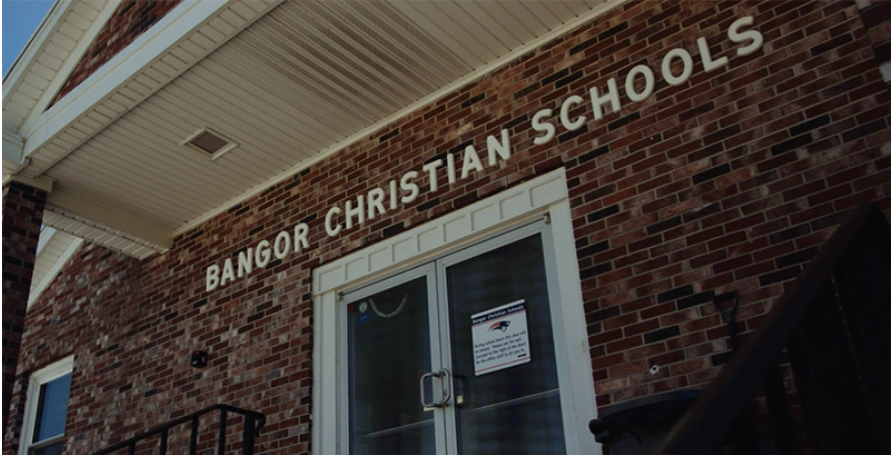
Michael Bindas, senior attorney for the Institute for Justice, said a former Maine attorney general did not pay close attention to the Supreme Court’s commitment to religious liberty in recent years, which “embroiled the state in five lawsuits spanning three decades and that culminated in the Supreme Court’s ruling against the state,” and that the state’s current attorney general “seems to not have learned any lessons from that experience.”
Editor’s note: This article appeared last week on washingtontimes.com.
Religious schools got what they wanted when the Supreme Court allowed them to participate in a state tuition program. But the state attorney general said the ruling will be for naught unless the schools are willing to abide by the same antidiscrimination law as other private schools that participate in the program.
An attorney for the families criticized the “knee-jerk” comments, and the leader of a religious group predicted further litigation.
The Supreme Court ruled that Maine can’t exclude religious schools from a program that offers tuition for private education in towns that don’t have public schools. But religious schools didn’t have long to savor their victory before learning of a new hurdle.
Attorney General Aaron Frey said both Christian schools involved in the lawsuit have policies that discriminate against students and staff on a basis of sexual orientation or gender identity, preventing their participation in the tuition program despite the hard-fought litigation.
“The education provided by the schools at issue here is inimical to a public education. They promote a single religion to the exclusion of all others, refuse to admit gay and transgender children, and openly discriminate in hiring teachers and staff,” he said in a statement.
There was no immediate comment from two schools, Temple Academy in Waterville or Bangor Christian Schools.
To continue reading, click here.
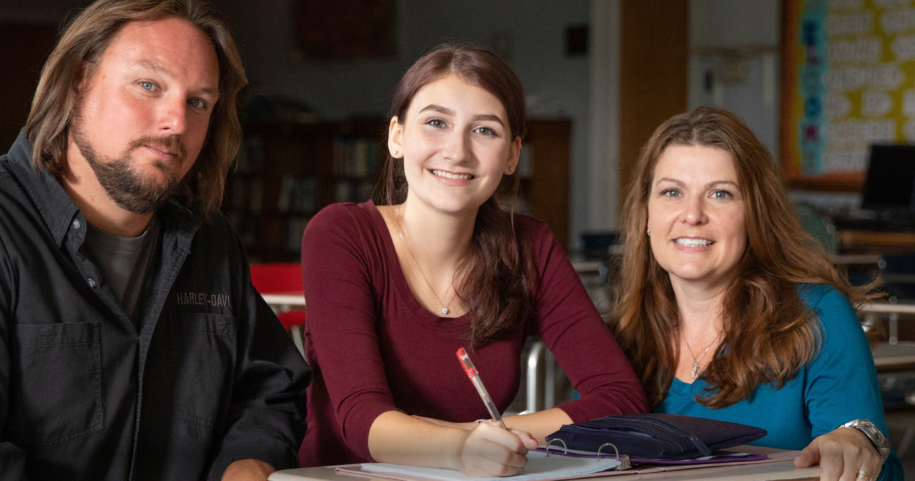
David and Amy Carson of Maine, pictured here with their daughter, Olivia, are challenging a 41-year-old policy that that limits to secular schools a state program offering financial assistance to families seeking education choice for their children.
David and Amy Carson both graduated from Bangor Christian Schools, housed in a tidy, red brick building in Maine. In addition to core academic subjects like reading and math, the school emphasizes a “biblical worldview.” Chapel meets every Thursday, and students are required to take Bible classes.
So, when their daughter, Olivia, was born they knew where they would send her to school.
“She started there in day care and then went to pre-K and straight through,” recalled Carson, who, with her husband, proudly watched Olivia cross the graduation stage with her high school diploma in hand from their alma mater. “Only one other kid had been there as many years.”
Even though their daughter is headed to college, the Carsons hope their involvement in a legal challenge that reaches the U.S. Supreme Court on Thursday will end what they consider discrimination against students who attend religious schools.
The Carsons live in Glenburn, a town with a population of 4,468 located near the center of the state and about 8.5 miles from Bangor. Though a district school offers an education to students in kindergarten through eighth grade, the town lacks a high school. Once students reach that level, they must look for a school in a neighboring town. A state program offers financial assistance to families who live in towns without a high school, even if they choose a private school.
But when Olivia reached ninth grade and became eligible, the Carsons and other families were barred from receiving any assistance. That’s because Maine law limits the program to secular schools. Schools that teach religion, or engage in religious activities such as chapel meetings, can’t be part of the program, called a town tuition program.
“That’s kind of ridiculous,” Carson said, adding that Bangor Christian’s annual tuition, which totals $5,450 per child (with discounts for multiple children) costs less than many of the other schools that are allowed to participate. “They would be paying twice as much as they would pay to send her to Bangor Christian.”
The Carsons, who own a residential construction firm, have always had to pay Olivia’s tuition and fees out of pocket. While they never considered the situation fair, they managed. They were concerned, however, about the kids who disappeared from class because their families could no longer afford tuition.
That’s why, when the Carsons, who were invited three years ago to help challenge the now 41-year-old policy, decided to sign on.
“Families were hesitant to get involved, so David said, ‘Well, we’re doing it,’” Carson said.
For the past three years, Carson v. Makin has moved through the court system, with the U.S. Circuit Court of Appeals in the 1st Circuit siding with the state in October. A three-judge panel said that the program’s limited scope separated it from other programs in which courts ruled that those bans were unconstitutional.
Maine’s ban, they said, was based on the schools’ use of state aid for religious activities, not merely the school’s status. The U.S. Supreme Court settled the status question last year when it ruled in Espinoza v. Montana that a school could not be barred from participating in a state scholarship program simply for being a religious school.
For an analysis of each case, see here and here.
“The central question here remains whether parents will be able to select the best schools to meet their children’s needs—including religious schools that reinforce the values and beliefs so many of these parents seek to instill in their homes,” said Michael Bindas, senior attorney for the Institute for Justice, which is representing the plaintiffs. “The Constitution requires government neutrality toward religion, not hostility. Maine’s exclusion of religious options violates that constitutional command of neutrality.”
The high court is expected to decide in the next couple of weeks whether it will consider the case during its next term.
The Carsons hope for a victory, even though they won’t benefit personally. They want to help others who are sacrificing to send their kids to a school known for its small class sizes, strong academics and a close-knit community.
“We both grew up in families with limited funds,” Carson said. “If (our parents) had had the ability for us to go to school and not have to pay for it, it would have been a huge help to them. We’re just hoping this goes through.”
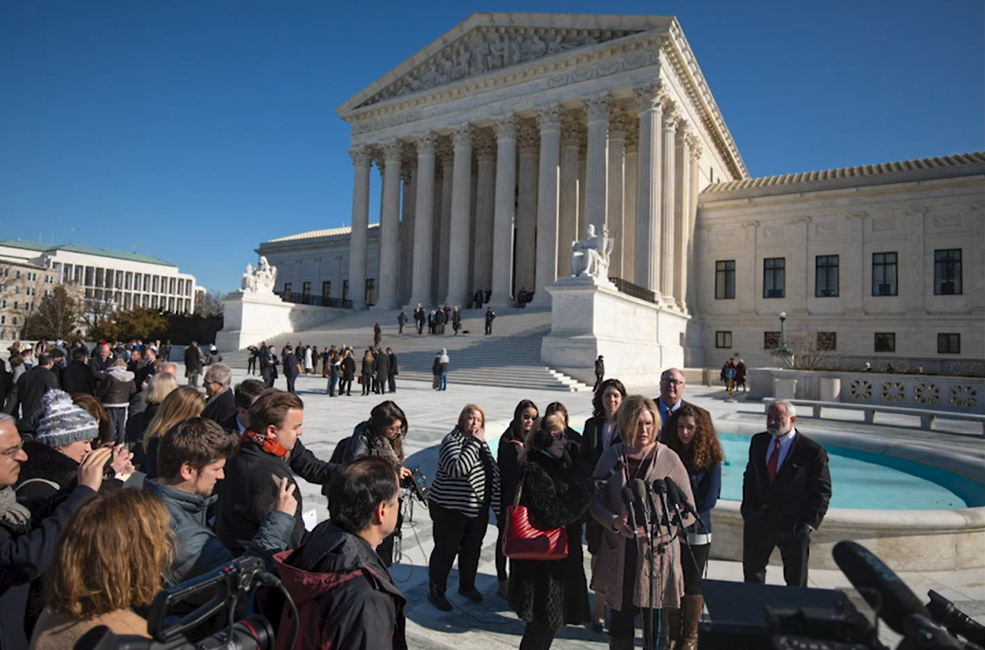
Two states, Maine and Vermont, have devised ways to circumvent the 2020 U.S. Supreme Court ruling in Espinoza vs. Montana.
States can’t discriminate against religious schools because of their religious identity. But can states discriminate if the school teaches religious things?
If you thought this debate was settled by the U.S. Supreme Court last summer, think again.
Two recent circuit court rulings say yes, states can discriminate against religious instruction. Lawyers for the Institute for Justice briefed the U.S. Supreme Court earlier this month and are waiting to hear if the nation’s highest court will resolve this issue once and for all.
The 2020 landmark Supreme Court case Espinoza v. Montana was supposed to settle the debate over “separation of church and state” in publicly funded education programs. That ruling determined that, “A State need not subsidize private education. But once a State decides to do so, it cannot disqualify some private schools solely because they are religious.”
Despite this proclamation, Maine and Vermont have found clever ways to ignore the court ruling.
Maine has been offering publicly funded private education through a town tuition assistance program since 1873. The program is available to students living in towns without an available public school. Students may choose to attend a public school in another town or attend a private school. That private school, however, cannot be religious in nature.
But just a few months after the Espinoza ruling, the 1st U.S. Circuit Court of Appeals upheld the religious exclusion in Maine’s program.
The court got clever with the wording. The judges argued that the Espinoza case prohibited states from discriminating against the schools’ religious status, whereas Maine was not discriminating against religious status but prohibiting religious use.
In other words, Maine’s ban on selecting private religious schools was not over the school’s religious identity, but because the religious school taught religious things.
It may be a distinction without meaning.
Could religious schools in Maine receive publicly funded tuition if they did not provide the publicly funded student religious instruction? That is unclear, as Maine’s prohibition appears to be a blanket ban.
The 2nd U.S. Circuit Court of Appeals rejected a similar argument in a case over Vermont’s tuition program earlier this month.
The Institute for Justice, which represented parents, appealed to the U.S. Supreme Court to take up the Maine case.
“Maine is discriminating against students that pick religious schools and the High Court should grant review and put an end to such exclusions nationwide,” Institute for Justice managing attorney Arif Panju said in a press release. “By singling out religion—and only religion—for exclusion from its tuition assistance program, Maine violates the U.S. Constitution.”
The U.S. Supreme Court justices will consider on June 24 whether to grant review.
You can read the Institute’s Supreme Court brief here and supplemental brief here.
*Updated to clarify the results of the Vermont case decided on June 2nd.

Arizona: A former school teacher criticizes the state superintendent of public instruction for his support of Common Core and school choice (East Valley Tribune). The Sierra Vista Herald editorial board says the state superintendent's support of ESAs hurts public schools. Applications for Empowerment Scholarship Accounts doubles (Heartlander). The Arizona Republic editorial board opposes allowing public funding to go to private schools, especially now that the state support for ESAs exceeds the state support for public schools (note: the editorial board's calculation excludes local support for public schools). A consultant at a scholarship organization is indicted for stealing $529,000 in scholarship money (Arizona Republic).
California: Vanila Singh, a professor and physician at Stanford University and congressional candidate, says school choice is the key to student success (Mercury News). The California Charter Schools Association has sued the West Contra Costa School District for withholding tax revenue intended to fund charter schools (Contra Costa Times). Charter schools struggle with online assessments (FSRN Radio).
D.C.: Two charter schools allegedly under federal investigation for possible discrimination say they have never received a complaint from a student or parent (Washington Post). President Obama sends his daughters to Sidwell Friends, an elite private school that refuses to release information on student course completion and graduation rates (Washington Post).
Florida: The tax-credit scholarship expansion will allow the program to serve higher-income families (Education Week, Tampa Tribune, WJHG TV). More low-income families will benefit from the tax-credit scholarship program if the Governor signs the bill into law (Florida Times-Union). The state passes the nation's second education savings account program (Foundation for Excellence in Education). Daphne Cambell (D-Miami-Dade) says she voted to expand the program because giving poor kids more options is the right thing to do (Miami Herald). The Tampa Tribune editorial board says the scholarship expansion is justified because every student deserves to find a school that works well for them. Brian Tilson, owner of a communications firm in Boca Raton, says the scholarships are unpopular and are hurting public schools (Gainesville Sun). Ron Matus, the editor of redefinED, says more progressive Democrats support parental choice (Gainesville Sun). The scholarship program helps families afford Jewish day schools (Chabad News). State Impact talks with Sen. John Legg about the legislative session including the passage of the scholarship bill. Marc Yacht, a retired physician, say charter schools should be more regulated and held to the same standards and rules as traditional public schools (Sun Sentinel).
Georgia: The Southern Education Foundation helps file a suit to overturn the state's tax-credit scholarship program (Watchdog). A former reporter sends her daughter to a charter school and says each school is so different it is difficult to compare them to each other let alone public schools, and that is a good thing (Atlanta Journal Constitution). (more…)
 Alabama: The Institute for Justice, a national civil rights law firm, says vouchers are constitutional in the state (Al.com).
Alaska: School choice opponents voice their concerns at a public hearing over a constitutional amendment to allow public funding of private schools (Anchorage Daily News, Nonprofit Quarterly). The proposed constitutional change passes the House Education Committee but the amendment faces a tough road ahead (Anchorage Daily News). There are 27 charter schools in the state with no cap on how many schools may operate (Alaska Dispatch).
Arizona: The state has many school choice programs (Camp Verde Bugle). A state court rules the Department of Education cannot recoup $5.9 million in over-payments to charter schools due to a change in teacher performance pay because it didn't notify the schools of the rule change (Arizona Republic). Charter school operators plan to open 25 new charter schools in Phoenix (Arizona Republic).
California: Parent trigger elicits emotions from parents on both sides (Hechinger Report). The superintendent of LA Unified says every "student has the right to a choice of a highly effective school" (Reason Magazine). San Diego school board members are attempting to exclude some charter schools from receiving bond money approved by city voters (Fox 5 San Diego).
D.C.: A new study reveals area charter schools are being shortchanged on student funding compared with district schools (Washington Post).
Florida: School choice is growing by leaps and bounds (Sunshine State News). The Palm Beach Post editorial board says giving students public school choice could reduce the disadvantages faced by low-income students. After 17 years as president and CEO of Florida Virtual School, Julie Young announces her retirement (redefinED, Orlando Business Journal). Gov. Rick Scott proposes allowing charter schools access to construction funds if they serve students within attendance zones of low-performing public schools (Tallahassee Democrat).
Georgia: A lawmaker wishes to expand the tax credit scholarship program with a $100 million cap (GPB News).
Illinois: Nobel charter schools name thee schools after donors who give $1 million or more, but the donors do not decide curriculum or which teachers to hire (Chicago Sun Times).
Indiana: The Lafayette Journal & Courier editorial board argues that private schools should continue to take the state test in order to create a fair comparison with public schools. Since vouchers can be worth no more than 90 percent of per-pupil state funding to local school districts, vouchers save the state money (Indianapolis Daily Star). Five voucher schools in the state say they teach intelligent design or creationism (Journal-Gazette). The Star Press editorial board worries that allowing students to use vouchers without ever attending public school creates two classes of education. (more…)
Gov. LePage
New Hampshire: The ACLU and Americans United for Separation of Church and State file suit against the state's new tax credit scholarship program (New Hampshire Public Radio). More from Associated Press.
Maine: State Education Commissioner Stephen Bowen points to problems in the process after the state charter school commission rejects four of five applicants (Bangor DailyNews). Gov. Paul LePage tees off on the commission and the teachers union after the rejections (Portland Press Herald). Supporters of virtual charter schools are also upset (Portland Press Herald). The teachers union blasts LePage for wanting to lift the cap on charter schools (Portland Press Herald). Public school administrators say charters should have to feel effect of education budget cuts too (Bangor Daily News).
Kansas: Vouchers, tax credit scholarships and an expansion of charter schools are all expected to be part of the legislative discussion this year (Wichita Eagle.)
Kentucky: A bill is filed to allow a limited number of charter schools to open in the state for the first time (Kentucky Public Radio).
California: Parents at Desert Trails Elementary School finally succeed in using the parent trigger law to get a charter school to take over their school (Los Angeles Times). More from Hechinger Report and Education Week.
Georgia: A state representative is planning to file a parent trigger bill for the session that begins today (Associated Press).
Mississippi: Business leaders are backing the legislative push for charter schools (Associated Press). Racial divisions and mistrust are at play in debate over charter schools (Hechinger Report). (more…)
Mississippi: State lawmakers are expected to try again this year to pass charter school legislation, but some suburban Republicans continue to have concerns (Desoto Times Tribune). Lt. Gov. Tate Reeves says there's bipartisan support for charter schools (Associated Press). More from the Memphis Commercial Appeal. At least one lawmaker is talking about the possibility of tax credit scholarships (GulfLive.com)
 Florida: Jonathan Hage, CEO of Charter Schools USA, is named Florida Trend magazine's Floridian of the Year for 2012. A new state lawmaker works in public schools as an assistant principal, but supports publicly funded private school choice options (redefinED).
Arizona: The state's education savings accounts program expands to include students from the lowest-performing public schools (Arizona Republic.)
Oregon: The founders of a charter school chain are accused of racketeering and money laundering and charged with scamming $17 million from the state (The Oregonian).
Washington D.C.: Charter schools in the district expel students at far higher rates than traditional public schools (Washington Post).
Indiana: Lawmakers will look at expanding the state's voucher program during the upcoming legislative session (Associated Press).
Louisiana: The legal challenge against the state's voucher program heads to the state supreme court (New Orleans Times Picayune). (more…)
 Chicago: The teachers union strike is over, but it highlights a growing rift within the Democratic Party over school choice and education reform (Christian Science Monitor). Mayor Rahm Emanuel can now focus on expanding charter schools (Chicago Tribune). (Image from louisville.com)
Florida: The state teachers union sinks $1 million into the campaign over a constitutional amendment that has little to do with education (redefinED). Republican Gov. Rick Scott and a Democratic candidate for Congress make a joint appearance at a new charter school (redefinED). The latest enrollment numbers show school choice in Florida has become mainstream (redefinED). The Volusia school superintendent recommends the school board reject all nine applications for new charter schools next year (Daytona Beach News Journal).
Maine: A task force begins considering legislative proposals for expanding school choice. (Kennebec Journal)
Virginia: A Richmond charter school welcomes a critique from school district officials. (Richmond Times-Dispatch)
Tennessee: State education officials fine the Nashville school district $3.4 million for denying a charter school application. (Education Week)
Michigan: Lawmakers are set to discuss parent trigger legislation. (MLive.com) (more…)
 Florida: State education commissioner Gerard Robinson, a former president of the Black Alliance for Educational Options, resigns amidst tumult over the state's accountability system (Tampa Bay Times). Robinson says the move was for family reasons (Tampa Bay Times). Critics of Florida's education reforms see an opportunity to change direction (News Service of Florida).
Louisiana: There are far more applicants than seats available in Louisiana's new voucher program, leaving thousands of parents and students out of luck. (New Orleans Times-Picayune)
Wisconsin: Private school vouchers are a central issue in a Democratic primary for a state assembly seat in Milwaukee. (Milwaukee Journal Sentinel)
Maine: On the birthday of school choice champion Milton Friedman, choice proponents in Maine promise another legislative push for an expansion of learning options. (Bangor Daily News)
Mississippi: Gov. Phil Bryant pushes for charter schools as part of his education reform package (Jackson Clarion Ledger). Lt. Gov. Tate Reeves also says he'll continue pushing for legislation to boost charter schools despite the failure of a charter school proposal during the last session (Memphis Commercial Appeal).
North Carolina: The state board of education is set to consider allowing 25 new charter schools across 13 counties next year. (Associated Press)
South Carolina: Parents and teachers talk up the positives of a new charter school in the Myrtle Beach area. (Myrtle Beach Online)
Nevada: A state lawmaker proposes a voucher bill that would give parents half of the state's per-student funding to send their children to private schools. (Las Vegas Review Journal)

