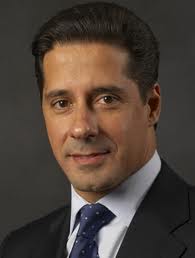
It’s one thing to hear school choice stalwart Jeb Bush or a think tank researcher state the obvious about school choice in Florida – that it’s now a fundamental part of the education landscape. It’s quite another to hear it from the likes of Alberto Carvalho, the well-respected superintendent of the Miami-Dade school district.
A news video shows him saying this to a reporter after a recent education summit (his remarks start at about the 4:30 mark):
Change is going to accelerate. And you need to learn about what the change is, impose your own change just to survive. We are now working in an educational environment that is driven by choice. I believe that is a good thing. We need to actually be engaged in that choice movement. So if you do not ride that wave, you will succumb to it. I choose not to.
It would be noteworthy if any big-district superintendent in Florida – where school choice is both nearly mainstream and perpetually hot button - spoke as refreshingly as Carvalho. But it’s especially significant coming from the Miami-Dade schools chief because 1) no district in Florida has made bigger gains with its students over the past decade, and 2) among the state’s biggest districts, it has among the highest concentrations of enrollment in magnet schools, career academies, charter schools and in private schools via tax credit scholarships.
In other words, the parents in Miami-Dade are seeking out school choice options more than most; the proliferation of options hasn’t hurt student achievement; and the superintendent, rather than feeling besieged, is being proactive.
It would be wrong to suggest Carvalho is alone. Other school leaders in Florida have positively responded to change; sometimes, it even makes headlines. “We have never had to compete before,” Walt Griffin, the new superintendent in Seminole County, Fla., said in a recent story about expanded learning options – public options – in that district. “People who home-school or send their children to private or charter school might not know what we have to offer.”
Without a doubt, there are myriad areas where superintendents and school choice supporters disagree (just like there are plenty of areas where supporters themselves butt heads.) But Carvalho’s comments acknowledge that expanded parental choice is a dynamic that isn’t going away. Indeed, when hundreds of thousands of Florida parents have collectively selected magnet schools, career academies, charter schools, vouchers, virtual schools, etc., how can it? The most pressing debate is how the players involved, including school districts, can continue to expand options in the most efficient and effective ways.
Maybe I'm reading too much into a sound bite, but I think Carvalho’s comments also suggest he doesn’t see the “either/or” that has seeped into so much of the school choice debate. At its core, despite the boilerplate story line, this is really just about giving parents more options.
(Image from asiapac.com.au)
If Florida deserves applause for its recent academic progress, the Miami-Dade school district deserves a standing ovation. The five-time finalist for the prestigious Broad Prize is a standout district in a standout state. Between 2000 and 2010, no big district in Florida made more progress in reading and math, even though Miami-Dade has a greater rate of low-income (70 percent) and minority kids (91 percent) than any of them. Over roughly the same period, no big district in Florida made a bigger jump in graduation rates, going from far below the state average to slightly above it.
Against that hopeful backdrop, U.S. Rep. Frederica Wilson, D-Miami, (pictured here) offered some particularly biting assessments of Florida’s education reforms last week. In an op-ed for the Miami Herald, the former principal and state lawmaker said school grades were “madness” and “ridiculous” and “nothing but hoodwinking parents and the community.” Then she added:
“Every time a young black male commits murder in Miami, or even at times a lesser crime, I check their school records to see if they have a diploma. Most of them are casualties of the FCAT. I call them the FCAT kids.”
It’s fair to say Florida’s public education system has far to go, even after 14 years of heady change, even after being a national leader in academic gains for much of that time. There are still far too many kids not being educated to their potential, in an evolving system that is still searching – and sometimes fumbling - for the best ways to maximize its potential.
It’s also reasonable to debate how much the FCAT and school grades have contributed to the progress. Miami-Dade has had two hard-charging, highly acclaimed superintendents in a row. It probably benefitted more from the class-size reduction amendment than many districts in Florida. Compared to the other big districts, it has among the highest percentages of students enrolled in charter schools and in private schools via tax credit scholarships. I think – and these are just the hunches of a layman -- that those factors and many others made a difference.
But I don’t think it can be credibly denied that the FCAT and school grades were essential parts of the mix. (more…)