This brief essay is the fifth in a series describing forms of legislation available to any state that considers adopting vouchers for private school tuition. The previous essays focused upon rules governing admission to private schools, the dollar amount of the voucher, information required of participating schools, testing and disclosure of scores and related issues. These can be accessed here. My present subject is legislation that affects private school curriculum - with emphasis on rules that affect the teaching of virtue and civic values.
All states - sometimes with federal incentive - require the teaching in their public schools of what we can call “basics.” The education codes differ, but predictably include English, math, computers, and aspects of science that are not controversial. However, this relative uniformity diminishes with respect to value-laden subjects such as marriage, health, civics, history, sex and literature. Our media swarm with conflict over the values curriculum - what is required and what is forbidden - in public schools. And, quite apart from the statutory rules, what actually gets transmitted behind the classroom door of any public school can be a matter of mystery; it is sufficiently unpredictable that I have preferred to call it the “Bingo Curriculum.”
This gamble with the minds of children is, of course, another good reason to pity the fate of families whose relative poverty conscripts them to “free” schools of the state.
Private schools have been less burdened either by law or by complaint of those customers who, after all, have freely chosen them. State law does require such schools to address the secular basics, but generally in the broadest language; and they are left free - at the parent’s direction - to teach their own specific value systems and of course, religion. The private school can and does hire teachers who represent its distinctive vision of the good life. It does this in order to attract customers (parents) who share that view and who expect the school to help them pass it on to their child. The Waldorf, Montessori, Muslim, Catholic, Hebrew, and Lutheran school exist precisely for this purpose. The U.S. Supreme Court long ago recognized this distinctive power of parents - deriving outside secular law - to employ educators who transmit their own vision, which may well include basic ideas that are unavailable to the state.
But, if the state here lacks power, it does carry two kinds of responsibility. One is to protect the right of the child to a basic education; the other is to protect society from the risk of intellectual corruption that is always present in the adult-child relationship, including that of teacher-student. The state subsidy for the parent’s school choice thus will not be usable at schools that are either dysfunctional as basic educators or that consciously promote contempt for values foundational to civic order. (more…)
Eleven states currently offer tax credits to specified taxpayers who make contributions to tax-exempt non-profit organizations that in turn use those contributions to fund scholarships for qualifying, financially-needy, elementary and/or secondary school students attending private schools. This fairly recent development is currently empowering perhaps 150,000 lower-income families, who generally are unable to afford private schools, to make this sort of school choice for their children. To be clear, these plans provide benefits for taxpayers who make contributions that help other people’s children attend private schools.
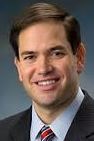
Sen. Rubio
Sen. Marco Rubio, R-Fla., has just introduced a bill that would expand this tax credit scholarship initiative nationwide. To understand the good (and dubious) features of Senator Rubio’s proposal, it is important to appreciate the state law background against which it is set.
Florida has the financially largest of these 11 state tax credit programs, with about 50,000 children currently participating. It restricts the scholarships to children from truly low-income households; the child must be eligible for a free- or reduced-price school lunch – currently just over $40,000 a year for a family of four. Other states are more generous, with Oklahoma reaching well into the middle class since there a family of four can still qualify with $120,000 in annual income. Senator Rubio’s plan, while not as tightly restricted as Florida’s, focuses the scholarships on families with income no more than 250 percent of the poverty level, which is a bit over $50,000 today. The main thing to emphasize here is the senator clearly seeks by his bill to empower the least well-off Americans who are currently least able to exercise school choice – a choice that more well-to-do families make by either moving to a better public school district or paying for private schools on their own.
Several state plans give tax credits to both individual and corporate donors (and for corporate donors the plans sometimes allow credits against a variety of state taxes). Senator Rubio’s bill does the same – allowing married couples and single taxpayers both to obtain a federal income tax credit for an annual contribution of up to $4,500, and allowing corporations an annual corporate income tax credit of up to $100,000. Florida by contrast only allows corporate tax credits and Arizona (which was the first state to adopt this program) initially granted only individual tax credits. Senator Rubio’s proposed tax credit limit for couples and individuals is about twice that now allowed in Arizona. Some states have no cap on donations, and indeed in Florida a few very large corporate donors contribute millions each year to the plan.
Senator Rubio’s proposed tax credit is a 100 percent credit, as is true in both Florida and Arizona, for example. This means that for every qualifying dollar contributed, federal income taxes would be reduced by a dollar. This essentially makes contributions costless to the donors. They, in effect, are able to re-direct their tax dollars to this specific cause – helping needy families send their children to private schools. It is worth nothing, however, that some states grant only a partial tax credit, such as the 65 percent credit allowed in Iowa and the 50 percent credit allowed in Indiana. In those latter states, donors must put up some of their own money.
Most states that adopted these plans imposed a maximum overall limit on the amount of tax credits that may be claimed each year in support of the program. These maxima vary enormously and even so are often not reached. Senator Rubio’s plan has no such limit. It probably would be complicated and costly, but clearly not impossible, for the IRS to administer an overall ceiling in a way that allowed would-be donors to know whether their contribution was within the national maximum and hence truly eligible for the credit.
One important difference between many state plans and Senator Rubio’s proposal is there is no limit on the amount of the scholarship that may be awarded. Florida, for example, caps scholarships at $4,335 at present; in Georgia the limit is just over $9,000. Hence, as appears to be the case in states like Iowa and Indiana, it would be legally possible under the senator’s plan for a child to win a full scholarship to a very high cost, elite private school and hence indirectly obtain government financial aid well beyond what is now being spent on public schools. This is perhaps unwise. Note, however, that nothing in Senator Rubio’s bill would require scholarship granting organizations to award full scholarships or high-value scholarships. In many states at present, the average scholarship is less than $2,000 a year. Since it would be rare to find a school with tuition that low, either the families must find some way to come up with the difference, or the schools must use their own financial aid plans to make up some or all of the gap.
The most striking difference between most state plans and Senator Rubio’s is children already enrolled in private schools would be eligible for scholarships. (more…)
Kathy Jamil, the principal of an Islamic school in Buffalo, N.Y., has a suggestion for anyone who balks at the inclusion of Muslim schools in school choice programs.

KathyJamil
Please, come visit.
"This is something that I wish I could just get on a soapbox and just shout at the top of my lungs,” Jamil told redefinED in the podcast attached below. Before passing judgment on Muslim schools, she said, “We hope that those who have fears … would take the opportunity to get to know them."
Anti-Muslim bigotry is a small but steady undercurrent in school choice debates. In the past year alone, it surfaced in Alabama, Tennessee, Kansas and a handful of other states. In the most-publicized example, a state lawmaker in Louisiana said she regretted supporting that state’s new voucher program because it could wind up promoting Islam.
Jamil is chair of the Islamic Schools League of America, an associate of the American Center for School Choice (which co-hosts this blog) and a member of the new national Commission on Faith-based Schools. Given the atmosphere, she believes school choice in America is particularly important for Muslim families.
“You find that Muslim children oftentimes – and their families for that matter – feel intimidated or afraid to openly practice their faith. So we find that some students in the public school setting will not tell their classmates or their friends, or be openly Muslim if you will,” she said. “This is challenging for any child, because now you have to play these two roles. You’ve got this duality going on, where at home or in your faith tradition, community center - wherever it is that you feel safe in terms of practicing your faith - you can act Muslim. But in the public school sector, you’ve got to avoid being Muslim at any level. This duality is very difficult for children. It’s very unhealthy.”
“We need to help children reconcile how they can practice their faith and how they can further solidify their commitment as citizens of America,” Jamil continued. School choice helps them “bridge those two worlds.”
 The belief that a society or a nation can be unified - its barriers of religion, class, and race broken down - by bringing its children together in common schools that express a lowest-common-denominator vision of national life is a persistent theme throughout the 19th and 20th centuries, and has especially been evoked against schools created by immigrant groups to teach their children within their own religious tradition.
Critics like Jeff Spinner-Halev counter that pluralism is a positive social good, and allows individuals freedom to shape their own lives in terms of real choices:
A relentless diversity flattens the pluralism of society. … A pluralistic society is not a place where every institution mirrors the ethnic, racial, and gender composition of society. A pluralistic society has different kinds of groups with different kinds of memberships. … This kind of society will offer its members more choices than one that is diverse “all the way down.” … the irony of a diversity that is taken too far: eventually it makes society more homogeneous rather than heterogeneous. ... A society that has different institutions with different audiences, customers, clienteles, or students will be more pluralistic than a society where all the institutions are composed of the same people.
Advocates for an educational system that encourages non-government schooling argue that freedom in educational provision and the pluralism of the education provided requires the flourishing of alternatives to the schools operated by government, but only if these alternative schools are not compelled – or seduced – into adopting a pédagogie d’état which makes them essentially similar to government schools.
For the sake of freedom of conscience and of expression – itself founded on the principle of tolerance as well as ideological and philosophical principles of non-discrimination – no educational monopoly by the state can be justified within the democratic order. Freedom of conscience and expression are meaningless if children are subjected to mandatory indoctrination in a particular viewpoint selected by the state. (more…)

