 Pre-K access, funding: Florida ranks second in the nation in providing access to pre-kindergarten programs, but just 40th in per-student funding, according to a report from the National Institute for Early Education Research. Florida enrolled about 76 percent of all eligible 4-year-olds, trailing only the District of Columbia, but its per-student funding amount of $2,353 is less than half the national average. Florida also meets just three of the 10 quality measures, the report concludes. Gradebook.
School resegregation: A study by the Civil Rights Project at UCLA contends that the proliferation of school choice programs is contributing to the resegregation of public schools in Florida and the rest of the South. The report says 34.6 percent of Florida's black students and 32.1 percent of Hispanic students attended schools with 90 percent or more minorities in 2014, when the overall student population was 22.3 percent black and 30.9 percent Hispanic. Florida has one of the highest charter school expansion rates, according to the report. Gradebook.
Private school changes: Historically, private schools were often places where white students went to get away from public schools. Increasingly, that is changing, with many private schools now filled with low-income or disabled students who use scholarships from the state to attend. “The historically unfavored are now being favored, are now being accepted,” says Vernard Grant, director of the ACE Student Success Center with the Association of Christian Schools International. redefinED.
Education bill feedback: A slight majority of Floridians is now urging Gov. Rick Scott to sign the education bill. A week ago, about 75 percent of those who had contacted the governor wanted him to veto H.B. 7069. The change of sentiment is widely thought to be attributed to organized campaigns by school choice advocates. Miami Herald. (more…)
Daily recess: Elementary school students in the Orange County School District will be given 20 minutes of recess daily. The school board approved the measure, although it also allows teachers some discretion in how recess is scheduled. Orlando Sentinel.
Early education: Most of Florida's children eligible for the Head Start program aren't enrolled because there isn't enough money to add classrooms, according to a study by the National Institute for Early Education Research. Fixing the problem would cost about $20 billion a year. Orlando Sentinel. Washington Post. The 74.
District rankings: The St. Johns County School District is named tops in the state in an annual survey by Niche.com. The Seminole County School District is second, Okaloosa third, Sarasota fourth and Brevard fifth. Ratings are based on data from the U.S. Department of Education, including test scores, college readiness, graduation rates, SAT/ACT scores and teacher quality. WPLG.
Failing schools: New Miami-Dade County School Board member Steve Gallon is proposing the district focus on improving schools that have received grades of D or F from the state. Florida Bulldog.
SpringBoard survives: The Hillsborough County School District will keep using English and math textbooks from SpringBoard. Teachers and students have complained about effectiveness of the materials, which the district buys from the College Board. Replacing the textbooks would have cost almost $12 million, a price the financially strapped district was unwilling to incur. Tampa Bay Times. (more…)
I am more politically incorrect than your average guy, so when I heard President Obama call for universal pre-K for 4-year olds in the State of the Union, I cringed. With all the raucous enthusiasm ringing around this issue since the speech, adapting Warren Buffet’s investment approach to public policy might be wise: when everyone is bold, it’s time to be cautious.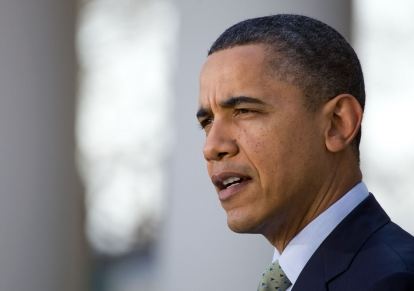
In 2006, when I was with California Parents for Educational Choice, we were part of a coalition of organizations that defeated Rob Reiner’s ballot initiative to bring universal pre-K to the state. It was introduced to widespread public approval, but by Election Day garnered only 39 percent of the vote. The electorate came to understand three major elements they did not like:
* Expanding pre-K to everyone, including middle class and upper income families, is hugely expensive and precious little, if any evidence, supports much educational value added for the middle class and wealthy.
* The initiative vastly expanded the existing public school monopoly, which hardly has a resounding record of educational success, especially with poor and minority students. It also mandated collective bargaining, swelling the ranks and economic power of the California Teachers Association, an organization that systematically stands in the way of innovation and reform.
* The academic outcomes were questionable. A Reason Foundation analysis found from 1965 to 2005, 4-year old participation in preschool programs had grown nationwide from 16 percent to 66 percent, but we had virtually no evidence of increased student learning on the National Assessment of Educational Progress (NAEP) by fourth grade. Oklahoma, with a universal program since 1998, finished dead last on the 2005 NAEP, actually losing four points.
But that was close to seven years ago and admittedly, I haven’t followed the pre-K issue regularly. So I spent the last few days reviewing some studies and data. The key word in the Obama proposal is quality.
We likely can justify a highly targeted effort on kids in failed families or families that simply have no resources - financial, social, emotional, or cultural - to allow their children to mature and develop normally. But when Obama declares, “We know this works,” he overstates and simplifies our experience. (more…)

