 Editor’s note: This commentary from writer, lawyer and legal historian Natalie Wexler appeared recently on forbes.com. You can listen to a podcast Step Up For Students president Doug Tuthill recorded with Wexler here.
Bowing to longstanding pressure, New York City’s outgoing mayor has announced that the city will eliminate its gifted-and-talented classes. But without fundamental changes to curriculum and instruction, that move is unlikely to achieve its goal of making the system more equitable.
For years, Mayor Bill de Blasio has faced calls to dismantle the city’s extensive programs for students who score high on tests intended to measure academic aptitude, beginning at the tender age of 4. Critics have charged that the programs, which enroll disproportionate numbers of white and Asian students, are racially discriminatory.
The criticism is part of a broader push to dismantle selective admissions tests in other parts of the country as well, extending beyond the K-12 system to higher education.
Now, with only months left in his tenure, de Blasio has taken what appears to be bold action: a plan to replace gifted classes with what the New York Times describes as “a program that offers accelerated learning to all students in the later years of elementary school.”
Details are scarce, but the new model, dubbed “Brilliant NYC,” would also provide training for all of the system’s roughly 4,000 kindergarten teachers to deliver accelerated instruction – either to all 65,000 kindergarteners, according to one account, or just to those who “need accelerated learning within their general education classrooms.”
To continue reading, click here.

Editor’s note: This article appeared Saturday on nypost.com.
Research is clear that expanding school choice — empowering parents to choose educational options for their children outside traditional district schools — provides benefits for families, communities and society. But these programs have an ancillary benefit beyond improving schools, one that New York’s political class isn’t in a position to pass up: saving state and local governments money.
With the Empire State in the throes of a budget disaster — a problem that’s sure to get worse if rich Manhattanites continue to leave the state — policymakers should ask themselves what they could do with an extra nest egg to the tune of hundreds of millions of dollars. That type of money is exactly what expanding school choice could provide.
Specifically, a new paper looks at the savings New York could generate by creating an education savings account program, a school-choice mechanism by which families withdraw their children from public schools in exchange for public funds they can then spend on education.
The money — often distributed via debit card — can be applied to a variety of pre-approved pursuits such as private and parochial school tuition, online learning programs, tutoring services or other approved customized learning services and materials, depending on what families decide is best for their child’s needs and goals.
An ESA program would be a win for the parents of New York, who have already signaled their desire for alternative education options for their children beyond what traditional district schools can offer. Consider that enrollment in the city’s charter schools and Jewish schools, for example, is way up from fall 2019 to fall 2020.
To continue reading, click here.
 Center for Reinventing Public Education
The Center for Reinventing Public Education (CRPE) is an education research and policy analysis think tank at the University of Washington, Bothell. The organization’s research finds statistical support for charter schools and for reforming the way public education is operated and funded.
Back in August, CRPE released a working paper on the impact of charter schools on student achievement. Its meta-analysis of high-quality studies found charters tend to have a small but positive impact on student achievement in math, but no additional impact in reading.
 By the end of September, the National Education Policy Center released a review of CRPE’s analysis, calling CRPE’s conclusion “overstated” and “exaggerated” and concluding the report offers “little value for informing policy and practice.” (Readers of this blog may already be familiar with NEPC’s reflexive bias against charter school and school choice studies).
Well, get out your popcorn because CRPE just released a devastating counter-critique. CRPE accuses NEPC of quoting selectively, implying arguments not present, inaccurately presenting the research and several serious technical errors. In total, CRPE counts 26 errors within NEPC’s 9-page analysis.
 Yogi Berra once quipped, “It’s tough to make predictions, especially ones about the future.” While true, it doesn’t stop political pundits from attempting to predict the future based on (sometimes unreliable) exit poll data. Following the drubbing Democrats (and the once powerful education unions) received in the mid-terms, many of those pundits began wondering if education choice would lead minorities, especially African Americans, over to the Republican camp.
Just check out some of the speculation (Exhibit 1, Exhibit 2, and Exhibit 3) about how the school choice issue hurt Democrats and helped Republicans (at least in Florida).
But whether Republicans can use education and school choice to win over black voters isn’t the right question. The better, and more important, question is whether the school choice movement can finally win over more Democrats…
Americans United for Separation of Church and StateAmericans United for Separation of Church and State backs the lawsuit seeking to terminate the Florida tax credit scholarship program for low-income students, and the president of its national board of trustees is listed as a plaintiff. But that’s not why it’s receiving a “Needs Improvement” today. Getting basic facts about the case wrong earns it that distinction.
The biggest error is from AU’s blog, where blogger Rob Boston wrote,
“The plaintiffs and the groups backing them argue that the program shares the same flaws that ultimately condemned the state’s previous voucher system, mainly, the overwhelming majority of private schools participating in the current plan are sectarian.”
 “Separation of church and state” may be AU’s bailiwick, but it clearly overstates the claims here. In 2006, the Florida Supreme Court ruled the Opportunity Scholarship Program unconstitutional, but it dodged the question of whether the program crossed church-state lines. That’s because in 2002, after the Florida suit had been filed, the U.S. Supreme Court ruled that parents can in fact use vouchers to send their children to religious schools.
If scholarships to sectarian private schools was really a main flaw of the Florida program, as AU alleges, we might expect that argument to occupy more than one page of 20 in the plaintiffs’ complaint.
(As always, we note the scholarship program is run by nonprofits like Step Up For Students, which co-hosts this blog.)
 Alabama: The Institute for Justice, a national civil rights law firm, says vouchers are constitutional in the state (Al.com).
Alaska: School choice opponents voice their concerns at a public hearing over a constitutional amendment to allow public funding of private schools (Anchorage Daily News, Nonprofit Quarterly). The proposed constitutional change passes the House Education Committee but the amendment faces a tough road ahead (Anchorage Daily News). There are 27 charter schools in the state with no cap on how many schools may operate (Alaska Dispatch).
Arizona: The state has many school choice programs (Camp Verde Bugle). A state court rules the Department of Education cannot recoup $5.9 million in over-payments to charter schools due to a change in teacher performance pay because it didn't notify the schools of the rule change (Arizona Republic). Charter school operators plan to open 25 new charter schools in Phoenix (Arizona Republic).
California: Parent trigger elicits emotions from parents on both sides (Hechinger Report). The superintendent of LA Unified says every "student has the right to a choice of a highly effective school" (Reason Magazine). San Diego school board members are attempting to exclude some charter schools from receiving bond money approved by city voters (Fox 5 San Diego).
D.C.: A new study reveals area charter schools are being shortchanged on student funding compared with district schools (Washington Post).
Florida: School choice is growing by leaps and bounds (Sunshine State News). The Palm Beach Post editorial board says giving students public school choice could reduce the disadvantages faced by low-income students. After 17 years as president and CEO of Florida Virtual School, Julie Young announces her retirement (redefinED, Orlando Business Journal). Gov. Rick Scott proposes allowing charter schools access to construction funds if they serve students within attendance zones of low-performing public schools (Tallahassee Democrat).
Georgia: A lawmaker wishes to expand the tax credit scholarship program with a $100 million cap (GPB News).
Illinois: Nobel charter schools name thee schools after donors who give $1 million or more, but the donors do not decide curriculum or which teachers to hire (Chicago Sun Times).
Indiana: The Lafayette Journal & Courier editorial board argues that private schools should continue to take the state test in order to create a fair comparison with public schools. Since vouchers can be worth no more than 90 percent of per-pupil state funding to local school districts, vouchers save the state money (Indianapolis Daily Star). Five voucher schools in the state say they teach intelligent design or creationism (Journal-Gazette). The Star Press editorial board worries that allowing students to use vouchers without ever attending public school creates two classes of education. (more…)
 Alabama: Applications for the state's new tax credit scholarship program are now open (Alabama Opportunity Scholarship Fund, WTVY)
Arizona: Three charter schools will be shut down for poor performance (Arizona Business Journal).
California: The L.A. metro area has the largest number of students attending charter schools in the nation (LA School Report). Charter school growth booms in L.A. and San Diego (San Diego Union Tribune).
Georgia: NPR asks "what is school choice?" (WABE). Hall County ranks No. 1 in the nation for charter school enrollment growth (Access North Georgia). Charter school enrollment grows in the state as more schools request permission to convert to charters (Atlanta Journal Constitution).
Florida: If Catholic schools were a district, they'd be the 9th largest in the state (redefinED). 80,000 students attend charter schools in Miami-Dade, making it the 6th largest (numerically) metro charter area in the nation (Miami Herald). A virtual charter school is approved to set up shop in Pinellas County (Tampa Bay Tribune). Across the bay in Hillsborough, a school board votes down a charter school request by MacDill Air Force Base (redefinED). The number of students using "opportunity scholarships" to leave poor-performing schools doubles in Duval County (Florida Times Union). Florida Virtual School offers students flexibility (Townhall.com).
Indiana: Gov. Mike Pence wants vouchers for pre-k students (Indianapolis Star, Greenfield Reporter). Pence thinks charter school networks should be allowed to operate more like school districts (Courier-Journal). Public school districts will have to hold lotteries for public school choice if demand exceeds supply (Education Week). Gary ranks 5th in the nation for charter school enrollment (Post Tribune).
Louisiana: The Louisiana Association of Business and Industry is the most influential organization on education reform, according to a Brookings Institute study (Times Picayune). New Orleans has the largest percentage of students attending charter schools of any city in the nation...for 8 years in a row (Times Picayune). (more…)
Alabama: The Alabama Education Association sued to stop the state's education tax-credit program but a parent steps forward to try and block the suit with the help of the Institute for Justice (Associated Press).
Arizona: The Friedman Foundation for Educational Choice surveys parents using education savings accounts and finds they're happy with the program (Friedman Foundation).
Colorado: Two internet radio talk show hosts speak in Douglas County against school vouchers and "corporate" education reform (Lone Tree News).
D.C.: The government shutdown threatens the funding of the District's public school system including charter schools (Washington Times).
Florida: Tampa Bay area private schools are seeing enrollment growth thanks to a rebounding economy and school choice (Tampa Bay Times). GEICO donates $2 million to Step Up For Students, the non-profit that operates Florida's education tax-credit scholarship program for low-income students (PR Web). The McKay scholarship program serves 27,000 special needs students in Florida (Tallahassee.com). A group is suing the state to get more money for public schools, saying it is unfair to devote resources to charter and virtual schools (Miami Herald). Florida Virtual School wins the first round of court battles against K12 Inc. over trademark violations (EdWeek).
Georgia: Atlanta area KIPP charter schools received a group charter allowing them to pool resources (Atlanta Journal-Constitution).
Indiana: The state could be the No. 1 state for school vouchers if the growth continues (Indianapolis Star). Gov. Mike Pence talks education reform and school choice at the Education Nation summit (WNDU.com). A state report says voucher schools outperform the public schools but it is still unclear if the voucher schools are creating a bigger impact per student (Associated Press).
Iowa: A new survey by the Friedman Foundation shows a majority of parents in Iowa support having a school voucher program (Quad City Times, Waterloo Cedar Falls Courier). One local newspaper columnist calls school choice "insidiously popular" (Daily Iowan).
Louisiana: The state's voucher program actually promotes desegregation (National Review). A Ruston area private school that was kicked off the voucher program sues, claiming discrimination (The Advocate). Parents in Lafayette protest two charter school operators seeking authorizing in the parish (KATC.com). (more…)
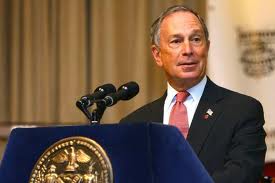 New York: For the third year in a row, New York City charter schools outperform traditional public schools, drawing praise from Mayor Michael Bloomberg, pictured here (New York Times). More from the New York Daily News.
New Jersey: The state teachers union fights new charters even as it attempts to unionize charter school teachers (NJ Spotlight). State education officials approve nine new charters, but reject 10 and postpone 13 (NJSpotlight), including a full-time virtual charter. (NJ.com)
Florida: State education officials reject appeals from three virtual charter schools seeking to open in the Miami-Dade school district. (Miami Herald) Education Commissioner Gerard Robinson defends charter schools at a town hall meeting (South Florida Sun-Sentinel). In a key Democratic primary in South Florida, state senate candidates differ over support for vouchers and tax credit scholarships. (Palm Beach Post)
Louisiana: Students and schools in the state's new voucher program are not likely to face the same regulatory accountability measures as public schools (Baton Rouge Advocate). A nonpartisan watchdog group recommends state education officials seek legislative guidance as they craft accountability rules (Associated Press). The state teachers union pans the academic results of the state's first all-grades, on-line charter school, but the school fires back with accusations of cherry picking (Baton Rouge Advocate).
Michigan: Democrats fear vouchers will be part of Gov. Rick Snyder's plans to overhaul school funding (MLive.com).
Washington: Gubernatorial candidates Rob McKenna and Jay Inslee agree on many aspects of education policy, but disagree on charter schools. (Seattle Times)
Elsewhere: Study finds students in K12 Inc. virtual charter schools are lagging behind their peers in traditional public schools. (Washington Post)

