 Cathy Nolan, New York State Assembly
Instead a 75 percent tax credit for donations to fund scholarships for low- to middle-income students, Cathy Nolan, a New York State Assembly Democrat from Queens, proposes a small tax deduction on educational expenses. The value of the tax deduction would worth be around $205, compared to a scholarship worth thousands of dollars, so it couldn't possible help a low-income or working-class child a shot at affording private school tuition.
Another problem is how she spins the counter-proposal.

Assemblywoman Catherine Nolan
“The main difference, I guess we can argue, is that the billionaires don’t get a break,” she told reporters earlier this week, according to Capital New York. Apparently she’s worried the real beneficiaries of the tax credit scholarship program will be the “rich guys.”
In other words, to prevent wealthy people from getting a partial tax credit to fund thousands of scholarships for low- to middle-income students, she’d rather give out a small tax deduction to those who can already afford private school tuition. Who does she think she's fooling?
Gloria Romero Gloria Romero, a former Democratic majority leader of the California Senate, helped pass a bill that required parents to be informed if their child attended a school in the bottom 10 percent of all public schools in California. If they did, the parents could stick around at the school and try to transform it (for example, by converting it to a public charter school) or transfer to a different public school.
The teacher unions and school districts opposed the bill, sued to stop the program, and continue to fight the program to this very day.
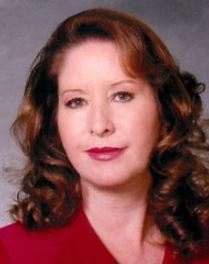
Gloria Romero
According to Romero, the state department of education delayed releasing the list of lowest-performing schools until the last minute. With only a few weeks remaining before the transfer deadline, L.A. Unified finally posted the transfer application, but only in English and only online. Districts also denied parent groups from informing parents of their rights at school events such as PTA meetings.
Kudos to Romero and the California Center for Parent Empowerment for highlighting these obstacles and fighting with and on behalf of parents to knock them down.
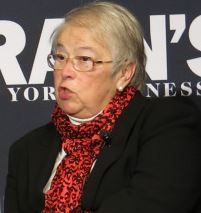 Carmen Farina, the chancellor of New York City Public Schools, recently accused charter schools of pushing out low-performing students just before statewide exams.
Charter schools responded by demanding the chancellor back up her claims with evidence. And the local union president more or less sided with them, saying enrollment data for both charter and district schools should be audited and disclosed. Marcus Winters even took her to task for misreading what little data is available.
Perhaps with some irony, Farina made those remarks while clarifying her position on how charter schools need to be more transparent. Now she has the opportunity to be transparent about her claims.

"Polly" Williams
Happy Birthday! The Milwaukee Parental Choice Program, America’s longest-running private K-12 school voucher program, is now 25 years old.
The program has not gone without controversies and critics but researchers generally find, at worst, no difference with traditional public schools and, at best, small but positive achievement gains, graduation rates and college attendance for participating students. Importantly, parents and students are happier going to the school of their choice rather than one assigned to them by the government. On a sadder note, Annette "Polly" Williams, a leading black Democrat and school choice leader who pioneered the program recently passed away. Her legacy, however, lives on.
Julian Vasquez Heilig, associate professor, University of Texas, AustinI am not sure whether Julian Vasquez Heilig wanted readers to laugh or cry when he published his latest brief on voucher research.
Vasquez Heilig sets up his paper by describing the attitudes, beliefs and motivations of voucher supporters. So who does he cite to provide a fair and accurate description of the beliefs of voucher supporters? None other than the National Education Association, the nation’s single largest voucher opponent (this is the actual citation).
To build a case against vouchers, he tries to show consensus among researchers, yet he provides few academic citations. The sources he does cite are over a decade old or inexplicably limited in scope. He even allows a blogger at an advocacy organization to summarize voucher research … twice. Interestingly, that blogger doesn’t have a single citation to back up her own single sentence summation.
 Padding the support for his own argument is bad enough, but Vasquez Heilig ignores whole swaths of voucher research, claiming much of the research was either not published in peer-reviewed academic journals, or was funded by pro-voucher groups.
Of course, Vasquez Heilig publishes this claim in a non-peer-reviewed outlet in the same week he tweets about his NEA Foundation trip to China. It is also worth noting he’s a research fellow for the union-backed National Education Policy Center and, contrary to his accusations of corporate influence corrupting research, lists himself on his resume as a former Bill and Melinda Gates Foundation Young Researcher.
 Charter schools in Orange County, Fla. are increasing racial and economic segregation, or so say state Rep. Geraldine Thompson and Orange County School Board Chair Bill Sublette.
They make this accusation after finding a handful of charter schools with demographics at odds with the district-wide average. But averages mask extremes on one end or the other, so comparing a single school, or even a handful of schools, to the average of a large district is not only unfair but inappropriate.
According to data from the Florida Department of Education, district schools in Orange County range from 26 percent to 100 percent minority. Charter schools range from 24 percent to 100 percent minority. Not much difference.
The same is true for economic segregation. District schools run from 7 percent free- and reduced-price lunch (FRL) eligible to 100 percent. The charters run from 0 percent to 93 percent.
It is worth noting that district-run schools seem more likely than charters to have extreme concentrations of minority or low-income students. Forty-four district schools in Orange – nearly a quarter of all schools - are 90-percent-plus minority, while 40 schools have a student body that is 100 percent FRL eligible.
Charter schools in Orange are drawing students from local neighborhoods much in the same way as district schools. Rather than pointing fingers at the 19 charters where students voluntarily enroll, Thompson and Sublette might want to scrutinize the 183 district schools where students are zoned.
 Alabama: Judge Gene Reese issues a stay on his own injunction against the Alabama Accountability Act school choice program (AL.com, Montgomery Advertiser, redefinED, American Federation for Children). The decision to lift the injunction takes uncertainty away from low-income families (AL.com). Jeff Reed, public relations director for the Friedman Foundation, says school choice thrives in the state even with the lawsuit (One News Now).
Arizona: Eileen Sigmund, president of the Arizona Charter Schools Association, and Glenn Hamer, the association's vice chairman, say charter schools provide some of the best education in the state and are still looking to improve (Arizona Republic).
Connecticut: Education leaders in Bridgeport drop the idea of suing the state over approving six charter schools in the area after the city attorney says the district has no basis for a lawsuit (Stamford Advocate).
Delaware: Lawmakers debate education savings accounts (JayPGreene.com, Choice Media, Education Week). The News Journal editorial board supports school choice if parents pick charter schools but not if parents want vouchers or education savings accounts to choose private schools.
Florida: The Florida PTA, state teachers union and Florida NAACP urge the governor to veto a school choice bill that includes expansion of tax credit scholarships (the scholarship program is administered by Step Up For Students, which co-hosts this blog). (Tampa Bay Times, Orlando Sentinel).
Idaho: Terry Ryan, president of the Idaho Charter School Association, says over 19,000 children attend charter schools in the state, making support for it a winning proposition for elected Republicans (Idaho Education News). (more…)
 Alabama: Scott Beaulier, chair of the Economics and Finance Division at Troy University, says there is a large body of evidence supporting vouchers but the U.S. Department of Justice and others keep getting in the way (AL.com). The Alabama Education Association spent $7 million to defeat school choice and education reform supporters (Associated Press).
Colorado: A new study on public school transfers shows middle- and upper-class students are more likely to request transfers to another public school than less affluent students (Education Week). ACE Scholarships releases a study on the impact of scholarships on students in the state (Ediswatching.org).
Connecticut: Education leaders in Bridgeport complain that the expansion of charter schools is hurting the district's ability to predict student enrollment and estimate a budget (Connecticut Post).
D.C.: District lawyers claim a charter school funneled millions to a for-profit company to do work that charter school officials were already doing (Washington Post).
Delaware: A new bill will allow the Delaware Board of Education to restrict charter schools to geographic areas and by grade and academic emphasis if the board deems the charters will affect nearby public schools (Delaware Online). Republicans propose a voucher program allowing full scholarships for Free and Reduced Price Lunch students and 25 percent scholarships for students in families earning up to $110,000 annaully (WDDE 99.1 FM).
Florida: Palm Beach County wants a special property tax to fund arts education but the new tax won't benefit the 13,000 students attending charter schools in the county (Sun-Sentinel). McKay Scholarships offer special needs students a way to find a different school that works well for them, but Fund Education Now, a group suing to enforce school uniformity, wants special ed students to have the exact same standards, instructions and method of teacher training at all schools (Sun-Sentinel). The state's graduation rate improves (Education Week, redefinED). (more…)
Alabama: A state judge struck down the tax credit scholarship program on procedural grounds while ignoring the teacher union claims that the program violated separation of church and state (Montgomery Advertiser, Education Week, AL.com, WAFF, Watchdog). Lawyers for the state and parents file a motion to lift the injunction against the program (AL.com). Parents and teachers react to the judge's ruling (WSFA 12). Judge Reese, who declared the tax credit scholarship program unconstitutional, is a Democrat and has thwarted Republicans on education issues in the past (AL.com). Katherine Green Robertson, a senior policy counsel for the Alabama Policy Institute, says the court decision was a political attack on students and school choice (AL.com).
California: Campbell Brown spotlights Vergara v. California, where nine students are suing the state over education policies they argue worsen quality (The Daily Beast).
Colorado: A group opposing education vouchers takes their case to the state Supreme Court (Chalkbeat).
D.C.: A proposed bill will make it easier for children of charter school teachers to enroll where their parents work (Washington Post).
Florida: The first proposed charter school conversion in Broward County awaits approval (Miami Herald). A group amends a 2009 adequacy lawsuit to include McKay Scholarships, tax-credit scholarships and charter schools as culprits for the alleged under-funding of public schools (Orlando Sentinel, redefinED). The Florida League of Women Voters release a report critical of charter schools (Jacksonville Free Press, Orlando Sentinel, Tampa Bay Times). Charter school advocates call the report "flawed" (Palm Beach Post). Henry Fortier, the superintendent of Catholic schools for the Orlando Diocese, says school choice doesn't pit private schools against public schools (Orlando Sentinel). Leaders in Pinellas County react to changes in the law including the expansion of school choice in the state (Tampa Tribune). School choice critics ask the governor to veto the new laws expanding school choice in the state (WJHG).
Illinois: The Chicago Tribune hosts a debate between school choice supporters and opponents (Huffington Post). The senate votes to require charter schools to accept special needs and English language learners (Sun Times).
Indiana: A group opposing vouchers and charter schools previews a documentary to teachers, union members and school administrators (Muncie Free Press). Enrollment at Indiana Cyber School doubles but the school is still in debt (Trib Town).
Kentucky: Jim Waters, president of the Bluegrass Institute, says charter school critics shouldn't focus on administrator salaries when some school districts have more employees making over $100,000 a year than the state capitol (Times-Tribune).
Louisiana: The last five traditional public schools in New Orleans close their doors for good (Washington Post, Joannejacobs.com). Gov. Bobby Jindal roasts President Obama over many issues including parental choice (Times-Picayune). The House votes 73-15 to allow students to transfer out of lower-performing schools (New Orleans Business Journal). Test scores for voucher students improve (Times-Picayune). (more…)
Alabama: Cameron Smith, vice president of the Alabama Policy Institute, shows readers the students who benefit from the Alabama Accountability Act (AL.com).
Arizona: Gil Shapiro, a spokesman for FreeThought Arizona, says parents can't be trusted to home-school or choose a good school for their child (Arizona Daily Star). Linda Thomas, a member of the Oracle School Board, says parents can be trusted to pick a good school (Arizona Daily Star).
California: Larry Aubry at the Los Angeles Sentinel says charter schools are civil rights failures because they are more segregated than traditional public schools. Avery Bissett, a student at Chapman University, says vouchers would provide the state an inexpensive experiment on how to improve public education (Orange County Register).
D.C.: Scott Pearson, director of the D.C. Public Charter Schools Board, says charter schools have helped to improve public school performance (Washington Post).
Georgia: During a debate among Democratic candidates for the open state school chief position, state Rep. Alisha Thomas Morgan said she will "buck the Democratic party for the best interest of children" and supports charter schools and tuition tax-credit scholarships (Atlanta Journal-Constitution).
Florida: Denisha Merriweather, a former tax-credit scholarship student, tells her story (redefinED). Ron Matus, the editor of redefinED, dispels the myths surrounding the tax-credit scholarship program (Pensacola News Journal). Scott Maxwell, a columnist for the Orlando Sentinel, says public schools lose when students are allowed to transfer to private schools. Chris Guerrieri, a middle school teacher in Jacksonville, opposes private school vouchers because students aren't forced to attend private schools (St. Augustine Record). Jac Wilder VerSteeg, a journalist based in Palm Beach County, says parents don't know best when it comes to their own child's education (Sun-Sentinel). The Orlando Sentinel reaches out to readers and finds 51 percent support expanding school vouchers. Two private schools have been barred from receiving McKay vouchers for reporting students that never enrolled (Miami Herald). Virtual learning labs become more popular in Lee County (NBC 2). Education leaders in Miami-Dade approve what may become the state's largest charter school (Miami Herald). (more…)
Arizona: Amy Silverman, a journalist at the Phoenix New Times, says charter schools lead to segregation for special needs students (note: the state has two private school scholarship programs for special needs students).
California: All candidates seeking to fill a vacant school board seat in Los Angeles agree on the value of public charter schools (LA School Report).
Florida: Sherman Dorn, a professor at Arizona State, ponders why there has been no constitutional challenges to the Florida Tax Credit Scholarship Program or the state's other voucher programs. The American Civil Liberties Union is filing a complaint to stop single gender schools (redefinED). State Impact looks at some of the research on single gender schools. U.S. Rep. Dan Webster, R-Orlando, explains why he supports charter schools (Sunshine State News). The Duval County School District may lose up 3 percent of its total enrollment to charter schools over the next decade (Florida Times-Union).
The Legislature sends the tax-credit scholarship expansion bill to Gov. Rick Scot (Heartlander). The teachers union asks the governor to veto it (Orlando Sentinel, Tampa Bay Times). A record-setting 100,000 students have started applications for tax-credit scholarships (redefinED). Chris Guerrieri, a public school teacher and education choice opponent living in Jacksonville, makes many negative claims about parental choice and Step Up for Students (which co-hosts this blog) (Gainesville Sun, Pensacola News-Journal).
Georgia: The Atlantic Public School District is negotiating a compact with local charter schools to encourage collaboration (WABE Public Radio). The number of charter schools that must hold admission lotteries grows as waiting lists increase (The Telegraph).
Louisiana: A bill to allow students in low-performing public schools to transfer to higher-performing schools advances (Associated Press). Traditional public and charter schools in New Orleans look to expand the use of technology in the classroom (Hechinger Report). U.S. Sen. Mary Landrieu, a Democrat, supports charter schools and believes every child should have the right to attend one if they wish (CNN). Two bills that would negatively impact charter schools fail to pass out of committee (The Advertiser). Kenyatta Collins, a high school student attending a charter school in New Orleans, says her school focuses too much on discipline and not enough on academics (Time). (more…)
Arizona: The Tucson Diocese School Board says parents can be trusted to decide on the education for their own children (Arizona Daily Star). Gov. Jan Brewer signs a bill to expedite the approval process for parents seeking Empowerment Scholarship Accounts (Associated Press). The state superintendent of public instruction will increase scholarship amounts to 90 percent of the funding for charter schools after the state legislature declines to clarify the voucher funding limits (Capitol Media Service). The Jewish Tuition Organization raises $2.9 million to fund scholarships for seven Jewish day schools in the state (Jewish News).
Colorado: The Coloradan chronicles the six charter schools of Fort Collins.
Connecticut: Charter schools in the state receive about $3,000 less per pupil (New Haven Register). Education leaders in Bridgeport and Stamford consider taking legal action to stop more charter schools from opening in the cities (Connecticut Post, Associated Press). Education reform groups representing many different interests, including charter schools and school choice, work to shape education policy in the state (Middletown Press News).
Florida: A bill to expand the tax-credit scholarship program and create an education savings accounts program stalls on Thursday (Associated Press, Politifix) but passes out of the Senate and House the next day (Associated Press, redefinED, Tampa Bay Times, WFSU, Florida Current, News Service of Florida, South Florida CBS 6, Miami Herald, Jaypgreene.com). State Sen. Dwight Bullard, D-Miami, an opponent of the scholarship expansion, accuses Step Up For Students of bribery but refuses to offer proof and apologizes for his comments (Palm Beach Post, Orlando Sentinel). (Step Up administers the program and co-hosts this blog.) Opponents rallied to try and defeat the bill (Orlando Sentinel).
A lot of back-and-forth on whether tax credit scholarships are good for English language learners (Voxxi, Tampa Bay Times). Kate Wallace with the Foundation for Florida's Future says school choice helps students and is only a threat to adults worried about keeping their jobs (Context Florida). Educators in both public and private schools say school choice is beneficial to students (redefinED). Valerie Strauss argues "accountability" means everyone should follow the exact same rules, regulations, curriculum and take the same exact tests (Washington Post). John Romano, a columnist for the Tampa Bay Times, calls lawmakers hypocrites for not requiring private schools to follow the same accountability rules as public schools.
The state legislature cuts charter school capital funding support from $91 million to $75 million (Tampa Bay Tribune, redefinED). Charter schools receive less money than traditional district schools (State Impact). The Florida League of Women Voters discuss its study on charter schools on WJCT radio. A school district explores allowing students access to other public schools through open enrollment (Ocala Star Banner). (more…)
Arizona: A bill to allow children of military service members killed in action to become eligible for Empowerment Scholarship Accounts passes into law (Watchdog). Gov. Jan Brewer vetoes a bill to allow owners of S-Corps to receive individual tax credits for donations to scholarship funding organizations, but signs two bills related to Empowerment Scholarship Accounts (Arizona Republic, Associated Press).
California: Two Democrats battle for leadership of California's K-12 system: one backed by the establishment and the other backed by education reformers (Reuters).
Colorado: The school choice oriented school board in Jefferson County looks to provide more equity for charter school funding (Denver Post). Fewer students get their first choice in Denver's public school choice program (Chalkbeat).
D.C.: The D.C.Public Charter School Board hears proposals for eight new charter schools (Washington Post).
Delaware: A charter school principal says charter schools were meant to help improve the quality of public education but not intended to simply duplicate public schools (The News Journal).
Florida: The senate revives a plan to expand the tax-credit scholarship program, but the senate's version is less ambitious than the House version (Education Week, Tampa Bay Times, Florida Current, The Ledger, WFSU, Palm Beach Post, Naples News, Highlands Today, GTN News, St. Augustine Record, redefinED). William Mattox, an education researcher at the James Madison Institute, argues that private schools already face greater accountability because parents, and donors, can leave at any time (Daytona Beach News-Journal). A local public school PTA president favors school choice and says the legislature should expand options, not deny them (Tampa Tribune). The Palm Beach Post editorial board opposes expanding tax-credit scholarship eligibility from 230 percent of poverty to 260 percent because that now represents the middle class. The Orlando Sentinel editorial board opposes expanding the tax-credit scholarships without more accountability, which the editorial board defines as taking the exact same test as public school students. The Tampa Bay Times editorial board believes it is hypocritical to require the FCAT of public schools and students but not of private school students on scholarship. A private school principal says she supports school choice in all its forms because schools that work for one child may not work well for another (Context Florida). A tax-credit scholarship mom says she is thankful for a program that helps build a future for her children and others (Daytona Beach News-Journal). (more…)

