
Chavous
Kevin Chavous, a senior advisor to the American Federation for Children, criticizes President Obama in this recent Washington Post op-ed for not supporting the Washington D.C. voucher program and suggests a new approach for Term 2:
I have long been a supporter of the president, and I continue to applaud many of his education initiatives, including his embrace of charter schools. But his administration’s opposition to giving low-income families the full slate of educational options — captured when he zeroed out funding for the program in his budget this year, despite the earlier deal in which he agreed to reauthorizing the program for five years — is unacceptable. ...
These roadblocks are part of a long history of the administration’s resolute opposition to the voucher program, from Education Secretary Arne Duncan rescinding 216 scholarships in 2009 to the department ignoring the positive results of a gold-standard study, conducted by its own Institute of Education Sciences, that found that D.C. voucher students graduate at a rate of 91 percent — more than 20 percentage points higher than those who sought a voucher but either didn’t get one or didn’t enroll in the program after being accepted. Because of the delaying tactics of the department, a credible — and federally mandated — new study of the program cannot be conducted unless the program enrolls hundreds of new students next year. ...
On many occasions during his first term, President Obama demonstrated an ability to embrace education reforms that help kids, and I expect that to continue now that he has won a decisive reelection. What’s different about this one? This is an easy one: All he and his Education Department have to do is get out of the way and let a successful program work. Full op-ed here.
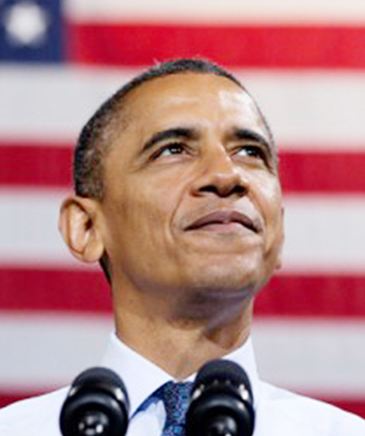 President Obama has often called on us to be true to who we are as a people, as Americans. And in his second term, he has the opportunity to transform the education system back to our core - to where parents are primarily in charge of children’s educations.
We have paid a price for transferring authority and responsibility for educating children from parents to government entities. With mostly though not always good motives (remember Brown v. Board of Education), we allowed the dream of the government-owned and operated common school to live on despite overwhelming evidence that, in reality, it wasn’t working. A child’s educational destiny continues mostly to be a function of his/her zip code and the competence of strangers who sit on local school boards.
For more than three decades, a long, slow correction of this anomaly in American society has been underway. First, intradistrict and interdistrict transfers began to appear that allowed limited parental choice within some parts of the public school system. Then magnet schools surfaced, offering options such as vocational, talented and gifted, and language immersion programs, and responding to more demands. In 1992, charter schools emerged. Today they account for almost 6 percent of all public schools, approaching 6000 total, and the number grows steadily each year because the demand from parents so far is insatiable.
Thanks to my colleague at the American Center for School Choice, Gloria Romero, a new tool has appeared. The parent trigger empowers parents to make changes to their school when they are not satisfied. Already 20 states have considered the approach and seven have adopted laws.
Private school choice programs continue to gain support, too. And they have done so despite fierce opposition from forces that want to defend market share over a parent’s right to choose. Today, 32 such programs operate in the country. And in recent years, many school choice bills have either been passed by legislatures with Democratic majorities or signed by Democratic governors. Just as important, once enacted, these programs have only grown. No state has repealed a program or decided choice does not serve the public well. Moreover, the doomsday scenarios that opponents consistently forecast for public education systems have never happened.
It’s said you can’t argue with a river; it is going to flow. Parents are going to take back the authority and responsibility for educating their children. The river has been flowing for more than 20 years and the current is gaining speed. It’s time for more Democrats to stop arguing as families assert their fundamental and universally accepted American value that they know the best choice for their children. Democrats need to work in positive ways to transform our system. We need good schools and there’s plenty of room for all types - public, charter, and private.
President Obama has the life experience, as well as the political skills and credentials, to lead this transformation, and to make it less jarring and less confrontational. (more…)
 Editor's note: Better (a day) late than never. This was posted on The Charter Blog yesterday:
Twenty years ago today, the first public charter school opened in St Paul, MN, forging the path for the most innovative public education reform movement in a century. The concept of charter schools was proposed by a local Citizens League and authorized by bi-partisan legislation endorsed by a Democratic-majority legislature and a Republican governor. City Academy High School was started by two teachers and a youth recreation leader who wanted the autonomy to provide students at high risk of dropping out with the choice of a new type of public school that could better serve their needs.
Today, politicians from both sides of the aisle support charter schools, including Presidents Clinton, Bush, Obama, and Governor Romney. Legislatures in 41 states and Washington, D.C. have adopted charter school legislation. Additionally, in the last two years, 19 states strengthened their charter school laws by lifting caps restricting charter growth, providing more equitable funding and facilities support, and enacting new authorizing and accountability measures. Maine enacted its first charter school law.
And demand for public charter schools is at an all time high. More than 2,000,000 students attend approximately 5,600 charter schools, and more than 610,000 more are on waiting lists. Full post here.
(Image from unciaandtigris.blogspot.com)
Massachusetts Gov. Deval Patrick made the most extensive remarks about K-12 education on the DNC stage last night. He didn't explicitly mention Race to the Top, expansion of charter schools or a push for better teacher evaluation systems (all Obama administration priorities) but he did reference more accountability, higher teaching standards and longer school days. His suggestion of lower student achievement during Gov. Romney's tenure was wrong; Massachusetts is and has been an academic leader. In a nod to teachers unions, he described making ed reform in Massachusetts "with labor at the table." Here's the kicker to his speech, which highlighted change at a high-poverty school in Boston:
 What's at stake is real. The Orchard Gardens Elementary School in Boston was in trouble. Its record was poor, its spirit was broken, and its reputation was a wreck. No matter how bad things were in other urban schools in the city, people would say, "At least we're not Orchard Gardens." Today, thanks to a host of new tools, many enacted with the help of the Obama administration, Orchard Gardens is turning itself around. Teaching standards and accountabilities are higher. The school day is longer and filled with experiential learning, art, exercise and music.
The head of pediatric psychology from a local hospital comes to consult with faculty and parents on the toughest personal situations in students' home lives. Attendance is up, thanks to a mentoring initiative. In less than a year, Orchard Gardens went from one of the worst schools in the district to one of the best in the state. The whole school community is engaged and proud.
So am I. At the end of my visit a year and a half ago, the first grade—led by a veteran teacher—gathered to recite Dr. King's "I have a dream" speech. When I started to applaud, the teacher said, "not yet." Then she began to ask those six- and seven-year-olds questions: "What does 'creed' mean?" "What does 'nullification' mean?" "Where is Stone Mountain?" And as the hands shot up, I realized that she had taught the children not just to memorize that speech but to understand it. (more…)
Beyond the boos for his vow to undo President Obama's health care overhaul, Republican president Mitt Romney stressed school choice in his speech to the NAACP today, talking up charter schools and suggesting Obama’s ties to teachers unions hampered his efforts to help disadvantaged kids.
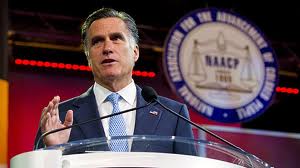 “If equal opportunity in America were an accomplished fact, black families could send their sons and daughters to public schools that truly offer the hope of a better life,” he said, according to his prepared remarks. “Instead, for generations, the African-American community has been waiting and waiting for that promise to be kept. Today, black children are 17 percent of students nationwide – but they are 42 percent of the students in our worst-performing schools.”
“Our society,” he continued, “sends them into mediocre schools and expects them to perform with excellence, and that is not fair. Frederick Douglass observed that, “It is easier to build strong children than to repair broken men.” Yet, instead of preparing these children for life, too many schools set them up for failure. Everyone in this room knows that we owe them better than that.”
Media coverage of today's event in Houston is focusing heavily on the negative reaction Romney received for his plans to scuttle "Obamacare." The Republican candidate got a more polite response to his education positions.
Romney noted his support for charter schools as governor of Massachusetts, despite opposition from teachers unions and Democratic lawmakers.He also pitched his plan to allow federal education funding to follow the student to the school of the parents’ choosing, including private schools “where permitted.”
The dig at Obama's education agenda came without mentioning the president’s name. (more…)

