
EdChoice has an interesting survey question comparing what sort of school parents would prefer (district, charter, private or home) and comparing the results to actual enrollment patterns. In 2024 it looked like this:

There is a lot happening in that chart, starting with the apparent desire of approximately 50% of the parents of district students to have their students somewhere else. Of course, a great many legal and practical constraints stand between preference and reality, which is why we have an education freedom movement and why we find so much opposition from the insecure K-12 reactionary community. Taking the surveyed demand as a part of a thought experiment around “what would it take to give families what they want?” can be illuminating. Of course, in the real world, these things change only gradually. Arizona has the highest percentage of students in charter schools at 21% or so, but it took three decades to get there for all kinds of reasons, including the need to have school space, which involved a great deal of construction and debt. We live in a world of charter and private school scarcity relative to demand, and keeping up the previous (inadequate) pace of construction may prove difficult.
Using my advanced skills acquired in the Texas public school system between 1972 and 1986, I have used this surveyed demand to calculate an implied demand for an additional 1.1 million charter school spaces. Don’t hold your breath waiting for them. It took almost three and a half decades to reach 3.7 million, and if you’ll now take a look at the first chart above, you’ll see that most of that three-and-a-half-decade period involved relatively low and almost continually declining long term interest rates between 1991 and 2021.
After 2021, both interest and building costs went up for charter school construction. Interest rates of course could go down, but they could also (gulp) go further up. A slowdown in the rate of new charter openings happened before the increase in interest and construction costs:

The little green force mystic taught us “always uncertain the future is,” but it appears to me that circumstances will require the rise of different school models that create seats sans debt. The old expression holds that God doesn’t close a door without opening a window, and the recent rise in interest rates happened almost simultaneously with the rise of pandemic pods and a la carte learning.
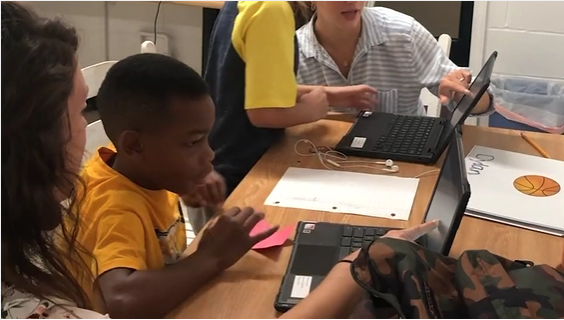
Students study in a pandemic learning pod organized by a group of South Carolina churches, business, nonprofits and individuals in underserved communities.
As the pandemic gripped the nation in the spring of 2020, American schools shut down and sent students home to finish the semester through online learning. The hastily organized programs were thought to be short-term solutions.
But as the rising numbers of coronavirus cases ended administrators’ hopes of fully reopening in the fall, Allan Sherer, a member of the pastoral staff at an Upstate South Carolina church, saw trouble ahead, especially for low-income minority students who had suffered academically in the spring.
The effort Sherer and his church made to educate low-income students over the course of the past two years received national recognition, placing as a semi-finalist for a $1 million STOP Award from Forbes Magazine and the Center for Education Reform.
Sherer’s North Hills Church, a non-denominational suburban congregation that draws 2,000 weekly worshipers, had sponsored academic summer camps for the past nine years. These camps focused on students in economically disadvantaged neighborhoods with the goal of preventing the annual summer learning slide. Now, with the pandemic sending students home permanently, Sherer feared these disadvantaged students in would suffer learning losses so steep that they would never recover.
“We heard numerous stories of children who, when sent home with Chromebooks, never even turned those Chromebooks on,” said Sherer, who has overseen local and global outreach for 15 years at the church in Greenville, S.C. The Palmetto State’s sixth-largest city, Greenville has a population of 70,720 and includes former textile mill villages that sit one county away from BMW’s first North American manufacturing plant, which has brought more than 11,000 jobs and contributed other economic development to the state. Still, intergenerational poverty remains an issue.
After seeing stories about how affluent families were banding together and hiring teachers to deliver in-person instruction to their kids, Sherer immediately thought, “Why shouldn’t children who do not have the means for pods like this also be served?”
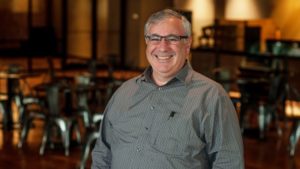
Allan Sherer, pastor of missions and outreach at North Hills Church and leader of pods project
Sherer’s vision quickly led to the start of Come Out Stronger, an initiative to offer learning pods in the most underserved communities of the city. North Hills already had relationships with churches in those communities, including Black churches, community organizations and individuals committed to making a difference.
Less than six weeks later, the group raised more than $300,000, identified more than 40 staff members, and set up 10 Covid-compliant locations, each of which was able to serve as many as 24 public school virtual learners.
Sherer said the initiative succeeded because of two major factors: an unprecedented awareness of the intractable gap minority and low-income families face; and a unifying belief that those who have the least opportunity receive an excellent education. The fact that so many community members stepped up in a state that flew the Confederate battle flag on the statehouse grounds until 2015 is a testament to the efforts made toward racial progress in recent years.
“As a faith-based institution leading the way in this initiative we found no resistance or even hesitancy among businesses, public school administrators, predominantly white or African-American churches, and other community stakeholders to coalesce around doing whatever it takes to make sure children were not irreparably left behind,” Sherer said.
In Judson Mill community, which derives its name from the former textile plant there, 76% of children live in homes below the poverty line, placing it in the lowest .3% of comparable communities in the United States. Organizers identified it as a great place for a pod, and the community came together to help make it and other pods a reality.
A regional gas station chain provided financial support while also providing breakfast each day. The lead counselor in the community’s Title I school went door-to-door to persuade parents to place their children in the pod. A Black church offered its building and recruited volunteers of color to help. A white Presbyterian church supplied “a phenomenal reading specialist” who tested each student at the beginning of the school year, laid out personalized plans for reading development and then re-tested students at the end to gauge progress.
“Every child experienced significant reading improvement over the course of the year,” Sherer said.
Each pod was designed to serve 12 children at one time, with one group attending Monday and Wednesday and the other attending Tuesday and Thursday. Students arrived each day at 7:45 a.m. Trained staff helped children log into their school e-learning platform and stay on task with their work. The pods also provided tutoring, structure, snacks, and recreation. Most ended at 2 p.m. Each pod had a budget of $25,000.
The biggest challenge, Sherer said, was the uneven and inconsistent delivery of virtual learning.
For example, one first-grader was expected to log into four different learning platforms to complete her work. Each platform had its own log-in routine and its own method of completing and uploading work.
“This child lives with her grandmother, who cares for three other primary-age children,” Sherer said. “The challenge of navigating these platforms was immense.”
Sherer said establishing standard performance metrics also proved difficult.
“Because of the chaotic nature of the school year, with schedules shifting and children at times coming in and out of our pods it was not feasible to create an evidence-based measure of our success,” he said. “Anecdotally, we have dozens and dozens of stories of children who had never been successful in school who made the A-B honor roll.”
A few examples of that success can be found in the personal stories shared by staff on a video.
One student, described as a “quiet hoodie kid” who had nothing to say, came from a single-parent home and claimed affiliation with a local gang. His grades were all failing.
“We began to speak to him and love him and tell him who he could be,” said staff member Miriam Burgess. She said being around her son, who works in the pod, offered the student a positive male role model.
Within a couple of weeks, his “F’s” became “B’s” and “A’s” and he started talking.
“Now he runs through the pod like he owns it,” Burgess said. The boy’s mother told Burgess that he renounced his gang affiliation and “his whole demeanor is different.”
When another student joined one of the pods, he had been to class only four times since the beginning of the pandemic. He had forgotten how to read, did not know his math facts, and could not remember the order of the alphabet.
“He has gone from reading 35 words per minute to 102 words per minute,” said pod staffer Brittany Meilinger.
Then there were the three siblings who were in the custody of grandparents who also were raising a set of kindergarten twin siblings.
“Their grandmother had no hope of keeping up with all five children and their assignments,” pod staffer J.P. Camp said. “The pod has been life-changing for this family.”
Success stories like those earned the project a place on the list of 20 semi-finalists for the STOP Award. Sponsored by the Center for Education Reform and Forbes, it awarded a $1 million prize to an education provider, exceptional group of people, or organization that demonstrated accomplishment during the coronavirus pandemic by providing an education experience that was “Sustainable, Transformational, Outstanding, and Permissionless.”
Despite the success, Sherer’s pandemic pods ended when local schools reopened in August 2021. Although the pods were closed, church volunteers continued their work in education, logging more than 400 tutoring hours at local public schools so far this year.
Sherer said the experience offered valuable insights about the future of education and inspired the Greenville pod organizers to think even bigger.
The coalition is now working to open a network of private, hybrid, community-based schools that will serve the poorest regions of South Carolina.
“These smaller networks have the potential to drive a new era of innovation. We are re-imagining the entire in-person learning experience, and our partners are lining up,” Sherer said.
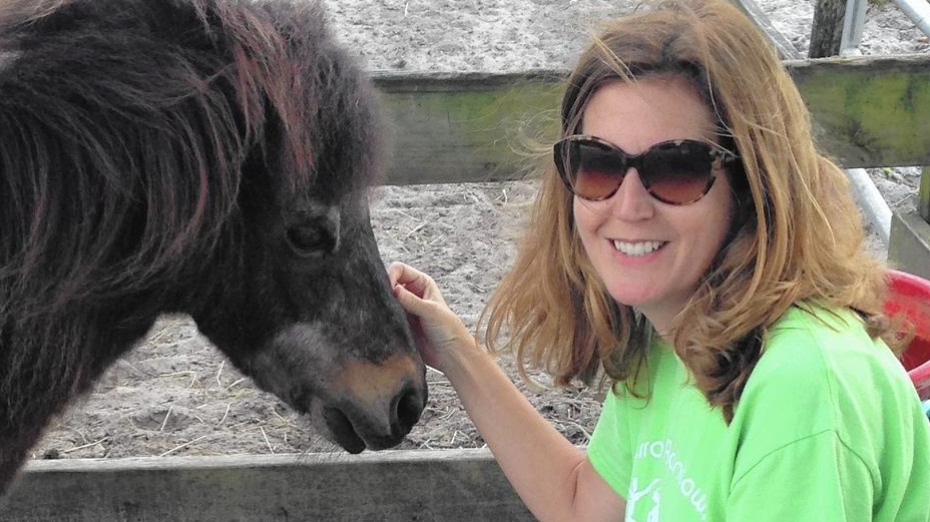
Christy Kian of Boca Raton discovered a new way to pursue her passion for teaching during the coronavirus shutdown.
Editor's note: reimaginED is proud to reintroduce to our readers our best content of 2021 such as this feature story from senior writer Lisa Buie.
 Christy Kian wasn’t sure what she was getting into last year when she agreed to help a parent struggling to educate her two children during the coronavirus pandemic.
The mom wasn’t satisfied with the distance learning plan her school had set up at the start of the shutdown, and things were still in flux for the coming school year. She asked Kian if she would be willing to teach her children at their home.
After nearly two decades of experience in traditional school settings, Kian had to think carefully. But in the end, the call to set off on a new adventure proved too tempting.
Those tentative steps into the unknown launched Kian’s tutoring business.
“It’s been magical,” said Kian, whose Boca Raton-based company, Launch Concierge Learning LLC, blasted off in mid-July. “It’s been better than I could have imagined.”
Kian spent the 2020-21 school year working exclusively with two pandemic pods, small groups that employ a teacher to instruct children in person at home. The pods became a national phenomenon last summer when school campuses in some states refused or were forbidden to reopen, spurring some parents to take matters into their own hands.
Within weeks, social media sites popped up across the country, matching teachers with families eager to try something new. Some families grouped to form micro-schools, which typically serve fewer than 10 students.
The Washington Post called the pods “the 2020 version of the one-room schoolhouse, privately funded.” Experts wrote essays and did research on the trend.
To prepare for her new adventure, Kian spent the summer of 2020 creating curriculum, designing lesson plans, and setting everything up on a spread sheet so that everything would run smoothly from Day 1.
She made the decision to teach the children mostly in person, with kindergarteners in one group and second graders in another. When one family traveled briefly out of state, she pivoted and taught them online.
All her students have thrived under the new learning model.
“I’m doing fractions in my kindergarten,” she said. “If you look at the regular curriculum for kindergarten, fractions are not a part of it.”
The students made such learning gains that Kian decided to introduce them to material early in hopes of giving them an edge when they return to the traditional classroom.
“By exposing them to it now, I hope it will kick in later,” she said.
A peek at her Facebook page offers a window into the classroom.
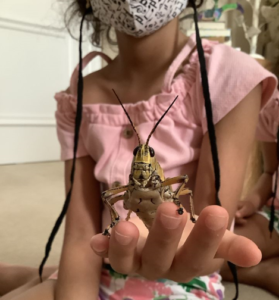 “Insect week! This Eastern Lubber Grasshopper was a wonderful sport in class. Now she is free again in my backyard. But not before teaching us to sing Head, Thorax, Abdomen.”
“Our second-graders wrote their own fairy tales!”
The students learned about scientists such as Jonas Salk and artists such as Claude Monet, experimented with stop motion animation, and read lots of books. Kian made so many trips to the public library that the staff came to know her by name.
Just before winter break, the students surprised Kian with a T-shirt with her logo – a rocket ship blasting off – on the front and “Commander Christy” emblazoned on the back. They all wore T-shirts that matched.
The show of school spirit touched her.
“It really felt wonderful to me that they took such ownership,” she said.
With the kindergarteners heading back to the traditional classroom in the fall, as their parents had planned from the start, Kian is focusing on her rising third graders, who will be returning to her for another year. She’ll spend this summer creating curriculum and lesson plans for them.
She also is considering picking up another group for fall but still hasn’t decided. In any case, she has no plans to return to traditional school.
Quoting a parent, she said, “This has been a terrible year, but we made lemonade.”
 In a classic bit in his comedy special “Delirious,” Eddie Murphy comments on how strange it is that people hang around in haunted houses in movies like “The Amityville Horror”:
“I would have been in the house and said, ‘Baby, this is beautiful! We got a chandelier hanging here, kids outside playing, it’s a beautiful neighborhood, I really love this, this is really nice …”
An unseen demonic voice urges, “Get out!!!”
“It’s too bad we can’t stay!”
An increasing number of American families have adopted the attitude that the nation’s public-school system is a sunk cost and have made alternative plans to ensure the future of their children. Home-schooling is at an all-time high, micro-school pods have exploded, and lawmakers are busily and wisely expanding parental choice programs.
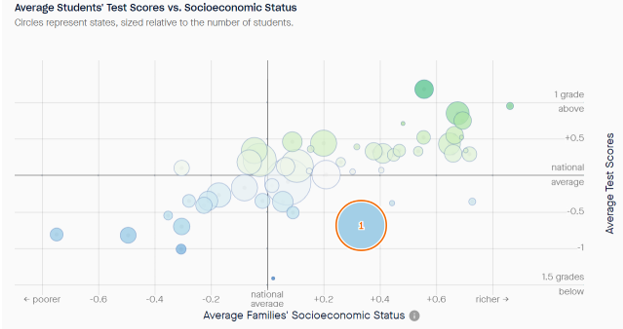
In the chart below, the Educational Opportunity Project at Stanford University marks the nation’s largest state, California, as 1. The median home value in California in September 2021 was $808,890, which would assure your children a spot in a public-school system that is well below average in terms of academic outcomes.
Is it any wonder that Silicon Valley invented pandemic pods?
If you’re wondering how it’s possible for a state to be so wealthy and inept, a Riverside, Calif., student recently did all of us a favor by filming a Trigonometry class; the clip went viral. The district placed the teacher on paid leave for the cultural insensitivity of whatever it was she was doing.
Mere pedagogical incompetence, however, remains beyond the reach of a school board to address, as the reader can clearly see from the chart.
The eggs of far too many public schools have begun frying themselves, and the fridge is strangely growling out, "ZUUL!"
If you are confused as to what to do, just remember “WWEMD,” or “What Would Eddie Murphy Do?”
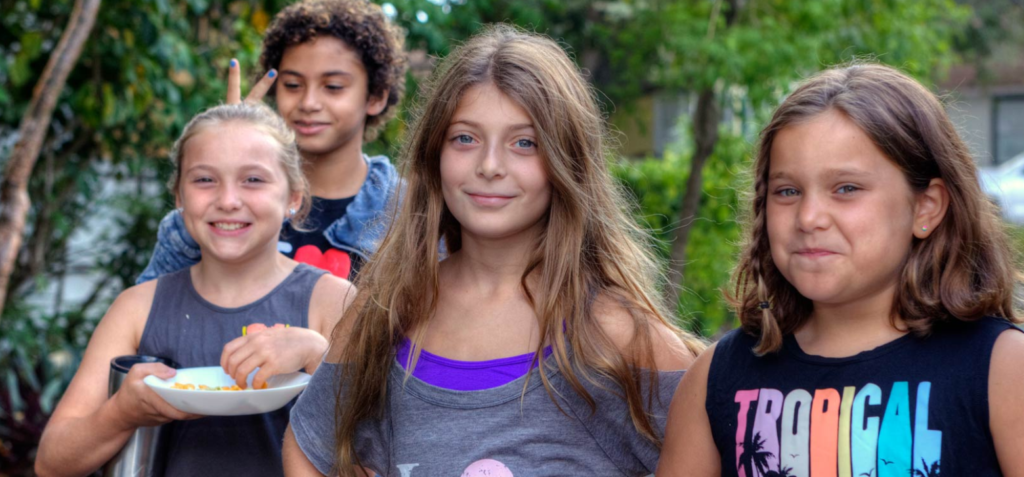
Founder Ali Kaufman describes Space of Mind in Delray Beach, Florida, as a “boutique educational experience,” designed for a modern, social world. Its creative, flexible and personalized educational environment fosters growth for all kinds of learners – children, parents, and educators alike.
Like a school, but better.
That’s how Ali Kaufman, founder and CEO of Space of Mind, describes a revolutionary program that engages students, families, educators and the larger community in experiential learning.
Kaufman’s brainchild, launched in 2004, is not a traditional school. Nor is it a tutoring center. It’s not even a learning pod. The entrepreneur herself recently had this to say about it: “Everything is different about Space of Mind versus the public schools.”
In her interview with reimaginED, she said the best way to describe Space of Mind is to call it “a tutoring service for homeschool children.” But there’s so much more to it than that.
Searching for a learning solution that could provide parents more flexibility while still challenging students in the classroom, Kaufman combined elements of the most cutting-edge education delivery systems available to better meet students’ individual needs. Starting with just three students in her Delray Beach, Florida, living room, she grew the group to eight by 2011, when Space of Mind moved into a historic home in her city’s downtown area.
Some Florida children with special needs have the option of using education savings accounts to attend Space of Mind through the state’s Family Empowerment Scholarship program. Families can use these accounts to customize their child’s education through full- or part-time teaching and tutoring services during regular school hours. But parents of mainstream children also are taking advantage of Space of Mind, many citing the benefits from an individualized school day based around student needs.
Still others are drawn to the 3-to-1 student-teacher ratio and that Space of Mind uses the entire city of Delray Beach as an extended classroom beyond its 10,000-square-foot space, which can serve up to 80 students. Parents not using a Family Empowerment Scholarship or other private-school scholarship option pay tuition for their child to attend Space of Mind, just as though their child were attending a private school.
(You can watch first-hand accounts of Space of Mind’s success at https://www.youtube.com/watch?v=9L1jPmniB0M&t=5s.)
Families who have chosen learning options such as homeschooling and learning pods, which proved to be a lifeline for students during the pandemic, also enroll their children at Space of Mind. Homeschool and learning pod students are able to access subjects and receive tutoring that may not be available through their homeschool or pod curriculum. Scholarship students, private school families, homeschool children, students in learning pods—Space of Mind has something to offer a wide range of families.
“Everything is collaborative and creative, and very much personalized to the students,” Kaufman said.
***
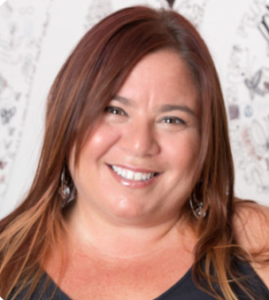
Ali Kaufman
Kaufman’s idea for Space of Mind evolved from 17 years of professional coaching experience for adults and children with special needs. Business leaders and CEOs who struggled with attention-deficit issues and other behavior needs also sought her out for professional coaching. Her services made such an impact that the CEOs asked her to work with their families in tandem with therapists to help adults and children who wrestled with anxiety.
She developed a passion for helping students with school-related stressors. After successfully helping students and parents create productive homework and time management strategies, Kaufman began working with teachers, guidance counselors and school teams to translate that success to the classroom.
In the process, she says, she met intelligent children who did not want to go to school because of bullying or test anxiety. Recently, students cited the distractions of safety drills at school in the wake of the school shooting at Marjory Stoneman Douglas High School, located just 20 minutes from Space of Mind.
Safety drills are nothing short of essential after violent incidents, but Kaufman says that some Stoneman Douglas students enrolled in Space of Mind because the constant reminder of the threat of violence made it hard for them to concentrate on their schoolwork.
Seventeen-year-old Tal Argov told the Sun-Sentinel last year that Space of Mind gives him the opportunity to work on projects instead of only memorizing material for tests. Argov attended Space of Mind on the Delray Beach campus from fifth through eighth grades, left for two years, and then came back.
He calls it “a different way of learning.”
“It’s family-oriented, more personal with the teachers,” Argov said. “It helps me enjoy learning. There’s a lot of leeway and flexibility compared to public school.”
***
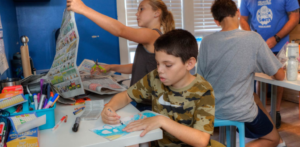
Reducing stress is "mission critical" at Space of Mind, where students are encouraged to engage in creative projects that stretch their imaginations.
Kaufman and her team designed their own curriculum, aligning it with Florida’s state standards and allowing students to earn a state of Florida high school diploma. But it goes further to include social, emotional, wellness and character-building standards that are integrated into every academic and extracurricular program.
Students have an array of benefits, from academic coaches, who provide one-on-one assistance for skill development and strategy building. They are eligible for honors, Advanced Placement and college dual enrollment, as well as the Florida Bright Futures Scholarship. Space of Mind reports a 100% acceptance rate for college-bound students.
It’s an understatement to say that Space of Mind is difficult to categorize. It doesn’t meet the definition of a homeschool co-op; parents are not part-time teachers during the school day. It doesn’t fit the description of a learning pod; with 60 students enrolled this fall in the “full-time schoolhouse,” it’s far larger than most learning pods.
Yet it appears to be a “just right” learning option as families grapple with how to best meet their children’s educational needs during the continued pandemic.
“The No. 1 problem when parents call is they say, ‘My kid doesn’t care about anything,’” Kaufman told the Sun-Sentinel. “We’re wildly well-positioned. We can give families a lot of safety and choice.”
And before, during, or after a pandemic, this should give parents peace of mind.

COVID-19-related challenges to K-12 education resemble the type of intense dust storms that are carried on an atmospheric gravity current, also known as a weather front.
Back in 2015, I studied Census forecasts about predicted looming increases in state elderly and youth populations. Based on those forecasts, it was easy to see trouble ahead.
Six years later, it’s obvious that trouble did indeed arrive, in some cases as expected and in others, in a different form.
These grim forecasts remain on track, but an unforeseen “Baby Bust” and a global pandemic threw in some unexpected curves. The 2020s were always going to be a challenging decade for American K-12, and the chaotic opening to the decade should not overly distract us from understanding the bigger picture issues.
First off, there are the short-run issues related to the COVID-19 pandemic:
Public school enrollment fell during the 2020-21 school year. Parents around the country kept their young children out of kindergarten. This fall, school may have a larger-than-average kindergarten cohort as students return and a smaller-than-average first-grade cohort.
Schools could accommodate this situation in part by shifting first-grade teachers into kindergarten assignments. This likely will happen in many places, but then again, signs indicate parents may have other ideas. Denver Public Schools, for example announced that applications for pre-kindergarten for fall 2021 have declined by 20%v.
Although it’s too early to get a firm picture on the data, many school systems may be headed toward a second consecutive year of declining kindergarten enrollment. COVID-19 vaccines have not been approved for use in young children. Although research indicates that the flu is literally deadlier to young people than COVID-19 and that school staff has had access to vaccines, many people remain concerned. As many as one-quarter of American parents have indicated they will keep their children home this fall.
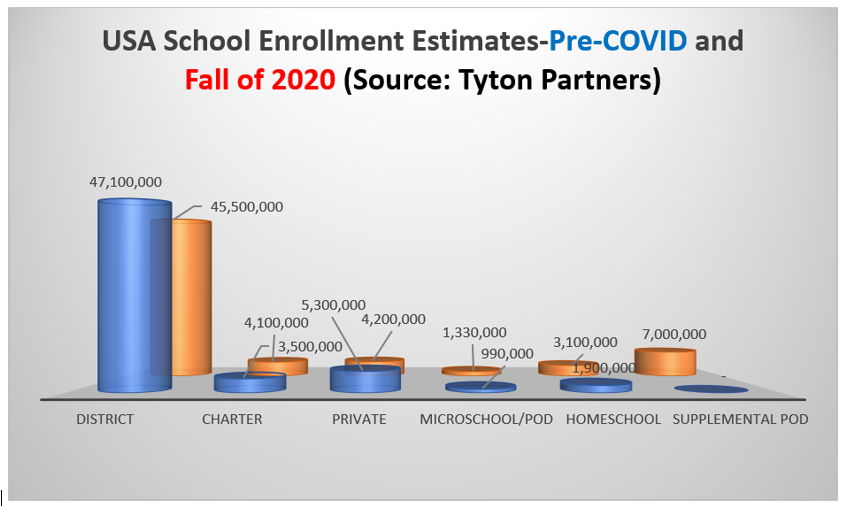
Tyton Partners, an advisory firm serving clients in the education, information and media markets arenas, performed a panel study of enrollment decisions and education spending of a panel of parents last fall. Based on parent response, the firm estimated trends illustrated in the chart above for fall 2020. The closer you study these trends, the more dramatic they seem; large increases in home-schooling, charter school attendance and micro-schools.
Nationally, charter schools took more than a decade and a half to reach the same 1.3 million student mark reached by full-time micro-school students last fall.
Almost out of thin air, 7-million students, by Tyton’s estimate, attended supplemental pods last fall. These students remained enrolled in a pre-existing school through digital learning arrangements, but participated in small “pandemic pod” gatherings for socialization and custodial care.
Scattered formative assessment data from pods during fall 2020 have been released, and the news is academically encouraging.
An investigation of student engagement in Chicago Public Schools with distance learning, for instance, found that one-quarter of students failed to log on once during the week studied. Students “enrolled” in a system continued to generate resources for that system, but whether they actually engaged in any learning is an entirely different question.
The longer-term age demography challenge involves an ever-growing cohort of aged retirees and funding imbalances in retiree entitlement programs such as Social Security and Medicare. At any given time, working aged people carry the primary financial burden of providing the resources to pay for the education of the young and the retirement of the elderly.
Much of the working-age population of the later 2020s, 2030s and 2040s just took an impromptu break from schooling.
The ability of American policymakers to sustain the social welfare state always has been a bet on the ingenuity and productivity of future generations. The pre-pandemic school system did far too little to instill confidence in this bet.
Shutting schools down and losing track of millions of students in the process makes matters worse still.
Our best hope for overcoming these challenges lies in an anti-fragile system of K-12 education that grows stronger in times of distress. Federal K-12 emergency funding, however, seems likely to simply preserve the past rather than bridge the way to a brighter future.
Bottom-up pressure, however, points entirely in the opposite direction. An entirely new sector of micro-schools has grown, home-schooling has surged, and state lawmakers have enacted the most far-reaching set of education choice bills in the nation’s history.
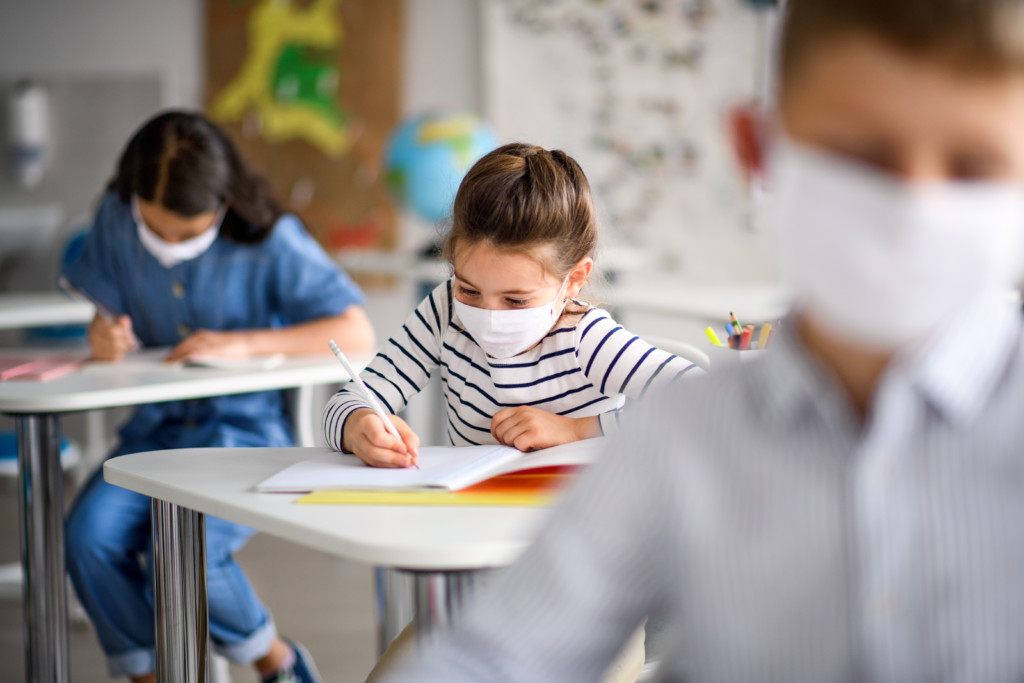 Editor’s note: This opinion piece from Steven Hodas, senior strategic lead for citiesRISE, and Travis Pillow, editorial director at the Center on Reinventing Public Education, suggests it would be a mistake to ignore the hundreds of community-based innovations in teaching, learning, childcare and health and wellness that have sprung up nationwide during the pandemic even as schools return to “normal.”
For nearly a year, schools' unpredictability has created stress and suffering for kids and families, especially in Black and brown communities where jobs and lives are also most at risk from the virus.
We've seen record learning loss, disengagement, depression, and signs of great stress in families.
But just as many schools struggle to serve their families, creative grass-roots responses have risen to fill institutional gaps. Policymakers are understandably eager to return to normal as soon as possible. But it would be a mistake to pave over the hundreds of community-based innovations in teaching, learning, childcare, and health and wellness that have sprung up around the country.
The media has highlighted stories of privileged families spending thousands to create personalized learning "pods." Less well-known is the growth of public pods, also known as learning centers or hubs, set up by community-based organizations, self–organized mutual aid groups, and freelance volunteers.
Pods share an ethos of mutualism with community-based tutoring, homework help, and counseling and mentoring programs. They enable community members to better help one another. And they provide an unprecedented natural laboratory for districts to work with families to codesign the services they need.
While much of this work is happening at organizations outside the traditional fabric of public education, a growing number of school systems have taken notice and begun to shift how they work. We are now collaborating with six of them.
The existential threat of enrollment loss, the unique flexibility of unrestricted federal relief funding, and a painful year of reflection on the subjugation of Black and brown families have led school districts to collaborate in power-sharing partnerships with families, volunteer groups, and community-based organizations.
Already, we are seeing the potential for more flexible, innovative roles for district staff, new talent pipelines into and alongside certificated teaching, revamped pathways between the K–12, higher education, and workforce sectors, and a leveraging of districts’ substantial financial resources to support organizations in their communities.
Indianapolis was one of the first communities where partnerships between the school system and local nonprofits spawned new supports for students learning remotely. The Mind Trust understood that churches and neighborhood groups had deep wells of trust in communities and worked with them to stand up small learning environments before school started last fall.
Leaders at The Mind Trust and Indianapolis Public Schools are now planning for these hubs to become a durable feature of student support, one that persists long after district buildings have reopened.
In North Carolina, Edgecombe County Public Schools opened learning hubs that provide in-person learning and social opportunities to students in the district who have chosen to continue learning remotely. The district is working with principals to design a “spoke-and-hub” approach to schooling that offers more community-based learning projects and uses flexible scheduling to make schooling more compatible with students’ jobs or internships.
Many leaders with whom we speak hope that the structures and services they are building now will persist and fundamentally redefine how they show up for their communities.
Though many kids will do better in regular in-person school, some are thriving with new kinds of adult support and the freedom to pursue ideas that light them up. Long after the COVID-19 pandemic is over, learning pods and arrangements that let schools resume online learning whenever necessary—knowing students can still receive in-person support if they need it—can hedge against possible future disease outbreaks and climate-caused shutdowns.
This is an exciting moment, but experience tells us that the old familiar ways will likely reassert themselves once schools feel out of mortal danger. Innovations will be discarded or wither away, depriving families, communities, and schools themselves of benefits being proven on the ground right now.
The innovations are at risk simply because the old arrangements—kids attending in-person school in large groups, teachers providing all instruction, community assets sidelined—are familiar and serve the interests of the best-organized interest groups. Parents who will want a return to full-time in-person instruction after the pandemic are in the majority. Teachers unions will also want a complete return to the status quo to protect their collective bargaining agreements.
Even well-intentioned relief efforts backed by new federal COVID funding could turn out to be palliatives that relieve strain on the status quo of schooling rather than catalysts to maintain a more diverse array of public support for learning.
For example, some plans for a “national tutoring corps” would require that tutoring be delivered in school buildings during school hours(link is external), often by district employees. This would crowd out grassroots homework-help programs that meet families where they are, at far lower cost and with far more community, parent, and student agency.
To avert the inevitable rush to put things back just as they were before the pandemic, governments and foundations should be building evidence about which innovations—online instructional programs, tutoring programs, pods, and other student support environments—are effective, for which kids and under which conditions.
The window of opportunity to learn from these new arrangements and produce durable changes will likely close in a matter of months.
People must get organized. Families that have come to rely on COVID-era innovations need to start urging school boards and municipal governments to continue them. Nonprofit groups that sponsor innovations must organize now to press state legislators to eliminate strings on public funds and other regulations (seat time and class size requirements, closed-shop arrangements that prevent community-based workers from becoming teachers).
Rather than using this unprecedented funding to double down on the very systems and practices that have failed our communities for decades, state and local advocacy groups should ensure that states and school districts invest stimulus funds in lasting changes that will preserve new educational arrangements that worked for families during the crisis and hold open the space of community-based agency and innovation.
Now is the time not only to invest in helping students recover from the pandemic, but to build an anti-fragile education system that is less brittle, less monolithic, more family-centric and more capable of meeting students’ individual needs—now and in the future.
 “It wouldn’t surprise me if, five to 10 years from now, everyone looks at this and thinks, ‘That grew a whole lot faster than I thought it could. There is a slice of the market that is not being served by public education. They’re saying, ‘The public schools don’t work, [and] I can’t get into the charter schools.’”
-- Andy Calkins, deputy director of Next Generation Learning Challenges, in an Education Next article on micro-schools, 2017
Homeschooling began as a counter-cultural practice on the anti-establishment left, was then adopted by conservatives, and in recent years has become a more mainstream practice including about 3.3% of American students.
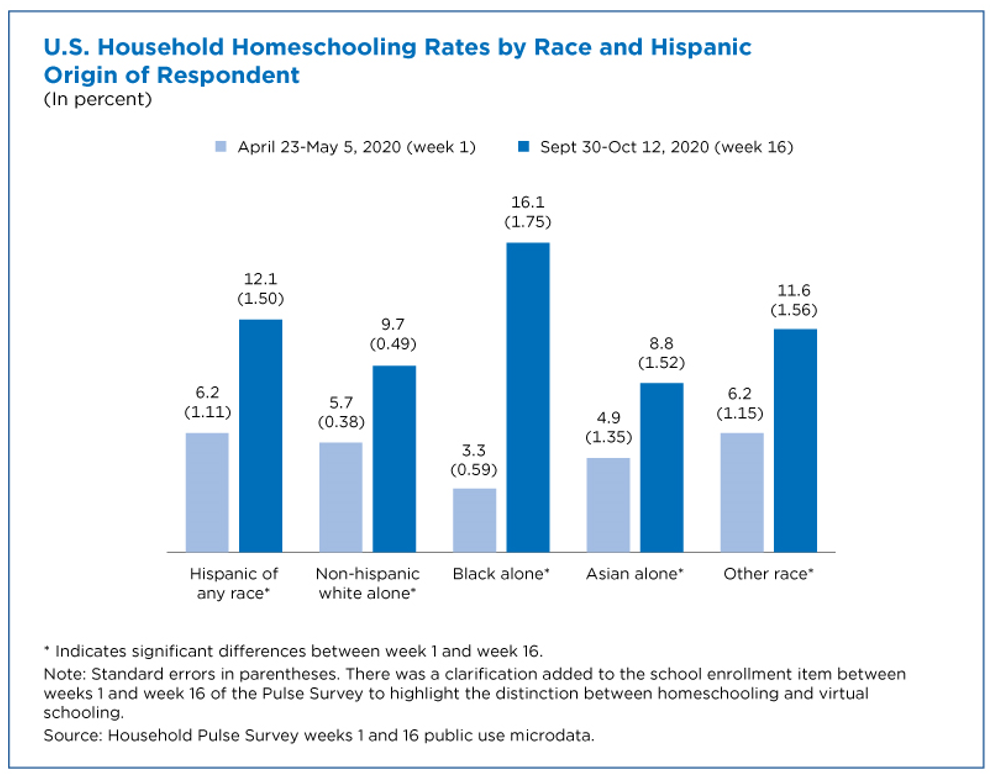
The U.S. Census Bureau earlier today released the results of a parent survey about homeschooling that asked parents to distinguish between distance learning while enrolled in a school and actual homeschooling. Results indicate a very large increase in reported homeschooling – a rise from 5.4% in spring 2020 to 11.1% in fall 2020.
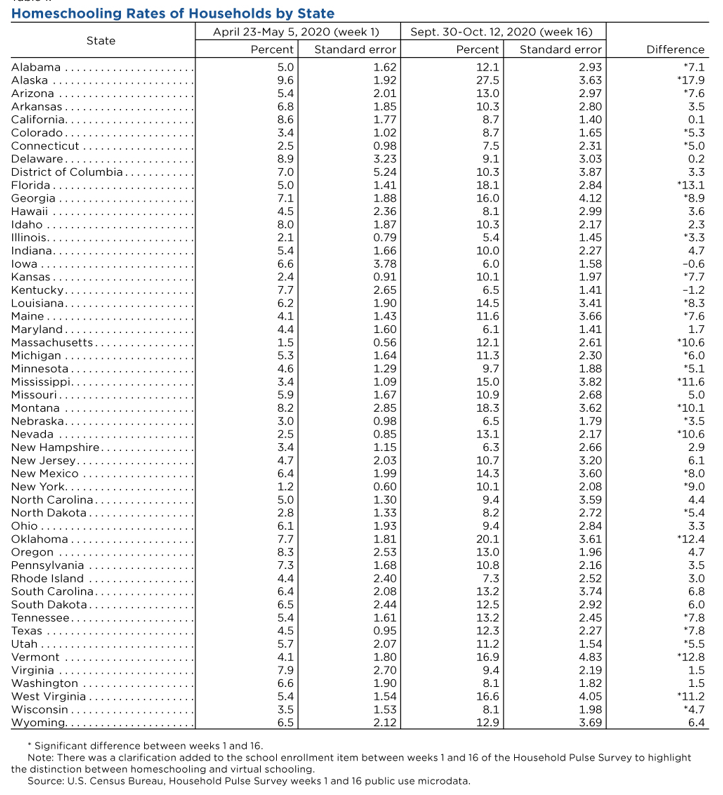
 Here is the breakdown in homeschooling by state.
 So, a few things to note.
Despite the fact that the Census Bureau asked respondents to distinguish between distance learning and homeschooling, it seems entirely possible that more than a few respondents confused such distinctions. If 13% of students in my home state of Arizona are homeschooling, only a few of them have complied with a legal requirement to register with their county superintendent.
The distinctions between participating in a pandemic pod that has enrolled students through a public distance learning program and homeschooling may have eluded some respondents. Or perhaps “homeschooling” is a popular response for people who have decided to delay kindergarten enrollment. Or perhaps Arizonans get even less mindful than usual about regulations during a pandemic.
These numbers deserve more investigation, but the Census Bureau may have provided a partial explanation for the thousands of students who have “gone missing” during the pandemic.
With those caveats in mind, well, wow.
The 16.1% figure for Black students in particular is striking. Out in the bubbling primordial soup of pre-pandemic homeschooling innovators combined a DIY ethos with experiments with co-operative education. Upper-middle class American parents spent decades spending an increasing amount on enrichment activities for students.
Silicon Valley families discovered that education was way cooler if you combined homeschool co-ops with more enrichment education. A growing number of Valley residents discovered the educational opportunity cost of having a child in a school modeled after a 19th century factory to be far too high for the cool kids.
When the pandemic struck, a quick rebrand of homeschool co-op into “pandemic pods” went viral. COVID-19 accelerated a number of pre-existing trends and homeschooling appears to be one of them.
What happens next? No one can be sure.
The structural problems of American public schooling have not gone anywhere. The nation’s fiscal time bomb has been ticking away during the pandemic. Almost all Americans have experimented with new forms of education. Pathways for disadvantaged students to participate in this form of learning would be a most welcome development.
Apparently, a large percentage of Americans have decided that if you want education done right, you do it yourself.
 Recently, we reported on the city of North Las Vegas’ pandemic pod effort, namely, the Southern Nevada Urban Mico Academy, or SNUMA. Included was what must be the edu-quote of the year from North Las Vegas Mayor John Lee:
Children who otherwise likely would be given a jar of peanut butter and told not to answer the door while their parents work and CCSD remains virtual instead are attending in-person homeschool co-op learning sessions, receiving live tutoring and participating in enriching, fun activities in a safe, socially distant environment at a cost of just $2 per day.
Now comes word not only that the city is renewing the effort until the end of spring semester 2021, but of preliminary data on academic outcomes.
Says councilwoman Pamela Goynes-Brown, who has led the city’s efforts at SNUMA: “Our kids are learning and thriving in a safe environment. I could not be more proud of their progress.”
Among the academy’s academic results:
· While 78% of children arrived at SNUMA below grade level in reading, 62% are now at or above grade level
· While 93% of children arrived at SNUMA below grade level in math, 100% currently are working on material that is at least on grade level
· While nearly three-quarters of third graders (71%) arrived reading below grade level, 42% are now at grade level, and 28% are above grade level; additionally, 85% have completed at least a year's worth of growth since their initial assessment
· While 71% of third graders were testing below grade level in math, 57% are now working at grade level, and 43% are working above grade level
The news story lacks detail regarding testing, but these data presumably have been derived from formative assessments. The data appear very promising, but obviously a great deal more study is warranted before drawing any conclusions. Nevertheless, beating the living daylights out of being left alone with a jar of peanut butter may just be a warmup for this innovative form of education, so stay tuned to this channel for more developments in 2021.

