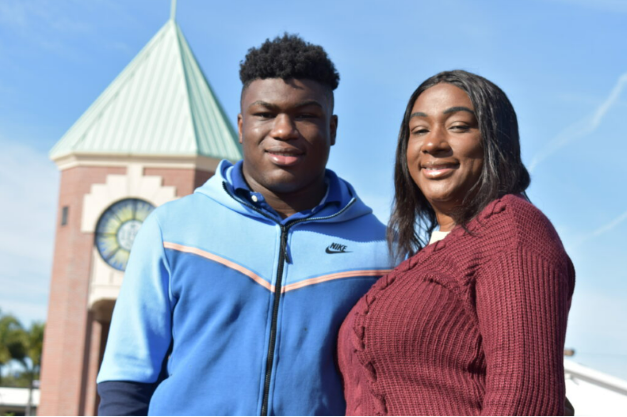
Joquez Smith, pictured with his mother, Joann, is heading to Temple University in Philadelphia, one of seven universities that offered him a football scholarship. As proud as he is of his success as an athlete, he is equally proud of his work in the classroom.
TAMPA – The numbers Joquez Smith compiled as a running back during his four years of high school football place him among the best to have ever played in Hillsborough County.
The numbers he’s earned in the classroom at Jesuit High School, an academically demanding Catholic school in Tampa, are just as impressive.
Combined, they helped “Jo” (as he’s nicknamed) earn a football scholarship to Temple University in Philadelphia.
Hi mom, Joann, said that was the plan since that October day in 2004 when Jo was born.
“From Day 1 I knew I wanted him to go to college and I knew a sports scholarship would help him,” Joann said.
The plan was realized with the help of a Florida Tax Credit Scholarship made possible by corporate donations to Step Up For Students.
“I want to say thank you to Step up,” Joann said. “Without the scholarship, Jo wouldn’t be able to be here and take advantage of what Jesuit has to offer. It’s done so much for our family. Academically, we know he’s ready for college.”
Academics ultimately is what led Jo to Jesuit.
Yes, he wanted to play for one of the top football programs in the state. That decision was clinched when Jo attended a Jesuit game as an eighth-grader. He was thrilled by the Friday night atmosphere at the school’s football stadium and wowed at the talent on the field.
Joann was sold that same year during an open house for eighth graders.
“When we visited Jesuit, they never promised anything (athletically),” she said. “They didn’t promise that he would be a starter. They didn’t promise him a certain jersey number. They were promising Jesuit, what they could do for Joquez academically. How to make Jo a better man, a stronger man, a giving man. And that’s what brought us to Jesuit.”
To continue reading, click here.
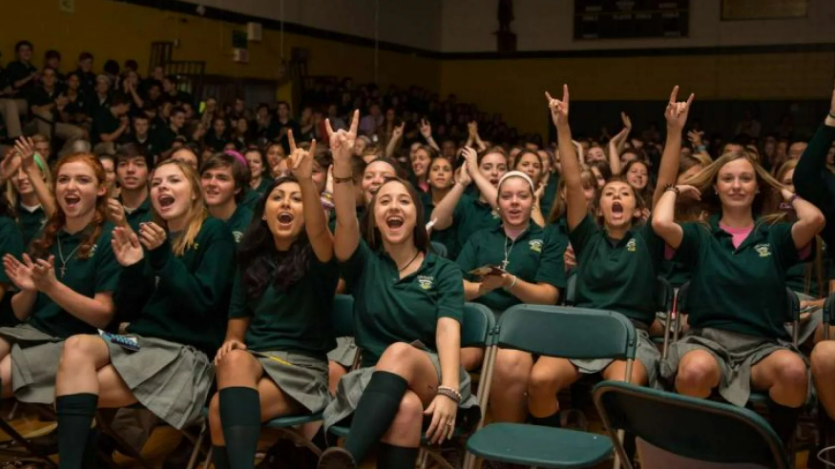
Landsdale High School in Landsdale, Pennsylvania, one of 1,814 private schools in the state serving more than 260,000 students, offers 44 honors and 36 college preparatory courses to encourage critical thinking and problem-solving skills.
Editor’s note: This commentary appeared Monday on inquirer.com.
After a more than eight-year slog, the Pennsylvania Commonwealth Court affirmed what the Pennsylvania Constitution has said all along: Kids deserve their education to be about a “meaningful opportunity,” not a flawed and antiquated system.
The ruling is a victory, especially for school-choice advocates, many of whom are parents of color, looking to help their children get out of failing district schools. When Commonwealth Court Judge Renée Cohn Jubelirer issued her ruling last week, she gave our most vulnerable children a path forward. The only way to ensure adequate and equitable funding to schools is to have education funding follow the child, not the school district.
The Pennsylvania education system is flawed — that much we can all agree on. The 2014 lawsuit alleged that the state’s system of determining school funding deprives students in poorer districts of opportunities and resources. The court agreed.
In doing so, the court made a critical point that deserves praise; it stopped short of massive judicial overreach and instead rightly highlighted what the state constitution has stated since 1873 — that the power to fix this problem rests with the legislature.
And in directing the people’s elected representatives to fix the problem, Judge Jubelirer took a bold stance, writing: “The options for reform are virtually limitless. The only requirement, that imposed by the Constitution, is that every student receives a meaningful opportunity to succeed academically, socially, and civically.”
The Pennsylvania Constitution calls for an “efficient system of public education.” Nothing is more efficient than the free market, and that’s what we would be creating in Pennsylvania if we follow the judge’s ruling.
If our state really wants to empower communities of color, then it should give money directly to parents and caregivers. By putting money directly into the hands of families — rather than into government schools run by bureaucrats, where funding tends to benefit administrators rather than students — parents have more options and children have more opportunities.
To continue reading, click here.
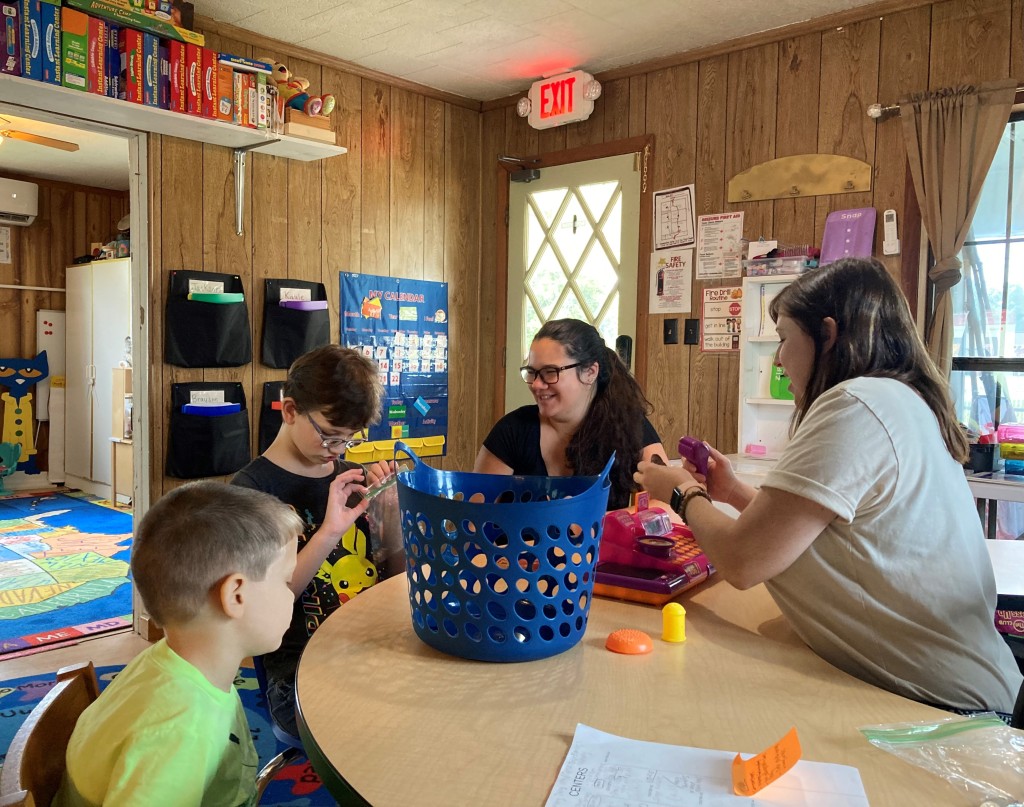
Bristol, Florida, population 996, is home to beloved, home-grown Gold Star Private Academy. Every student at Gold Star uses state-funded school choice scholarships.
Editor’s note: This article appeared Monday on iwf.org. To watch a video created by Step Up For Students featuring Gold Star Private Academy, click here.
In Starbuck, Minnesota, parents were devastated to learn that the local school district, a major employer in the area and bedrock of the community, was set to close due to declining enrollment. Instead of attending their local school, students would have to bus over to the next town.
But thanks to Minnesota’s charter school laws, parents, teachers, and community volunteers banded together to open Glacial Hills Elementary, a community-run charter school that serves 91 students, including several students with special needs.
Though operating such a small school is not without its challenges, small class sizes, frequent outdoor activities, and a focus on special education have helped Starbuck children excel academically without leaving their town.
In Questa, New Mexico, population 1,770, the public schools are alive and well, but 50 K-8 students have opted to attend Roots and Wings Community School. Founded by New Mexico educators who spent two years building relationships with local officials and parents before opening their school, Roots and Wings focuses on expeditionary learning and extended outdoor activities in a multigrade classroom setting.
Students at this unique school consistently score higher on state reading and math tests than their public school counterparts and with 76% of students qualifying for free or reduced lunch, the school is also providing high-quality education to economically disadvantaged students.
In Bristol, Florida, a town of only 996, a family of educators opened a special needs private school after years of watching children with autism, Phelan-McDermind syndrome, and other challenges struggle through public school. Today Gold Star Private Academy serves 17 students with a wide spectrum of special needs and allows parents to access the care their children need without moving to a bigger city.
These schools, along with countless other charter and private schools and microschools serving small towns, show that school choice is a boon to every community regardless of size.
To continue reading, click here.
 Editor’s note: This commentary appeared last week on merionwest.com.
With the recent passage of school voucher bills in Iowa, Arizona, and Utah, and with a similar bill under consideration in Virginia, the question of school choice has increasingly moved to the front and center of our public consciousness.
While parents and politicians have been toying with voucher and charter school programs since the 1980s, the major disruption of schooling caused by pandemic-driven public school policies seems to have made the question all the more pressing.
Dissatisfaction with pandemic schooling led families to leave public schools in droves in 2020 in particular, and the trend has continued ever since. These families have sought alternative educational solutions upon withdrawing from public schooling, not only embracing private schooling and traditional home schooling in great numbers (home schooling rates jumped dramatically to likely somewhere between 6% and 11% of schoolchildren; unfortunately, home schoolers are notoriously difficult to count), but also trying out creative responses such as establishing learning pods and employing private tutors.
Public school systems, on the whole, have reacted shamefully, including the infamous letter sent out by one of the largest school systems in the country, that of Fairfax County, Virginia, telling parents they should not create learning pods because then their children would receive a better education than public school kids, which would leave the public school children behind.
While Fairfax County’s implication that parents should neglect their own children just because taking care of them might “widen the [achievement] gap” is preposterous, it does speak to the underlying problem at the heart of resistance to school choice: that for most Americans currently, there simply is no choice.
And that is why school vouchers are critical to repairing American education.
The idea that most American parents already have choices in education is central to the argument against school vouchers, a claim that is repeated across print, in person, and in social media conversations. The idea is that it is not the public’s job to provide choices in schooling because people already have acceptable choices. Families have a good option in public schooling, and they are also free to send their children to private schools or to educate them at home.
This freedom to choose private or home schooling should not absolve any individual family from paying taxes in support of public education, the argument goes, because we all already have free choices, and we all also have a responsibility to provide a free education for all American children. If a parent cannot afford private school, that is his or her own problem.
To continue reading, click here.
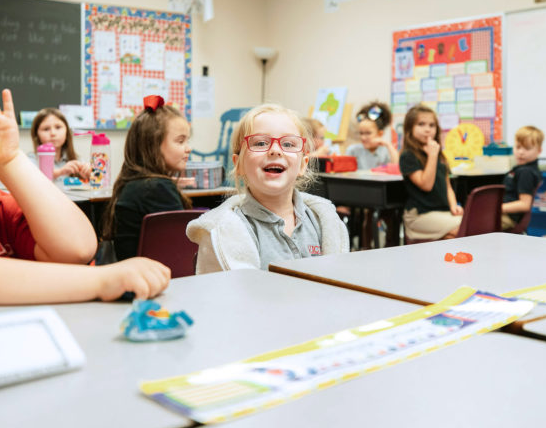
Victory Christian Academy in Lakeland, Florida, is one of dozens of private schools in Florida committed to assisting need-based families with financial assistance for tuition through the Florida Tax Credit Scholarship program.
Editor’s note: This essay was shared with reimaginED by Angelina Severino, a 2022 Future Leaders Fellow with the American Federation for Children.
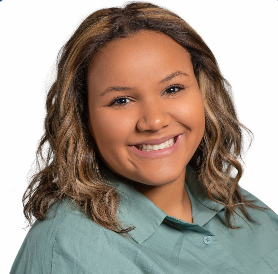
Angelina Severino
President Joe Biden, in his State of the Union address, covered many public policy topics, including education. I was disappointed that he did not mention how students can be given more choice in their education. I was disappointed because I know the difference having that choice made in my life.
When I was growing up, I never thought I would make it to college, much less be playing college-level sports or coaching my own team. I didn’t have a desire for school until I switched to a private school after attending a public school from kindergarten through sixth grade.
That setting was not right for me. It seemed my growth was stunted. I didn’t know what to do about it. My sister wasn’t getting what she needed at this school either. She was interested in a private school in town. Our mom set up an interview with the principal to discuss a transfer and I tagged along.
Unlike my sister, I was a rebel. I didn’t want to go to a school where students wore uniforms, but as I learned more about the school, I became curious. The principal noticed and asked if I would like to attend. My mother applied for a tax credit scholarship that helped cover my tuition.
Before I knew it, I was in uniform at Victory Christian Academy in Lakeland, Florida, starting my first day of seventh grade. I had no idea what a huge decision I had made.
Having the ability to choose my school gave me control over my own success. Not only did I receive an amazing education, but I was also able to focus on my faith, and I met a coach who would change my life. I soon realized that I had a family at home and at school.
The teachers cared about me and what I had to say. They listened to my opinions, and they showed me that I mattered as an individual. That felt good. As I started to feel more comfortable at school, I decided to dive into sports again.
I met Coach D, head of the varsity girls’ team. I didn’t know much about soccer, but that didn’t keep him from encouraging me to play from seventh grade until I graduated.
I had grown up under the care of an amazing single mother, feeling the absence of a father who hasn’t helped as much as I wish he would. I never really had a father figure until Coach D made the difference. Not only did he teach me how to play soccer; he also taught me how it feels to be loved and important. I have never taken this opportunity for granted.
Without the opportunities that came from my private school and the tax credit scholarship, I wouldn’t be playing and coaching basketball at Webber International University. I am grateful for school choice because it allowed me to find a family that believed in me and a coach who never doubted me.
Going forward, I hope that all policymakers, regardless of political persuasion, realize what education choice can mean to the life of a child. Take it from me: It can mean the world.
Editor’s note: This commentary from Brandon Detweiler and Robert Bellafiore, head of studio and research manager, respectively, at Lincoln Network, comes to reimaginED via reimaginED guest blogger Dan Lips. Lincoln Network describes itself as “a boutique think tank that works with policymakers and tech innovators to promote market-oriented ideas to strengthen American innovation.”
You can listen to a podcast about the importance of technology and infrastructure in making school choice possible from Step Up For Students president Doug Tuthill here.
In 2023, Iowa and Utah have already enacted new education savings account programs that will help thousands of families take control of their children’s education. These states follow Arizona and West Virginia in enacting broadly available ESA programs in recent years.
There’s more to come. According to EdChoice, lawmakers in more than 20 states are considering similar measures to give parents greater power to choose in education. There’s good reason to be optimistic that many more parents across the country will have new options in the coming years.
But as advocates know, establishing these promising programs is just the first step. For students to benefit, parents need to learn about their new options and use them. In the past, the work of educating parents about new school choice options and helping them take advantage of their options has fallen to community groups, grassroots leaders, and parent activists.
These are still invaluable, but today, they can be complemented by new technology and parental choice programs to help parents provide a better education for their children. Technology is allowing parents and the public to use government data to understand what their public schools are spending on their children’s education and better understand the possibilities that school choice creates.
Our organization, Lincoln Network, and our team of engineers and software developers have built two platforms with these goals in mind: Schoolahoop and Project Nickel. Schoolahoop helps parents identify new schools and scholarship opportunities for their children, while Project Nickel allows the public to analyze what public schools spend on a per-student basis across the country.
Schoolahoop is a school choice tool allowing parents to compare and find local schools. Once a parent has discovered a new school, Schoolahoop shares the contact information for the school’s admissions office and helps parents discover scholarship programs they qualify for, opening up new educational opportunities.
Other features include easy browsing of the latest COVID-19 safety protocols at each school; indicators of which schools are best at remote learning; and integrated commute times for walking, biking, or driving. Most recently, we’ve added the ability for parents to discover available scholarship programs in a given state, as well as the ability for any organization to embed a version of Schoolahoop’s school finder application on its own website within minutes.
This kind of program is essential for addressing a common question directed at advocates of school choice: if parents are granted more options, how will they be able to determine which one is best?
It’s a fair point: busy parents hardly have the time to inspect a dozen schools and investigate all the differences among them. The beauty of Schoolahoop is that it compiles all the most important information in one place, making it much easier for parents to identify the school that fits their unique needs and find scholarships that allow them to enroll their children in previously unattainable schools.
Since launching in Texas, Schoolahoop has expanded to Florida, Arizona, the Kansas City metro area, and now Wisconsin, and we’re always working on expansion into new states so that more parents can make an informed choice for their kids’ education.
Our second program, Project Nickel, similarly aims to educate parents about some of the most important financial facts at different schools. It should go without saying that the public––including not just parents, but also journalists and policymakers—deserves to know what public schools spend. But too often, this isn’t the case.
Finding out something as fundamental as a public school’s average spending per student can be a challenge, with parents left wondering what exactly those “public” funds are going towards. Since the 2015 passage of the Every Student Succeeds Act, states have been required to report each school’s per-student expenditure, but even now, it can be challenging for parents to find this information or know what to do with it.
Project Nickel solves the problem by compiling the data on per-pupil expenditure for every public school in the country, in one place. Just having easy access to the facts is crucial to helping parents understand what public schools are spending and consider if those funds could be put to better use.
There remains widespread confusion on this topic. For example, a 2022 survey by EdChoice found that Americans think public schools spend about $5,000 per student; in fact, the real amount is roughly three times as much.
It’s no wonder people have the wrong impression, when getting clear information on school spending is so difficult. Project Nickel aims to correct these kinds of misunderstandings, so that parents can make better-informed decisions.
To be sure, choosing a good school isn’t just a matter of having the right information or using the right website; we also need the right policies in place so that parents are able to choose a school, rather than being stuck with one picked by the government. But technology can still play an important role by giving parents the information they need.
Both efforts—getting the right policies and developing the right technology to help parents—will be essential for ensuring that kids can get the best education.
 Editor’s note: This commentary appeared last week on Utah’s kslnewsradio.com
A freshly minted Utah law gives a $6,000 raise to every public schoolteacher, but it also provides parents $8,000 per student per year in state funds to attend a private school or use the money for homeschooling.
As a homeschooled student, Anna Ressie, a co-worker at KSL, joined Dave and Dujanovic to share her experience as a home-schooled student. Recsiek said she was allergic to chalk dust so her mother kept her home. The school sent homework along to her.
“I was able to churn through it really rapidly,” she said. “My mom was like, ‘Oh, please give her more, and the teachers [said], ‘That’s about all we do … she’s doing a good job.”
Recsiek said homeschooling gave her siblings flexibility in the pace of their learning, with individual assistance from Mom.
“For some of my siblings, maybe a slower approach to helping them grow without some of the peer pressures that public schools have,” she said. “If we were struggling, maybe she’d spend some more time with one child or another.”
Her mother encouraged the kids to race each other to finish their homework and to read out loud because she would be in another room folding laundry and could not monitor them as closely.
“Other times we were at the kitchen table — all of us learning about the same subjects and sharing with each other what we learned,” Recsiek said.
She said she would learn about animals, then take a family field trip to a zoo or study art, then visit a museum.
“We would go to the park. When it was a nice day, we could sit at the picnic tables and … enjoy being outside in a different environment. My mother really thought that variety spurred that creative side and really made learning not ever boring,” Recsiek said. “I don’t ever remember being bored.”
To continue reading, click here.
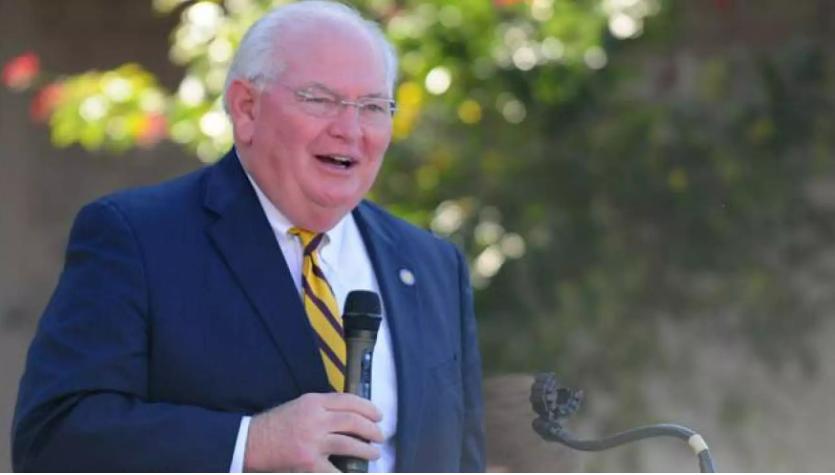
Former State Sen. Bill Montford (D-Tallahassee), Chief Executive Officer of the Florida Association of District School Superintendents, praised Senate President Kathleen Passidomo and Sen. Corey Simon for taking a “first great step” toward keeping the state’s public schools competitive.
HB 1 no longer stands alone.
State Sen. Corey Simon R-Tallahassee, chair of the Senate Committee on Education PreK-12, on Friday filed SB 202, a companion bill that allows for parental involvement and customized K-12 education in Florida through the expansion of education savings account eligibility to all students.
In addition to empowering parents, the legislation also incorporates recommendations from the Florida Association of District School Superintendents and calls for reducing “onerous and excessive regulations” on public schools.
“The right and the responsibility of raising children belongs to parents, not state government. This bill makes it clear that the money follows the child, and parents have a right to guide their child’s education as they see fit,” Simon said a in a news release.
“Here in the free state of Florida, we stand with parents. We recognize that parents are a child’s first and best teachers, and we support the vital and irreplaceable role of a parent to decide what academic experience best fits the needs of their child. At the same time, we take important steps to allow our legacy, neighborhood public schools to thrive in the communities they serve.”
Senate President Kathleen Passidomo, who had previously expressed support for HB 1, a key priority of House Speaker Paul Renner, said SB 202 “makes school choice a reality for every child in every family across our great state by providing parents the chance to guide how and where the funding for their children’s education is spent.”
The Naples Republican added that universal choice also requires a level playing field for the providers.
“Universal school choice means that every school has a chance to compete for students, and their parents can decide the best fit,” Passidomo said. “Additionally, by reducing red tape that burdens our traditional public schools, these institutions, which have served our communities for generations, will have a meaningful chance to compete right alongside other school choice options.”
Former State Sen. Bill Montford (D-Tallahassee), Chief Executive Officer of the Florida Association of District School Superintendents, also weighed in, saying:
“Traditional, neighborhood public schools have been, and will continue to be, the backbone of our K12 education system. We want our schools to be the first choice for parents, not the default choice, and to do that we need to reduce some of the outdated, unnecessary, and quite frankly, burdensome regulations that public schools have to abide by.
“I appreciate the willingness of President Passidomo and Senator Simon to dig in right along with us and cut some of the red tape right away. This is a great first step towards keeping our public schools competitive.”
Education Savings Account for Every K-12 Student Florida currently offers scholarship programs for eligible students (typically students from lower income families) to attend private schools that a parent determines will better serve their particular needs. These programs include the Florida Tax Credit Scholarship (FTC) and the Family Empowerment Scholarship (FES) for students attending private school.
Scholarships are funded at an amount commensurate with the per-student amount appropriated for students attending a public school. Florida also offers a Family Empowerment Scholarship for students with unique abilities, which provides educational savings accounts that allow parents to direct funding for their child either to a private school, or other educational services and materials.
Scholarships for students with unique abilities are funded at a higher per-student amount, determined in part by the type of developmental disability and the cost of services the child may need. Eligibility for all school choice programs is currently limited by state law in the form of an income or enrollment cap.
SB 202 expands eligibility for Florida’s school choice scholarships to all students who are residents of Florida and eligible to enroll in kindergarten through 12th grade in a public school. Under the bill, parents will receive an education savings account to take dollars the state of Florida has appropriated for their child in the public education system and choose among a variety of options to customize their child’s education.
The bill makes several immediate revisions to Florida’s Education Code, identified by the Florida Association of District School Superintendents. For example, the bill reduces hurdles to a five-year temporary teacher certification for anyone with a bachelor’s degree and for those with two years of effective or highly effective service.
The bill provides flexibility to school districts in setting salary schedules and repeals the requirement that a student have one online credit in order to graduate from high school, which is not currently required in private schools.
The bill also offers districts flexibility in facility costs for new construction, and offers student transportation flexibility to improve efficiency, while maintaining student safety. (Current law limits districts to using school buses for transportation.)
Additionally, the bill includes a provision that would require the state Board of Education to review the entire chapter of Florida education statutes and recommend to the governor and Legislature revisions “to reduce regulations on public schools.”
The bill does not specify what regulations would change, but instructs the state board to consider input from superintendents, teachers, administrators, school boards, public and private post-secondary schools, home educators and others to be delivered in a report by Nov. 1.
The bill has been assigned to the Senate Committee on Education Pre-K 12 and is expected to be heard there on Feb. 21.

An athletics coach at Noble High School in Noble, Oklahoma, wants kayaks for his students so they can learn to navigate on the school’s pond. One option for making the project a reality would be DonorsChoose, a foundation that already has funded 61 projects at the school.
Editor’s note: This commentary from Mike Goldstein, a former Boston charter school administrator, appeared last week on the Thomas B. Fordham Institute’s website.
“Chicken Coops, Trampolines and Tickets to SeaWorld: What Some Parents are Buying with Education Savings Accounts.” That’s the title of a news story from The 74, cross-posted to the The Guardian, about states like Arizona that are passing laws giving parents money to use for private or homeschooling.
The emailed version is titled “ESA Boondoggle.” The charge? “Some find the rules, as one former state chief put it, ‘incredibly permissive.’”
Under the excitable headline is a balanced article. These Arizona parents aren’t just buying books and tutoring with their education accounts; they’re also buying kayaks, skating lessons, and roping lessons. One poor vendor gets the raised-eyebrow treatment: “The sword casting instructor, for example, said he would teach students ‘archaeology, physics, history and metallurgy.’”
I’m not here to debate the usual stuff: Who decides, parents or educators, on the last 1 percent of dollars spent? Who decides what is a reasonable expenditure?
Instead, my contrarian take is four-part:
A Boston elementary school teacher has twenty kids at $25,000 per student per year of government spending. Why is her discretionary share of that $500,000 just a few bucks? Why couldn’t she control $10,000 per year (2%) to spend directly on her students? Why does a school administrator get to control all 100%?
To continue reading, click here.
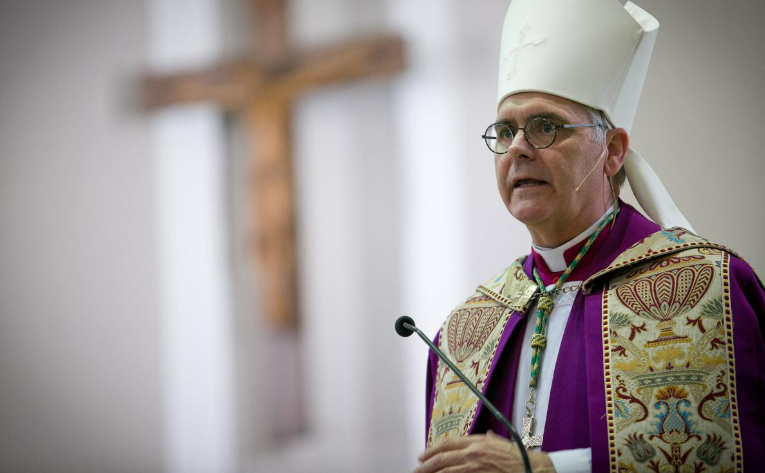
Oklahoma City Archbishop Paul S. Coakley wrote to the Statewide Virtual Charter School Board in November 2021, asking: “Before the Archdiocese undertakes the necessary time and expense to prepare a charter school application, I request confirmation that such an application will not be denied because of our religious affiliation or because of the integration of religion into our schools’ operations and programs.” Photo courtesy of Chris Porter
A meeting of an obscure state board set for Tuesday could swing open the door to religious charter schools nationwide.
Members of the Statewide Virtual Charter School Board in Oklahoma are expected to consider an application by the Archdiocese of Oklahoma City and the Diocese of Tulsa to open an online charter school that would include religious instruction among its offerings. If approved, it would be the nation’s first religious charter school.
So far, the two Catholic organizations in Oklahoma have been the only ones pursuing charter school authorization, said Shawn Peterson, president of Catholic Education Partners, a nonprofit that supports education choice efforts across the nation.
However, if Oklahoma gets authorization, which is not expected to be announced for a couple of months, look for other states to follow, he said.
“I think it may become a reality in Oklahoma in the short term, although I suspect that it will be challenged in court,” he said.
The two organizations began planning to apply for permission to open the virtual charter school in November 2021, when Archbishop Paul Coakley sent a seven-page letter to the board outlining the case for allowing a religious organization to open a charter school.
“The Archdiocese is enthusiastic about sponsoring a virtual charter school to improve educational opportunities for children and families in the state,” he wrote. “Yet we cannot ignore the reality that, regrettably, the discriminatory and unlawful exclusion of religious schools remains at least formally on the books of the state’s Charter School Act.”
Coakley cited the 2020 U.S. Supreme Court ruling in Espinoza v. Montana Department of Revenue that found that exclusion of religious schools from participating in a tax credit school choice scholarship program because of their religious status was unconstitutional. In his letter, Coakley also referenced Carson v. Makin, then a pending case that involved Maine’s ban on religious schools’ participation in “town tuitioning” programs that give private school scholarships to students in towns without public high schools.
Shortly after the archbishop’s letter was written, the U.S. Supreme Court agreed to hear Carson. On June 21, 2022, the justices ruled in favor of the plaintiffs, who had been barred from using the scholarship to send their daughter to a private Christian school.
The archbishop also references a case that the U.S. Supreme Court is considering hearing that involves a conservative North Carolina charter school whose dress code required that girls, whom it describes as “fragile vessels,” wear skirts to promote a traditional of “chivalry” and “respect.”
A group of parents who sued argues that the public school’s policy violated their daughters’ constitutional rights. In its defense, Charter Day School argues that charter schools were not “state actors” but essentially private schools, with only broad state oversight. In its ruling for the plaintiffs, the Fourth Circuit Court of Appeals, however, called charter schools public schools and therefore subject to state and federal anti-discrimination laws.
The high court has asked the solicitor general, the Biden administration’s top Supreme Court lawyer, for guidance before deciding whether to consider the case.
Meanwhile, Oklahoma Attorney General John O’Connor issued an opinion that says a state law that prohibits religious organizations from operating a public charter school likely violates the First Amendment of the U.S. Constitution and therefore “should not be enforced” because of rulings from the Oklahoma Supreme Court and U.S. Supreme Court.
In the Dec. 1 opinion, O’Connor cited three U.S. Supreme Court rulings: Trinity Lutheran v. Comer, in which the court ruled that religious organizations can’t be barred from participation in general benefit programs based on their status, as well as school cases Espinoza and Carson.
“As the U.S. Supreme Court emphasized in Carson, ‘a neutral benefit program in which public funds flow to religious organizations through the independent choices of private benefit recipients does not offend the Establishment Clause.’ … No student is forced to attend a charter school—it is one option among several for parents. … The Establishment Clause therefore provides no cover for a clear Free Exercise Clause violation here.”
The opinion drew praise from the American Federation for Children, a national education choice advocacy group.
“We applaud Attorney General John O’Connor’s opinion that underscores the right of families to access the best educational options for their kids,” Jennifer Carter, senior adviser for the American Federation for Children -- Oklahoma, said in a statement. “Today’s AG opinion is entirely in keeping with the spirit of what charter schools are meant to be: free public schools that offer tailored experiences to students in addition to those available in traditional public schools.”
However, not all education choice advocates share that view.
“Specifically, we take issue with the Attorney General’s assertion that charter schools are private entities/contractors that are not bound by the First Amendment’s Establishment Clause,” said Nina Rees, president and CEO of the National Alliance for Public Charter Schools. “The legal precedent cited in the Oklahoma Attorney General’s opinion (Trinity Lutheran, Espinoza, and Carson) are cases dealing exclusively with private schools, not charter schools, and we believe the precedent simply does not apply to public charter schools.”
Rees went on to say that her organization “believes there is no such thing as ‘private religious charter schools’… All charter schools are public schools. Public schools have never been able to, and cannot now, teach religion, require attendance to religious services or condition enrollment or hiring on religious beliefs. While a sectarian organization may be permitted to operate a charter school, that school must remain a nonsectarian, open enrollment, non-discriminatory public school.”
Other education choice advocates have raised questions the possible fallout if the religious charters are allowed.

