This à la carte learning provider uses woodwork to instill deeper lessons
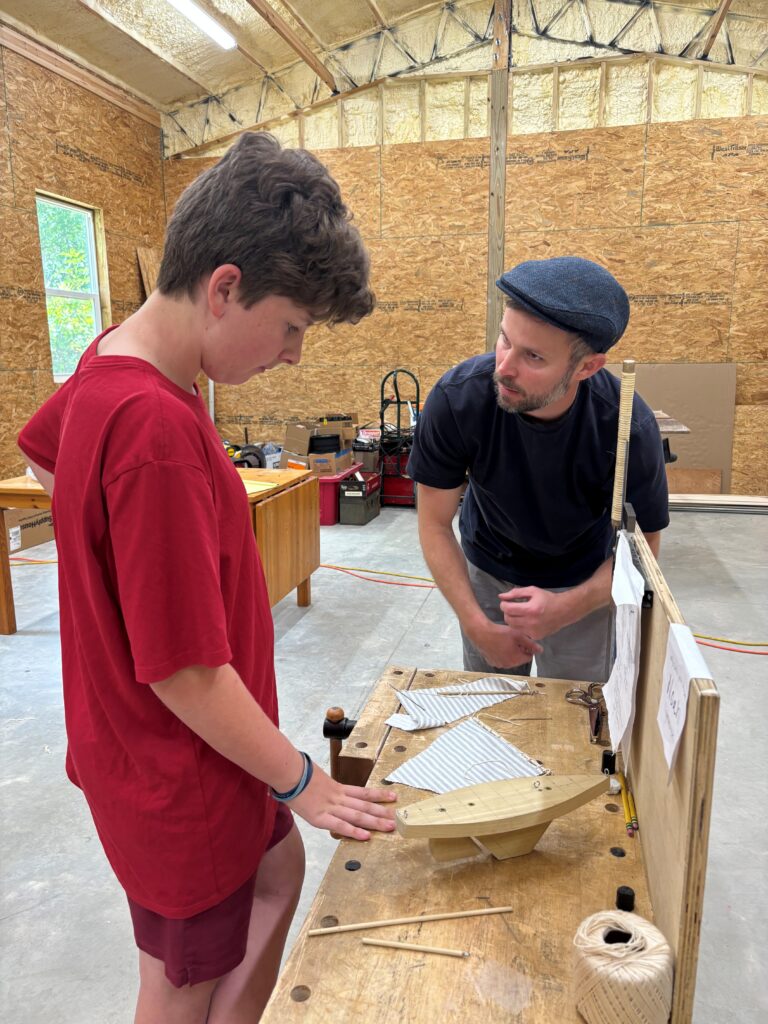
JACKSONVILLE, Fla. — Alex Knott began to gravitate toward woodworking in 2021, first as he was remodeling he and his wife’s fixer-upper, then as he was teaching his friend’s kids how to build birdhouses. His interest led him to the classic PBS show, “The Woodwright’s Shop.” He watched, rapt, when the series re-aired a segment about “sloyd,” an approach to education through woodworking that originated in Scandinavia in the late 1800s.
A year later, The Sloyd School was up and running.
Alex’s wife, Lindsey, tapped their homeschool connections for an initial cohort of 21 students. That turned out to be more than enough for Alex, then a gainfully employed mechanical engineer, to realize he wanted to do this full time.
“The kids didn’t use a lot of words, but you could see it in the smiles on their faces. They’d say, ‘This is so cool’ and ‘This is so satisfying,’ “Alex said. “And their parents would say, ‘It’s nice that they’re using their hands to make things, and they’re off the screens.’ “
Demand, too, signaled the Knotts were on to something. Today they serve 91 students across 13, 90-minute classes. The students range from 8 to 20 years old.
Alex’s full-time job now is being their instructor.
They’re “not doing it because they’re necessarily going to be a woodworker someday,” Alex said. “They’re doing it because they want to learn, and they want to make stuff, and they just love planing and sawing and the way they’re bodies move.”
“If they take satisfaction and pride in their work,” he continued, “that’s going to carry forward.”

The Sloyd School is another bloom on the most diverse and dynamic education landscape in America.
In Florida, where school choice and education choice are the new normal, it’s easy to find former public school teachers behind new schools and à la carte providers. But it’s also not hard to find other talented people creating compelling options, like this marine biologist … this neuroscientist … this building contractor …
Alex worked as a design and process engineer. Lindsey taught literature in a hybrid homeschool. Now their fledgling operation is one of roughly 8,000 à la carte providers that, in just a few short years, are already part of Florida’s choice-driven education system. With 150,000+ à la carte learners and more than $1 billion in à la carte spending this year, Florida is setting the pace nationally when it comes to unbundling education.
Classes at the Sloyd School are aimed at cultivating “skilled hands and wise hearts.”
The magic happens in a spacious workshop next to the Knotts’ home. It’s sweet with the smell of sawdust and alive with the bang and scrape of wood being transformed.
Most of the students use either the Personalized Education Program scholarship or the Family Empowerment Scholarship for Students with Unique Abilities. Both are education savings accounts that can be used for parent-directed learning.
The students fashion their projects at individual work benches, arranged in two rows against a backdrop of walls made from oriented strand board and wood scraps stacked neatly on shelves. With planes and files and a variety of other hand tools, they make everything from yo-yos and hat racks to toy sailboats and crossbows.
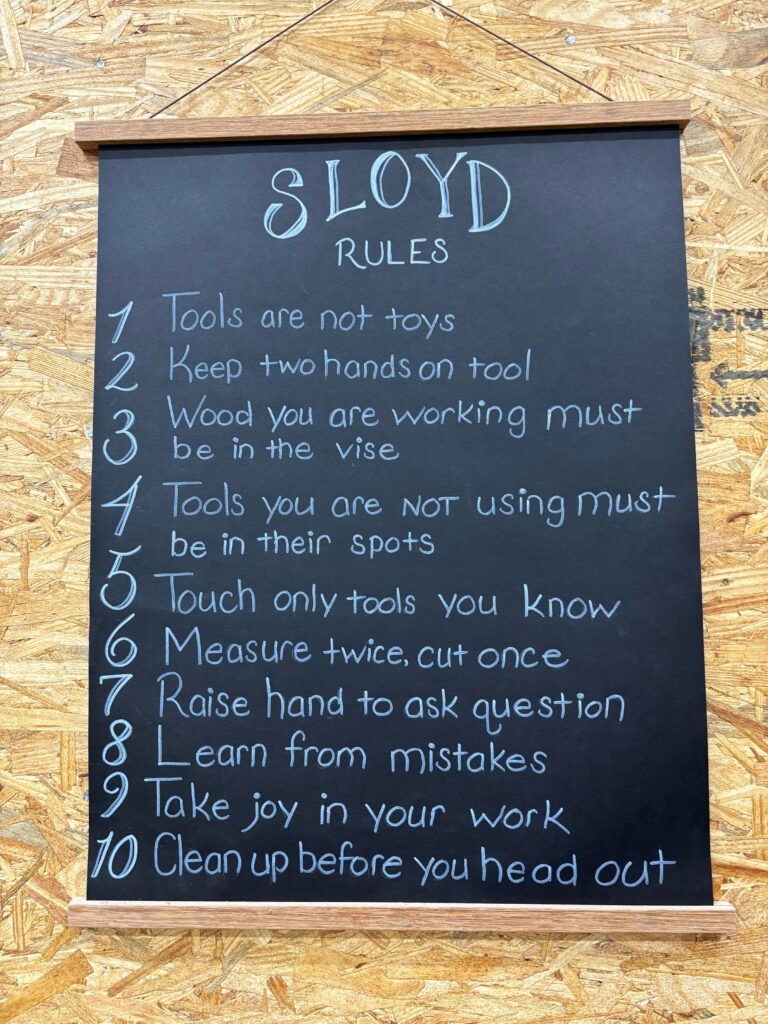
Power tools are not in the mix. The school website explains why, in terms that should be savored:
“Because hand tools function as an extension of the hand, rather than reducing the hand to a manipulator of buttons or mechanical arm, they immerse us in the full benefits of handwork; they bring the world close enough to experience its spectacular range of textures and scents and hues, to feel the difference between working with rather than against its grains and currents and patterns, to move from knowing about the world as a fact to knowing it as a friend.”
Alex scaffolds his lessons, starting with the simplest exercises, then adding new skills class by class. The students follow written instructions for their projects. But Alex offers guidance as he makes the rounds with a newsboy cap on his head and a pencil perched on his ear.
“This side looks really, really tight,” he told a student making a stool, referring to where a leg fit into the socket on the underside of the seat. “But this side’s got a little gap.”
Another student was making a helicopter-on-a-stick toy that’s propelled by spinning the stick between the palms and abruptly stopping. “I’ve found that if you make these a little thinner,” Alex said of the blades, “it’ll fly better.”
Both students listened and nodded, then got back to work.
Sloyd is about way more than the practical skill of making things with wood.
The lessons are deeper: Pride in work. Problem solving. Persistence …
Laura Flaherty enrolled her oldest son Matthew after hearing about the class in 2023. Her father, a civil engineer whose hobby was woodworking, unexpectedly died five years ago just as he had begun to teach Matthew the basics.
“We were all happy to have someone with as much skill and knowledge as Alex teach our boys,” said Laura, a former veterinarian who’s now a stay-at-home mom of four. “He’s a calming presence too. He’s so good with how he explains things.”
Matthew, now 12, likes the challenge. His favorite projects are the toughest ones, like the windmill he finally finished after breaking several blades.
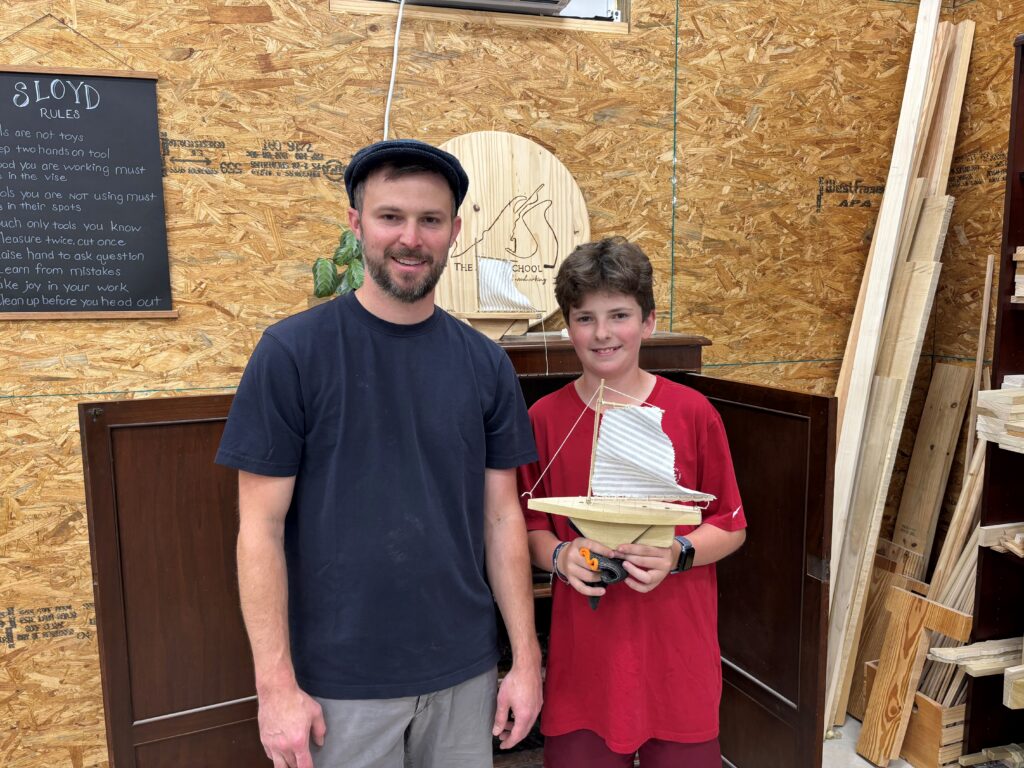
“There were several projects he told me were frustrating, but he kept at it,” Laura said. “If you make mistakes, you keep moving and eventually you’ll get it.”
The Sloyd School feels like a bridge, not only between past and present, but between different educational camps. It evokes other threads in alternative education, like the “common arts” idea that surfaces in some classical education circles, and the “handwork” from Waldorf education.
The school website nails the deeper connections.
“To shove a plane across a pine board is to work in the pattern of countless others across time and place, and to join hands with them in sustaining and shaping a facet of human culture,” it says. A few sentences later it adds, “Yet over above all this, we delight to work with wood because it is a living material, individual, intriguing, and lovely.”
Piece by piece, The Sloyd School and other à la carte providers are re-shaping public education into something more individual, intriguing, and lovely, too.
GLEN ST. MARY, Fla. – Baker County is in a piney corner of North Florida that hugs the Georgia line near the Okefenokee Swamp. It’s part of metro Jacksonville, but on the country side, not the coastal side, still more small town than sprawl. Its biggest town, Macclenny, boasts 7,304 people. One of its top employers is a Walmart distribution center.
Places like Baker County aren’t often associated with school choice and innovation, but it’s not because those things aren’t happening there. They are. In fact, in the mega-state with the most diverse and dynamic education system in America, it’s Baker County that’s home to one of the biggest and most intriguing hybrid homeschools.
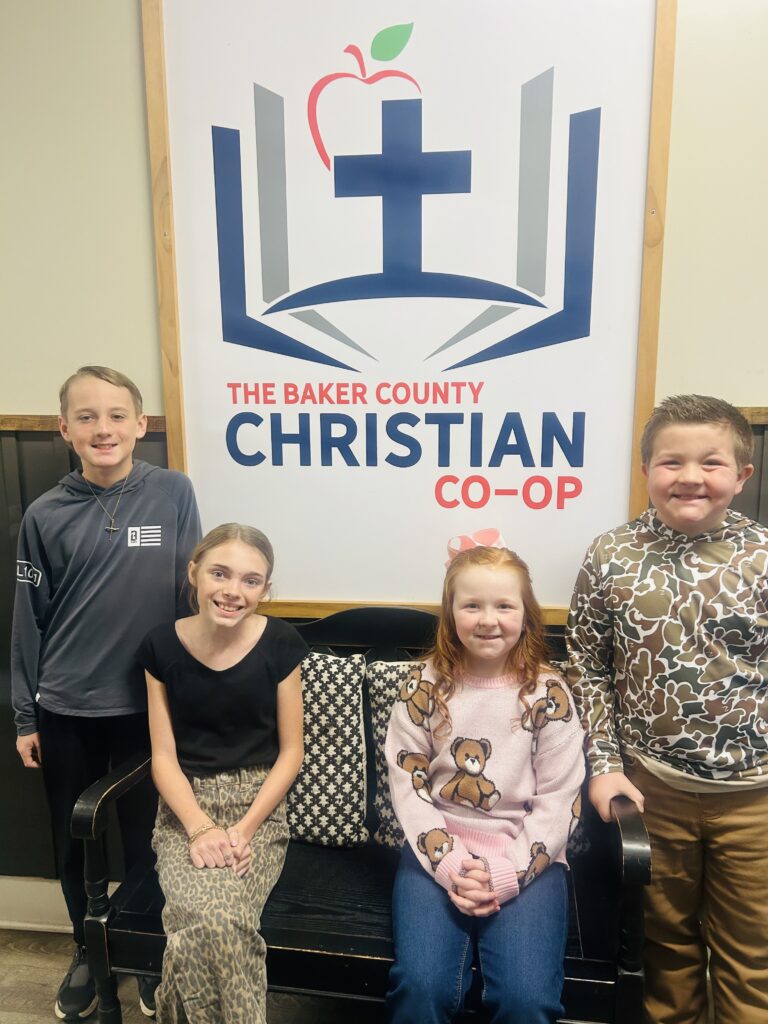
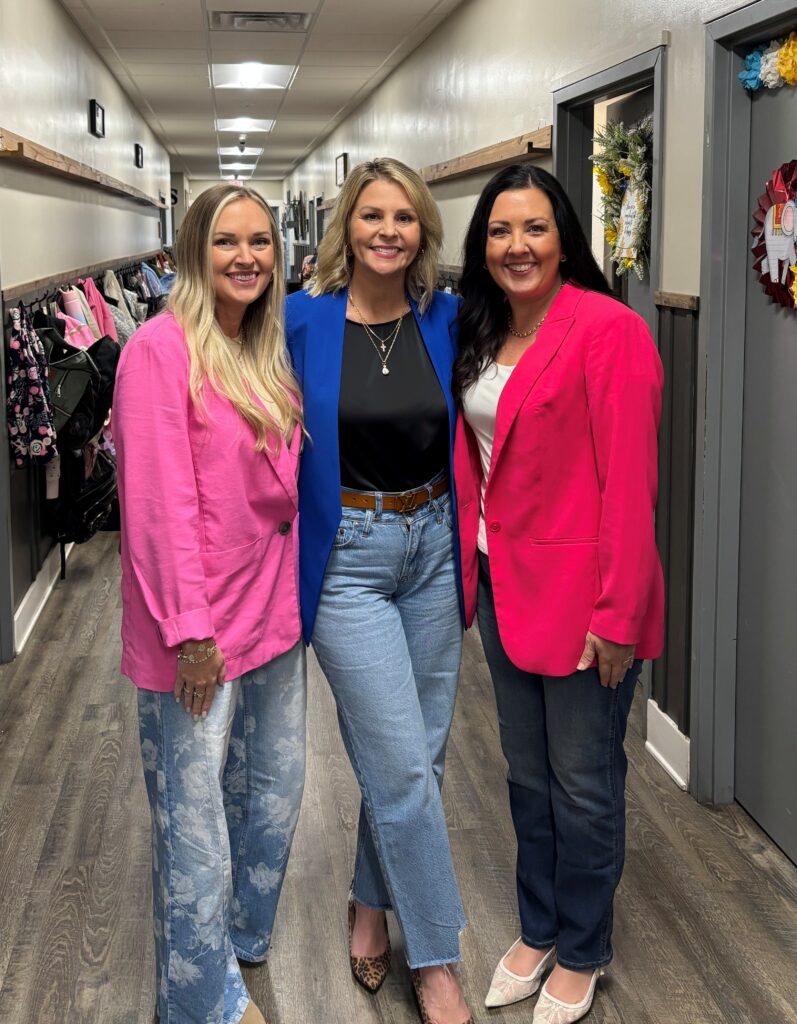
Nine years ago, three former public school teachers, Tara Rhoden, Katie Wilford, and Amy Blankenship, said goodbye to nearly 40 years of collective experience in the local public schools and went all in on the Baker County Christian Co-op.
Their four-day-a-week creation started with 45 students in grades K through six – and no plans to grow beyond grade eight.
But now BCCC has nearly 300 in grades K-11 – and 600 more on a waitlist.
That’s not a typo. SIX HUNDRED MORE ON A WAITLIST.
In a school district with 4,000 students.
“I joke that it’s the Disney World of education,” Katie said. “Everybody is happy. They want to be here.”
“There weren’t really choices in Baker County,” Amy said. “But we provided a choice.”
BCCC is another example of what’s possible when education choice is the new normal, as it is in Florida.
Its existence shoots down multiple myths.
School choice isn’t good for teachers? BCCC’s co-founders are among hundreds of former public school teachers in Florida who’ve created their own schools. Meanwhile, 16 of the co-op’s 17 teachers previously worked for public schools. (The one exception is Tara’s daughter, a product of local public schools, who started her teaching career at BCCC.)
School choice can’t work in rural areas? Baker County is one of Florida’s 30 rural counties; it has a grand total of 30,000 residents. Yet nearly every student at BCCC uses a flexible, state-supported choice scholarship, better known as an education savings account. It’s not hard to find other cutting-edge, choice-fueled learning options all over rural Florida.
Education innovation is a city thing? BCCC sets its pricing at $1,000 less than the value of the ESA, so parents can use their funds for other state-approved educational uses. “Incentive to hunt for value” is what ESA designers were aiming for when they were fine-tuning the concept two decades ago, and here it is happening in a county with more interstate rest stops (2) than Starbucks (1).
At BCCC, each co-founder had good reasons for wanting options for her own children.
Amy’s daughter had a tough time socially in elementary school, so Amy considered homeschooling her. But she worried that might leave her daughter in a situation where she wasn’t getting enough social interaction.
Katie’s daughter was in a faith-based preschool, and Katie appreciated how faith and academics were intertwined in a way they could not be in a public school.
Tara’s son, meanwhile, had health complications that made a full-time school difficult.
Tara and Katie, who were also curriculum coaches in the public schools, had thought about starting their own school. Years ago, Tara visited the school in Atlanta founded by legendary educator Ron Clark. That kept the dream alive, even if she never acted on it until co-founding the co-op.
“He just made learning fun,” Tara said. “I wanted to be that teacher.”
When the trio finally decided to go for it, they needed 30 students right off the bat to make the finances work. After the co-op’s first parent night, 31 students signed up.
For the most part, BCCC’s curriculum is aligned with the state’s academic standards. Even though those standards were designed for public schools, it’s not hard to find private school educators who value them.
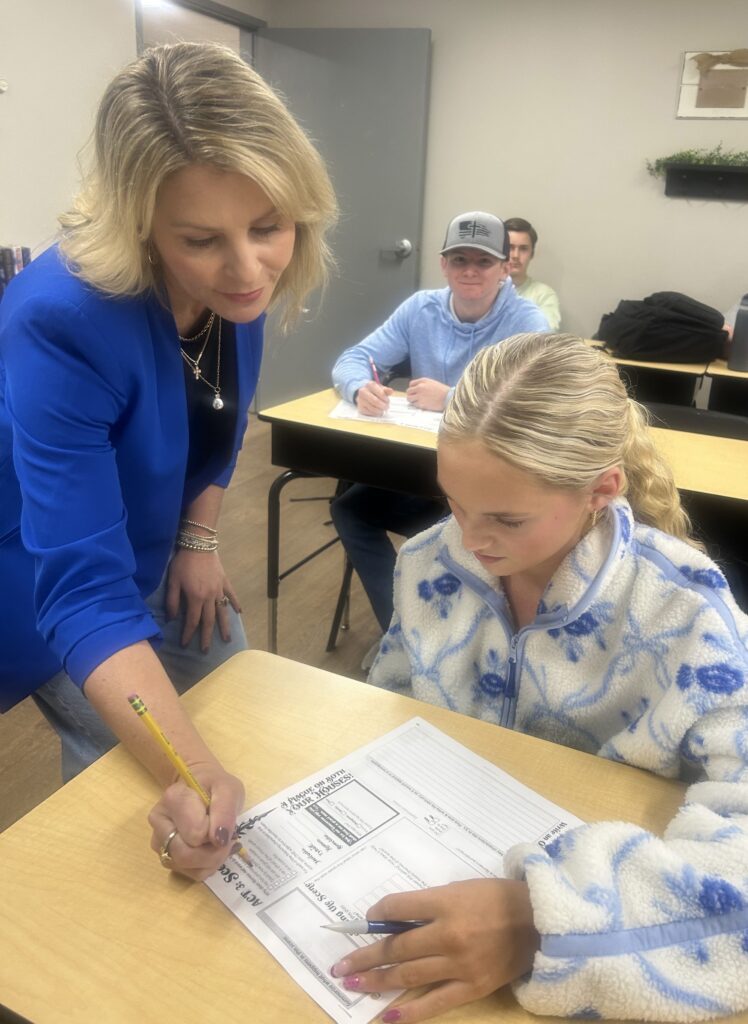
At BCCC, students in kindergarten through fifth grade study the core academic subjects and the Bible every day.
Students in sixth through 12th grade follow the same regimen, but with electives like health, home economics, and agriculture in the mix, too.
About half of BCCC’s high school students (the co-op will be fully K-12 next year) also take dual enrollment classes through a nearby state college.
“We’re going to give you what you need to be successful,” Amy said. “For those four days, it’s jam packed. We push these students.”
It’s what happens beyond academics, though, that makes the founders especially grateful they followed their hearts.
When Amy’s daughter was sick, for example, Katie’s daughter and her friends made a video for her, a compilation of 10 other students wishing her well and offering her prayers. No one asked these girls to do that; they just knew it would help their friend.
“This is why we did what we did,” Amy said.
“We’re not fighting the school system. We’re fighting the world,” Katie said. “We take faith very seriously.”
BCCC has always been four days a week. The founders decided from the start that they would not offer classes on Fridays because “it’s such a good family day,” Katie said.
BCCC has additional flexibility because it’s a co-op, not a private school. Attendance is not mandatory.
The founders said they never thought much about school choice before starting the co-op. With few options beyond public schools in Baker County, the idea seemed irrelevant.
That changed in 2023. That’s when the Florida Legislature and Gov. Ron DeSantis made every student in Florida eligible for choice scholarships and created the Personalized Education Program scholarship, which gave families of general-population students more flexibility with the funds.
Suddenly, more families could access what BCCC offers.
Jennifer Franks’s family was among them.
Jennifer enrolled her daughter, Jencee, 8, and son, Cutler, 10, after they attended the neighborhood school for several years. Her kids had good experiences and great teachers, she said. But BCCC offered features her family considered vital: smaller classes, a Christian education, and that family day on Fridays.
Academically, she said, her children are accelerating. And meanwhile, her family gets more time together.
Jennifer is a hair stylist. Her husband is an electrician. Both adjusted their work schedules to have Fridays off and long weekends with the kids. BCCC’s schedule syncs with that perfectly.
“That was a big selling point for us,” she said. “You just don’t get that time back. Your kids are only little once.”
BCCC isn’t sure how to accommodate all the families who want in. But there are plans for another building that can hold additional students. If all goes well, it’ll be in place by the start of school in 2027.
Meanwhile, word has gotten around about BCCC’s success.
Educators in other rural counties have reached out to learn how they can start their own operations. BCCC’s founders say there’s no reason they can’t.
With choice, Katie said, “all communities can come together and create something like this, to do what’s best for all children.”
PINELLAS PARK, Fla. — Surrounded by students in crisp school uniforms, a group of educators, faith leaders, and families urged Florida’s teachers union to drop a lawsuit that seeks to end the nation’s largest K-12 education choice programs.
“I am not anti-public school. Public schools work for many children. But they don’t work for every child, including my sons,” said Leslie Coker, a stay-at-home mom whose two school-age sons have radically different unique abilities and who have benefited from the learning options the programs provide. The scholarships made it possible for a single-income household like hers to afford to send one child to a hybrid school and homeschool the other son full time. Both boys are thriving in learning environments that best fit their individual needs.
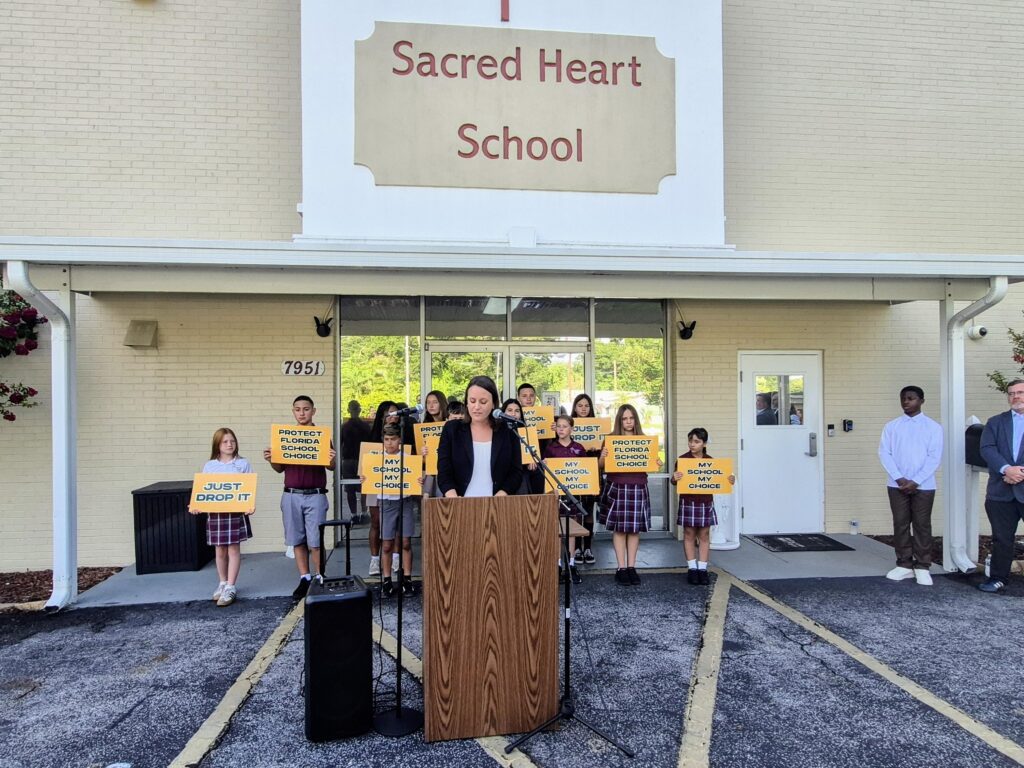
“For me, this lawsuit is not political. It is personal. If it succeeds, the impact will hit my family hard, as well as many others," the Bradenton area mom said. We are living proof that education choice is working in Florida. I urge the teachers union to respect our choices and drop the lawsuit.”
Mrs. Coker made her plea on Wednesday at a news conference at Sacred Heart Catholic School, which serves more than 200 students in preschool through eighth grade. Florida Catholic schools have increased their enrollments over the past decade in contrast to their counterparts in other states, which have seen declines. They credit Florida’s robust state scholarship programs, which have made the Sunshine State the national leader in empowering parents to choose the best learning options for their children.

“Ultimately, this debate comes down to one simple question: Who is best equipped to make educational decisions for these children? A bureaucrat sitting in an office hundreds of miles away? Or the parents who know, love, raise and sacrifice for that child every single day?” said Christopher Pastura, schools superintendent for the Diocese of St. Petersburg. He called the lawsuit “misguided and wrong” and urged the union to withdraw it.
“We cannot go backward,” he said.
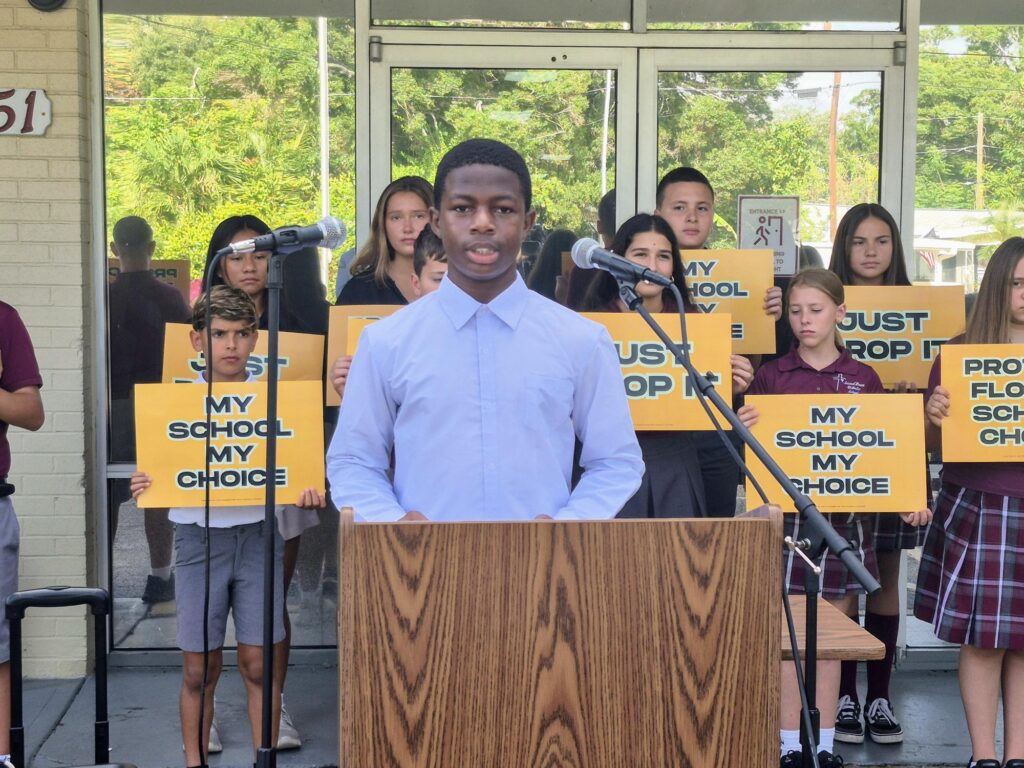
Supporters began speaking out within weeks after the Florida Education Association and others sued the state on May 5 over its three-decade-old private school scholarship and charter school programs. The latest figures from the Florida Department of Education show that 1 million Florida K-12 students are now educated outside of district schools. A news conference, organized by former Gov. Jeb Bush’s Foundation for Florida’s Future, was held May 14 outside the Old State Capitol in Tallahassee. Step Up For Students, which manages virtually all the state’s K-12 scholarship programs, organized Wednesday’s event.
James Hartman, executive director for IDEA Public Schools in the Tampa Bay area, noted that Florida charter schools, which the law established in 1996, now serve nearly 400,000 students on more than 700 campuses.
“Charter schools are not opposed to public education,” he said. “Charter schools are part of public education.”
Hartman said he hopes that as the lawsuit makes its way through the courts, the focus can stay where it belongs — on students.
For the low-income families who live in the part of Tampa served by Faith Action Ministry Alliance (FAMA), the scholarship programs are not a luxury but a lifeline.
Students who attend the FAMA-owned Grant Park Christian Academy share what they learn at home, said the Rev. Alfred Johnson. That elevates the educational level of an entire community.
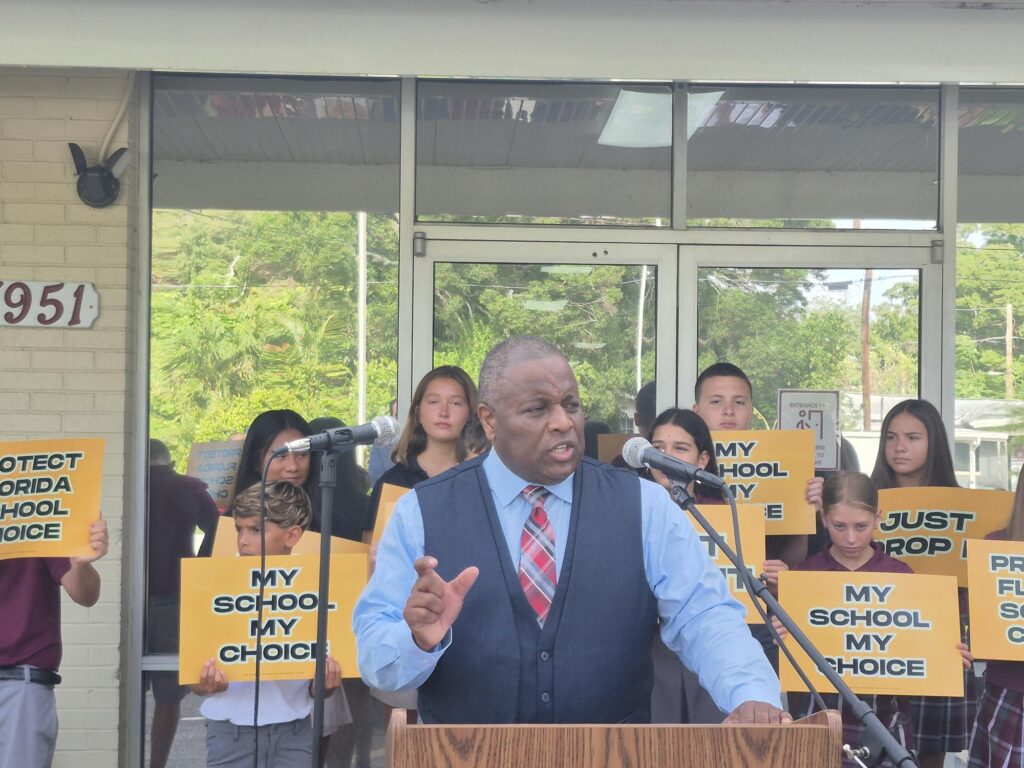
“I remember one mother telling us through tears, ‘My children are learning things at school that we didn’t even know in our home. They’re bringing it back home — and it’s changing our family.’”
Johnson said county commissioners tell him that more programs like his are needed to help those living in low-income communities.
“So how can we say we want to save neighborhoods while simultaneously attacking the very programs helping to save them?” he said. “I urge the teachers union to abandon this lawsuit — so that we do not abandon our children.”
Students at the University of Austin are getting an overview of the nation’s rapidly expanding education choice movement, including its storied history in Florida.
The survey course includes guest lectures delivered by top national researchers and thought leaders, including Ron Matus, director of research and special projects at Step Up For Students. The nonprofit organization is Florida’s and the nation’s largest education choice scholarship funding organization. Matus, who spent 25 years as a journalist and eight years as the state education reporter at the Tampa Bay Times, has authored many white papers on education innovation in Florida for Step Up.
The topic of Matus’s lecture was “Freedom, Pluralism and School Choice: Competing Rationales and Contemporary Practice” and included a special emphasis on education innovation in the Sunshine State.
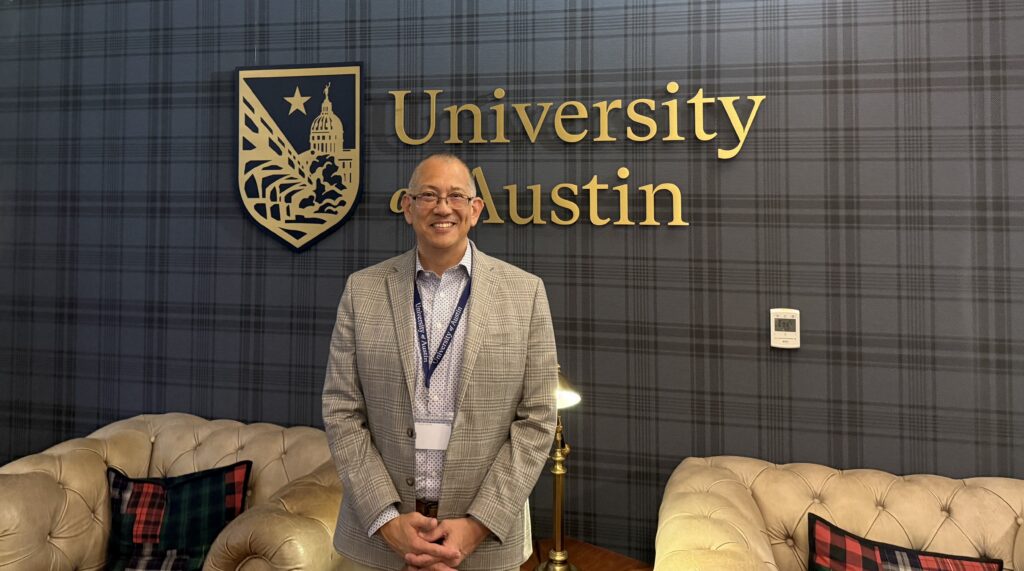
Matus shared the evolution of public education in Florida from its first model of neighborhood zoned district schools to the rise of charter schools, homeschooling, private school scholarships, educational savings accounts, a la carte learning, and even public schools now offering individual courses paid for with education savings accounts. He also described the many learning options now available, from traditional private schools to farm and forest schools to microschools and programs customized by families.
Matus also recommended reading that exposed students to various arguments in favor of education choice, including economist Milton Friedman’s 1955 groundbreaking essay “The Role of Government in Education,” which emphasized free markets and competition, and John E. Coons, a professor emeritus at the University of California, Berkeley, School of Law, who focused on dignity and fairness to all families regardless of income.
Erin Davis Valdez, executive director of the university’s Center for Education and Public Service, developed the course, which followed two K-12 practicums with rotations that began in the fall of 2025 at participating private and charter schools.
She describes the program as being in “the incubator phase,” and hopes to expand it into an academic minor.
“What we’re trying to do every term is offer a course for students interested in education policy as a career or in teaching as a career or something adjacent to it, like entrepreneurship,” she said. “But for now, students can take these as elective classes, and it builds their interest in the field.”
Valdez, who was homeschooled as a young child in Lakeland, Florida, a year before it became legal, said she chose the guest lecturers by looking for the best researchers and thought leaders in the movement. In addition to Matus, the list includes Eric Wearne, an associate professor in the Education Economics Center at Kennesaw State University and director of the Hybrid Schools Project. Wearne, who once described most traditional teacher prep programs as “thinly veiled arms of the HR department of the school district,” spoke on “Design Policy for New School Models.”
Others included Patrick Wolf, Distinguished Professor and 21st Century Chair in School Choice at the University of Arkansas, who spoke about the history of school choice policy, Jay P. Greene, senior fellow at the Defense of Freedom Institute, who spoke on the national responsibility of American universities; Katherine Bathgate, CEO and founder of SchoolForward, who spoke about economic foundations and emerging policy issues I education freedom; Mary K Wells, managing partner at Bellwether, who spoke on the last 30 years of education reform efforts; and Anita Scott, director of public policy for the Texas Home School Coalition, who spoke on connecting policy and practice in the homeschooling community.
Matthew Ladner, a senior adviser for education policy implementation at The Heritage Foundation’s Center for Education Policy and former executive editor of the NextSteps blog, is scheduled to lecture on June 1 about new directions in education choice and the question of accountability. The class will conclude June 8 with a lecture by Robert Pondiscio, a senior fellow at the American Enterprise Institute, whose topic is “The Last Days of Public School.”
TALLAHASSEE, Fla. — Parents, students, and education leaders who gathered at the Florida Capitol on Thursday had a message for the Florida Education Association, the teachers union that filed a lawsuit to end K-12 education choice scholarship programs used by nearly 540,000 children, as well as all charter schools.
Just drop it.
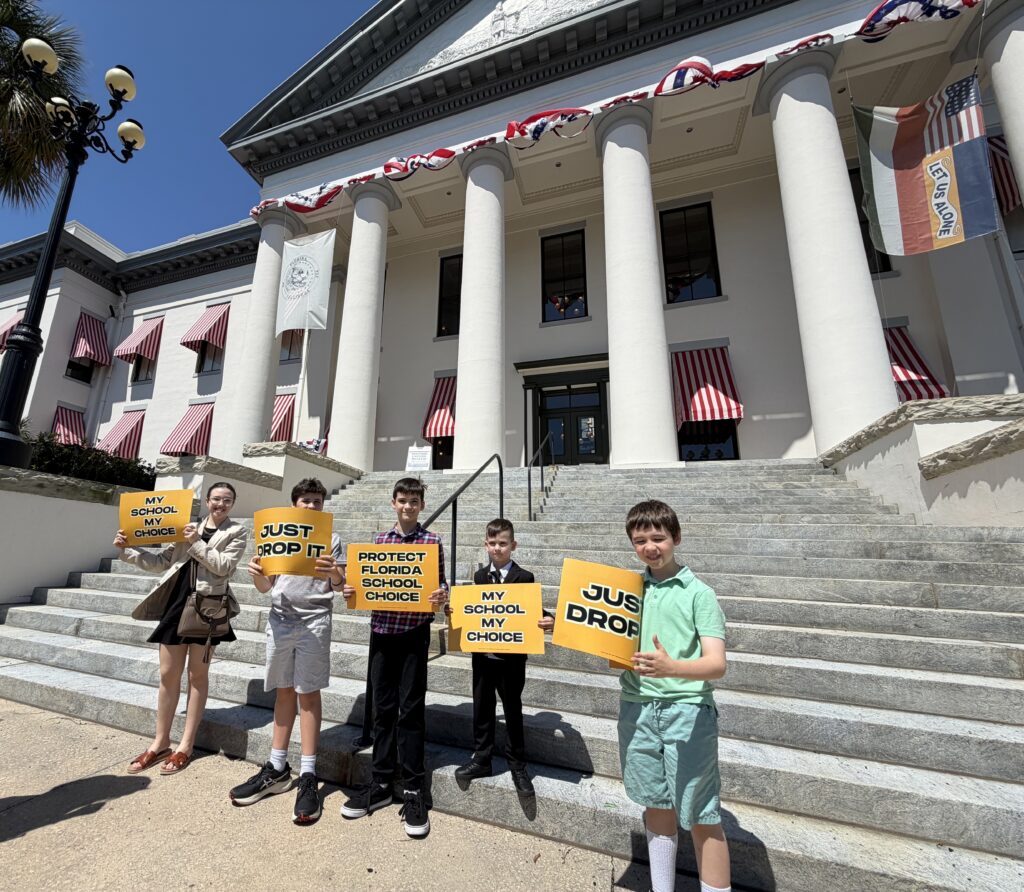
That was just one of the messages on the signs that supporters held up as they stood on the steps of the Old State Capitol building, as advocates proclaimed how education choice scholarships changed lives for the better. “My School My Choice” and “Protect Florida School Choice” could also be seen on the bright yellow signs. Former Gov. Jeb Bush’s Foundation for Florida’s Future organized the news conference. Bush launched the private school choice movement in 1999, right after he became governor.
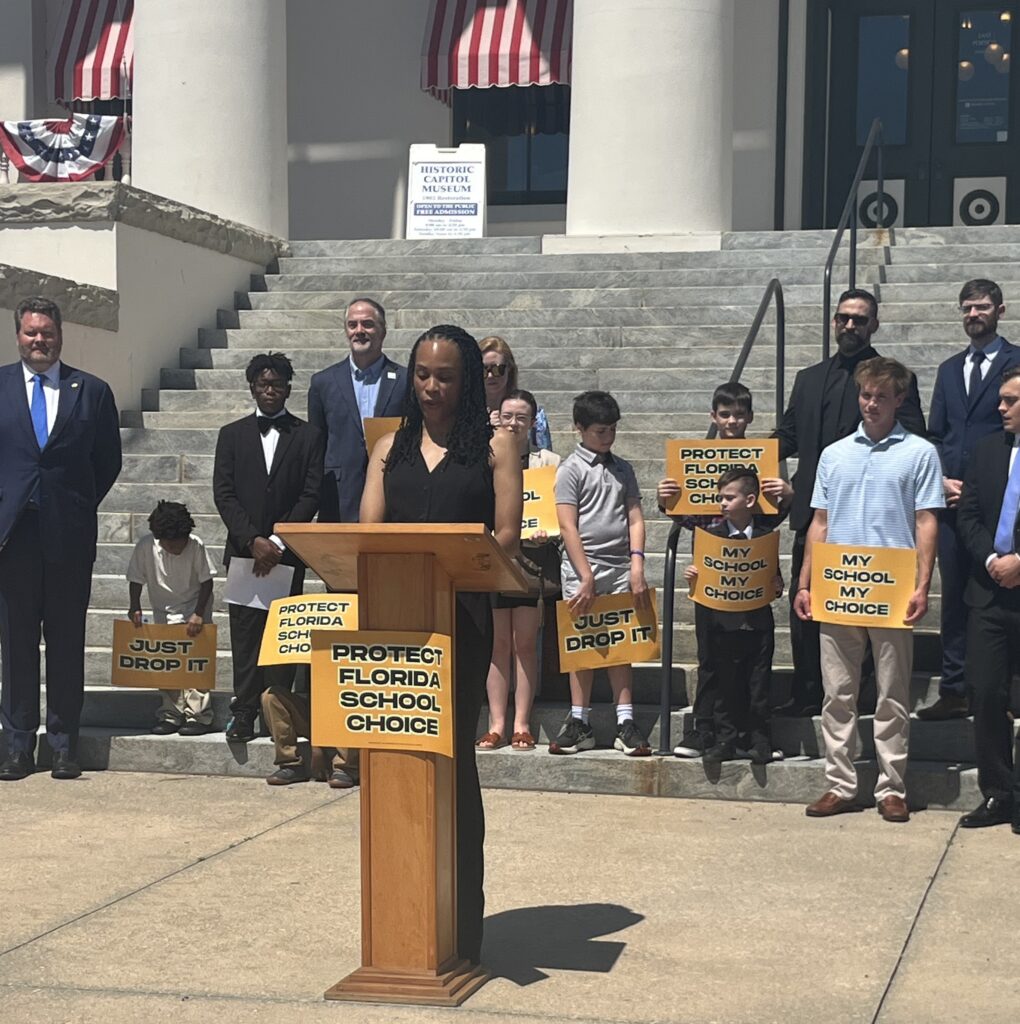
“The scholarships are VERY important to me,” said Kiteka Walker, whose son, Rashad, is in seventh grade at Dixon School for Arts & Sciences in Pensacola. After attending previous schools and homeschooling Rashad, he asked to return to school. She sent him to Dixon because it was the right fit, offering Rashad opportunities to participate in student government, the robotics team, and other enriching activities. The Florida Family Empowerment Scholarship he received made it affordable for him to attend the private school while his two younger brothers attended a private elementary school. If the lawsuit succeeds in eliminating the scholarships, Walker said she would have to homeschool him again because she could not afford private school for three children.
“Parents choose where we send our children to daycare, we choose where to go to college. Why can’t we do the same with K-12 schools?”
Rashad Walker, who traveled to the event with his family, shared how he is thriving at the school his mother chose for him.
“Dixon has been the perfect fit for me. It has a lot of culture and provides a bunch of opportunities in band, art, singing, technology, and media,” he said.
Rashad, who also participates in robotics and serves on the student council, said the school encourages him to try new things, like playing a piano that had been gathering dust at home for years.
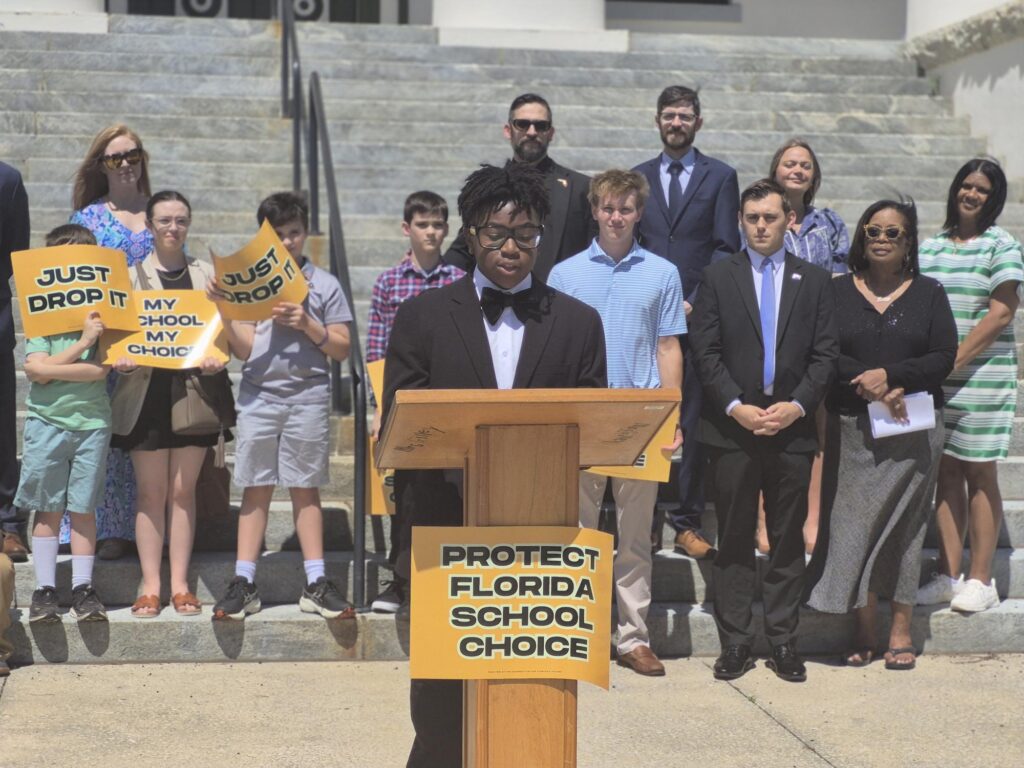
“Dixon inspired me to teach myself to play the piano. I practice every day on that piano at home. No more dust,” he said.
Last fall, when he was hospitalized for three weeks following knee surgery, Rashad created craft kits called DUCK bags that help kids combat boredom. He sold the kits at business fairs and is making some to donate to children’s hospitals.
None of that would have happened if it weren’t for Dixon, he said. And Dixon wouldn’t have happened if it weren’t for the scholarship.
“That’s why I don’t understand this lawsuit,” Rashad said. “Why get rid of something that is life-changing for other people? That helps them achieve better things in life?”
Rita Brown can see proof that education choice changes lives every day at Brownsville Preparatory Institute in Tallahassee, a private school she founded more than 20 years ago.
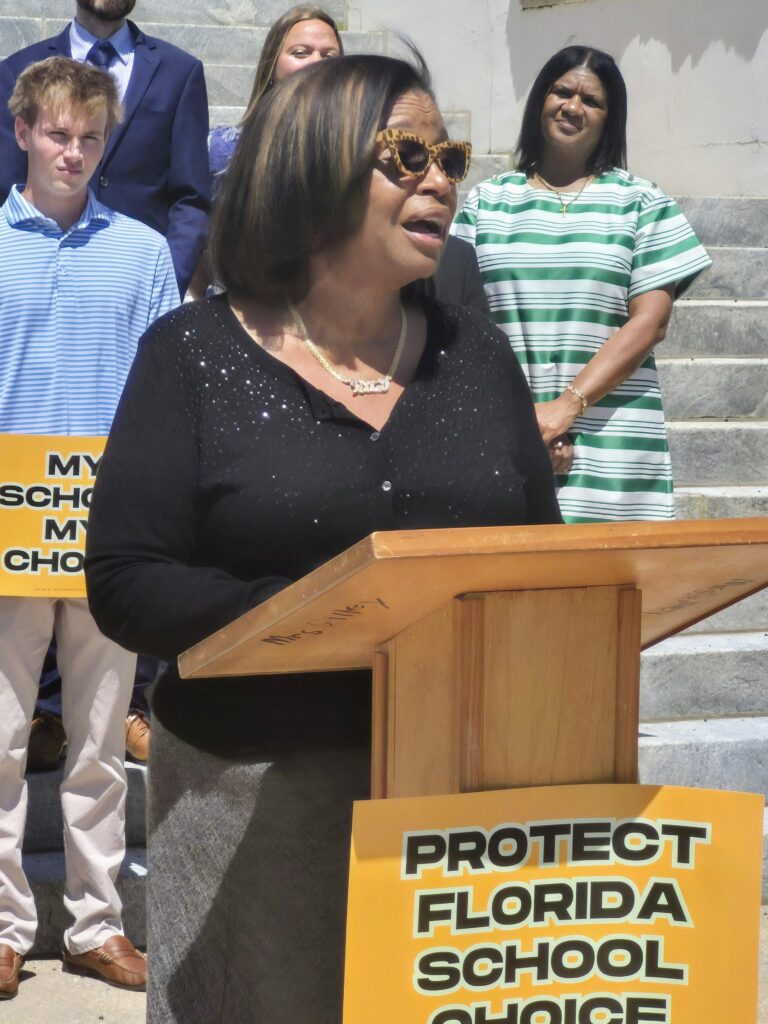
The school began as a pre-kindergarten and now serves 95 students through third grade. Brownsville is in a low-income community. Most parents can’t afford private education after their 4-year-olds complete the state-subsidized pre-kindergarten program.
The scholarships, Brown said, changed that.
It allowed her to add grades. Today, Brownsville students typically learn to read at age 3 and are adding, subtracting, writing, and learning cursive.
“We are the best school in our neighborhood,” she said. “Florida’s education choice scholarships have been a vital part of that.”
If the teachers union wins in court, Brown said, the school would lose most of its school-age children.
“That K-3 program would probably die. It would be devastating for our parents. We have all these students doing amazing things, but they would be forced to go to schools that don’t meet their needs. “
She called the lawsuit “frivolous” and “an attempt to turn back the clock.” But Florida is too embedded in education choice to return to a bygone era.
“At the end of the day, we need to be collaborative in educating all students,” Brown said.
The event inspired a lawmaker to attend to voice his opposition to the lawsuit.
State Sen. Jonathan Martin, R-Fort Myers, said empowering parents to choose the best options for their children does not take away resources from other students and makes America “the light on the hill that Ronald Reagan talked about.”
Florida’s robust scholarship programs have led the way and “will continue to make sure our light stays the brightest, not just in this country but around the world.”
For a glimpse into the future of public education, visit Florida.
Nearly three years after landmark legislation gave Sunshine State families the flexibility to choose from an expanding number of learning options, 75% of its 67 school districts now offer a la carte services.

In a recent Johns Hopkins University Homeschool Research Lab podcast, Keith Jacobs, director of provider development at Step Up For Students, explained how putting parents in control of their children’s education dollars is changing the way Florida students learn.
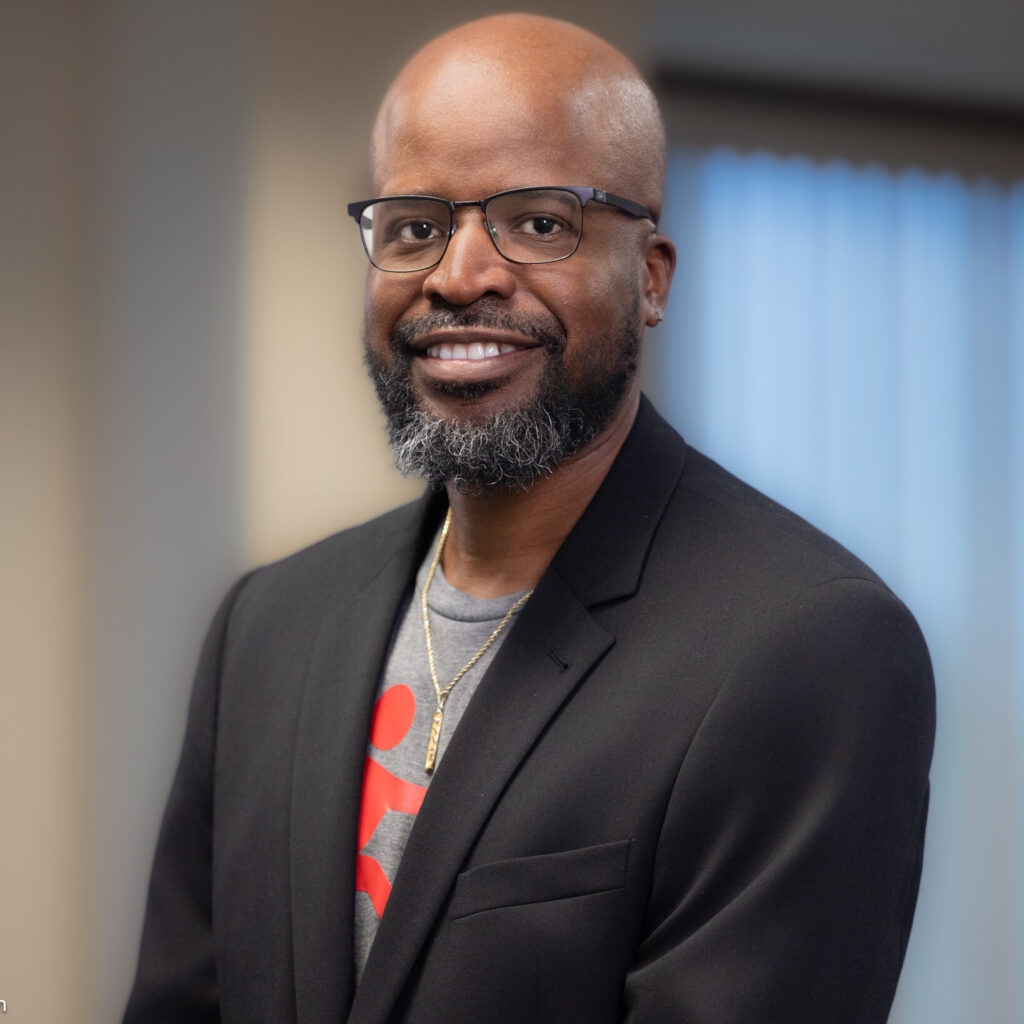
“In every major service offered in human experience, the need for customer service is evident,” said Jacobs, a former public school teacher and administrator. “So, when you’re talking about education, we’ve gone from government-sponsored, government-funded within the public school sector to now families being empowered with the money and the opportunity and the knowledge to make a decision on which a la carte model they feel is most valuable for their child. It’s no longer, ‘I have to go to my neighborhood public school based on the ZIP code we live in.’ They want that level of customization.”
Last year, roughly 80,000 students were funded in the Personalized Education Program, which allows parents to design customized learning for their children who are not enrolled full time in public or private schools. Another scholarship, the Family Empowerment Scholarship for Students with Unique Abilities, allows parents the choice between full-time private school or customized homeschool plans. Last year, about half of the more than 150,000 students who participated in the
UA option chose homeschooling.
“There are many different ways for families to experience homeschool education in Florida,” Jacobs told host Christy Batts, a senior research data analyst at the Johns Hopkins University School of Education, Institute for Education Policy.
Jacobs has spent nearly two years helping school districts expand learning options for students who receive funding through education savings accounts. These accounts allow parents to use funds for tuition, curriculum, therapies, and other pre-approved educational expenses. That includes services by approved district and charter schools.
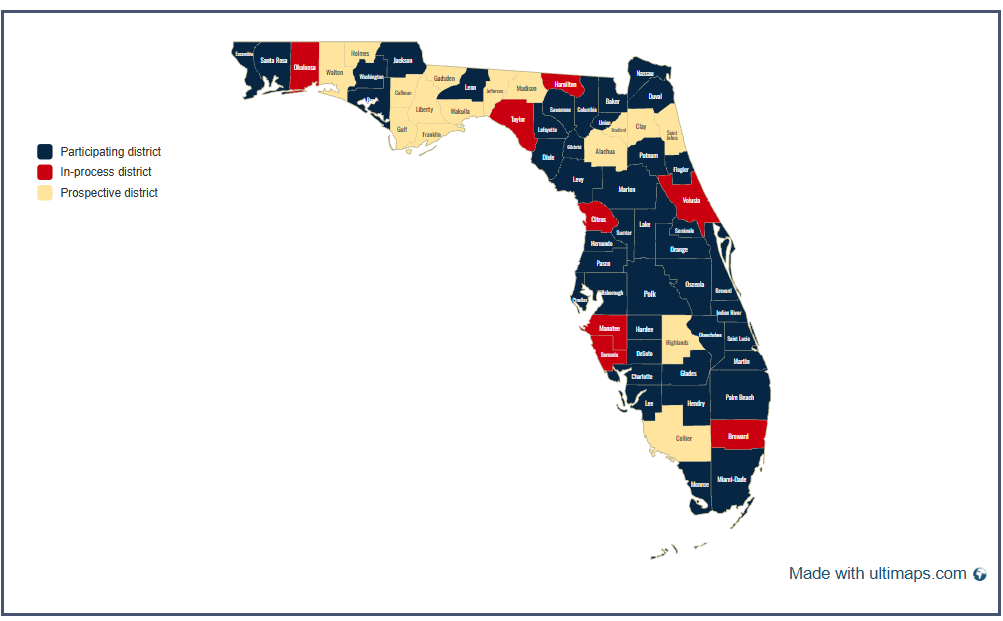
Jacobs said 51 of the state’s 67 public school districts have agreed to offer some form of unbundled services. Those can be in-person or virtual, core classes or extracurricular activities.
Jacobs sees the fact that more than 50% of families in Florida exercise some form of choice as a big motivator for school districts to innovate. When it comes to developing their own offerings, Jacobs said his team at Step Up lets district leaders take the lead.
“We try to meet them where they are,” he said.
Rashad Walker’s big idea was born last September in room 429 of the children’s ward of Ascension Sacred Heart Pensacola hospital.
Rashad, confined to a bed for three weeks after surgery to repair his knock knees, was bored.
“Insanely bored,” said his mom, Kiteka “Tiki” Walker.
There are only so many books you can read, TV shows you can watch, and video games you can play. His mom and dad, Sean, visited daily, and so did his two younger brothers, but eventually, they ran out of things to talk about.
If only there was a way to occupy your hands and your mind, to unlock the imagination. Get the creative juices flowing.
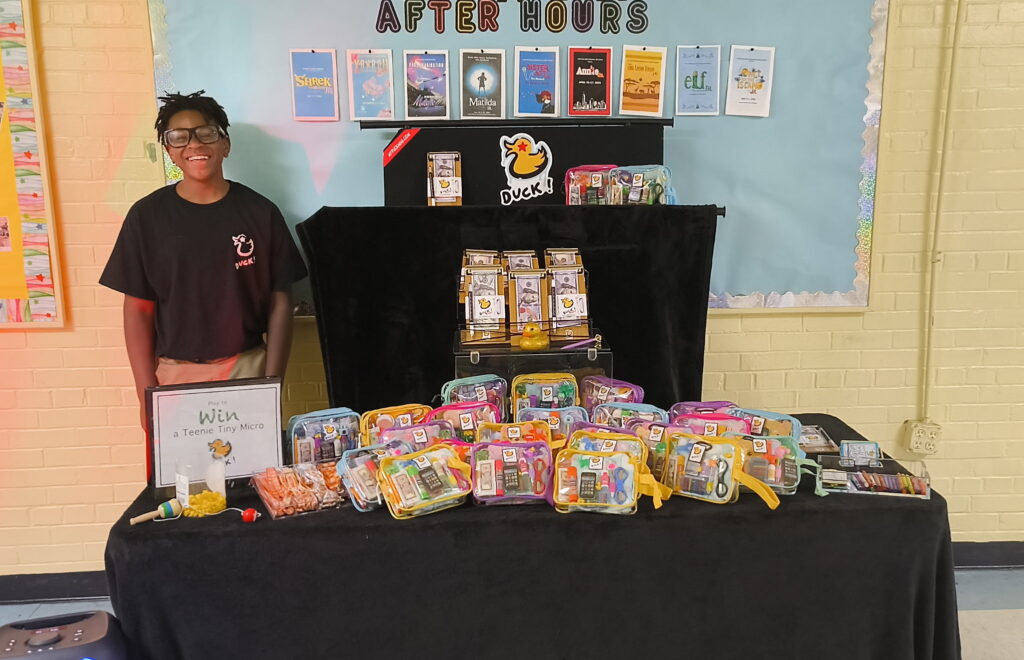
Rashad, 13, had an idea. It would require construction paper, glue, and scissors.
And imagination.
The result is DUCK, an acronym that stands for Different Unlimited Craft Kits.
“It’s kind of like an emergency kit, but it’s crafty,” he said.
Rashad is a seventh-grader at the Dixon School of Arts and Sciences in his hometown of Pensacola. He attends the K-8 private school with the help of a Florida educational choice scholarship, managed by Step Up For Students.
DUCK debuted in October at Dixon’s business fair. From there, Rashad was invited to sell his kits at the Pensacola Children’s Fair. The kits are priced at $25. Between the two fairs, Rashad made $600.
And he’s just getting started.
“I see myself as an entrepreneur, helping others, helping my generation, or the next generation,” he said. “I want to create more solutions for boredom.”
This is Rashad’s first year at Dixon, a school his mom and grandmother attended when it was still part of the Escambia County School District. Tiki was intrigued by the changes after it became a private school. She liked the arts and science components. The robotic and coding classes. The student-maintained garden.
“They seem to be well in tune to get more out of the students,” Tiki said. “Rashad wasn’t doing any of that yet, and I wanted him to.
“I felt like it was the school for him, and it’s been a wonderful experience. He just blossomed.”
Despite missing three weeks in the fall because of his hospital stay, Rashad quickly made an impact. He was elected to the student government and participates in the school’s music and dance programs.
“He looks for opportunities, which is really neat,” Dixon Principal Dr. Kevin Kovacs said. “He looks at the things we offer and just goes for it.
“It’s a pleasure to see his smile and warmth and drive to get involved. It’s hard to be a new student. It’s hard to be a middle school student. But Rashad fit in, and he fit in right away.”
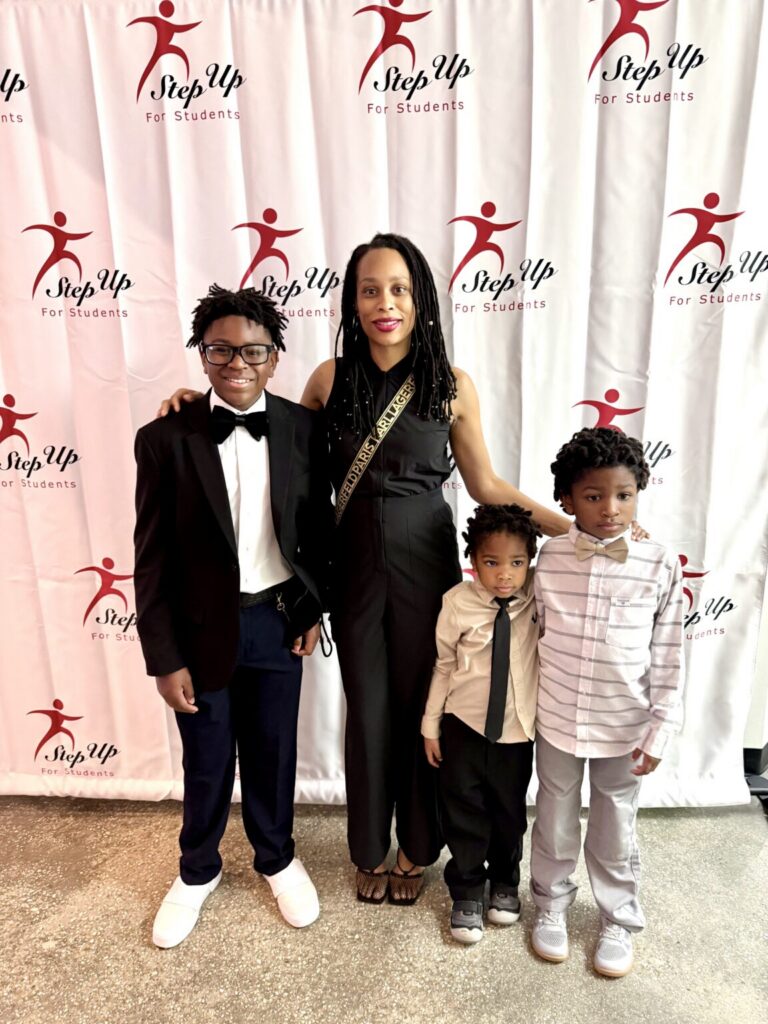
Rashad had to deliver a speech to the middle school when he ran for the student government. He told of how he wanted to help them and how they could help bring out the leader in him.
He had never been a member of the student government at any of his previous schools.
“I really want to help others,” he said. “I want to try new things.”
Those desires worked in tandem to bring about DUCK.
But first, understand this: Rashad has experience as an entrepreneur.
When he was 3, he received a kit that allowed him to engrave names and words into crayons. His parents set up a table for him at a flea market. Tiki said he made $50.
Two years ago, he took some of his mom’s excess supply of Easter-themed art supplies, made baskets, and sold them from the trunk of Tiki’s car, first on the road in front of his grandmother’s house, then on a busier road.
He made $200.
Rashad entered the hospital in early October for guided growth surgery, a procedure where a plate and screws were inserted into each knee. There were complications that required a longer-than-expected stay.
“And boy, he found out what true boredom is,” Tiki said. “I even found out that there was a different level of boredom than you can even imagine.”
Tiki has a container at home of what she called “junk.” It’s filled with feathers, beads, fake snow, old socks, and shirts.
“You name it, we've got it,” Tiki said. “We cut them up and turn them into something.”
What if the junk container were a small box, and the box was filled with items that could keep someone’s hands and mind busy?
Well, you’d have DUCK.
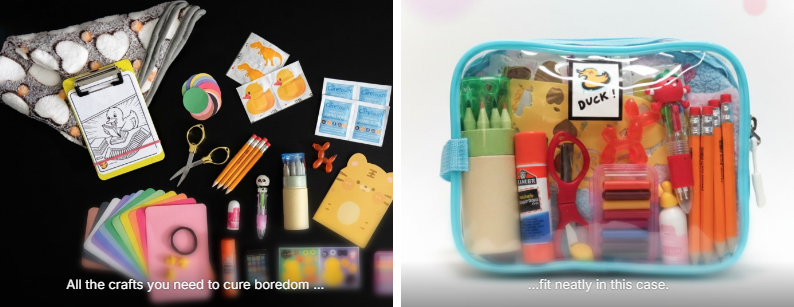
Each kit comes with construction paper that is 4 inches by 6 inches, a small pair of scissors that fold up, a miniature clipboard to hold miniature worksheets and coloring sheets, small crayons, colored pencils that come in a case, and glue.
There are Band-Aids, hand wipes, a hairclip, and lip balm.
The kit also contains a small blanket that can be used as a drop-cloth of sorts, so the items don’t roll away if the user is in a hospital bed or on a plane.
Rashad Walker’s big idea was born last September in room 429 of the children’s ward of Ascension Sacred Heart Pensacola hospital.
Rashad, confined to a bed for three weeks after surgery to repair his knock knees, was bored.
“Insanely bored,” said his mom, Kiteka “Tiki” Walker.
There are only so many books you can read, TV shows you can watch, and video games you can play. His mom and dad, Sean, visited daily, and so did his two younger brothers, but eventually, they ran out of things to talk about.
If only there was a way to occupy your hands and your mind, to unlock the imagination. Get the creative juices flowing.
Rashad, 13, had an idea. It would require construction paper, glue, and scissors.
And imagination.
The result is DUCK, an acronym that stands for Different Unlimited Craft Kits.
“It’s kind of like an emergency kit, but it’s crafty,” he said.
Rashad is a seventh-grader at the Dixon School of Arts and Sciences in his hometown of Pensacola. He attends the K-8 private school with the help of a Florida educational choice scholarship, managed by Step Up For Students.
DUCK debuted in October at Dixon’s business fair. From there, Rashad was invited to sell his kits at the Pensacola Children’s Fair. The kits are priced at $25. Between the two fairs, Rashad made $600.
And he’s just getting started.
“I see myself as an entrepreneur, helping others, helping my generation, or the next generation,” he said. “I want to create more solutions for boredom.”
This is Rashad’s first year at Dixon, a school his mom and grandmother attended when it was still part of the Escambia County School District. Tiki was intrigued by the changes after it became a private school. She liked the arts and science components. The robotic and coding classes. The student-maintained garden.
“They seem to be well in tune to get more out of the students,” Tiki said. “Rashad wasn’t doing any of that yet, and I wanted him to.
“I felt like it was the school for him, and it’s been a wonderful experience. He just blossomed.”
Despite missing three weeks in the fall because of his hospital stay, Rashad quickly made an impact. He was elected to the student government and participates in the school’s music and dance programs.
“He looks for opportunities, which is really neat,” Dixon Principal Dr. Kevin Kovacs said. “He looks at the things we offer and just goes for it.
“It’s a pleasure to see his smile and warmth and drive to get involved. It’s hard to be a new student. It’s hard to be a middle school student. But Rashad fit in, and he fit in right away.”
Rashad had to deliver a speech to the middle school when he ran for the student government. He told of how he wanted to help them and how they could help bring out the leader in him.
He had never been a member of the student government at any of his previous schools.
“I really want to help others,” he said. “I want to try new things.”
Those desires worked in tandem to bring about DUCK.
But first, understand this: Rashad has experience as an entrepreneur.
When he was 3, he received a kit that allowed him to engrave names and words into crayons. His parents set up a table for him at a flea market. Tiki said he made $50.
Two years ago, he took some of his mom’s excess supply of Easter-themed art supplies, made baskets, and sold them from the trunk of Tiki’s car, first on the road in front of his grandmother’s house, then on a busier road.
He made $200.
Rashad entered the hospital in early October for guided growth surgery, a procedure where a plate and screws were inserted into each knee. There were complications that required a longer-than-expected stay.
“And boy, he found out what true boredom is,” Tiki said. “I even found out that there was a different level of boredom than you can even imagine.”
Tiki has a container at home of what she called “junk.” It’s filled with feathers, beads, fake snow, old socks, and shirts.
“You name it, we've got it,” Tiki said. “We cut them up and turn them into something.”
What if the junk container were a small box, and the box was filled with items that could keep someone’s hands and mind busy?
Well, you’d have DUCK.
Each kit comes with construction paper that is 4 inches by 6 inches, a small pair of scissors that fold up, a miniature clipboard to hold miniature worksheets and coloring sheets, small crayons, colored pencils that come in a case, and glue.
There are Band-Aids, hand wipes, a hairclip, and lip balm.
The kit also contains a small blanket that can be used as a drop-cloth of sorts, so the items don’t roll away if the user is in a hospital bed or on a plane.
All of the items are purchased on Amazon and modified by Rashad and his mom.
The idea behind the smaller-sized contents is that everything can fit on an overbed table used in hospitals, a snack tray on a plane, or the backseat of a car.
“Trust me,” Rashad said, “you can have a lot of fun with this.”
Rashad wants to grow the product by adding crossword puzzles and word games. He’d like to make an instructional video for kids who aren’t used to arts and crafts. He would like to someday present DUCK to the investors of the TV show Shark Tank in the hopes of receiving financial backing.
Some of Rashad’s customers at the Pensacola Children’s Fair didn’t buy the kits for themselves. Rashad said they asked if they could donate them to the patients in the children’s ward at the hospital.
He thought that was a great idea.
“Because,” Rashad said, “I want to solve that problem where other kids won't have to feel that boredom while they're in the hospital.”
A new state law has replaced Florida’s patchwork of local zoning rules that had prevented some small private schools from opening, paving the way for robust school choice options to expand.
Gov. Ron DeSantis signed Senate Bill 182 on April 20. In addition to a broad swath of education changes, from a cursive writing mandate to a teacher mentoring program, it includes a provision that exempts private schools with 150 or fewer students from applying for costly rezoning and land use changes when operating in commercial or mixed-use zones and in nontraditional buildings, provided they meet fire safety standards or similar checks.
The new law takes effect on July 1. It benefits private schools of all sizes by expanding legislation passed in 2024 that allowed them to operate in houses of worship, museums, theaters, colleges, and former schools or day care centers without needing these changes.
SB 182 also lets them build new facilities on these properties or on land owned by Florida College System schools and state universities without zoning changes.
The new law covers faith-based and secular schools, with Jewish education leaders leading the push for its passage. According to the Florida Department of Education, 15,679 students are enrolled in 85 Jewish schools across the state.
Demand for Jewish day schools has soared as families primarily from the Northeast move to Florida because of its robust education choice scholarship programs. The migration has meant fewer available seats for those seeking schools that provide academic and Judaic instruction.
Teach Florida, a division of the Teach Coalition, which advocates for Jewish nonpublic schools and parents, praised the law as “a transformational moment” for all Florida families.
“Today, Florida confirmed its commitment to students by removing one of the biggest barriers standing between Florida families and the education they want for their children,” said Melissa Glaser, executive director of Teach Florida. “For too long, local zoning restrictions have prevented schools from opening where demand is greatest. This law will help more schools grow, create more classroom seats, and ensure that more students can access the education they deserve.”
Last year, the group published a report on regulations governing the opening of private schools across South Florida. It concluded that local zoning restrictions were a major barrier to opening a new school, due to a patchwork of local laws that limit where schools can open, allow public schools to open in the same areas where private schools are prohibited, impose extra requirements on new private schools such as costly traffic studies regardless of school size, nebulous standards for “compatibility” and “scale,” and arbitrary requirements for lot size, fence height, building sharing and more.
As a result, the typical time to obtain zoning approval for a new school in South Florida was 12 to 18 months, and the process cost more than $150,000 in legal, architectural, and study fees.
“All nonpublic schools should receive the same protections and flexibilities as public schools,” the report said.
For microschools that register as private schools, the law exempts them from fire code complications that limit them to a maximum of five students.

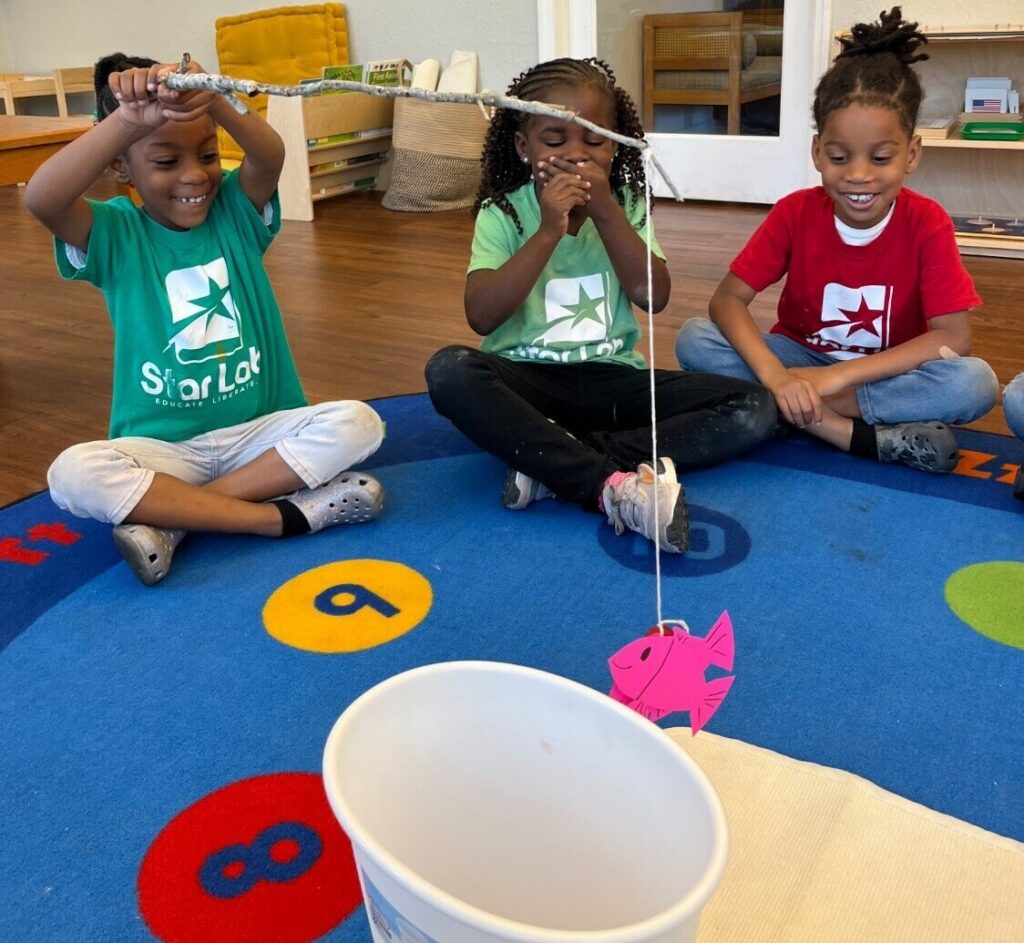
Alison Rini, the founder of Star Lab in Sarasota, could serve only five students during her first year due to fire codes that would require her to spend $97,000 on a sprinkler system for the rec center of a public housing complex where Star Lab operated. A local philanthropy stepped forward to help the housing authority pay for the system, but many founders are not as fortunate.
“The new law is a major win for diverse educational options,” Rini said. “The zoning process is incredibly burdensome.” In addition to the sprinkler system, Rini said she spent $10,000 to apply for a minor conditional use permit to use a one-story building less than 3,000 square feet that had previously housed a day center. The whole process took nearly two years and cost a total of $130,000.
“All of that time and money could have gone into our students and our curriculum; it was so frustrating,” Rini said.
Rini said she had to invest all the time and money with no guarantee of success. However, she said the planning commission easily approved her proposal when she was finally able to present it after 22 months of preparation.
After the vote, Rini said the chairperson commented, “I don’t know why this had to be so hard for her. I’m from Europe, and we have schools in apartment complexes all the time. This is a very compatible use.”
Danny Aqua, projects director for Teach Florida, recently told EdChoice the law adopts common sense fire code reform by 1) requiring fire officials to recognize alternative fire safety methods that are already in the code, and 2) treating similar facilities like day cares and churches as existing schools when applying the fire code.
“The goal is not to reduce safety, but to ensure that regulations designed for large, traditional schools are applied more appropriately to smaller educational environments,” he said.
By Lauren May, Mary Camp, and Ron Matus
First, Florida. Now, Indiana. Which state will be next for a Catholic school comeback?
Our new, 2026 “Catholic school update brief” highlights not only continued Catholic school growth in Florida – which saw enrollment rise for a fifth straight year – but signs of resurgence beyond Florida, nudged by the historic expansion of school choice across America.
As we noted when the latest National Catholic Educational Association statistics were released in March, Indiana is now, like Florida, showing net enrollment growth over the past decade. Among the Top 10 states for Catholic school enrollment, the Sunshine State and Hoosier State are, for now, the outliers.
But don’t sleep on Ohio, which saw its Catholic schools grow by more than 3,000 students this year; or Texas, where a jaw-dropping 274,000 students applied for that state’s brand-new choice program. Don’t overlook smaller states with big choice programs and momentum, including Iowa and New Hampshire. And don’t forget about the potential of the new federal scholarship tax credit to enhance what’s been happening in the states.
Our brief includes a 50-state chart where you can track Catholic school enrollment year-by-year over the past decade. (Big thanks to the NCEA for collecting the data.)
It also includes more insight into the pace-setting growth in Florida, including a rapid rise in the number of students using special-needs scholarships.
If you have any questions, don’t hesitate to reach out. Our emails are in the bios at the end of the brief.
Editor's note: This post is shared by our sister organization, Step Up, Step Further Scholarship Fund, a new federal scholarship program launching in 2027 to support students in public and private schools.
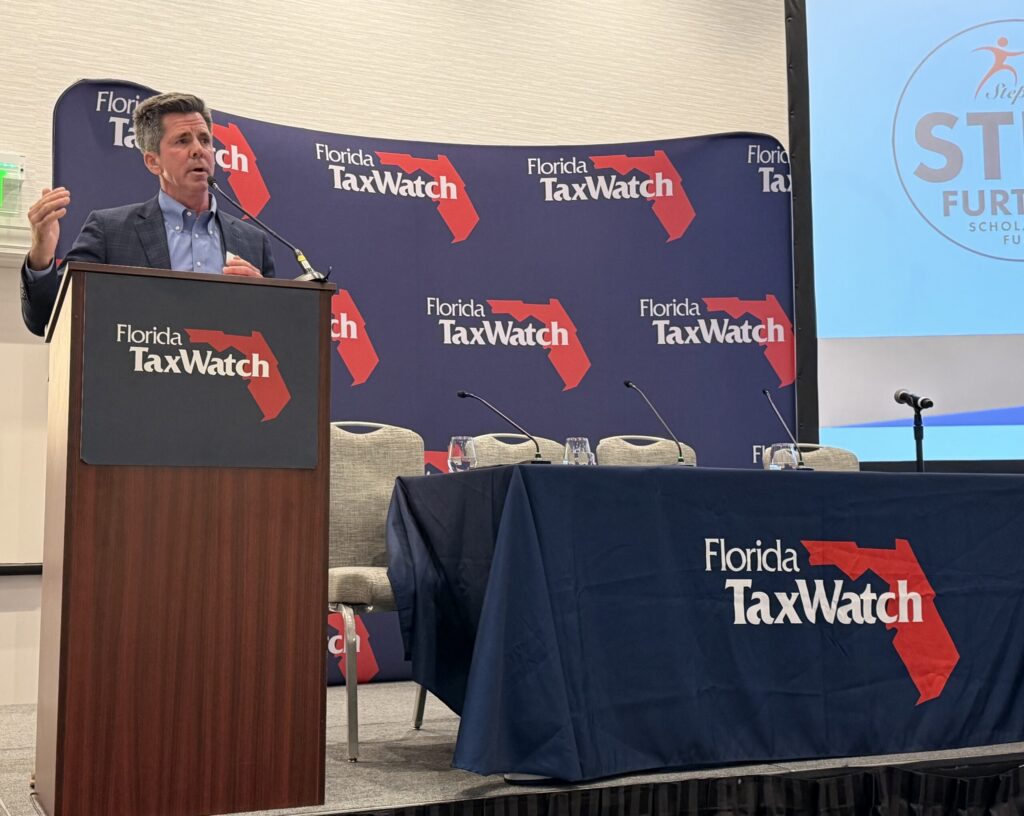
At Florida TaxWatch’s policy forum, Step Up For Students Founder and Chairman John Kirtley shared how the new federal Education Freedom Tax Credit will help expand opportunity for K-12 low income district school students. “The income levels that the federal law allows are, in my opinion, pretty generous,” Kirtley said. “They’re 300% of the area’s median income, which in Florida will be anywhere up to probably $250,000. However, a scholarship organization can set its own income limits.”
The new tax credit will continue to allow Step Up, Step Further, sister organization of Step Up For Students, to focus on serving the lowest-income students in Florida.
Kirtley went on to illustrate how Florida school districts have seen a dramatic increase in graduation rates since 1981, when the graduation rate hovered under 50%. He noted that a statewide push for greater accountability in schools and grading them has resulted in a graduation rate of over 90%.
“That’s an incredible improvement, and we should all be very proud of that. A great example of how the districts have responded is very close to home for me. My high school, Fort Lauderdale High School, when schools were first graded back in 1999, my high school was an ‘F.’ And it was an ‘F’ for several years,” Kirtley said.
Read the full article at Florida Politics > https://floridapolitics.com/archives/791109-john-kirtley-makes-case-for-choice-encouraging-use-of-education-savings-accounts/

