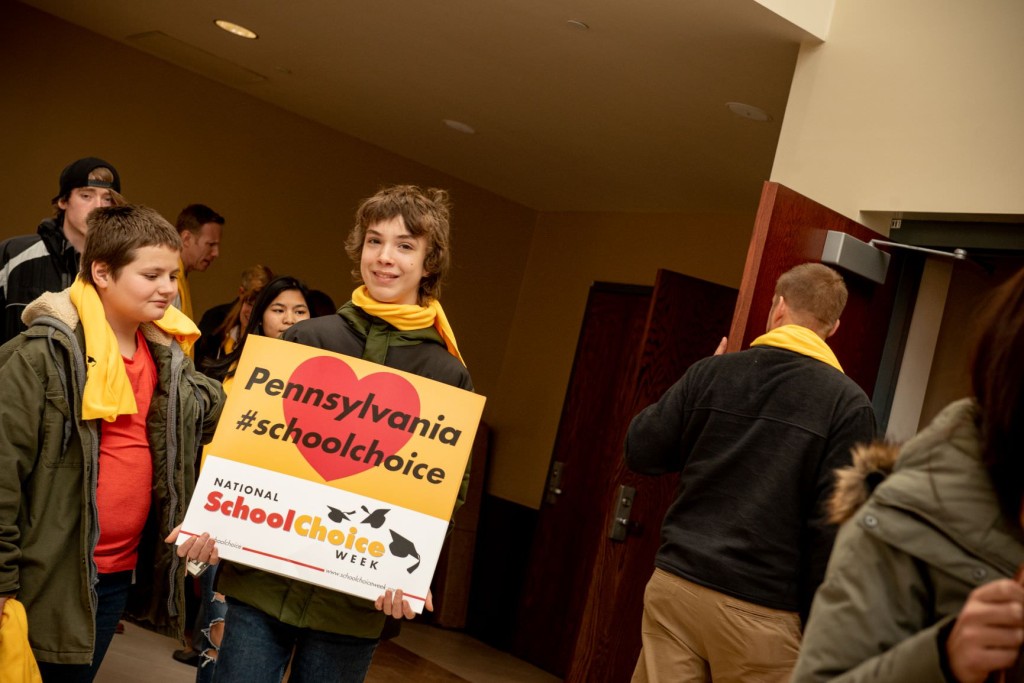
Pennsylvania Gov. Josh Shapiro—a popular swing-state Democrat—is trying his best to maintain his balance on an education choice tightrope.
On one side of the rope are supporters of a GOP-backed education choice bill that would establish a Lifeline Scholarship Program. The program would set up education savings accounts for families in areas with “low achieving” public schools to spend on private school tuition and fees. The Senate bill would allow the program to begin in the 2023-24 school year. The biggest effect would likely be felt in Philadelphia, where 100 schools meet the bill’s definition of “low achieving.”
On the other side are opponents, led by the state teachers union, who say such a program would drain money from public schools at a time when a judge ruled earlier this year that Pennsylvania’s school funding system was unconstitutional and treats students in lower-income school districts unfairly.
In trying to stay balanced on the rope, Shapiro has backed the Lifeline Scholarship bill, while at the same time saying he would not agree to take money from public schools to pay for it.
“Let me just say, in general, I believe every child of God deserves a shot here in the Commonwealth of Pennsylvania, and one of the best ways we can guarantee their success is making sure every child has a quality education," he told Fox News on June 23. "I've been very clear that I'm open to that concept that you described a moment ago, but I've also made crystal clear that I won't take a dollar out of our public schools in order to achieve that.”
In an era where education choice support comes more from the Republican ranks, the fact that Shapiro is a Democrat stands out.
He’s taken political heat from the Pennsylvania State Education Association and the Philadelphia Federation of Teachers, groups that endorsed him during the 2022 election.
However, Shapiro recently received encouragement from former U.S. Sen. Joe Lieberman of Connecticut, who served as an independent but caucused with the Democrats and who has been an education choice champion. Lieberman serves on the board of the American Federation for Children. He called Shapiro’s move “gutsy.”
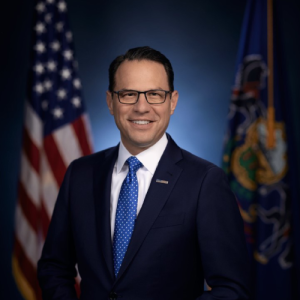
Pennsylvania Gov. Josh Shapiro
“I'd say to Governor Shapiro, he's doing something absolutely right, consistent with the traditionally Democratic (capital-D) values, and small-D democratic values, and he should stay the course because I think it is what the public wants,” Lieberman told Commonwealth Foundation fellow Guy Ciarrocchi on Dave Hardy's "School Choice Report" podcast.
If the surveys are any indication, Liberman’s assertion is correct.
A survey released in January by National School Choice Awareness Foundation, showed half of the 3,820 parents of school-aged children polled wanted more options for their children’s education, and most parents wanted more information about school choice options. That included a majority of Black parents, part of the group that historically has tended to vote Democratic. According to the survey, 64.7 percent of parents, including 71.2 percent of Black parents and 75.7 percent of Hispanic parents said they wish they had more information about the schooling options available for their children.
An EdChoice survey of 1,300 parents of Black school-aged children showed strong support for parents’ ability to choose the best educational fit for their children.
The survey provided a basic explanation of various choice options. Results showed 79 percent of respondents supporting traditional choice scholarships, 74 percent supporting charter schools and 78 percent supporting open enrollment. The survey results also showed that 78 percent support education savings accounts.
Neal McCluskey, the director of the Cato Institute’s Center for Educational Freedom, said today's political climate has influenced African American families to take charge of their children's education.
“There's been this move for school choice for decades," said McCluskey. "They as a group tend to be likely to fare or to benefit, benefit from it more than other groups. But there's also something that we've seen in the last few years that's really come to a head which is sort of a feeling that public schools don't serve African American families well when it comes to teaching things that are specific to African American children.”
Pennsylvania's proposed scholarship program may be funded in the state budget, which must be approved by tonight, or it may be funded separately.
Regardless of the funding, when it comes to education choice, it appears Shapiro, who voiced support for the idea during his campaign, and handily defeated his GOP opponent, is listening as he continues his highwire balancing act.
So far, it appears to be paying off. A recent Quinnipiac University survey found 57 percent of Pennsylvania voters approve of Shapiro's job performance. He received significantly better marks from voters than his state's two U.S. senators or President Joe Biden.
Editor's note: This commentary by Kevin Mooney, senior investigation journalist at the Commonwealth Foundation, Pennsylvania's free-market think tank, originally appeared June 16 in the Daily Caller.
By following through on his campaign commitments to expand school choice, Pennsylvania Gov. Josh Shapiro can distinguish himself from other elected officials cowed by the teachers’ unions, according to education policy analysts.
But he only has a few weeks to make good on his pledge to increase the supply of scholarship funds available to students in failing schools since lawmakers will potentially finalize the 2022–23 budget on June 30. If Shapiro can persuade some of his fellow Democrats to embrace school choice initiatives as part of the ongoing budget negotiations, he could have a transformative impact on the state’s educational system.
Marc LeBlond, the director of policy for EdChoice, a nonprofit that favors a wide range of options for K–12 education, is optimistic that Shapiro will support some form of “Lifeline Scholarships” for students in the worst-performing school districts while also accommodating an increase in the existing tax credit scholarship program.
To continue reading, go here.
 Editor’s note: This commentary from Jonathan Butcher, Will Skillman Fellow in Education at The Heritage Foundation and a reimaginED guest blogger, and David P. Hardy, Distinguished Senior Fellow at the Commonwealth Foundation, appeared Nov. 4 on the Commonwealth Foundation’s website.
Pennsylvania’s leading gubernatorial candidates both support Lifeline Scholarships, a proposal to give students in underperforming schools around $7,000 in education funding. This is good news for Pittsburgh students, especially for those trapped in schools that aren’t meeting their needs.
Pennsylvanians are desperate for fresh leadership that will finally prioritize students above special interests. Bought off by government unions, current politicians want to force families to send their students to their zip-code-assigned public school—all while they benefit from the best private education that money can buy.
Take top Washington politicians like President Biden, Vice President Kamala Harris, and House Speaker Nancy Pelosi, who trumpet praises for public schools but send their own children to private institutions. Pennsylvania Gov. Tom Wolf chose to attend an elite, private boarding school in the 1960s but actively opposes scholarship programs that give other students a similar choice.
If politicians exercise educational choice for their children, they should support giving their constituents access to the same opportunities. Without it, students are confined within a broken system that assigns poor children to the state’s worst public schools.
Pittsburgh’s Woodland Hills School District, for example, was originally formed in the 1980s as part of a desegregation effort but has failed to provide true opportunity and equality to its students.
Despite increases in funding, Woodland Hills struggles with failing academic performance. While per-student funding has increased over 50 % in the past 10 years, the latest standardized test scores show dismal results. Of eighth graders in the district, 95 % are not proficient in math and 73 % are not proficient in English.
Woodland Hills is just one of many neighboring districts that are struggling. Allegheny County is home to over 40 schools that rank in the bottom 15 % of public schools in the state. Close to 80 % of students in underperforming schools are minority and economically disadvantaged, effectively trapped in their assigned public schools.
Government unions routinely argue that underperforming public schools just need more taxpayer funding, but these calls distract from fundamental, structural flaws in the system. What’s more, Pennsylvania has already tried statewide funding increases and has little to show for it.
Since 2013, total taxpayer spending on Pennsylvania public schools has skyrocketed 32 % to over $33 billion. In addition to their ever-growing budget, state public schools received over $6 billion in federal taxpayer money during the COVID-19 pandemic. Far from being underfunded, Pennsylvania public schools spend over $4,000 more per child than the national average.
What are the results of all this spending? Recently released scores from the Nation’s Report Card (or NAEP) show a 12-%age point decline in Pennsylvania eighth-grade math scores between 2019 and 2022.
While money can protect bureaucrats and pad special interests, it cannot buy parent satisfaction or student achievement. A Gallup Poll from September finds that nearly 25 % of Americans are “completely dissatisfied” with public education. The level of overall satisfaction is at its lowest point in 20 years.
In Pennsylvania, specifically, parents appear to be demonstrating dissatisfaction by choosing schools outside the assigned system. Public school enrollment has dropped by almost 7 % since 2000. In some districts like Woodland High, enrollment declines in the last decade are at nearly 20 %.
Meanwhile, polling shows an overwhelming majority of Pennsylvanians support giving families more educational freedom.
If lawmakers want to help every child, then they should give all families the chance to choose how and where their children will learn. Earlier this year, the Pennsylvania House approved Lifeline Scholarships, which would give families in underperforming schools funding to purchase textbooks, hire a personal tutor, pay private school tuition, and more.
Right next door in West Virginia, families already have these options. Pittsburgh families should too.
Lifeline Scholarships isn’t about partisan politics, it’s about giving every child a better future. While it’s good news that both gubernatorial candidates are signaling support, voters should hold every candidate accountable for where they stand on educational opportunity.
Merely increasing funding for a broken system isn’t fair for students that are stuck in it. Pennsylvania’s leaders—especially those who benefit from educational opportunity in their private life—should empower all students with the freedom to choose.
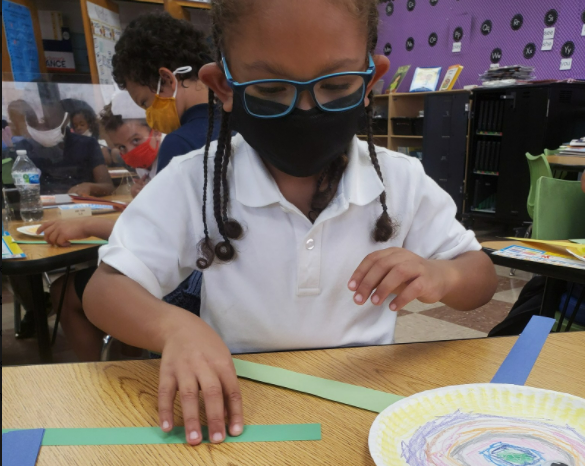
Penn Hills Charter School for Entrepreneurship in Pittsburgh offers a unique educational choice option for families: the national MicroSociety model.
Editor’s note: reimaginED guest bloggers Walter Blanks Jr. and Nathan Cunneen, who serve as press secretary and communications associate, respectively, for the American Federation for Children, recently had the chance to see the inner workings of several charter, private and virtual schools in Pennsylvania. Their visits came courtesy of an AFC partnership with the Pennsylvania Coalition of Public Charter Schools, the Commonwealth Foundation, and Harrisburg Families United. In this post, Cunneen reports on what he saw at one of those schools during the “Stronger Together Tour.”
The first stop on our tour was a visit to Penn Hills Charter School for Entrepreneurship. Penn Hills serves more than 400 students from more than 10 school districts in the Pittsburgh area.
A key component of Penn Hills is its Advancing Youth Initiative, which supports students’ health, welfare and education, and serves as the school’s philanthropic arm, seeking and accepting donations and resources to help each student reach his or her full potential.
Penn Hills pledges to educate its students using an innovative, hands-on, engaging curriculum grounded in entrepreneurship and aligned to Pennsylvania Common Core standards. The curriculum is designed to bring entrepreneurial and economic concepts alive for students; basic economic and entrepreneurial concepts are embedded in lessons connected to science, math, social studies, and English language arts.
To learn more about what this means in practice, Walter and I attended a discussion panel with Penn Hills CEO Wayne Jones and board president Tricia Shelton, who explained that their vision is to educate the future leaders of their community and the country. They do this by investing in students and focusing on CARE – Character, Academics, Relationships and Entrepreneurship – so those young people will be prepared to successfully go out into the world.
Penn Hills creates an environment where all students are learning real-world skills that will serve them for the rest of their lives, Jones and Shelton said. While students aren’t forced to become entrepreneurs, they are required to learn skills that will prepare them for whatever career path they choose.
Kindergarteners at Penn Hills, for example, are introduced to resume writing. You might wonder what kind of a resume a kindergartener could have. What Walter and I learned from Jones and Shelton is that it’s not about what the student puts on paper so much as that he or she is being exposed to the concept at such a young age.
We also learned from these innovative leaders that Penn Hills Charter School of Entrepreneurship follows the national MicroSociety model, created in 1967, that introduced the idea of creating a functioning miniature society into classrooms to bring relevance to learning and to teach individual responsibility.
Penn Hills holds the distinction of being the first MicroSociety school to open with only a kindergarten to second grade student cohort. Since then, the school has grown to serve kindergarteners through eighth-graders, challenging students more as they age.
By the time students graduate, each has fulfilled the requirement to produce a concrete business plan.
You can learn more about Penn Hills by reading its strategic plan here.

