Teachers unions. The rise of Fedrick Ingram, new president of the the Miami-Dade teachers union. Miami Herald.
 Teacher conduct. Ocala Star Banner: "Teacher suspended for bonk with a banana."
Dual enrollment. A mandate that school districts pick up the tab for dual enrollment students is putting districts in a tough spot. Fort Myers News Press.
Rick Scott. Gov. Rick Scott must decide on several high-profile education issues, including virtual school funding and the future of state-mandated tutoring for low-income students, reports News Service of Florida. He's going to veto a proposed tuition hike, reports the Times/Herald.
School atmosphere. A Palm Beach County School District investigation finds an elementary school torn apart by a feud between the principal and a school board member, reports the Palm Beach Post. The Florida Commission on Ethics dismisses two complaints against the board member, including one filed by the principal, the Post also reports.
Bullying. State officials work with the Walton County school district to combat bullying, reports the Northwest Florida Daily News. Pasco Superintendent writes in this op-ed for the Tampa Bay Times that bullying prevention is a moral imperative.
School closings. Citing cost concerns, Manatee plans to close a small high school for struggling students. Bradenton Herald. (more…)
School recognition funds. About 1,700 schools will get about $134 million, reports Gradebook. More from SchoolZone, Miami Herald, South Florida Sun Sentinel, TCPalm.com, Florida Times Union, Naples Daily News.
Charter schools. Palm Beach Post: "Palm Beach County has pledged to help a nonprofit charter school sell $10.5 million in mostly tax-exempt bonds so it can open a new campus in Juno Beach — a move that has upset County Commissioner Paulette Burdick, who questions whether the county should aid privately run charters that pull students away from the public school district." More on Cape Coral charter schools asking the Lee County school district for facilities funding from NBC2.
Pre-K. Florida's pre-K isn't the reason its students are surging ahead of Nevada's. Heartland Institute.
Parent trigger. Lakeland Ledger weighs in.
Zero tolerance. Despite changes in the law, thousands of students are still arrested in Florida schools every year for minor infractions. StateImpact Florida.
FCAT. Time again for students to "brace" for the "dreaded" test, reports the South Florida Sun Sentinel. This year, teachers and students better prepared for tougher writing standards, reports the Orlando Sentinel.
Grad rates. Another report notes Florida's rate is low but improving. SchoolZone. (more…)
I am more politically incorrect than your average guy, so when I heard President Obama call for universal pre-K for 4-year olds in the State of the Union, I cringed. With all the raucous enthusiasm ringing around this issue since the speech, adapting Warren Buffet’s investment approach to public policy might be wise: when everyone is bold, it’s time to be cautious.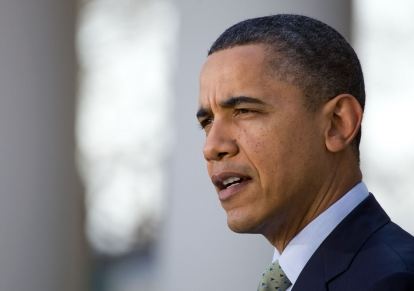
In 2006, when I was with California Parents for Educational Choice, we were part of a coalition of organizations that defeated Rob Reiner’s ballot initiative to bring universal pre-K to the state. It was introduced to widespread public approval, but by Election Day garnered only 39 percent of the vote. The electorate came to understand three major elements they did not like:
* Expanding pre-K to everyone, including middle class and upper income families, is hugely expensive and precious little, if any evidence, supports much educational value added for the middle class and wealthy.
* The initiative vastly expanded the existing public school monopoly, which hardly has a resounding record of educational success, especially with poor and minority students. It also mandated collective bargaining, swelling the ranks and economic power of the California Teachers Association, an organization that systematically stands in the way of innovation and reform.
* The academic outcomes were questionable. A Reason Foundation analysis found from 1965 to 2005, 4-year old participation in preschool programs had grown nationwide from 16 percent to 66 percent, but we had virtually no evidence of increased student learning on the National Assessment of Educational Progress (NAEP) by fourth grade. Oklahoma, with a universal program since 1998, finished dead last on the 2005 NAEP, actually losing four points.
But that was close to seven years ago and admittedly, I haven’t followed the pre-K issue regularly. So I spent the last few days reviewing some studies and data. The key word in the Obama proposal is quality.
We likely can justify a highly targeted effort on kids in failed families or families that simply have no resources - financial, social, emotional, or cultural - to allow their children to mature and develop normally. But when Obama declares, “We know this works,” he overstates and simplifies our experience. (more…)
A new Florida House subcommittee devoted to all things school choice does not necessarily signal major reforms in the upcoming legislative session, says incoming House Speaker Will Weatherford. The point, rather, is to keep choice in the debate.
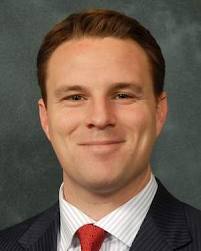
Weatherford
“I think choice has always been in the conversation,’’ Weatherford, who is scheduled to be voted in as speaker today, told redefinED.
Creating the Choice & Innovation Subcommittee is really more about helping the Education Committee make sure parental empowerment, technology and other school choice issues don’t get lost in the general discussion, he said. Education is “such a huge policy area,’’ Weatherford said. “There are a lot of bills that get filed.’’
Expect those bills to include many that have more to do with overall education policies and red tape than turning classrooms into a “21st learning experience,’’ he said. “There’s a lot of reform and a lot of innovating taking place across the country and across the world,’’ Weatherford said. “I want the Legislature to lead this debate.’’
The subcommittee has sparked interest across party lines. (more…)

Colburn
David Colburn is a respected former University of Florida provost and progressive academic who should have done more homework before he blithely characterized those who support private school options as salesmen and hucksters. His recent commentary in the state’s largest newspaper, the Tampa Bay Times, rather pointedly ignored important evidence in his own backyard.
Dr. Colburn is good thinker on education issues, but somehow managed to treat all school vouchers as though they are inherently unaccountable. “There is something basically wrong when public funds are earmarked for these private schools,” he wrote, “and the state fails to insist on accountability measures for student achievement outcomes.”
That assumption is demonstrably false, and he need look no farther than his own state. The state’s first voucher program, which was declared unconstitutional in 2006, required students to take the state test. The current pre-K voucher that served 145,551 4-year-olds last year requires pre- and post-academic evaluations that are used to rate providers.
Lincoln Tamayo, who runs the highly successful Academy Prep Centers of Tampa and St. Petersburg that serve underprivileged middle school students, was also quick to note in a letter to the editor that the Florida Tax Credit Scholarship serving 49,000 low-income students has required nationally norm-referenced tests since 2006. The test scores for Tamayo’s students, who are treated to an intensive six-day-a-week, 11-months-a-year program, reveal both year-to-year academic gains and 8th grade reading and math scores in the 70th and 76th percentile range.
There is ample room for principled debate over whether the current testing approach for these private options is sufficient to assure that students are making academic progress. For example, there are certainly challenges in trying to compare the test results of low-income students in private schools with their low-income colleagues remaining in public schools, in part because the scholarship students tend to be much poorer.
But Dr. Colburn instead seemed content to assert that vouchers “court disaster,” as though every one of these programs is flying blind. His lack of intellectual rigor was, needless to say, disappointing.
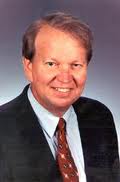 Former Florida House Speaker Jon Mills (pictured here) will now get his day in court, representing a group that has sued the state over both the funding and quality of public education. But the state Supreme Court’s decision on Tuesday to let the suit move forward also invites a more enticing legal debate: Does the constitutional requirement of “a uniform, efficient, safe, secure, and high quality system of free public schools” mean that every school must look the same?
That question may sound facetious, but unfortunately has judicial grounding. In 2006, the state high court invalidated Opportunity Scholarships by rejecting “separate private systems parallel to and in competition with the free public schools.” And the court didn’t stop there. It went further, arguing that “uniformity” calls for consistency in school accreditation, teacher certification and education qualifications, background screening for employees, academic standards, and curriculum in reading and history.
The question of school variety and choice might not sound like fodder for a case that’s primarily about money, but give Mills credit for being open to all interpretations of high quality. “The mission,” he said when the case was first filed in 2009, “is for students to have a good educational opportunity and to succeed, and it seems to me we need more options and not less.”
That is clearly the direction in which Florida is moving. (more…)
 Hi everybody. My name is Ron Matus. I’m the new assistant director of policy and public affairs at Step Up for Students, a nonprofit in Tampa, Florida that oversees a tax credit scholarship for 38,000 low-income students. Among other responsibilities, I’ll be editing redefinED, which means I have the unenviable task of replacing the irreplaceable Adam Emerson, who put this forum on the map and is now the school choice czar at the Fordham Institute. I have mountains of homework to do before I can approach the depth and breadth of knowledge that Adam brought to redefinED. But I am pumped about keeping the blog’s spirit alive and finding ways to bring more people into the conversation. I think redefinED stands out for its tone and view. I appreciate its humility. And I know it is absolutely on point in 1) trying to reshape what is meant by “public education” and 2) accentuating the common ground between so many of us who have somehow been segregated into warring camps.
I’m sure I’ll be sharing more about myself in future posts, but for now I think two things are worth noting.
I was a newspaper reporter for 25 years. (more…)

