
Keith Jacobs II, affectionately called "Deuce," with his parents, Keith and Xonjenese Jacobs. Photos courtesy of the Jacobs family
When our son Keith — affectionately known as “Deuce” — was diagnosed with autism spectrum disorder at age 3, we were told he might never speak beyond echolalia (the automatic repetition of words or phrases). Until age 5, echolalia was all we heard.
But Deuce found his voice, and with it, a unique way of seeing the world.
He needed to find the right learning environment, with the assistance of a Florida education choice scholarship.
Deuce spent his early academic years in a district public school, supported by an Individualized Education Plan (IEP). Despite the accommodations, learning remained a challenge. We realized that for some, a student’s success requires more than paperwork. It requires community, compassion, and collaboration with the parents.
Imagine having words in your head but lacking the ability to communicate when you need it most. That was Deuce’s experience in public school. His schools gave him limited exposure to social norms and rigor in the classroom. Additionally, through his IEP, he always needed therapy services throughout the school day, which limited his ability to take electives and courses he enjoyed.
His mother and I instilled the importance of having a strong moral compass and working hard toward his social and academic goals. Although we appreciated his time in public school, we knew a change was needed to prepare him for post-secondary education. We applied and were approved for the Family Empowerment Scholarship for Students with Unique Abilities.
Knowing the potential tradeoffs of leaving public school and the IEP structure behind, we chose to enroll Deuce at Bishop McLaughlin Catholic High School in Spring Hill, about 35 miles north of Tampa. We believed the nurturing, faith-based environment would help him thrive. It was the right decision.
Catholic school provided Deuce with the support he needed to maximize his potential. Despite his autism diagnosis, he was never limited at Bishop. He was accepted into their AP Capstone Program. This was particularly challenging, but Bishop was accommodating. The school provided him with an Exceptional Student Education (ESE) case manager dedicated to his success, and he received a student support plan tailored to his diagnosis and learning style. The school didn’t lower expectations; instead, it empowered him to take rigorous coursework with the right guidance.
Any transition for a child with autism will take time to adjust. On the first day, I received a call: Deuce had walked out of class. This was due to his biology teacher using a voice amplifier. The sound overwhelmed Deuce’s senses, and he began “stimming”— rapidly blinking and tapping his hands. Instead of punishing him or ignoring the issue, the staff immediately reached out.
Together, we crafted a Student Success Plan tailored to Deuce’s needs, drawing from his public school IEP without being bound by it. His plan included preferential seating, frequent breaks, verbal and nonverbal cueing, encouragement, and clear direction repetition. For testing, he was given extended time, one-on-one settings, and help understanding instructions.
These adjustments made all the difference.
Throughout high school, Deuce maintained a grade-point average of over 4.0 while taking honors, AP, and dual enrollment courses. Additionally, he was inducted into the National Honor Society and Mu Alpha Theta Math Honor Society while also playing varsity baseball. Because of his success at Bishop, he will continue his educational journey at Savannah State University, where he will major in accounting and continue to play baseball.

Deuce Jacobs earned an academic scholarship to Savannah State University, where he plans to major in accounting and continue playing baseball.
Catholic schools in Florida increasingly are accommodating students with special needs. The state’s education choice scholarship programs have been instrumental in making Catholic education available to more families. Over the past decade, during a time when Catholic school enrollment has declined across much of the nation and diocesan schools have been forced to close, no state has seen more growth than Florida.
At the same time, the number of students attending a Catholic school on a special-needs scholarship has nearly quadrupled, from 3,004 in 2014-15 to 11,326 in 2024-25. Clearly, many families are choosing the advantages of a private school education without an IEP versus a public school with an IEP.
So, I’m puzzled why federal legislation being considered in Congress, the Educational Choice for Children Act (ECCA), includes a mandate that that all private schools provide accommodations to students with special education needs, including those with IEPs.
Although more and more students with special needs are accessing private schools, not every school can accommodate every student’s unique needs (which is also true of public schools). And, as I learned with Deuce, some schools can accommodate students more effectively if they aren’t bound by rigid legal mandates and have the flexibility to collaborate with parents who choose to entrust them with their children’s education.
If the IEP mandate passes, it would prohibit many schools from accepting funds through a new 50-state scholarship program, undermining the worthy goal of extending educational choice options to more families. The U.S. Conference of Catholic Bishops has called it a “poison pill” that would “debilitate Catholic school participation.”
Bishop McLaughlin’s willingness to partner with me as a parent not only allowed Deuce to succeed academically but also gave him the dignity and respect every child deserves. IEPs work for many. For others, like Deuce, it takes something more like collaboration to build a path forward together.
The most encouraging trend lines for Catholic schools in America continue to be in Florida, where enrollment grew another 2.3% this year, according to fresh national data.
Over the past decade, Catholic school enrollment is down 13.2% nationally, but up 12.1% in Florida.
That tidbit and more can be found in our new Catholic schools update brief, which is primarily based on new enrollment figures from the National Catholic Educational Association and Florida Catholic Conference.
 The brief is a follow-up to our widely circulated 2023 special report, “Why Catholic Schools In Florida Are Growing: 5 Things To Know.” We issued an update in April 2024 because last year’s numbers continued to show strong growth, and that’s the rationale for this update, too.
Florida, though, may see competition in the comeback department soon. Across America, there are more glimmers of hope for Catholic schools.
Catholic school enrollment nationally held relatively steady again this year, for a third straight year since rebounding from COVID-19. Meanwhile, even more states, including Texas, have adopted the kind of expansive private school choice programs that helped fuel Florida’s growth.
Our update brief includes a table showing a decade’s worth of Catholic school enrollment, year-by-year and state-by-state, for all 50 states.
We look forward to seeing the next states gain traction.

Blossom Montessori School for the Deaf has served students for more than two decades. Photo courtesy of Blossom Montessori School for the Deaf
CLEARWATER, Fla. – More than 20 years ago, Julie Rutenberg and Colette Derks harnessed some of the first private school choice programs in America to create a bespoke little school they knew their community needed. All these years later, Blossom Montessori School for the Deaf continues to show what kind of diverse, ever-expanding options are possible when education choice is in the mix.
Rutenberg founded Blossom in 2003. Derks, now the associate director, helped stand it up. As the name suggests, the PreK-6 school serves students who are deaf or hard of hearing (along with their siblings) and the children of deaf adults. Occasionally, Blossom also serves students who do not have any hearing loss because their parents want them to have more one-on-one attention. Over the years, nearly every one of its 250-plus students used a state-funded choice scholarship.
Rutenberg and Derks were working at a community center for deaf people when they got the idea for the school. They thought the hands-on, self-directed, mastery-based approach of Montessori offered a good alternative to the students they saw having a tough time in traditional schools.
“They’re able to move around the manipulatives when they’re working out their (math) problems, when they’re building words for reading, working with writing skills,” Derks said. “We really love how Montessori just kind of gets the whole body involved when learning.
“You’re not just sitting at a table looking at a paper or a book all day, (where) everybody’s on the same level,” she continued. “It really helps the student to be able to kind of grow and develop at their own pace.”
Rutenberg and Derks praised the public-school programs in their area that are serving similar students. Offering an option, they said, is not a knock on them.
“We’re just a different way of learning,” said Rutenberg, who attended Montessori schools as a child. “We’re not always going to be the right fit, either. Our goal is just to make sure the child comes first.”
Blossom got its start using three rooms inside another Montessori school. But for most of its existence, it’s been housed in a trim, beige building in an eclectic office park, right next to an ice-skating rink.
Most of the families it serves are working class. Most live in the immediate area. Some, though, drive an hour or more each way so their kids can attend. Others have moved from as far as Daytona Beach – on the other coast of Florida – because they wanted the school that much.

Quinten Caroline, 7, in costume as Leonardo DaVinci as part of a school project on Italy. Photo courtesy of Blossom Montessori School for the Deaf
“It’s nothing but positive with everything they do. They see the kids as perfect the way they are,” said Anastasia Caroline, whose son Quinten, 7, attends Blossom. “In a normal school, you’re not always going to get that love, that acceptance.”
Blossom represents so many choice-fueled trend lines. It’s a microschool. It’s a Montessori school. It’s a school for students with special needs. In Florida, where choice is the new normal, all those options are growing.
Microschools are so much of a thing now, they’re routinely showing up in local news stories (like this one and this one). I don’t know if anybody has a good handle on the total number, in part because there isn’t an official definition. But Microschool Florida, an excellent resource, puts the number at 156 and counting.
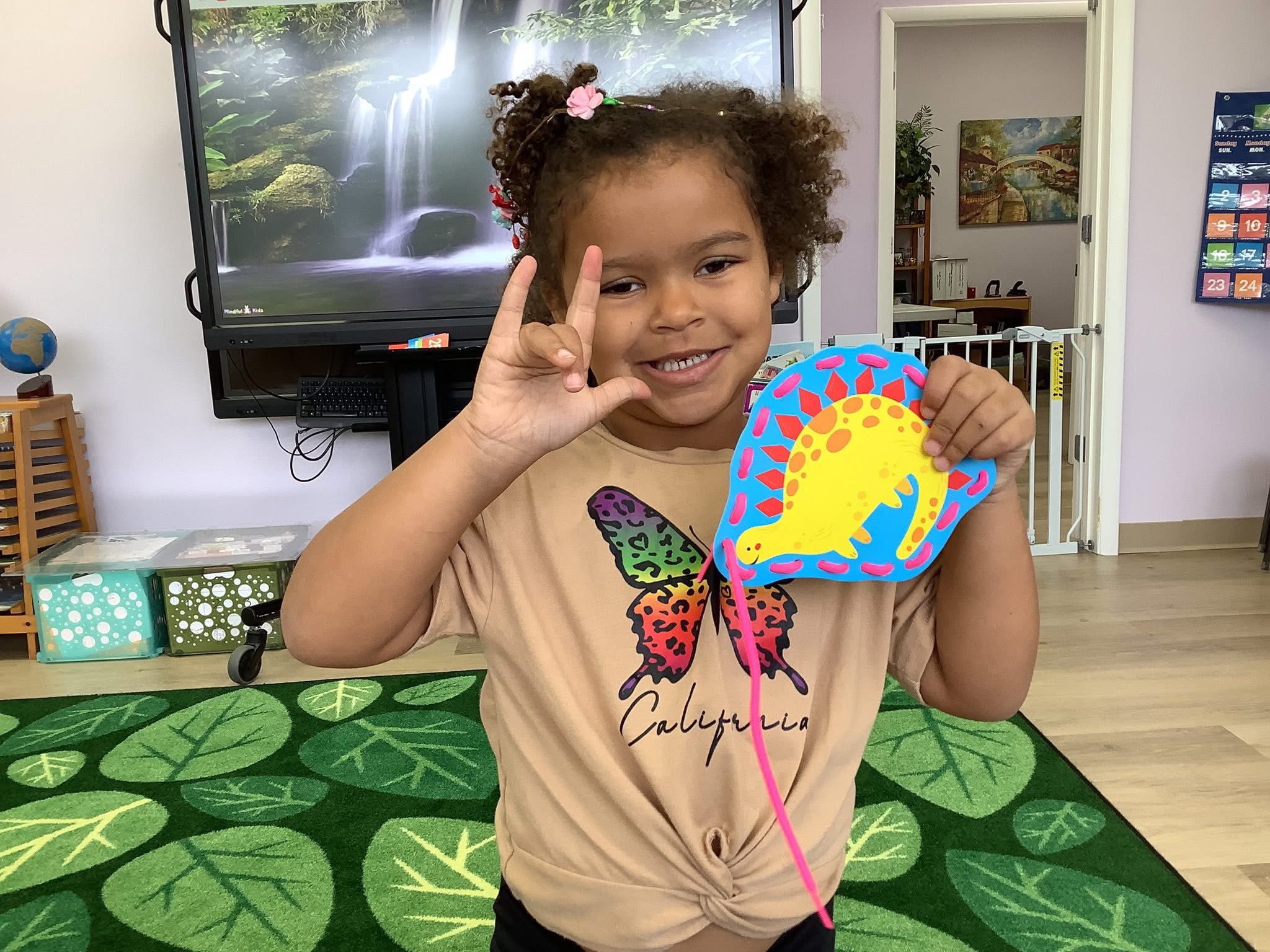
A student says "I love you" in American Sign Language. Photo courtesy of Blossom Montessori School for the Deaf
Meanwhile, there are at least 150 private Montessori schools participating in Florida’s choice programs. I say at least because that’s how many are listed in the state’s private school directory with Montessori in their name.
To be sure, there are plenty of Montessori-influenced private schools that don’t have Montessori in their names (like this one, this one, and this one). There are also plenty of school-like entities, like this hybrid operation in Tampa, and this homeschool co-op in South Florida, that are Montessori influenced, but aren’t official private schools, and aren’t tracked in any kind of official way, yet are funded in part by parents using flexible, state-funded education savings accounts.
Finally, there are more options for students with special needs. There’s more inclusion because more families can now afford schools that were once out of reach. (Check out, for example, the trend lines for scholarships for students with unique abilities in our white paper on Catholic schools.)
At the same time, there are more specialized schools, because, with choice, education entrepreneurs can more easily create them. Not far from Blossom, schools like this one, this one, this one, and this one, are all thriving.
“We would not be here today if we didn’t have the opportunity to use the choice scholarships,” Derks said. “It really is so important because the world today tries to fit everybody into the same box. (But) we’re all individuals, and we’re all our own person, and we learn differently, and we grow differently.”
Caroline, who works as an office manager at a medical practice, secured choice scholarships for both her sons, Quinten, and Silas, 10. She said private school would not have been possible otherwise.
Both use the Family Empowerment Scholarship for Students with Unique Abilities, an ESA Florida created in 2014. Once called the Gardiner Scholarship, it now serves 122,000 students. (Prior to the FES-UA Scholarship, Florida had a scholarship for students with special needs called the McKay Scholarship. It was merged with the FES-UA Scholarship in 2022.)
Caroline said she chose Blossom because she wanted Quinten immersed both in a sign language program and in the tight-knit deaf community. The school provides the warmth, structure, and positive reinforcement he needs, she said.
“They don’t allow bullying. They don’t put kids down. They just celebrate their growth and watch them blossom,” Caroline said. “It’s completely an amazing school for my child.”
DeLAND, Fla.– A black sweater, white shirt, and a red tie lay on Aaliyah Tape’s bed when she returned home from a summer vacation spent with family. She knew what they were: a private school uniform.
“Oh, Lord,” she thought.
It was a message from Aaliyah’s grandmother, Cat Gracia, that would drastically change Aaliyah’s life.
The 2023-24 school year began in two weeks, and Aaliyah would no longer attend her district-assigned high school. For her junior year, she was headed to DeLand Preparatory Academy, a grades 6-12 school, where Cat hoped Aaliyah would get her grades back on track.
The ensuing conversation between grandmother and granddaughter can be politely described as tense. Both sides dug in.
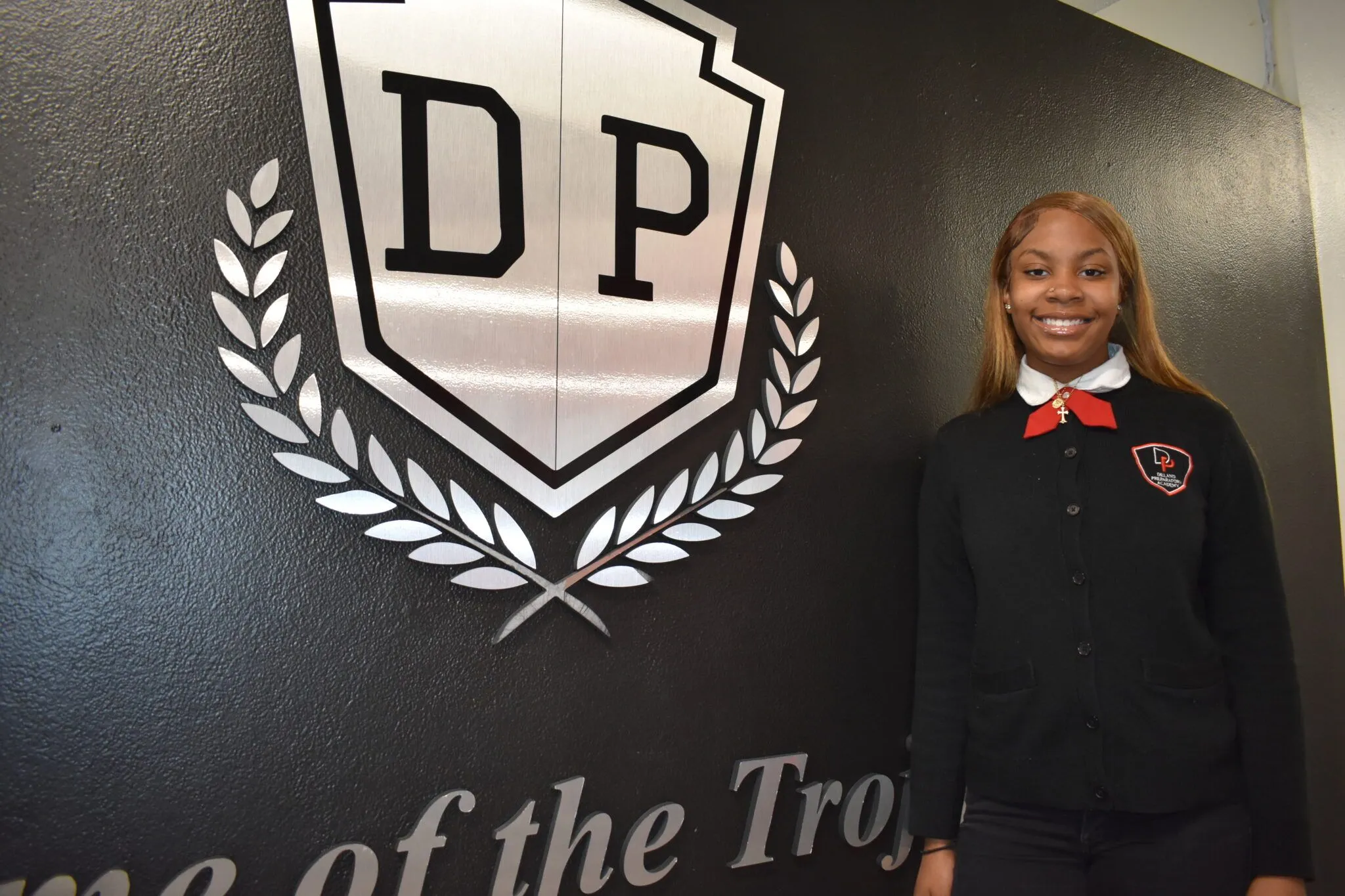
Attending college was something Aaliyah never thought about until she enrolled at DeLand Prep. Now she plans on going to Florida State University.
Aaliyah said she wasn’t going.
Cat said she was, that it was too late to turn back. Cat had applied for and received a Florida education choice scholarship for Aaliyah, and she was already enrolled.
Reluctantly, Aaliyah made the switch.
“I thought, ‘OK, let me give it a chance,’” she said.
And?
“I never thought I’d wear a red tie to school,” she said, “but here I am.”
Now a senior, Aaliyah never thought she’d be a straight-A student or headed to college, either, yet here she is, weeks from graduating with a future that is, well, a future.
Her goal is to attend Florida State University. She’s thinking of a career as a neonatal nurse or as a psychologist who works with children.
“She turned her life around,” Cat said. “We are so proud of her.”
It was a somewhat rocky journey to DeLand Prep, which Aaliyah attends on a Florida Tax Credit Scholarship, funded by corporate donations to Step Up For Students.
“The scholarship changed her,” Cat said. “It literally changed her academic journey. She’s refocused. It’s been night and day. It’s just incredible.”
Aaliyah had been an above-average student until middle school, Cat said. A lot of students encounter turbulent waters during those years, but Aaliyah was dealing with something more. Her mom, Shantrese Gracia, passed away when Aaliyah was 10.
The anger from losing her mom, mixed with the angst of a young girl moving from adolescence to a teenager, had Cat concerned.
“We’ve been through so much with her,” Cat said. “She has all this potential. She’s super smart, but she was making poor decisions, and there was absolutely no way we were going down that path with her. We had to do everything we could to get her refocused and understand what her purpose is in this life. But where do you start? And how do you get there?”
The answer was DeLand Prep.
“We had identified her strengths, areas for growth, and opportunities, and so we had a proactive approach to finding the best resources we possibly could to ensure she has an opportunity to succeed and have a bright future,” Cat said.
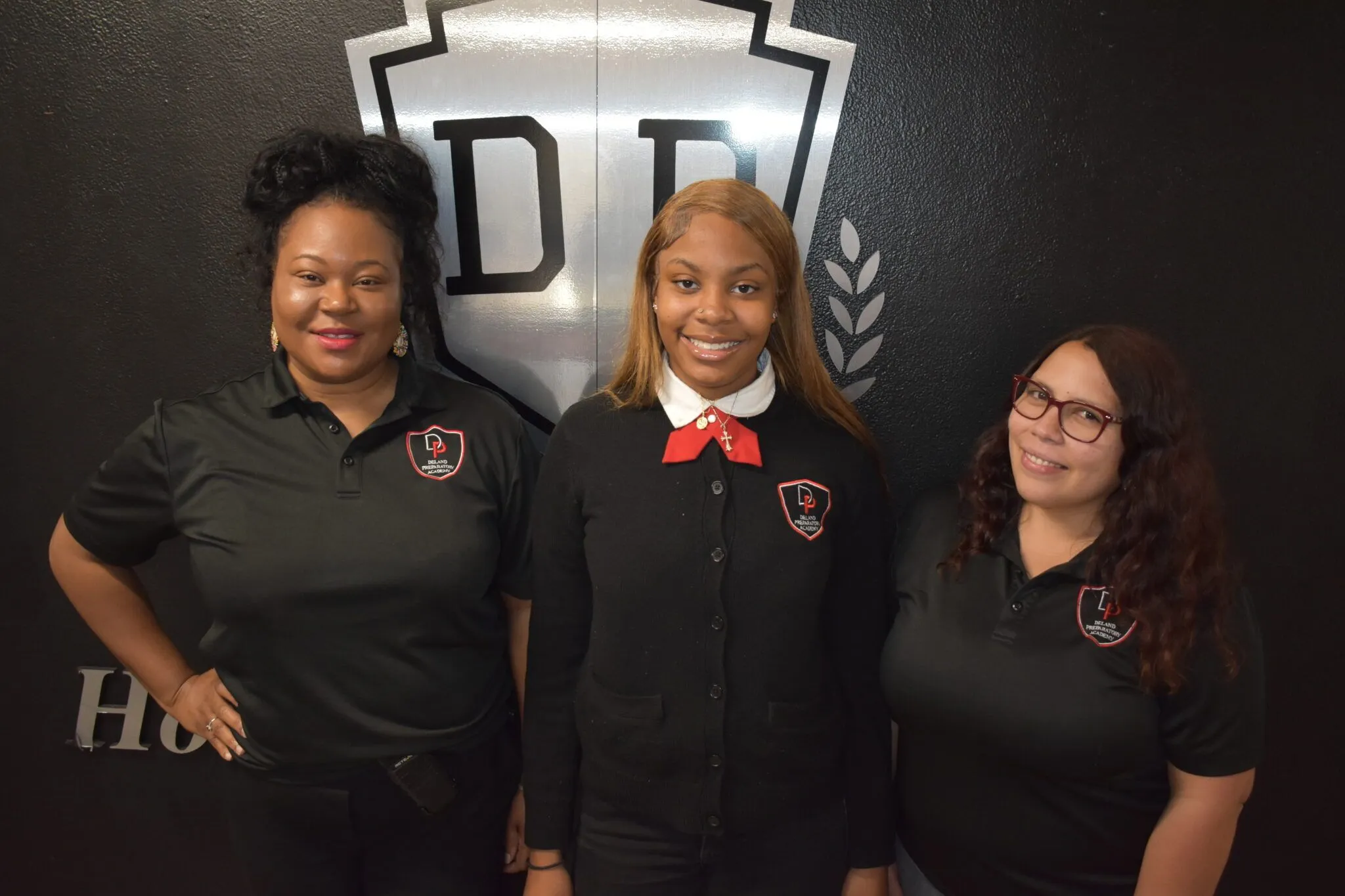
Donita Gordon, DeLand Prep's superintendent (left) and Melissa Castillo, the school’s director (right) helped to bring out the A-student in Aaliyah.
Dr. Donita Gordon, the school’s superintendent, said Aaliyah was the type of student who needed to be “repotted.” Her new “soil” had smaller class sizes with favorable teacher-to-student ratios and a college-like class structure – four courses a semester with classes running 90 minutes.
Located on the outskirts of DeLand’s quaint, award-winning downtown, the school has a motto: “Small School … Big Opportunities.”
That’s what Cat wanted. She knows her granddaughter can achieve so much. She just needed a setting that would allow Aaliyah to realize that, as well.
“I always tell her the sky’s the limit,” Cat said.
Aaliyah said her previous academic problems were the result of cutting classes, not doing her schoolwork, not pushing herself. She was hanging out with unmotivated students, and they were pulling her down.
At that time, Aaliyah wanted to be an ultrasound technician. She felt a college education was not in her future. Neither was attending a private school.

Aaliyah was honored as a Super Senior during Step Up For Students' annual Rising Stars Award event.
“Private school just didn’t sound pleasing to my ears, but it's actually not bad,” she said. “I actually like it better. It's just a small group of people. There’s not much going on, and there's a lot of time to just focus on the work. There’s less distractions. Everything is straight to the point. Our classes are longer, so we have more time to understand what we’re learning.
“It works in my favor.”
Cat met with Melissa Castillo, the school’s director, the summer before Aaliyah enrolled and said her granddaughter was a straight-A student who wasn’t getting straight-A’s. Castillo met Aaliyah on the first day of school and agreed with Cat.
“Aaliyah is a very unique student,” Castillo said. “She thrives in getting all her schoolwork done. When I first met her, she didn't have enough credits to graduate. Every meeting that I have with Aaliyah, she's always striving to complete her work and go to college. She is very aware of what she wants to do. I feel like out of all the students that I met in this school, she's one of the ones that stuck with me because of how driven she is.”
Aaliyah said she is motivated by the supportive teachers and administrators. She said she likes to study and do her homework and has surrounded herself with like-minded classmates.
“I got a lot of help that I needed, and not just on my assignments and tests, but college and school and advice, too,” she said. “I've got to experience a lot of things. I met a lot of people that I became friends with. I'm setting myself up for college.”
In February, Aaliyah was honored by the city of DeLand for being a Superstar Student and by Step Up For Students at its annual Rising Stars Awards event for being a Super Senior.
“All these awards she received, we’ve been in awe. It inspires her to strive for excellence,” Cat said. “We’re so proud of her growth. Here she is, ready to graduate.
“It’s been a journey beyond measure.”
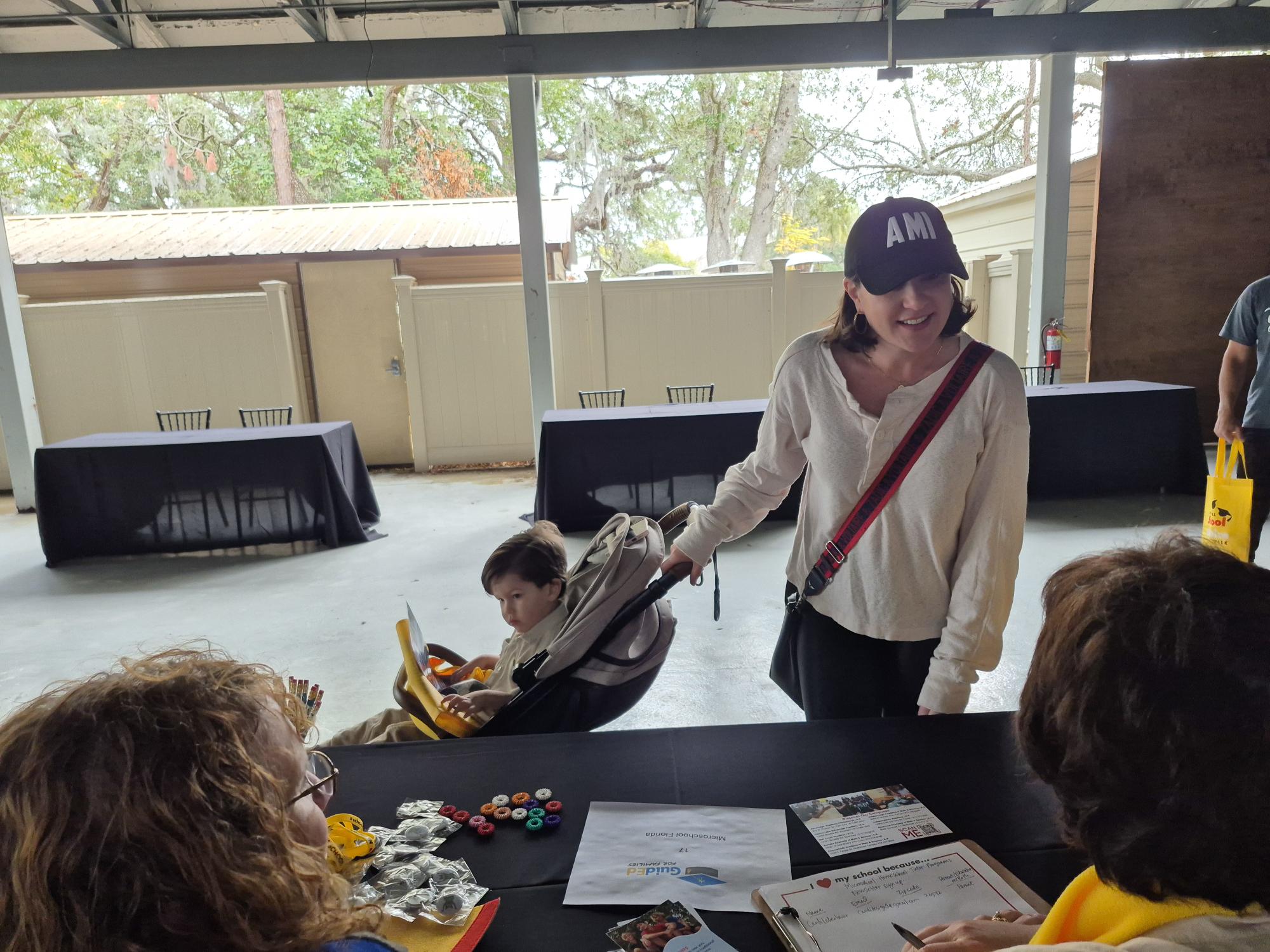
Gevrey Lajoie visited a School Choice Safari event to learn about options for her son, Elijah. The event was sponsored by GuidEd, one of the many organizations springing up in states that have granted parents the flexibility to choose the best educational fit for their children.
TAMPA, Fla. — Parents, many pushing babies in strollers with school-age children in tow, made their way through the covered pavilion as they surveyed the brightly decorated tables representing 28 local schools.
Their goal: To gather as much information as possible as they try to figure out the best educational fit for their children, either for the 2025-26 school year or beyond.
“We’re all over the place with which school,” said Gevrey Lajoie of South Tampa. Her son, Elijah, is only 3, but she said it’s not too early to begin looking at options. A mom friend told her about the School Choice Safari at ZooTampa at Lowry Park. It would give her a chance to check out many schools all in one place and learn about state scholarship programs.
Lajoie isn’t alone. For this generation of Florida families, gone are the days of simply attending whatever school they’re assigned based on where they live. Families actively shop for schools; schools actively court them, and districts perpetually create new programs.
And while the benefits are clear, some families end up feeling adrift in a sea of choices.
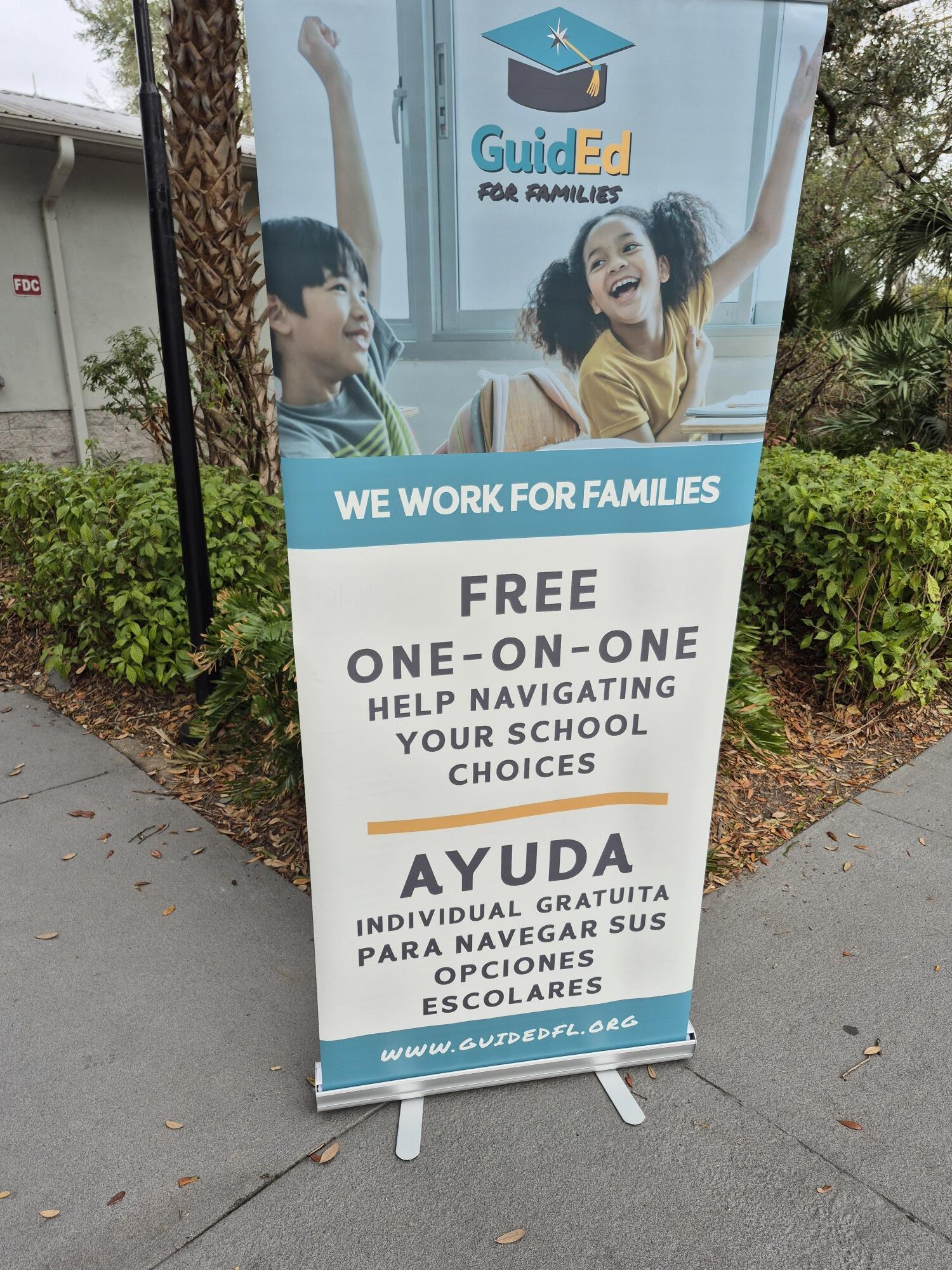 New organizations are springing up to help families find their way. "A variety of options are out there, and the number is growing, but families don’t know how to navigate them. There was no place for them to go to get help,” said Kelly Garcia, a former teacher who serves on Florida’s State Board of Education.
In 2023, the Tampa Bay area resident and her brother-in-law, Garrett Garcia, co-founded GuidEd, a nonprofit organization that provides free, impartial guidance to help families learn about available options so they can find the best fit for their children.
The organization hosts a bilingual call center where families can get information about all options in Hillsborough County, from district and magnet schools to charter schools, private schools, religious schools, online schools and even homeschooling. GuidEd also helps families sift through the various state K-12 scholarship options. The group also hosts live events, such as the School Choice Safari, to connect families and schools.
Organizations are cropping up all over the country, especially in areas with lots of choices. Their specific missions and business models vary, but they are united by a common theme: They help families navigate an evolving education system where they have the power to choose the best education for their children
Jenny Clark, a homeschool mom and education choice advocate, saw the need for a personal touch in 2019 when she launched Love Your School in Arizona.
“One of the most important aspects of our work is knowing how to listen, evaluate, and support parents who want to talk to another human about their child's education situation,” said Clark, who had seen parents struggle with the application process surrounding the state’s new education savings accounts program. The program has since expanded to West Virginia and Alabama.
Clark’s nonprofit provides personalized support through its Parent Concierge Service, which offers parents the opportunity for phone consultations with navigators. Love Your School also provides free online autism and dyslexia guides and details about the legal rights of students with disabilities, and it hosts an online community where parents can get support.
“Our services are unique because we pride ourselves in being experts in special education evaluations and processes, which are required for higher ESA funding, public school rights and open enrollment, experts in the ESA program law and approved expenses, and personalized school search and homeschool support,” Clark said.
Kelly Garcia, GuidEd’s regional director, has hosted several in-person events that feature free snacks, face painting, magicians, and prize giveaways in addition to booths staffed by schools and other education providers. During the recent event, parents could visit a booth to learn more about the state’s K-12 education choice scholarship programs.
Garcia, whose organization prioritizes neutral advice about all choices, including public schools, advises parents to start by assessing their child’s needs and then identifying learning options that would best serve them. GuidEd’s philosophy is to trust parents to determine the best environment for their kids.
At the School Choice Safari, families got to check out private schools, magnet schools and charter schools.
“There’s a school out there for everyone,” she said.
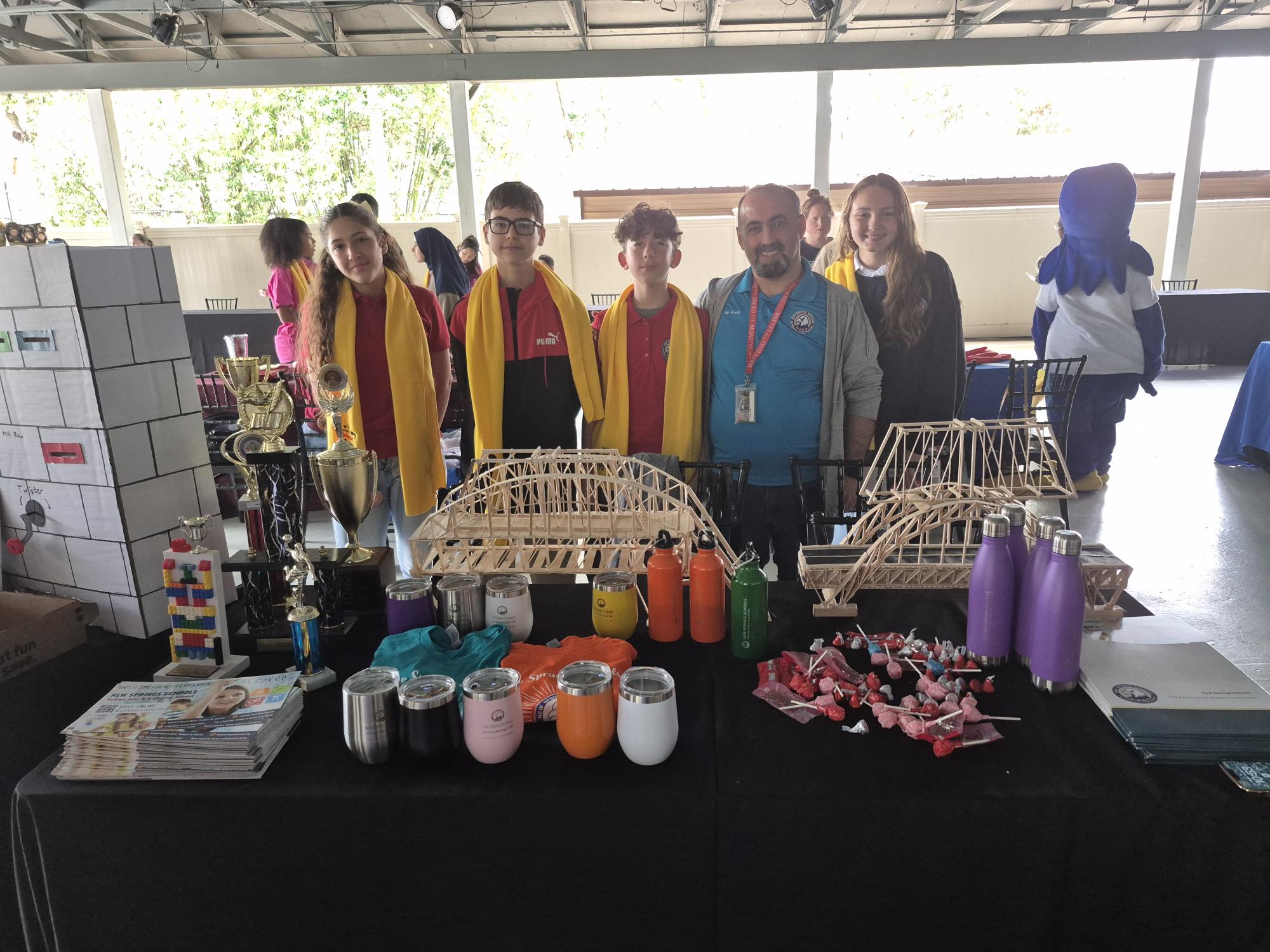
Students at New Springs Schools, a STEM charter school that serves students ages 5-14, show off some recent class projects at the School Choice Safari in Tampa.
During the zoo event, Garcia personally escorted parents with specific questions to the tables where they could get answers.
One of them, Hugo Navarro, recently moved to Tampa from Southern California to start a new job for a national investment firm. His wife, who had remained with their three kids in California, had already started researching schools online, but Navarro wanted to get an in-person look at providers and learn more about state education choice scholarships before their 7-year-old son starts school in August.
On his wish list: academic rigor, a focus on the basics, and a diverse student body.
“Academic ratings, that’s our number one thing,” he said.
A Catholic school that offers academic excellence was also a contender, though a secular school wouldn’t be a dealbreaker if it had a reputation for strong academics.
Garcia and Clark both said that as new generations of parents grow more comfortable selecting education options, they see the navigators’ role becoming more relevant, not less.
“Parents can use online tools like google to search for schools, but the depth of what parents actually want, and our highly trained knowledge of a variety of educational issues means that as choice programs grow, the need for our parent concierge services will continue to grow as well,” Clark said. “There are exciting times ahead for families, and those who support them.”
As the number of schools and a la carte learning options grows, Garcia said, families will need information to better customize learning for their children.
“This is a daunting task, even for the most seasoned parents,” she said. “At GuidEd, we see a growing need for unbiased education advisers to ensure a healthy and sophisticated market.”
Garcia compared the search for educational services to buying a home.
“A family is not likely to make a high-stakes decision, like buying a home, by relying on a simple Zillow search,” she said. “Instead, they use the Zillow search to help them understand their options and then rely on a Realtor to help guide them through the home- buying process, relying on their trusted, yet unbiased expertise. We see ourselves as the "Realtor" in the school choice or education freedom landscape.”
DELTONA, Fla.– Of all the skills Yaeli “Yaya” Santos could have picked to earn a grade in that portion of her eighth-grade physical education class, standing on her head seemed the easiest.
Understand this: Yaya does not claim to be athletic in the least, but she had to master a skill, and “How hard is a headstand?” she thought.
So, there she was, hands on the mat, feet pointing toward the ceiling.
Yaya was about to earn a passing grade when she lost her already tenuous balance, causing the mat to slip from under her. The top of her head slammed into the now uncovered hardwood floor.
“Not my finest moment,” Yaya said.
Yet that moment changed her life.
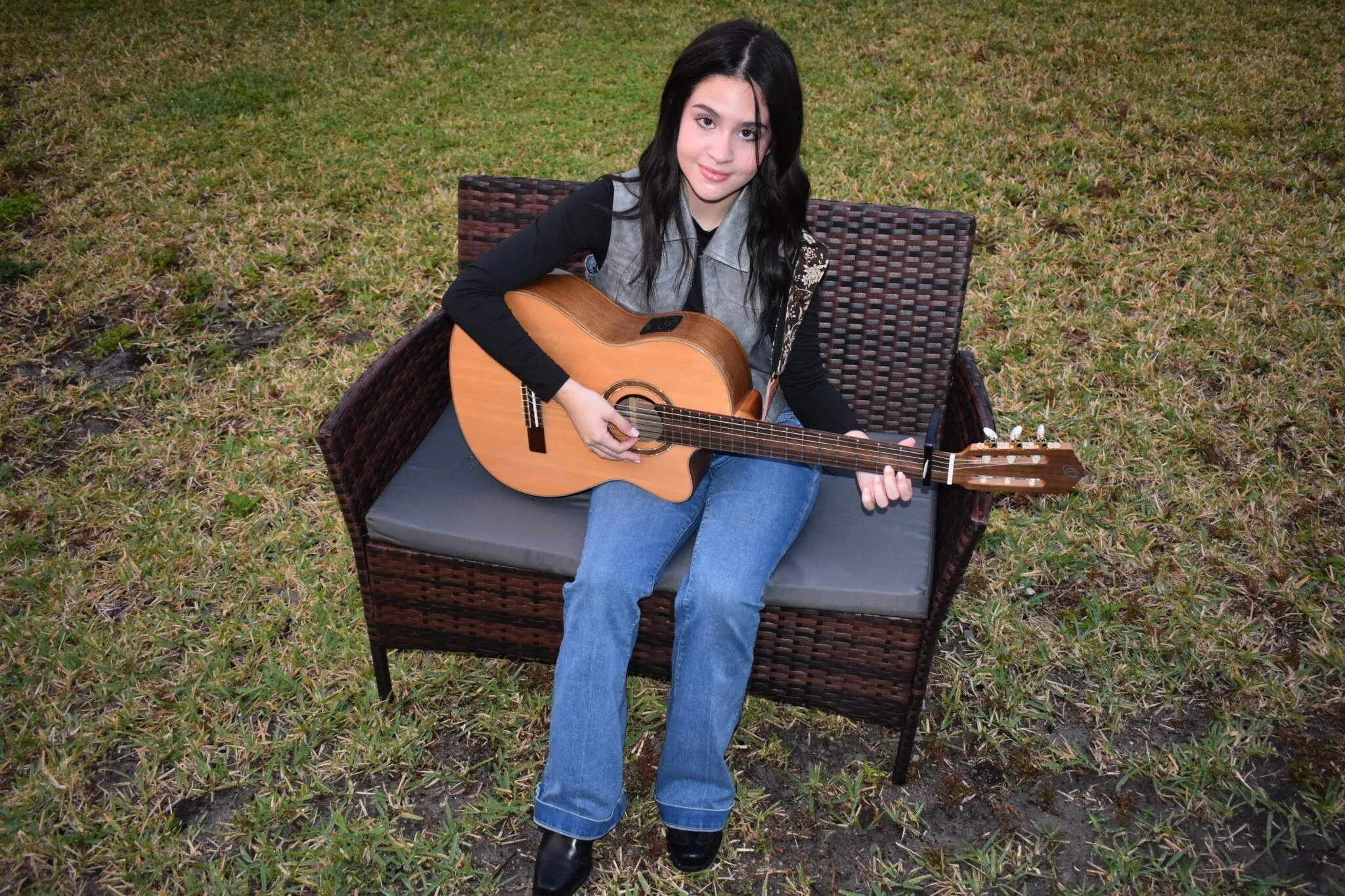
Yaeli "Yaya" Santos is learning to play the guitar as part of her curriculum under the PEP scholarship.
She suffered a severe concussion with lingering symptoms that included migraine headaches, dizziness, dyslexia, and memory loss. She went from being a confident student who earned top grades to one who lacked confidence in herself and struggled to complete assignments and tests.
“My eyes did not catch up with my brain, so I couldn’t focus on what I was reading,” Yaya said. “I couldn’t take notes because it was like my eyes got stuck when I was reading and I couldn’t transfer things from the board to paper, pen to paper.”
Yaya was attending Trinity Christian Academy, a private school near her Deltona home, with the help of a Family Empowerment Scholarship for Educational Options (FES-EO) when she suffered her head injury in March 2023. Now, learning in the traditional classroom setting was no longer working.
“I needed an alternative education path that could support her recovery with flexibility for doctors’ appointments and therapies,” said her mom, Giselle Bory-Santos.
That path was created by the Florida Legislature, which around the time of Yaya’s injury passed House Bill 1 and created the Personalized Education Program (PEP) that comes with a Florida Tax Credit Scholarship. Both the FES-EO and the PEP scholarship are managed by Step Up For Students.
The PEP scholarship provides an Education Savings Account (ESA) for students who are not enrolled full time in a public or private school.
Yaya graduated from the eighth grade at Trinity Christian then transitioned to the PEP scholarship for high school.
This allowed Giselle, the resource officer at Trinity Christian, and her husband, Rafi, a math professor at Full Sail University in Winter Park, Florida, to homeschool Yaya and tailor her education by spending the scholarship funds on various approved education-related expenses.
“PEP truly gives parents the chance to find the right educational path for their child’s unique journey,” Giselle said.
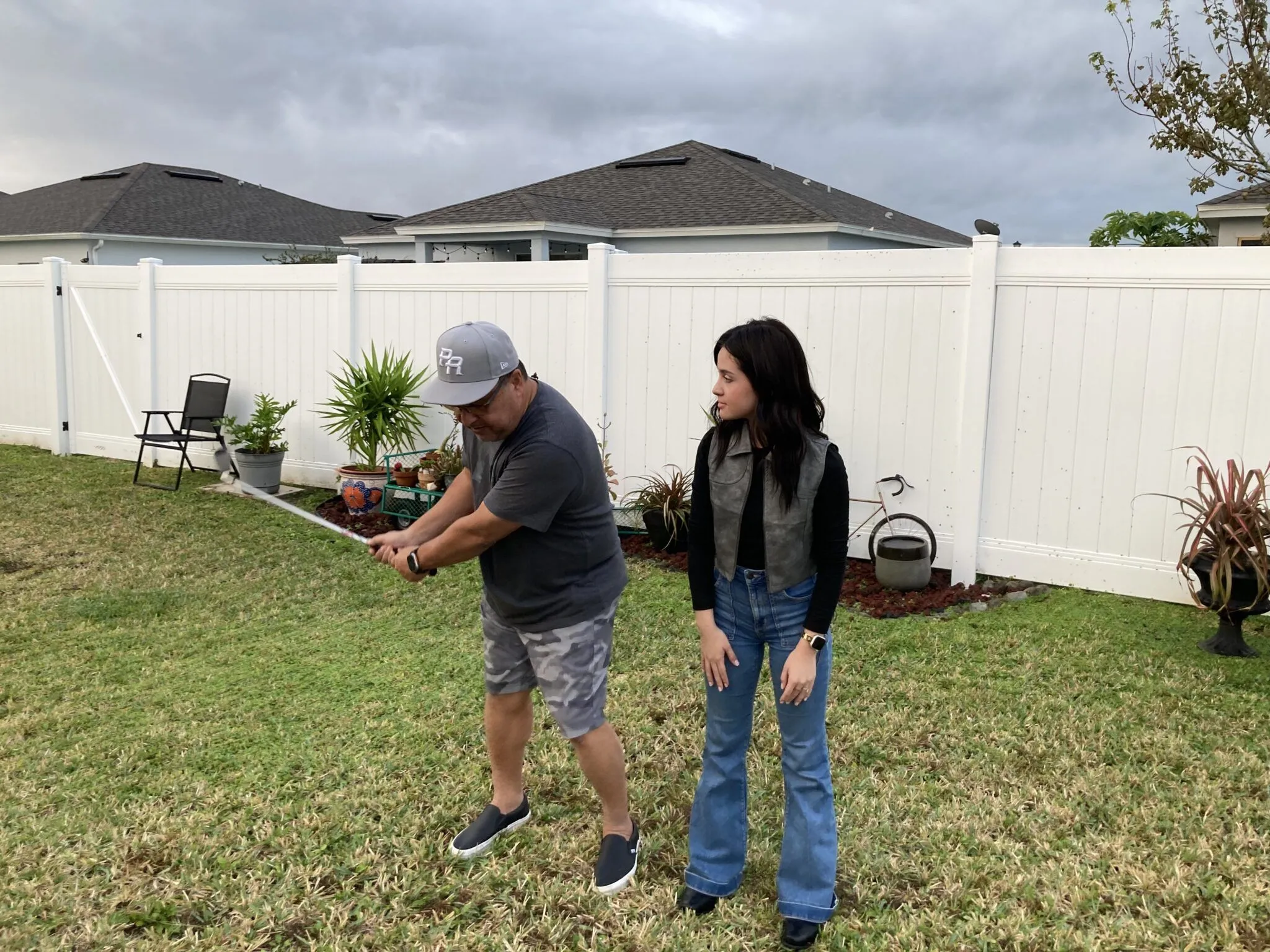
Yaya, working on her swing with her dad, Rafi, is learning golf as her physical education requirement.
Yaya moved to the PEP scholarship for the 2023-24 school year and enrolled in Florida Virtual School Flex. Now educated at home, Yaya could adjust her class schedule for appointments with her physical, occupational, and vision therapists. She could also work at her own pace without the pressure of completing a test by the end of the period.
She incorporated music into her curriculum and learned to play the guitar. Instead of gymnastics for her physical education requirement, she took up the safer sport of golf.
“I’ve officially retired from gymnastics,” she joked.
The PEP scholarship also allowed Yaya to dual enroll at Daytona State College, where she is working toward an associate degree in liberal arts.
With the help of her therapists, Yaya has been able to return to the classroom setting at Daytona State. Her professors, aware of her learning challenges, allow her more time to take tests and complete assignments. The result is a 3.94 GPA.
“I've been able to tailor my education and personalize it to who I am as a learner,” Yaya said.
Yaya has a 4.0 GPA in her high school studies. She will be 16 this spring when she graduates from both high school and Daytona State.
Next year, she will head to the University of Florida, where she plans to study sports and media journalism. Her goal is to eventually earn a master’s degree in media journalism from Full Sail University and a doctoral degree in professional communications from Florida by the time she’s 21.
“She is determined,” Giselle said.
Yaya said she was skeptical when her mom first raised the idea of home education. A self-described social butterfly, Yaya enjoyed attending school with her friends. Yet, she knew it was time for a change.
“My new normal was unique,” she said.
And the PEP scholarship, she said, was just what she needed.
“The word ‘personalized,’ I can’t think of a better one to sum it up,” she said. “Sometimes students excel when there are no boundaries to how they can learn. Being homeschooled opened opportunities for me.
“Who would have known that, after I had the concussion, that my school could no longer accommodate where I was at in my learning journey because of my health? Who would have known that this scholarship would have opened, and I would have been the first 10,000 students to receive it? Crazy. Now that is not normal.”
One of Yaya’s therapists suggested she keep a journal and write down her thoughts and feelings. A common theme during her recovery was the support she received. She often heard the phrase “you got this” as she struggled during therapy or with schoolwork.
So, Yaya wrote and recorded a song that incorporated her faith, her hard work and the support she received along the way. It’s called, “You Got This”:
“My thoughts fell apart
On the way to the ER.
In despair and fear,
He spoke into my ear
Time will heal your pain.
Take some time away.
You got this, you got this.”
Yaya still suffers from the effects of her concussion. Migraines come and go, and she can still become confused, but she’s learned to cope and compensate. She said she has far more good days than bad.
“The PEP scholarship is a blessing, and it changed my life, and it changed my family's life,” Yaya said.
“I would not go back and change anything about what I'm doing for school now. I've been able to find my dreams, my passions. I've been able to see that life outside of high school is going to be okay. The goal is to graduate and be successful, and that’s what I’m doing.”
Education is no longer about students sitting in rows of desks from 8 a.m. to 3 p.m. And school choice, the term supporters used for years to describe the movement for education options is out. Parent-directed education is in.
That was the call to arms Florida charter school leaders received from one of their earliest supporters on the closing day of an annual gathering convened by the state’s Department of Education.
“We were charged to be laboratories of innovation,” said Jim Horne, a former Florida education commissioner and lawmaker who sponsored the Sunshine State’s first charter school bill. “I challenge you to step out of the proverbial box. If you don’t innovate, you will stagnate.”
Education savings accounts, which allow parents to direct public education funding to private schools, tutoring, curriculum and other options for their children, have been sweeping the country and are now in effect in 19 states.
This has led some national observers to wonder whether charter schools risk losing momentum or becoming political orphans.
Manny Diaz Jr., Florida’s education commissioner, has pushed to counter that chatter. In his keynote address last year, he said education options of all kinds can flourish in the Sunshine State, which is home to the nation’s largest ESA programs and a growing charter school sector.
“We’re capitalizing on this historic school choice and charter school movement. We’re giving parents the ability to choose the best path for their students, regardless of background, regardless of income.”
Last year, the state rechristened its annual convening of charter school leaders as the Florida Charter School Conference and School Choice Summit. This year, private school leaders and educators made up nearly a quarter of the 1,300 attendees.
This year’s event featured main-stage presentations by Success Academy founder Eva Moskowitz, whose New York-based charter school network began eyeing a Florida expansion, as well as presentations on improvements in public-school student achievement, and multiple sessions that highlighted the opportunities growing scholarship programs offer to charter schools.
Last year’s House Bill 1 supercharged the growth of Florida’s ESA programs and created a new Personalized Education Program for students who don’t attend school full-time. That, combined with continued growth of New Worlds Scholarship Accounts for public-school students who need extra academic help, and the existing program for students with unique abilities, creates a substantial opportunity for public schools, including charters, to offer services to scholarship students.
Between those three programs alone, “we’re talking about $1 billion from students that do not have to go to school,” David Heroux, senior director of provider development and relations for Step Up For Students, which manages the bulk of Florida’s K-12 education choice scholarships, said during one session.
School districts, including Brevard and Glades counties, have already begun offering individual courses to scholarship students, with others planning announcements soon or expressing interest in participating.
Adam Emerson, executive director of the Florida Department of Education’s Office of Independent Education and Parental Choice, urged attendees to join the school districts in embracing a la carte learning and the possibilities it has unlocked for charter schools.
“We are entering into a whole new universe of choice,” he said.

For we who grew up tall and proud
In the shadow of the mushroom cloud
Convinced our voices can't be heard
We just want to scream it louder and louder and louder
— Queen, Hammer to Fall
Recently we reviewed in these pages' election returns by generation showing that Vice President Kamala Harris won a majority of most generations but decisively lost Gen X, and thus the election as a whole. We Gen Xers shrugged off the daily looming prospect of global thermonuclear annihilation. Latchkey kids had more pressing things to concern themselves with. Worse still, we survived the cultural oppression of the Baby Boomers and their allegedly “classic” rock playing the same seven songs on infinite radio repeat. Punk, funk, new wave, alternative, grunge — please just give us something else to listen to!
But I digress; in addition to our shared childhood experiences, many in Gen X were the parents of school-aged children during the COVID-19 dumpster fire. This made many see red far more than even having to listen to Stairway to Heaven 18,589 times. K-12 traditionalists/reactionaries might hope to wait out the Gen X generation — some of us have become grandparents — we can’t live forever. Delightfully, still greater challenges for the status-quo tribe loom in the immediate future.
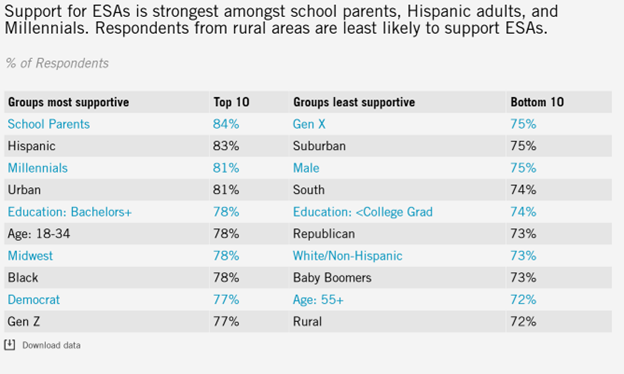
Polls, like the one above from Ed Choice, show that both Millennials and Gen Z show higher support for school choice than either Gen X or Baby Boomers. This is hardly surprising. There were only three channels on television (four if you count PBS) when Gen X was young, and we were thrilled when cable television came along and provided an additional 50 or so channels. Young people these days can stream anything, anytime, anywhere. Future generations will not even understand the phrase “cutting the cord” as they won’t have ever experienced a cord to begin with.
It's hard to imagine public education remaining one-size-fits-all in a world of ubiquitous customization. Democracy can be terribly unforgiving to candidates who attempt to give voters what they think they need rather than what they want. Ultimately this points to a bipartisan future for K-12 choice.
Chuck Todd for instance noted on election night:
Both Florida and Texas have been very aggressive about expanding school choice. Where have Republicans made the greatest gains among Hispanic voters? Florida and Texas. So, education, the economy, those issues, bread and butter issues, and that is how they talk to them. I’m not saying Democrats weren’t, but the cultural issues don’t play as well with Hispanic voters as they may with college-educated whites or even African Americans.
Political parties don’t generally volunteer to play the role of the nail indefinitely; it’s better to be a hammer. Gen Xers are old enough to have seen a bipartisan coalition for choice come, and to have seen it go. Will we see an effort to get a new bipartisan coalition rushing headlong as a new goal, or will we be waiting for the hammer to fall again?
Stay tuned.
By Shaka Mitchell
After this month’s election, which has resulted in a surprising Republican trifecta, the first action GOP lawmakers should take is to pass and sign the Educational Choice for Children Act (ECCA). This bill aims to provide educational opportunities outside the public school system for millions of students over the next four years alone.
The push for educational choice has been growing across the country, primarily driven by state legislatures, which control most K-12 education legislation. However, states like California, Kentucky, Colorado, New York, and Michigan have faced challenges in advancing such legislation, largely due to Democratic majorities and significant influence from teachers' unions.
The ECCA would create a federal scholarship tax credit program that allows tax-paying individuals to direct up to ten percent of their adjusted gross income to a Scholarship Granting Organization (SGO). SGOs already grant scholarships to students in 22 states, but they are products of state-level legislation and implicate the state tax code. Therefore, these programs are non-starters in states without personal income tax. The ECCA represents a first at the federal level and just this year the bill made significant progress, having passed the House Finance Committee.
Be like water
While subject to change, if the ECCA passes with a $10 billion cap, it would likely benefit more than a million students from low- and middle-income families. Families would apply to an SGO for a scholarship, and upon receiving one, parents could use the funds for a range of educational expenses including tuition at private schools, online courses, special education services, and tutoring. Some families will likely choose to keep their student enrolled in a public school and use scholarship funds to supplement the experience with technology or tutoring – enhancements normally reserved for more wealthy families.
The federal nature of the ECCA presents a new opportunity to deliver educational options for children in states where state legislatures have been resistant to educational freedom.
California serves as a prime example. Despite substantial investment in public education (on average more than $18,000 is spent on K-12 students in the state), student outcomes remain disappointing. Only 3 in 10 students in 8th grade are proficient in reading, according to the 2022 National Assessment of Educational Progress (NAEP).
Earlier this year, and at the behest of the California Teachers Association, the state legislature defeated a proposal that would have created an $8,000 voucher program. Like water flowing around a stubborn obstacle, the ECCA would give donors and parents another option in their quest for an educational best fit.
While not a cure-all, this bill would significantly improve educational outcomes for all children.
Elections matter
Finally, the ECCA allows Republicans to fulfill the responsibilities entrusted to them by voters, ensuring a prosperous future for all children, regardless of their state's political leaning.
Famously, or infamously depending on your point of view, President Jimmy Carter established the Department of Education as a way to further endear himself to the National Education Association (NEA), the country’s largest teachers union. The Department’s creation was the fulfillment of his 1976 campaign promise, and he was further rewarded in 1980 by receiving the union’s endorsement.
In a similar fashion, candidate Trump and many other Republican candidates including Tim Sheehy (MT), Bernie Moreno (OH), Dave McCormick (PA), and Gov. Jim Justice (WV), expressed their desire to support American families through education choice. President Trump was rewarded on election night in large part thanks to increased support among Black and Latino voters.
On election night, NBC News chief political analyst Chuck Todd noted that “Latino voters align more closely to the conservative party [on] school choice.” Many of these voters live in states with little hope of state-initiated school choice legislation.
The ECCA could deepen the bonds between Republicans and Latino voters and bring much-needed opportunities to students who need them most.
— Shaka Mitchell is a senior fellow at the American Federation for Children.
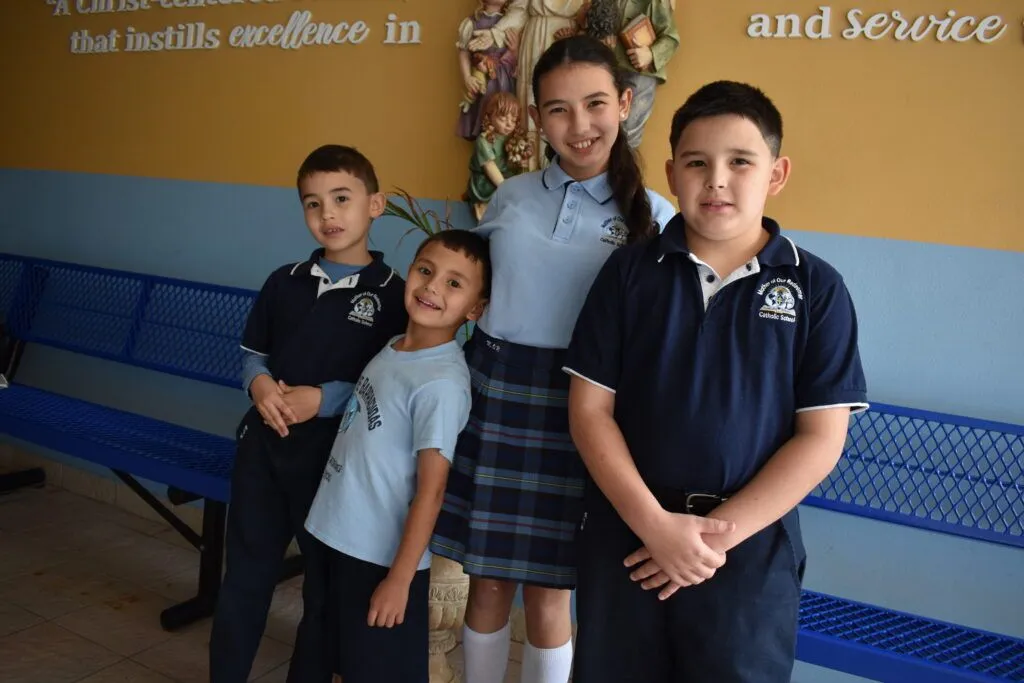
The Ivins children, (from left) Lucas, Nicholas, Rebekah and Joseph, are flourishing academically.
MIRAMAR, Fla. – William Ivins moved his family to South Florida ahead of his retirement from the United States Marine Corps and enrolled his children at Mother of Our Redeemer Catholic School, hoping they would reap the same rewards as he did from a faith-based education.
But, as William and his wife, Claudia, would soon learn, that was easier said than done.
A lawyer for much of his 20-year career in the Marines, William needed to pass the Florida Bar Exam before he could enter the private sector. It was a long process that left him unemployed for 19 months.
“It was a struggle,” he said. “My retirement income was not enough to pay for the cost of living and tuition for my children.”
William and his wife Claudia faced a few choices: continue with the financial struggle, homeschool their children, send them to their district school, or move out of state. None were appealing to the Ivins, and fortunately, they didn’t have to act on any.
The Florida Tax Credit Scholarship made possible by corporate donations to Step Up For Students allows his four children to attend Mother of Our Redeemer, a private K-8 Catholic school near the family’s Miramar home.
“It was a perfect storm of having to retire from the Marines and not really having a job lined up,” William said. “The transition was more difficult than I thought it would be. The income just was not available for us to continue our kids’ education in the way we wanted. Had the scholarship not been there, we would have been forced to move out of state or homeschool them or move them to (their district) school.”
In July 2020, the Ivins moved to South Florida from Jacksonville, N.C., where William had been stationed at Camp Lejeune. William contacted Denise Torres, the registrar and ESE coordinator at Mother of Redeemer, before making the move. She told William the school would hold spaces for his children. She later told him about the education choice scholarships managed by Step Up For Students.
“That was a big relief for him,” Torres said.
At his mother’s urging, William began attending Catholic school in high school.
“That was a life-changer for me,” he said.
He converted to Catholicism and vowed if he ever had children, he would send them to Catholic school for the religious and academic benefits.
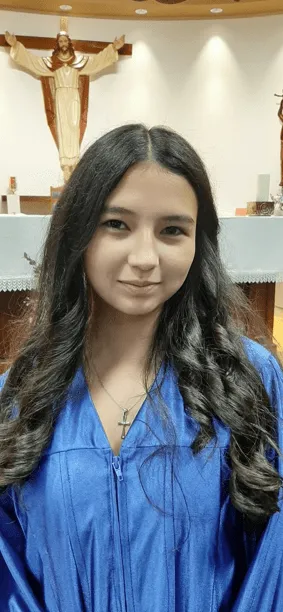 Rebekah graduated in May from Mother of Our Redeemer. She had been an honor roll student since she stepped on campus three years ago.
“Rebekah likes to be challenged in school, and she was challenged here,” Claudia said.
Rebekah, who received the High Achieving Student Award in April 2022 at Step Up’s annual Rising Stars Awards event, is in the excelsior honors program as a freshman at Archbishop McCarthy High School.
“She's an amazing, amazing student,” Torres said. “It’s incredible the way she takes care of her brothers. She's very nurturing. Every single teacher has something positive to say about her.”
Rebekah’s brothers, Joseph (sixth grade) and Lucas (third grade), do well academically and are active in Mother of Redeemer’s sports scene, running cross-country and track. Nicholas, the youngest of the Ivins children, is in first grade. He was allowed to run with the cross-country team while in kindergarten, which helped build his confidence.
William had been in the Marines for 20 years, eight months. He served as a judge advocate and was deployed to Kuwait in 2003 for Operation Iraqi Freedom, to Japan in 2004, and then to Afghanistan in 2012 for Operation Enduring Freedom.
He retired in May 2021 but didn’t find employment until December 2022. The Florida Bar Exam is considered one of the more challenging bar exams in the United States. He took the exam in July 2021 and didn’t learn he passed until September. It took William more than a year before he landed a position with a small law firm in Pembrook Pines.
Claudia, who has a background in finance, works in that department at Mother of Our Redeemer Catholic Church, located next to the school.
“They have really become part of our community,” principal Ana Casariego said. “The parents are very involved and are big supporters of our school and church.”
In Mother of Our Redeemer Catholic School and Church, Willian and Claudia found the educational and faith setting they wanted for their children.
“It is a small community environment where you know all the teachers and staff by first name,” William said. “My kids have received a wonderful education in an environment where they don’t have to worry about bullying, and they can really strive to grow and do their best academically.
“The scholarship kept us in the state and kept our kids in the school system that we wanted them to be in. It’s been a great blessing to us.”

