Eleven states currently offer tax credits to specified taxpayers who make contributions to tax-exempt non-profit organizations that in turn use those contributions to fund scholarships for qualifying, financially-needy, elementary and/or secondary school students attending private schools. This fairly recent development is currently empowering perhaps 150,000 lower-income families, who generally are unable to afford private schools, to make this sort of school choice for their children. To be clear, these plans provide benefits for taxpayers who make contributions that help other people’s children attend private schools.
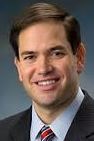
Sen. Rubio
Sen. Marco Rubio, R-Fla., has just introduced a bill that would expand this tax credit scholarship initiative nationwide. To understand the good (and dubious) features of Senator Rubio’s proposal, it is important to appreciate the state law background against which it is set.
Florida has the financially largest of these 11 state tax credit programs, with about 50,000 children currently participating. It restricts the scholarships to children from truly low-income households; the child must be eligible for a free- or reduced-price school lunch – currently just over $40,000 a year for a family of four. Other states are more generous, with Oklahoma reaching well into the middle class since there a family of four can still qualify with $120,000 in annual income. Senator Rubio’s plan, while not as tightly restricted as Florida’s, focuses the scholarships on families with income no more than 250 percent of the poverty level, which is a bit over $50,000 today. The main thing to emphasize here is the senator clearly seeks by his bill to empower the least well-off Americans who are currently least able to exercise school choice – a choice that more well-to-do families make by either moving to a better public school district or paying for private schools on their own.
Several state plans give tax credits to both individual and corporate donors (and for corporate donors the plans sometimes allow credits against a variety of state taxes). Senator Rubio’s bill does the same – allowing married couples and single taxpayers both to obtain a federal income tax credit for an annual contribution of up to $4,500, and allowing corporations an annual corporate income tax credit of up to $100,000. Florida by contrast only allows corporate tax credits and Arizona (which was the first state to adopt this program) initially granted only individual tax credits. Senator Rubio’s proposed tax credit limit for couples and individuals is about twice that now allowed in Arizona. Some states have no cap on donations, and indeed in Florida a few very large corporate donors contribute millions each year to the plan.
Senator Rubio’s proposed tax credit is a 100 percent credit, as is true in both Florida and Arizona, for example. This means that for every qualifying dollar contributed, federal income taxes would be reduced by a dollar. This essentially makes contributions costless to the donors. They, in effect, are able to re-direct their tax dollars to this specific cause – helping needy families send their children to private schools. It is worth nothing, however, that some states grant only a partial tax credit, such as the 65 percent credit allowed in Iowa and the 50 percent credit allowed in Indiana. In those latter states, donors must put up some of their own money.
Most states that adopted these plans imposed a maximum overall limit on the amount of tax credits that may be claimed each year in support of the program. These maxima vary enormously and even so are often not reached. Senator Rubio’s plan has no such limit. It probably would be complicated and costly, but clearly not impossible, for the IRS to administer an overall ceiling in a way that allowed would-be donors to know whether their contribution was within the national maximum and hence truly eligible for the credit.
One important difference between many state plans and Senator Rubio’s proposal is there is no limit on the amount of the scholarship that may be awarded. Florida, for example, caps scholarships at $4,335 at present; in Georgia the limit is just over $9,000. Hence, as appears to be the case in states like Iowa and Indiana, it would be legally possible under the senator’s plan for a child to win a full scholarship to a very high cost, elite private school and hence indirectly obtain government financial aid well beyond what is now being spent on public schools. This is perhaps unwise. Note, however, that nothing in Senator Rubio’s bill would require scholarship granting organizations to award full scholarships or high-value scholarships. In many states at present, the average scholarship is less than $2,000 a year. Since it would be rare to find a school with tuition that low, either the families must find some way to come up with the difference, or the schools must use their own financial aid plans to make up some or all of the gap.
The most striking difference between most state plans and Senator Rubio’s is children already enrolled in private schools would be eligible for scholarships. (more…)
I am grateful to Rebecca Sibilia and Sean Gill for their thoughtful response to my blog post encouraging Michelle Rhee to replace her failing schools model of school choice with an approach based on equal opportunity.
Rebecca and Sean defended StudentsFirst’s support of the failing schools model on pragmatic grounds. They wrote: “When state resources are limited or the existing supply of desirable private schools is limited, it also makes sense to prioritize vouchers or scholarships for those low-income children attending a low-performing school or living in low-performing school districts.”
Every community suffers from an insufficient supply of effective schools for low-income students. But in Florida we’ve learned that increasing demand - not limiting demand - is the best way to increase supply.
Access to Florida’s tax credit scholarship program for low-income students, which I help administer, is limited by a state-imposed cap. But our demand is not limited, so it often exceeds supply. This excess demand has not had a negative effect on students or the program. Instead, it has generated political pressure on the state Legislature to allow our cap to rise to meet this additional demand.
In 2010, as a result of excessive demand, the Florida Legislature voted to allow our program to grow 25 percent every year the demand hits or exceeds 90 percent of supply. The result has been extraordinary growth of supply and demand. While we have been awarding scholarships since 2002, 34 percent of our growth has occurred in just the last two years. This school year we added 10,000 more students to the program and had more than 12,000 students add their names to our waiting list after we hit our cap.
We’ve also been adding about 100 new private schools per year to the program, and some have started to expand their physical capacity to serve more students. Had we adopted the StudentsFirst approach of limiting demand when faced with limited supply, this extraordinary growth would not have occurred.
Today, more than 43 percent of Florida’s preK-12 students attend a school other than their assigned district school. Charter schools, magnet schools, virtual schools, career academies, dual enrollment and homeschooling are all growing dramatically. Private schools are already struggling to maintain their market share given all these choices. If we were to limit our scholarships to low-income students in state-designated failing schools, then many private schools serving low-income students might be forced to close - to everyone’s detriment. (more…)
On Wednesday, U.S. Sen. Marco Rubio, R-Fla., introduced a bill that would create a federal tax credit scholarship program for low-income students. Today he offers his thoughts about it in an op-ed for the Tampa Bay Times. Here's an excerpt:
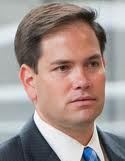
Sen. Rubio
Unfortunately, hundreds of thousands of schoolchildren in our country are not as fortunate as I was. These children are being failed by our nation's broken public school system, and they and their parents deserve the freedom and flexibility of school choice. There is perhaps no greater symbol of failure in our education system and our society than the worried faces of parents sending their kids off to a failing school because they don't have the liberty to choose a better, safer school.
While some students may be lucky enough to attend high-quality public charter schools in their areas, a private school education has become unattainable for the majority of low-income and middle-class families. It's too difficult for parents in today's economic environment to incur the financial burden of paying tuition at a private school, forcing parents to bypass better and safer education options.
Further, because of our nation's fiscal crisis, private schools may not be able to distribute a high number of institutionally funded scholarships to children. The result is a large number of students and families yearning for the opportunity of gaining a better education at a high-performing private school that will adequately prepare them to compete in a 21st century global economy.
To ensure that more American children receive that opportunity, I have introduced the Educational Opportunities Act, to create a new federal tax credit for individuals and corporations to help families pay for expanded educational opportunities. Full op-ed here.
Many of our more public minds oppose aid to families who want, but can’t afford, a non-government school. For working families and the poor, the guru’s motto appears to be “public school only.” He endorses our ancien regime of schooling, which eliminates the parent from any role in the process; as such minds see it, the State rescues half of America’s children from their parents’ mistakes by conscripting them each morning to government custody. I will call these pundits “shepherds”; they applaud as the lambs of the hoi polloi get herded into that safer fold of the State.

It takes guts not common to the Shepherd to argue plainly that the well-off parent is up to the job, but not the rest of you. Better just to stand by as the State properly does for worker and the poor what better-fed families do for their own children - i.e., choose.
Oddly enough these same Good Shepherds - so often wordy - seldom comment on the wisdom and justice of family choice when exercised by those other parents who can afford it. Of course, such comfortable folk can actually assert a constitutional authority over the child; and it would be a steep climb - legally and politically - to disentitle every parent, as Oregon attempted nearly a century ago. Still, one might expect our contemporary civic sentinels to notice and regret the damage to children and society wrought daily by these imperfect parents making choices. The honest dogmatists of Oregon were candid and public about their fear of feckless parents both rich and poor; today’s enemies of choice remain oddly reserved and ambiguous regarding the sovereignty of our more prosperous mamas and papas.
Such restraint suggests profound ambivalence. Often we watch the very prototype of the Shepherd - the public school teacher and union leader - execute their own child’s exodus to a more favored district residence or even to a private school. Such thoroughbred parents on occasion even manage a different postal address for the child, one where in fact he is seldom to be found. (Less popular school districts now pay bounties to detectives to assure that resident parents do not divert illegally the per-pupil state subsidy for their child. Parents caught cheating get prosecuted.)
Is this silence of the the Shepherds a shroud for their own embrace of choice by the well-off? As these gurus run with the hare and hunt with hounds, they remind us of that familiar foreign critic of America’s sins - the one who turns handsprings to secure his own visa.
Is the Shepherd simply a hypocrite? Often yes; but often no. In this short piece it would be hazardous to critique the possible excuses of the Shepherd - coherent and otherwise - for his apparent approval of society’s systematic bullying of the poor parent while indulging the tastes of the rich. In my experience - apart from union intimidation - the most common explanation is the simple blindness of the middle class and the academy to the reality of the coercion. (more…)
 At Jeb Bush’s National Summit on Education Reform in Washington, D.C. last week, two prominent education reformers from the center-left and the center-right joined to make a remarkable statement about parental choice. Asked from the audience to name their “No. 1 idea” to improve public education, former New York City school chancellor Joel Klein and former U.S. Secretary of State Condoleezza Rice answered with a remarkably united voice.
Their three minutes of extemporaneous remarks are well worth your time, and are available through C-SPAN.org here.
In brief, Klein spoke of the way various types of learning options, including charter schools, have helped spur improvements in New Orleans and Harlem: “About a third of the kids in Harlem in the third grade are in charter schools. What’s amazing is the Harlem District went up, and this is apples to apples, went up dramatically from when we started this intensive choice process there to now. … Not only did the charter schools outperform almost everybody, but the public schools … actually moved up significantly themselves.”
Rice spoke to how competitive pressures have produced a “catalytic” effect in higher education, and noted that only wealthier families tend to have choice in a K-12 system where pupil assignment is determined only by geography: “So the only people stuck in neighborhood schools are poor people, and that’s the height of inequality. And that’s why I’ve called it a civil rights issue.”
 The assertion that school choice somehow exacerbates segregation and separatism in American society surprises me every time it pops up. The ideal of traditional public education, a “common school” available equally at no cost to all citizens to impart a high level of academics as well as a core set of American values, has always been a myth. Yet it has amazing staying power despite the facts.
Put aside a hundred years of state-sanctioned racism that outlawed education for slaves, and then engendered “separate, but equal” schools for another 90 years until the 1954 Supreme Court decision banned the practice. Let’s look at how this “common school” system serves Americans now.
The statistics on K-12 education in the Department of Education’s "The Condition of Education, 2011" report are informative. Nationally, 31 percent of African-American students are in schools that have 75 percent or more African-American students. The figure is nearly 33 percent for Hispanic students. Nationally, 62 percent of whites attend a school with a population over 75 percent white, while those schools serve around 7 percent of the African-American and Hispanic populations.
When city demographics are analyzed, the segregation of traditional public schools dramatically jumps. Forty-two percent of African-Americans and 39 percent of Hispanics are in schools with 75 percent or more of those same students. Not surprisingly, school enrollment and especially urban school enrollment reflects how a public education monopoly assigns students to schools - by zip codes.
Another way to look at how this “common school” system is serving us is the distribution of the free and reduced lunch (FRL) population, which the Department of Education identifies as a proxy for low-income students. High-poverty elementary schools, those with 75 percent or more of an FRL population, enroll 45 percent of Hispanic students and 44 percent of African-American students. For whites, the enrollment is 6 percent in high-poverty schools. Nationally, urban areas account for 29 percent of our student population, yet 58 percent of all students in high-poverty schools live in our cities.
Combine this data with dropout statistics in the 40-60 percent range for inner-city minority populations, and abysmal academic outcomes for so many of the remaining students, and you have the “common school” myth stripped bare. (more…)

