Eleven states currently offer tax credits to specified taxpayers who make contributions to tax-exempt non-profit organizations that in turn use those contributions to fund scholarships for qualifying, financially-needy, elementary and/or secondary school students attending private schools. This fairly recent development is currently empowering perhaps 150,000 lower-income families, who generally are unable to afford private schools, to make this sort of school choice for their children. To be clear, these plans provide benefits for taxpayers who make contributions that help other people’s children attend private schools.
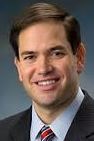
Sen. Rubio
Sen. Marco Rubio, R-Fla., has just introduced a bill that would expand this tax credit scholarship initiative nationwide. To understand the good (and dubious) features of Senator Rubio’s proposal, it is important to appreciate the state law background against which it is set.
Florida has the financially largest of these 11 state tax credit programs, with about 50,000 children currently participating. It restricts the scholarships to children from truly low-income households; the child must be eligible for a free- or reduced-price school lunch – currently just over $40,000 a year for a family of four. Other states are more generous, with Oklahoma reaching well into the middle class since there a family of four can still qualify with $120,000 in annual income. Senator Rubio’s plan, while not as tightly restricted as Florida’s, focuses the scholarships on families with income no more than 250 percent of the poverty level, which is a bit over $50,000 today. The main thing to emphasize here is the senator clearly seeks by his bill to empower the least well-off Americans who are currently least able to exercise school choice – a choice that more well-to-do families make by either moving to a better public school district or paying for private schools on their own.
Several state plans give tax credits to both individual and corporate donors (and for corporate donors the plans sometimes allow credits against a variety of state taxes). Senator Rubio’s bill does the same – allowing married couples and single taxpayers both to obtain a federal income tax credit for an annual contribution of up to $4,500, and allowing corporations an annual corporate income tax credit of up to $100,000. Florida by contrast only allows corporate tax credits and Arizona (which was the first state to adopt this program) initially granted only individual tax credits. Senator Rubio’s proposed tax credit limit for couples and individuals is about twice that now allowed in Arizona. Some states have no cap on donations, and indeed in Florida a few very large corporate donors contribute millions each year to the plan.
Senator Rubio’s proposed tax credit is a 100 percent credit, as is true in both Florida and Arizona, for example. This means that for every qualifying dollar contributed, federal income taxes would be reduced by a dollar. This essentially makes contributions costless to the donors. They, in effect, are able to re-direct their tax dollars to this specific cause – helping needy families send their children to private schools. It is worth nothing, however, that some states grant only a partial tax credit, such as the 65 percent credit allowed in Iowa and the 50 percent credit allowed in Indiana. In those latter states, donors must put up some of their own money.
Most states that adopted these plans imposed a maximum overall limit on the amount of tax credits that may be claimed each year in support of the program. These maxima vary enormously and even so are often not reached. Senator Rubio’s plan has no such limit. It probably would be complicated and costly, but clearly not impossible, for the IRS to administer an overall ceiling in a way that allowed would-be donors to know whether their contribution was within the national maximum and hence truly eligible for the credit.
One important difference between many state plans and Senator Rubio’s proposal is there is no limit on the amount of the scholarship that may be awarded. Florida, for example, caps scholarships at $4,335 at present; in Georgia the limit is just over $9,000. Hence, as appears to be the case in states like Iowa and Indiana, it would be legally possible under the senator’s plan for a child to win a full scholarship to a very high cost, elite private school and hence indirectly obtain government financial aid well beyond what is now being spent on public schools. This is perhaps unwise. Note, however, that nothing in Senator Rubio’s bill would require scholarship granting organizations to award full scholarships or high-value scholarships. In many states at present, the average scholarship is less than $2,000 a year. Since it would be rare to find a school with tuition that low, either the families must find some way to come up with the difference, or the schools must use their own financial aid plans to make up some or all of the gap.
The most striking difference between most state plans and Senator Rubio’s is children already enrolled in private schools would be eligible for scholarships. (more…)
Editor’s note: Wendy Howard is executive director of the Florida Alliance for Choices in Education, which includes a broad range of school choice organizations. The views expressed here are her own and not that of FACE.
Four years after my daughter Jessica Howard began a petition drive to make it easier for students to access virtual education in Florida, she is still not eligible for the virtual provider of her choice. No wonder so many parents settle for learning options that may not necessarily be the best option. There is so much bureaucracy and public attack if a parent merely wants more choice.
As a parent advocate, I have met many parents who are desperate for just that.
One told me her child wrote a suicide note after severe bullying at her school, but fortunately everything turned out okay after they found another option. Another couldn’t transfer her child to a virtual school – despite severe allergies – because of the “seat time” restrictions that were in place at the time. Instead, she had to access a district’s “hospital homebound” program, which cost taxpayers an exorbitant amount of money.
In other cases, parents have children who are failing in the system, or are far ahead of the system, or are pursuing athletic or professional careers that require some reasonable flexibility with academic schedules. There are endless reasons why some families want to choose schools outside of their traditional zoned school, or prefer Option X to Option Y, or want to mix and match those options so their kids can thrive.
All of those parents and their stories have made me wonder: Why can’t we just let all parents decide? Why are we limiting their choices?
Why not all parents, all choices? (more…)
Editor’s note: America isn’t the only place where school choice raises questions about not only education, but pluralism, citizenship and social integration. Noted school choice expert Charles Glenn, a Boston University professor and American Center for School Choice associate, writes that European countries with far more evolved choice systems continue to wrestle with these issues – but have no reason to fear faith-based schools.
 Early in June I was one of the speakers at a conference on educational freedom in The Netherlands and Flanders (the Dutch-speaking part of Belgium). It is no exaggeration to say these are the poster children of “school choice,” the two areas where its implications have been worked out most fully over the past two centuries (see my Contrasting Models of State and School, Continuum, 2011). Today, upwards of two-thirds of pupils in this area of some 23 million inhabitants attend non-government schools with full public funding.
Much of the discussion among the participants was about the details of how schools have been able – or not – to preserve their independence in the face of government regulation. I will not try to summarize that discussion here, except to note that as always the devil is in the details and we can learn a great deal from the experience over many decades of the interaction between schools seeking to maintain a distinctive religious or pedagogical character and government officials seeking to impose common standards. (The updated 2012 edition of Balancing Freedom, Autonomy, and Accountability in Education will include, in four volumes, detailed descriptions of how this relationship plays out in nearly 60 countries, most of them written by leading education law experts from each country, including these two.)
My own contribution at the conference was to raise openly what is beginning to be debated in Belgium and The Netherlands: is educational freedom still relevant, given changing circumstances? Is there still a need for schools not owned and operated by government and promoting worldviews that are in contrast with that of the societal majority? And, is the growing societal pluralism created by immigration an argument for or against such schools? Some, in fact, have claimed that the justification for non-public schools no longer exists because (a) some of them have ceased offering a truly distinctive education as a result of secularization, and (b) to the extent that they actually distinctive, they are a barrier to the social integration required in the face of the growing presence of Muslims in Western Europe.
My paper confronted head-on the widespread fear, among European elites, of strongly-held religious views, and argued that in fact “communities of conviction” make an essential contribution to the health of civil society. I cited research on faith-based schools in the United States to show they have by no means had a divisive effect or made their students unfit for active and positive citizenship. (more…)

