
States with recent education choice lawsuits involving EdChoice Legal Advocates and the Institute for Justice.
As education choice options expand for families across the nation, opponents are stepping up their fight to preserve the status quo.
Observers say these conflicts are examples of growing pains that come when a society undergoes transformational change.
 “It’s just part of the cost of doing business,” said Michael Q. McShane, director of national research at EdChoice, a national nonprofit think tank. “Educators are not alone in challenging policies they don’t like. New laws get passed; people who can’t do things democratically try to do things through the courts.”
Michael B. Horn used a famous quote (often misattributed to Mohandas Gandhi) to describe the spate of lawsuits: “First they ignore you, then they laugh at you, then they fight you, then you win.”
“I think we’ve entered the fight stage,” said Horn, the co-founder, distinguished fellow, and chairman of the Clayton Christensen Institute and an author of several books on disruptive innovation. “Education choice has gotten big enough that the entrenched interests dedicated to preserving the status quo are starting to see it as a threat.”
Legal fights over education choice began in the 1800s when Catholic families opposed the Protestantism taught in public schools. In 1925, the U.S. Supreme Court ruled in Pierce v. Society of Sisters that parents had the right to put their children in private schools. In 2002, the high court issued another landmark decision, Zelman v. Simmons-Harris, which upheld an Ohio scholarship that allowed parents to spend the money on religious schools. The high court found that when the parent controls the expenditure, the state has no role in determining whether the parent will choose to use funding at a religious or secular school.
With the Zelman ruling settling that question, choice opponents began trying to insert race-based arguments using the language of state constitutions. Michael Bindas, a senior attorney at the Institute for Justice who argued the landmark case Carson v. Makin before the U.S. Supreme Court, outlined that shift in a paper published in the Syracuse Law Review. According to Bindas, common arguments center on education clauses requiring states to maintain uniform or common public school systems. Education choice opponents, he said, take that a step further and claim that private scholarship programs could upset racial balances that state constitutions require state governments to maintain. They also argue that the requirements that states maintain public school systems bar them from establishing concurrent private education choice programs. Lower court judges in Ohio and Utah recently cited this argument in striking down choice programs. Ohio plaintiffs also raised the issue of racial balance argument, which the judge rejected.
McShane and Horn say the spate of lawsuits won’t stop education choice programs from becoming the norm in public education. However, they will delay the transition.
“Yes, these cases are a headache and can delay implementation, but school choice has a good track record,” McShane said. “It will take numbers and time, and it’s going to tip over into a different mindset.”
Where things stand
Montana: Families are waiting on a judge to rule on a lawsuit brought by opponents of a 2024 education savings account program for students with special needs. Plaintiffs argue that the law allowing reimbursements for $6,800 per child violates several provisions of the state constitution and redirects tax dollars to private institutions at the expense of students with special needs who remain in public schools. The judge denied the plaintiff’s motion for a temporary halt to the program, allowing families to continue using their ESAs while the case is pending.
Ohio: The state has appealed a lower court’s ruling that declared the state’s $700 million Educational Choice Scholarship Program (EdChoice) unconstitutional. In siding with the coalition of school districts and other choice opponents, the judge said that the program was not a subsidy program, as the state argued, but a separate system of schools in violation of the state constitution. However, the judge rejected the plaintiffs’ argument that the program violated the state constitution’s education clause by creating racial imbalances in the district schools. The 10th District Court of Appeal is expected to hear the case in 2026.
Utah: Families are continuing to receive funds from the Utah Fits All scholarship program while a district court ruling in favor of a teachers union-backed lawsuit is under appeal to the state Supreme Court. A district judge ruled that the state constitution prevents lawmakers from using tax revenue to fund education programs other than public education, higher education, and services for people with disabilities. The judge rejected the state’s argument that it had met its funding obligations to public education and that nothing in the law prohibited it from funding a separate program to support families choosing private or home education.
Wyoming: Families seeking to use Steamboat Legacy Scholarship ESAs had to find other options for the 2025-26 school year after a trial judge blocked the state from distributing funds in July at the request of the Wyoming Education Association and other plaintiffs until the judge rules on their lawsuit against the program. The judge recently denied a motion by state officials and attorneys for two families to dismiss the lawsuit based on their argument that the plaintiffs lacked legal standing.
Missouri: Education choice advocates scored a win last month when a judge denied the teachers union’s request to freeze payments to the MOScholars K-12 scholarship program as their lawsuit continues. MOScholars began in 2021 as a tax credit program supported by private donors. Earlier this year, the state allocated $51 million to the program, prompting the Missouri Education Association to file the complaint, which contends that the allocation unconstitutionally diverts taxpayer funds to private schools.
Arkansas: The state’s Education Freedom Account program is being fought on two fronts. In June 2024, opponents sued in state court, arguing that the program illegally diverted tax dollars from the public school system to benefit private schools. The judge denied the state’s motion to dismiss the complaint, so state attorneys are appealing to the state Supreme Court.
The same plaintiffs filed another lawsuit a year later in U.S. District Court. It argues that the program violates the Establishment Clause of the First Amendment because “it aids in the establishment of religion” by providing state funding to private schools operated by religious organizations. The state refutes that by arguing that the money can go to schools representing a wide variety of faiths, as well as secular schools.
They also argue that the program violates the Equal Protection clause of the 14th Amendment because it discriminates against low-income families, families in rural areas where there are fewer private schools and students with disabilities, because private schools are exempt from the federal Individuals with Disabilities Education Act. The program is also discriminatory, according to the complaint, because private schools are not held to the same standards as public schools. The state attorney general has filed a motion to dismiss the case, arguing that the plaintiffs lack standing.
Kentucky: The Kentucky Supreme Court heard arguments on Sept. 11 about whether the state’s charter school funding law violates the state’s constitution. Charter schools have been legal in the Bluegrass State since 2017, but there was no state funding mechanism. Lawmakers passed House Bill 9, which allocated money to charter schools, which are publicly funded but independently managed. A trial court judge ruled in 2023 that the law violated the state constitutional ban on the use of tax dollars to support non-public education and the constitutional requirement for “an efficient system of common schools.”

June 1, 2025, marked the 100th anniversary of the United States Supreme Court’s ruling in Pierce v. Society of Sisters- effectively the first victory of America’s school choice movement.
In 1922, the voters of Oregon had passed a ballot proposition, Measure 6, which required public school attendance for school age students, creating fines and jail sentences for non-compliance. Supported by the Ku Klux Klan and other nativist groups, the measure passed by a margin of 53% in favor, 47% opposed. Measure 6 took effect in 1926, but in the meantime, the Society of Sisters of the Holy Names of Jesus and Mary took the state of Oregon to court.
The Klan wanted all Oregon children to attend public schools so that they would be educated in a Klan-approved way in the hope of turning immigrant children into what the Klan considered “real Americans.” Wait…oh dear…hold on…I have a bucket and a towel for you…

When your retching subsides, do keep reading, as this story has a happy ending! The United States Supreme Court ruled unanimously in favor of the Society of Sisters and against the 53% of Oregon voters who endorsed illiberalism. The unanimous ruling read:
The fundamental theory of liberty upon which all governments in this Union repose excludes any general power of the State to standardize its children by forcing them to accept instruction from public teachers only. The child is not the mere creature of the State; those who nurture him and direct his destiny have the right, coupled with the high duty, to recognize and prepare him for additional obligations.
One hundred years on, the education freedom movement owes a great debt to the Society of Sisters. We should, like the court, oppose any general power of the state to standardize children. Families should have the right to opt between a broad universe of meaningfully diverse schools and educational methods. People can voluntarily adopt standards as a part of selecting schools and service providers.
A century after Pierce vs. Society of Sisters, we have a great deal of work ahead of us.
The story: With less than a week to go before the U.S. Supreme Court hears arguments about the constitutionality of religious charter schools, supporters and opponents are making wildly different predictions about the possible effects.
 Supporters, who include advocates for religious education, are framing a win for their side as a victory for religious freedom and a logical extension of recent rulings that affirmed faith-based schools’ right to participate in publicly funded programs.
“This is a way of getting new choice options in the context of performance accountability,” said Andy Smarick, a senior fellow at the Manhattan Institute, during a recent debate about religious charter schools sponsored by the American Enterprise Institute. “A small number of religious organizations might apply to run charter schools, and I think that’s wonderful and not going to change the world.”
The Manhattan Institute is among the organizations weighing in on the side of religious charter schools.
Opponents, which include the National Alliance for Public Charter Schools, are sounding the alarm over what they say could cripple a movement that began more than 30 years ago to launch innovative new public schools.
The other side: The National Alliance for Public Charter Schools warned that a ruling allowing religious charter schools could carry “catastrophic consequences” for the nation’s existing charter schools.
For religious charter schools to exist, they argue, the high court would have to redefine charter schools as private. That would overturn laws in 46 states, plus Washington, D.C., and Puerto Rico, that define charters as public and thus threaten their ability to be funded under the same per-pupil formulas as school districts.
Yes, and: Charter supporters also point out the potential for ripple effects, such as charter schools losing facilities funding, questions about teacher participation in state benefit programs, or more drastically, calls to halt the approval of new schools or even funding of existing ones.
“This could lead to the destruction of chartering or limiting of chartering,” said Kathleen Porter-MaGee, a managing partner at Leadership Roundtable, an organization that brings together laity and clergy to support the Catholic church.
Instead of extending charters to religious groups, she encouraged a doubling down on private K-12 scholarship programs, which are now established in 29 states, with Texas poised to become the 30th.
Expanding scholarship programs for private education would let faith-based schools maintain instructional and employment practices that align with their beliefs, free from government interference, while allowing them to serve families who would not have access without private funding.
Catch up: The legal and political battle rocketed to the Supreme Court shortly after two Catholic dioceses won approval from Oklahoma’s statewide virtual charter review board in 2023 to open St. Isidore of Seville Catholic School, an online charter school that would include the same Catholic teachings as the church’s in-person schools.
The fight pitted Republicans against one another, with the current Oklahoma attorney general taking a position opposite his GOP predecessor and filing a lawsuit. It also divided the charter school movement, with national groups forcefully opposing a legal argument that could redefine their status as public entities and some charter schools arguing they would welcome the change.
While Oklahoma has a refundable tax credit that pays up to $7,500 per child for private school tuition, the program was not available until January 2024, about six months after St. Isidore applied for charter school authorization.
Possible upsides of a win for St. Isidore:
“Catholic schools have been doing things on the cheap for far too long,” Smarick said. “This is the opportunity to say you can remain private for as long as you want…but if you think you can do more for your mission in the charter school context, you can.”
Possible downsides:
Charter groups preparing: In case the court rules in favor of St. Isidore, advocates of established charters are working on model legislation that would allow states to maintain funding. A finding that says charter schools are not state actors also raises many questions, such as whether the ministerial exception, a legal doctrine that shields religious organizations from non-discrimination laws in the hiring of staff with ministerial duties, would apply to faith-based schools.
“No one knows what the court is going to say,” Smarick said. “State legislatures need to step up fast and answer these questions.”
Tune in: The U.S. Supreme Court has scheduled oral arguments in the case for 10 a.m. April 30. Audio will be livestreamed.
The big story: After delivering a one-two punch to Blaine Amendments, the nation’s highest court decided not to take aim at Michigan’s version.
Zoom in: This week, the U.S. Supreme Court declined a request to hear an appeal of a 2021 lawsuit brought by kindergarten mom Jill Hile and four other families in the Wolverine State who sued after they were prohibited from using funds saved through the Michigan Education Savings Program, a tax-exempt 529 plan, to help offset the cost of K-12 private school tuition. The court offered no comment when it announced the decision, taken up during a Sept. 30 private conference preceding its 2024-25 term. The refusal to hear the case lets stand a Sixth Circuit Court of Appeals decision affirming a lower court’s ruling that upheld the constitutional ban on private school support.
The issue: A string of recent U.S. Supreme Court rulings has struck down provisions in other state constitutions that bar direct state  funding of private and religious schools. Michigan takes things to another level by prohibiting state funds from supporting any non-public educational institution. This, according to the Sixth Circuit, includes indirect aid like tax-exempt funds saved through 529 plans. This makes Michigan’s Blaine Amendment, enacted in 1970, among the most restrictive in the nation.
Other states, including Kentucky, have restrictive versions of the Blaine amendment. The Bluegrass State provision has shot down laws establishing private school scholarship programs as well as charter schools. Kentucky voters are set to go to the polls next month to decide whether they want to rewrite part of the state constitution to let the state legislature allocate taxpayer dollars to these educational opportunities.
Yes, but: The Supreme Court’s refusal to hear this case could open the door for other states to use Michigan’s overly broad Blaine Amendment as a blueprint to hinder school choice. However, some legal experts doubt that will happen.
“Politically, that would be an uphill battle in most states with parental choice programs,” said Nicole Stelle Garnett, a law professor and director of the Notre Dame Education Law Project. “It won't stop opponents from trying, of course.”
What they’re saying: “Michigan families are desperate to have more options,” said Molly Macek, director of education policy at the Mackinac Center for Public Policy, which teamed up with a Michigan law firm to represent the families in the case. “A child’s educational success shouldn’t be determined by the family’s financial means or ZIP code. We will continue to keep fighting until every family has the ability to choose the best education for their children.”
Next steps: Burdensome rules make repealing Michigan’s Blaine amendment highly unlikely. A two-thirds majority of the state’s lawmakers would have to vote to remove it legislatively. Or supporters could try a ballot signature amendment that would require 446,197 signatures from registered voters to get the issue on the ballot. Another solution would be for Congress to pass a national education choice bill that would make Blaine amendments obsolete – or at least give families a way to bypass them.
Not a cure-all: Legal experts warned that landmark U.S. Supreme Court decisions that struck down bans on religious schools from participating in choice programs wouldn’t be a panacea. “Despite the Supreme Court's decisions in Espinoza and Carson, barriers to educational choice remain in a small handful of states with "’public/private’" Blaine Amendments,” said Michael Bindas, a senior attorney of the Institute for Justice who argued the Carson case before the high court. “Although it is unfortunate that the Supreme Court did not use Hile v. Michigan as an opportunity to address the federal unconstitutionality of such provisions, we are confident that the Court will eventually do so.”
Growing pains: Blaine amendments were primarily rooted in bigotry aimed at the increasing numbers of Catholic immigrants entering the United States during the 1800s. Other laws required all students to attend district schools, which at the time promoted Protestantism. A 100-year-old landmark Supreme Court ruling in Pierce v. Society of Sisters abolished forced public school enrollment and declared that parents had the right to direct the education of their children. Education choice opponents’ court challenges to education choice programs, and supporters’ challenges to Blaine amendments will no doubt continue as the nation’s transition to a new era of public education begins.
For a decade, Yamilette Albertson Rodriguez served her country as a Marine sergeant. She spent seven months deployed in the Middle East where she fought to stem the tide of pirates that terrorized commercial vessels.
“My kids love that I chased pirates,” said the 37-year-old single mother of three from Bluffton, a city with a population of 27,716 in the southernmost tip of South Carolina’s Lowcountry.
Today, Rodriguez fights to make ends meet. The salary she earns as an operations manager at a Sherwin-Williams store is barely enough to support her and her 17-year-old daughter and 6-year-old twin sons. Her 65-year-old father recently had to move in with her. He’s also a military veteran and suffers from several chronic health conditions. Now he’s battling cancer.
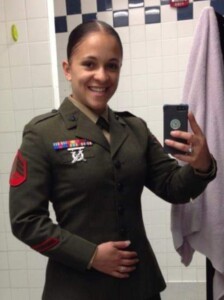 “I’m the sole income provider,” Rodgriguez said. “I basically live at work.” Her daughter said she felt invisible in her district and sometimes struggled in math. Her twins learned to read in pre-kindergarten and were ready for first grade, but the school district required them to be in kindergarten because they turned 6 after the Sept. 1 cutoff.
A new state scholarship program offered lower-income families $6,000 per child that could be spent on private school tuition, tutoring and textbooks. Rodriguez wasted no time getting approved. The kids started at Cross Schools, an Anglican church-sponsored K-12 program. Her daughter was succeeding in pre-calculus and receiving support to pursue higher education. Her twins were thriving in first grade.
A month into the school year, everything changed. The South Carolina Supreme Court declared the scholarship program unconstitutional. That day, the state Department of Education notified the nearly 3,000 families whose kids were enrolled in the program that it would immediately cut off all payments for private school tuition.
“I was in shock,” recalled Rodrigeuz, who had been unaware of the teachers union-backed lawsuit that put the program in jeopardy. Her daughter offered to get a job to help her mother pay the tuition.
“She said, “I feel like with them taking this away from you, it will just burden you financially,’” Rodriguez said.
Relief could come if the state legislature calls a special session to work out a plan that passes constitutional muster. Gov. Henry McMaster this week petitioned the court to rehear the case. However, lawmakers called that a waste of time and said they will come up with a new plan when the legislature reconvenes in January. That’s too late for Rodriguez and other families, whose incomes had to be at or below 200% of the federal poverty level to qualify for the program.
Without a quarterly scholarship payment she was supposed to receive from the state in October, Rodriguez is scrambling. She is trying to develop a plan to pay out of pocket and keep her kids in their private school for at least the rest of the school year. She had been working to build her savings, but she expects the absence of the scholarship will quickly deplete those. She has even sought out food pantries for help.
“I know for a fact I’m going to be living paycheck to paycheck,” she said.
Despite all that, Rodrigeuz remains hopeful.
“My strings are tight," she said. “But I’m holding on.”
For David Warner, choosing a school for his son was a “very personal” decision, he said. The ability to select the place where he could learn near their home in Myrtle Beach, South Carolina, made him and his family feel valued, a stark contrast, David said, to his experience with assigned public schools.
But [yesterday], a state supreme court ruling in a lawsuit supported by teachers unions will cancel the scholarships for some 3,000 children from low and moderate-income families. “It feels like the light has gone out,” David told me, “and we fear being left in the dark again.”
In 2023, South Carolina lawmakers enacted the Education Scholarship Trust Fund Program, which offered children from homes with incomes at 200 percent or less of the federal poverty line (approximately $60,000 for a family of four) the opportunity to use an education savings account. Participating families were awarded accounts worth $6,000 for use on education products and services such as personal tutoring, textbooks, private school tuition, and more. Some 19 states around the U.S. had similar account-style options for families.
Now the number is 18. The state chapter of the National Education Association (NEA), a teacher union, filed a lawsuit against the accounts last October. The South Carolina Supreme Court has ruled the program unconstitutional, saying the accounts are a “direct” benefit to private schools and violate the state constitution, even though the state awards the accounts to parents, not schools.
The ruling is devastating for families like the Warners because their child’s account may end immediately. “In just a few weeks of being in this program, we saw a completely different approach to education. We had more communication from teachers and staff, greater family interaction, and they valued our input in ways the public school never did,” David said.
He explains that the private school aligned with his family’s values and was transparent about what was being taught in the classroom. “The curriculum and teaching were totally transparent, allowing us to know exactly what our children were learning,” he said.
He fears having a “tough conversation” with his son about returning to the assigned school where he struggled to fit in. “He just made new friends, and now he may have to leave them, all because of this decision,” David said. “This ruling implies that low-income families are irresponsible and that the educational elite know better than parents, but that’s not true for us,” he says.
The Warners’ other son has special needs, and David adjusted his work commitments to care for this child. “Just because a family is low-income doesn’t mean they can’t make the best, most responsible choices for their children’s education,” David said.
Thousands of stories like this one should reach state lawmakers this fall as they prepare for the next legislative session. Policymakers can still help South Carolina families by considering other education choice innovations such as the new Parental Choice Tax Credit in Oklahoma. With this state tax credit, parents can receive tax credits worth up to $7,500 for private school tuition expenses and other education products and services. Every K-12 student in Oklahoma is eligible to apply.
Lawmakers nationwide continue to adopt new learning options for students, even in states with existing private school scholarship offerings such as vouchers. Lawmakers in Wyoming and Louisiana approved education savings accounts this year, and Louisiana added these accounts in addition to the state’s existing voucher program. Oklahoma families can “stack” their tax credits on top of the existing voucher options in that state. South Carolina lawmakers should consider solutions such as these as they look for ways to help families.
“We hope that, in the end, families in South Carolina will prevail so we can continue making the best decisions for our children,” David says. Unions shut the lights off for children in the state for now, but lawmakers have plenty of alternatives at their disposal to give families and students a bright future.
The story: A federal judge’s ruling means that Maine can continue to bar religious schools from a state school choice program, despite a 2022 U.S. Supreme Court ruling that struck down an outright ban.
Setting the stage: As the U.S. Supreme Court weighed the landmark Carson v. Makin, Maine extended its anti-discrimination law to private schools participating in its town tuition program.
The other Makin case: A Catholic school and a rural family sued, arguing the law forces religious schools to set aside their beliefs if they want to access public tuition subsidies. That, they contend, conflicts with the 2022 Carson ruling, which cleared the way for public funding of religious private schools.
U.S. District Judge U.S. John Woodcock Jr. denied the plaintiffs’ request for a preliminary injunction, saying the case was unlikely to succeed. However, his ruling said he expects a higher court to have the final say.
“The plaintiffs are free to practice their religion, including the teaching of their religion as they see fit, but cannot require the state to subsidize their religious teachings if they conflict with state anti-discrimination law,” Woodcock wrote in a 75-page ruling.
Why it matters: The case, St. Dominic v. Makin, along with a similar lawsuit filed by other Maine families, raises a key question that echoes other education choice cases: Can states require religious schools to adopt policies that conflict with their beliefs to accept public money?
Yes, but: A 2020 U.S. Supreme Court ruling said teachers at religious schools are not covered by federal employment discrimination laws if their roles are “ministerial.” Whether that line of reasoning could play a role in Maine and Oklahoma has yet to be determined.
Catch up quick: Maine is one of a handful of northeastern states that allows students in areas without public high schools to receive “town tuition” funds to attend nearby private schools. Maine banned religious schools from participating in 1982 after including them for nearly a century. Three families sued the state in 2018 on the grounds of religious discrimination, resulting in the 6-3 Carson decision.
Adèle Keim, senior counsel at Becket Law, representing St. Dominic Academy and a Catholic family, accused the state of making an end run around Carson. She also said the state allows out-of-state schools to participate and admits it does not police their policies. “St. Dominic is just asking for the same treatment Maine already gives to other private schools."
The state’s response: The state attorney general did not comment on the federal judge’s ruling. However, in a statement shortly after the Carson ruling, he said he was “terribly disappointed and disheartened” by the decision and called the education offered by certain religious schools “inimical to public education.”
To be continued: The plaintiffs have already appealed to the First Circuit Court of Appeals in Boston.
The story: After trying once and failing, opponents of Arkansas legislation that established education savings accounts are trying again to shut it down with a lawsuit.
The latest: The complaint, filed in circuit court by four parents of district school students, claims that the state’s 2023 law establishing the Education Freedom Account program violates the state constitution by redirecting tax money that would have benefited public schools. It says the state Supreme Court has “consistently upheld the constitutional requirement that public school funds may not be used for non-public purposes.” It also says the law will “drain valuable and necessary resources from the public school system and create a separate and unequal school system that discriminates between children based on economic, racial and physical characteristics and abilities.”
How it works: The EFA program, part of the comprehensive LEARNS Act, provides state funds for approved educational expenses, including private school tuition. The program is being phased in over three years, with eligibility reserved for low-income families the first year. Eligibility will be available to all students in the third year.
Who has benefited: Since the law took effect last year, more than 5,400 students have benefited by receiving about $6,600 each in state funding. The law caps participation at about 14,000 students during the 2024-25 school year, with the award amount increasing to $6,900.
Echoes of Florida: The Arkansas complaint raises similar issues to those in Bush v. Holmes, the 1999 case that challenged the Florida Opportunity Scholarship Program. Though the Florida Supreme Court sided with choice opponents, legal experts criticized the 2006 ruling as flawed and politically inspired. The Harvard Law Review said the court based its decision on “adventurous reading and strained application” of the Florida Constitution.
Though lower courts found that the scholarship program violated the state’s ban on indirect aid to religious schools, the state’s high court sidestepped that issue, instead ruling that the program violated the constitution’s provision requiring a “uniform” system of public schools for all students.
Chief Justice Barbara J. Pariente wrote that the program “diverts dollars into separate, private systems…parallel and in competition with the free public schools” and funds schools “that are not ‘uniform’ when compared with each other or the public system.”
Leslie Hiner, vice president for legal affairs at EdChoice, said the Florida high court’s decision likely stemmed from the fact that Justice John Roberts had recently been appointed to the U.S. Supreme Court, possibly resulting in greater support for religious freedom.
“That (Florida Supreme) court did everything they could think of to walk all around the religious liberty claims,” she said. “The widely held belief was that the court could see that if they were to rule on the religious liberty issue, this case was going to go up to the United States Supreme Court. No one on the other side of school choice wanted to see that happen.”
Then as now: Fourteen years later, that question went to the U.S. Supreme Court, which issued two rulings in 2020 and 2022 that settled the religious freedom issue. Espinoza v. Montana and Carson v. Makin prohibited states with education choice programs from banning religious schools from participation.
After those landmark decisions took the religious question off the table, opponents have turned to Blaine “variants” that they argue ban all private schools from participating. They also are relying on state constitution language that they say limits governments to spending on public schools. Thus, the claims that the Arkansas constitution prohibits funding for “any system which is free and not public,” echoing the claim in Holmes that Florida could not establish education systems that are “parallel and in competition” with public schools.
Past as prologue: Hiner said that despite the choice opponents’ victory in the Florida case, the Sunshine State went on to become a national leader in education choice programs passing universal eligibility education savings accounts in 2023. Today, 31 states, the District of Columbia and Puerto Rico have passed school choice policies.
“We didn’t think that position [in Holmes] would have the kind of validity that would stick on other states, and we were right about that,” Hiner said.
Watch list: The Alaska Supreme Court is scheduled to hear oral arguments Thursday in an appeal of a trial judge's ruling that struck down its allotment program. The program, which had been in place since before Alaska gained statehood, offered correspondence courses to students in remote areas but was changed over the years and most recently functioned as an education savings account. Arguments begin at 10 a.m. Anchorage time. You can watch the livestream here.
The headline: Utah’s largest teachers union filed a lawsuit against the nation’s second most expansive program that allows parents to direct their children’s public education funding.
Driving the news: The Utah Education Association challenged the law just weeks before 10,000 students were expected to start using their Utah Fits All scholarship funding, and more than a year after the legislature approved the program. The $82.5 million education savings account program grants eligible students up to $8,000 each that can be spent on private school tuition and approved educational goods and services. Though eligibility is universal, low-income families receive priority. The state also has two other school choice scholarship programs for students with special needs.
The complaint: Union officials, joined by a teacher, parent and a state school board member, allege that the program drains money from district schools and would deprive students with special needs of services guaranteed only in public schools. It asks a judge to declare the program unconstitutional and stop it permanently.
Education choice opponents have used these arguments in lawsuits filed in other states. What didn’t get discussed at the union’s news conference on Wednesday was Utah’s Blaine amendment. These bans on public funds flowing to religious institutions in state constitutions have continued to be among opponents’ legal tools of choice even after two landmark U.S. Supreme Court rulings in the past four years struck them down. Utah’s constitution says:
Neither the state of Utah nor its political subdivisions may make any appropriation for the direct support of any school or educational institution controlled by any religious organization.
Yes, but: Though lawsuit sidestepped the Blaine amendment, it cited another part of Utah’s constitution specifying that the legislature shall provide a public education system that is free and open to all students and “free from sectarian control.”
What opponents are saying: The union blasted the state for giving ESA students more than double the amount it spends on public school students.
"This discrepancy is not just unfair, it is a deliberate undermining of public education,” Utah Education Association President Renée Pinkney said.
However, the reality of how Utah students are funded is more complex. While the state provides direct aid of about $4,000 per student to public schools, it shares costs with local districts through property taxes and motor vehicle fees. The final total ends up being more than $11,000 per student, according to the Libertas Institute, which published a breakdown after opponents made those claims earlier this year. Students who fall into certain categories, such as, those with special needs, English language learners or those who attend high-poverty schools, get more money from the state.
What school choice advocates are saying: “Families in every state deserve the right to choose the best education for their children, and it is shameful but not surprising that the teachers unions are pulling out all the stops trying to block this opportunity in Utah,” said Ryan Cantrell, vice president of government affairs for the American Federation for Children. “The fact that more than 27,000 students applied for 10,000 scholarships in the first year of the program demonstrates the incredible demand for choice in Utah, and the unions are on the wrong side of this issue.”
On defense: The Partnership for Educational Choice, a joint initiative of the Institute for Justice and EdChoice, announced plans to intervene in and defend the program on behalf of participating families.
“Utah Fits All scholarship program empowers parents to choose the education that will work best for their children,” IJ managing attorney Arif Panju said. “The Utah Education Association is trying to deny Utah families that opportunity in order to protect the monopoly on education that it currently enjoys. The union and its allies will not succeed in depriving families of the desperately needed alternatives that Utah Fits All provides.”
Thomas M. Fisher, EdChoice vice president and director of litigation, praised Utah lawmakers for putting families first.
“Utah was right to prioritize students' needs over a state monopoly, and we will eagerly defend its decision to empower families.”
The story: All eyes will be on Oklahoma on Tuesday as the state’s highest court hears arguments about the constitutionality of what could be the nation’s first faith-based charter school. The case, which observers say will likely end up in the U.S. Supreme Court, pits top Republicans against each other and threatens to divide the national school choice movement.
State of play: State Attorney General Gentner Drummond sued the Oklahoma Statewide Virtual Charter School Board in October to stop the opening of St. Isidore of Seville, a Catholic virtual charter school approved to open in August 2024. Separately, a group of parents and faith leaders and a nonprofit education organization sued in a lower court. Drummond’s lawsuit reverses his predecessor, also a Republican, who issued an opinion stating that recent U.S. Supreme Court decisions nullified the state constitution’s ban on religiously affiliated public schools. Gov. Kevin Stitt, a longtime school choice advocate, sided with the board to back the school. Drummond filed his petition directly with the state Supreme Court, which is scheduled to hear arguments at 10 a.m. CDT Tuesday. The hearing will be live streamed here.
Why it matters: Charter schools are public schools run by private organizations. Many charter school supporters believe their status as public schools requires them to be non-sectarian and comply with anti-discrimination policies. If St. Isidore is allowed to open, it would be the nation’s first religious charter school. It would also throw the doors wide open to efforts in other states to allow religious organizations to operate public schools.
Yes, but: Catholic leaders, who are now accepting applications for next school year at St. Isidore, say it’s needed to reach students in rural areas that lack in-person Catholic schools. Most of the state’s Catholic schools are concentrated near cities. They also want to help brick-and-mortar Catholic schools by providing access to courses that schools typically can’t offer in-person.
Charter allegiances fraying: Besides stirring controversy among state GOP leaders, the issue has divided the charter school movement. Great Hearts Academies, a network of 40 classical charter schools in Texas and Arizona, took a position opposite the National Alliance of Public Charter Schools in a related case. Great Hearts argued that government funding does not make charter schools state actors. It urged the U.S. Supreme Court to settle the question. The high court declined.
“By design and definition, charter schools are run by independent entities that provide an alternative to government-run education. That independence frees charter schools from bureaucratic and governmental constraints and allows them to offer innovative curricula and environments that government-run schools do not. If charter schools are deemed state actors, that innovation will be stifled,” Great Hearts’ brief said.
The national alliance took the opposite position: “We support preserving the original intent and legal status of public charter schools to protect the constitutional rights of the students and teachers who choose these unique public schools. Charter schools are public schools and are state actors for the purposes of protecting students’ federal constitutional rights,” the group’s recent statement said. The group added that it “vehemently” opposes the Oklahoma board’s approval of the school and pledged to work with partners and advocates to “ensure that all students who wish to attend a high-quality, public school continue to have that option.”

