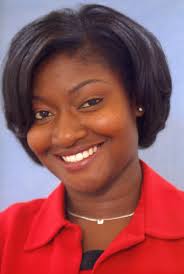
Rep. Morgan
Say school choice and some Democrats say profits, privatization, Republican plot.
Democrat Alisha Thomas Morgan says equal opportunity.
“We’ve got to put policies in place to ensure that how much my parents make or the neighborhood I live in does not determine the quality of education,” Morgan, a state representative in Georgia, says in the redefinED podcast attached below. “And so I think in terms of leveling the playing field, in terms of equal access, in terms of equality. To me, these are very much Democratic values and why I support school choice.”
Morgan is among a new breed of Democrats, many of them younger, many of them minority, who are embracing school choice despite the strains it can put on their relationships with fellow Dems and longtime allies. First elected in 2002 – at the age of 23 – Morgan, a Miami native, said she underwent her own evolution on school choice in part because conversations with parents led her to recognize “a lot of my opposition was really political.”
Now she’s a rising national star in school choice and ed reform circles, a Democrat who hasn’t been afraid to step out front on charter schools and tax credit scholarships in her home state and politely encourage other Democrats to live up to their core principles. “Education is not a Democrat or Republican issue; it’s a kids’ issue,” she said. “But I do think that Democrats should provide leadership here, and not be sort of dragged along as these reforms happen across the country.”
That’s not to say Morgan doesn’t empathize. It can be lonely as a pro-school-choice Democrat, she said. And it can be tough convincing other Democrats when their positions are at odds with Republicans on so many other issues. “What I’ve learned to do is to separate that we agree on this set of issues and these things we can work together; the other things, I’m going to fight you, just like the other Democrats do,” she said. “But I don’t think some of my friends on the Democratic side have been able to make that separation.”
In the interview, Morgan also said:
The privatization argument doesn’t make a lot of sense. (more…)
Federal vouchers. U.S. Sen. Marco Rubio, R-Fla., proposes what may be the most sweeping school choice legislation in U.S. history - a federal tax credit scholarship program similar to the state program in Florida. redefinED. More from the Miami Herald.
 Tutoring oversight. In response to a Tampa Bay Times investigation, Education Commissioner Tony Bennett promises to take steps to curb fraud and abuse in the state-mandated tutoring program.
Charter schools. The Pinellas school board votes to continue the closing process for the long-troubled Imagine charter school in St. Petersburg, despite more than 100 students showing their support for the school. Gradebook.
Exposed! The response. EdFly Blog notes what should have been in press reports - that In the Public Interest, the group that launched the latest Jeb Bush-corporate-cabal conspiracy theory, is run by Donald Cohen, the former political director of the San Diego-Imperial Counties Labor Council, AFL-CIO. (Gradebook, at least, did note the group's labor ties.)
School grades. A House subcommittee bill would extend grading to small schools. SchoolZone.
School spending. The St. Lucie County school board takes the possibility of four-day weeks off the table, reports TCPalm.com. A divided Volusia County school board votes to begin the process of outsourcing custodial and grounds maintenance jobs, reports the Daytona Beach News Journal. The Brevard school board votes to close three of four schools proposed for shuttering, reports Florida Today. (more…)
Charter schools. The exorbitant payouts to the principal of a failing Orange County charter school are behind legislative efforts to tighten charter laws. Orlando Sentinel.
Privatization. The Volusia County school district considers outsourcing 500 custodial and grounds maintenance jobs, reports the Daytona Beach News Journal. The Bay County school district considers bids for privatizing the district's transportation services, reports the Panama City News Herald.
School choice. Vouchers and tax credit scholarships can make private school more affordable. Panama City News Herald.
Forget the furloughs. The Pasco school district finds the $3 million it needs to keep from making employees take two unpaid days off, as originally planned. Tampa Bay Times.
Raising the bar. Don't set it too high with graduation requirements, a high school principal tells the House K-12 Subcommittee. WTXL.
Educator conduct. Prosecutors drop fraud charges against a band teacher who was accused of using nearly $15,000 in school funds to pay for relatives who accompanied the band on a trip to Paris, reports the South Florida Sun Sentinel. More from the Palm Beach Post. An assistant football coach in Manatee County is accused of improperly touching a student and asking her for naked photographs, reports the Sarasota Herald Tribune. More from the Bradenton Herald. A Hernando middle school teacher with a history of off-campus incidents - including three DUI arrests - returns to the classroom after his latest DUI, reports the Tampa Bay Times.
Substitutes. The Marion County teachers union is accusing the district of using "full time" subs to avoid paying benefits. Ocala Star Banner. (more…)
 Words such as voucher, privatization, profit and corporation are often used as weapons by individuals and groups who oppose parental empowerment and school choice. Using words as weapons is especially common during periods of significant social change - we all do it - but the practice undermines civic discourse and makes finding common ground more difficult.
“Market” is another term school choice opponents use to connote evil, but our way of life is largely based on markets, and public education is increasingly embracing market processes as customized teaching and learning become more common. Our challenge moving forward is regulating public education markets in ways that maximizes their effectiveness and efficiency.
People access products and services in one of two ways. Either their government assigns them, or they choose for themselves. In the United States, we have historically allowed citizens to choose, and this system of provider and consumer choice is a “market.”
In a goods and services market, providers decide which goods and services they want to sell, and consumers choose those they want to buy. Markets, when implemented properly, are preferable to assignment systems because they better utilize people’s knowledge, skills and motivation. Citizens are allowed to use their own experiences and judgments when making selling and purchasing decisions, and this citizen empowerment maximizes the universe of ideas from which improvement and innovation derive.
When governments assign products and services to their citizens, they rely on a small group of people to decide what to offer. This top-down approach is less open, transparent and effective than the decision-making that occurs in markets, and it discourages creativity. This is why most improvements in goods and services emerge from market systems rather than government assignment systems.
Markets allow providers to learn from consumers. When governments dictate to consumers what goods and services they may have, their citizens’ true wants and needs are not fully considered. The voice of the customer is silent. But when consumers are empowered to choose for themselves, providers learn from these choices and adjust accordingly. In markets, this necessity to meet customers’ needs drives innovation and continuous improvement. (more…)
Ben Austin of Parent Revolution and Rick Hess of the American Enterprise Institute have been engaging in a civil dialogue on the merits of educators and parents being able to purchase instructional and management services from for-profit corporations. Austin opposes allowing parents and educators to have this option, while Hess is a supporter.
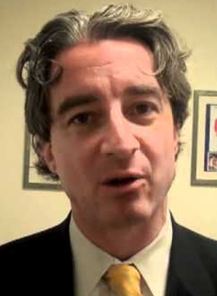
While Ben Austin (pictured here) is clearly well intentioned, his argument is based on ideology and politics, and not good public policy.
Austin’s advocacy of parental empowerment derives from his belief that public education too often puts adult needs over the needs of children. He thinks giving parents more influence over how their children are educated will move students to the center of educational decision-making. But Austin opposes allowing parents to contract with for-profit corporations because he thinks these companies will be more concerned with profit than children’s needs. A summary of Austin’s position was recently posted on the Parent Revolution blog: “Because we believe children need to be put first in every decision, it is far better to have non-profit organizations – accountable to parents, taxpayers and a stated mission – than a for-profit organization, which by definition is accountable first and foremost to investors and shareholders … ”
Hess argues that for-profit corporations already provide billions of dollars of products and services to school districts every year, and if parents decide a for-profit company can best meet their children’s needs, they should be allowed to work with it.
I agree with Hess. While Ben Austin is clearly well intentioned, his argument is based on ideology and politics, and not good public policy. Parents should be free to contract with providers that best meet their children’s needs.
The ad hominem aspect of Austin’s argument is troubling. While I was doing my holiday shopping this year, the gender, sexual orientation, race and ethnicity of the salespeople I talked to was irrelevant, as was their employer’s tax status. What was relevant was the quality and price of the products or services they were selling. I suspect Ben has these same priorities when he shops, and he likewise does not consider a corporation’s tax status when he purchases products and services for his family and friends. (more…)
 Florida’s next education commissioner will inherit a job that makes juggling chainsaws look easy. He or she must get under the hood of a complicated accountability system, ride herd on a historic shake-up of public education, dodge slings and arrows while walking a political tight rope and leap tall buildings in a single bound.
And yet, the job remains so compelling. Florida is the nation’s most promising bridge to an education system that can more fully give teachers and parents real power to help kids live out their dreams. In the last 10 to 15 years, no state has focused more on the low-income and minority students who are now a majority in Florida public schools. Simultaneously, no state has opened the door more to alternative learning options – options that have both empowered parents and multiplied the potential for educators to innovate. The result has been both dramatic and nowhere near enough. The next commissioner must find ways to continue the momentum.
To that end, we hope he or she can nimbly rotate hats long enough to also assume the role of explainer-in-chief. We know this won’t be easy; education reformers in Florida operate in an environment that is particularly tense and, in the past couple of years, has become downright ugly. But we can’t help but think that maybe, just maybe, the temperature will drop a few degrees if fair-minded people can be persuaded that not every education idea and not every education reform is a zero-sum proposition. Sometimes, they really can work in harmony with the other parts.
This is especially true with school choice. The sincere goal here isn’t “privatization,” it’s personalization. It’s about expanding options so more kids can be matched with settings that maximize their potential, and yes that includes private and faith-based options.
There’s no reason, and so far in Florida no demonstration, that these options have to come at the expense of traditional schools. It’s entirely possible – and many of us think it’s absolutely necessary – to support traditional public schools at the same time we push for additional options that, for individual students, may work better. (more…)
 It does sound nefarious: The people who back accountability for Florida public schools, the argument goes, are really out to mine huge sums of money from their degradation and demise. In a weekend op-ed for the Orlando Sentinel, Florida teachers union president Andy Ford (pictured here) mashed the privatization button hard in panning the state’s “flawed and punitive” ed reforms. The accountability system, he wrote, has been “endlessly promoted by legislators who favor for-profit schools, and the Florida Chamber of Commerce.” The state’s standardized test has been “abused by politicians and those wanting to make a profit off public schools and students.” The job of state education commissioner has “devolved into one solely focused on implementing the marching orders of Jeb Bush and the corporate community.”
Yikes! But if all of those folks really were out to make public schools look awful (so profiteers could swoop to the rescue with charter schools and vouchers) they’ve done a miserable job. As we’ve noted before, one key indicator after another and one credible, independent report after another has found Florida’s public school students – especially its poor and minority students – have, over the past 10 to 15 years, improved as fast as students in just about any other state. Matthew Ladner, a researcher at the Foundation for Excellence in Education, has more on this point today at Jay P. Greene’s Blog:
Notice that the “good ole days” in Florida (pre-reform) were a disaster for low-income children. A whopping 37% of Florida’s low-income 4th graders had learned to read according to NAEP’s standards in 1998. A lack of transparency and accountability may have suited the FEA fine, but it was nothing less than catastrophic for Florida’s low-income children. Thirteen years into the “flawed” system, that figure was up to 62 percent. The goal of Florida policymakers should clearly be to accelerate this impressive progress rather than to go back to the failed practices of the past.
Put another way, if Mr. Ford considers this system “flawed” then Florida lawmakers should quickly implement something that he would judge to be “catastrophically flawed.”
The last thing you want to give people waging a scorched-earth campaign against you is a gas can and a match.
Though well intended, the hard-charging Florida Board of Education moved too far, too fast last year when it raised the bar on academic standards. The short-term result for the state’s standardized writing test isn’t pretty. According to scores released this week, the percentage of passing fourth graders alone dropped from 81 to 27.
In an emergency session, the board tried to mitigate. It revised the passing scores downward so the percent passing will be roughly the same this year as it was last year. Education Commissioner Gerard Robinson also admitted the state should have better communicated the new scoring criteria to teachers.
But (sigh) the damage was done. The people who have bitterly fought every major education reform in Florida since Jeb Bush was elected governor – and who will never admit there has been real progress - now have a bit of real ammo. They’ll use it to take fresh aim at everything from new teacher evaluations to expanded school choice. They’ll be even more aggressive ripping into the next batch of reading and math scores, which will also look a lot starker this year.
Conspiracy theories are spinning wildly. This was a well orchestrated plot, goes one, to make traditional public schools look bad so charter schools shine by comparison and the privatization agenda can reign supreme. Never mind that just a few years ago, the state had a record number of A and B schools. Or that charter schools take the same tests. Or that, if the past is any guide, a disproportionate number of them will be tagged with F’s.
You won’t read this in the papers (except, thankfully, in this Orlando Sentinel column), so here’s the backdrop for Florida’s latest ed reform flap. (more…)

