When people learn Robert Breske is the father of a teenager with Down syndrome, they sometimes tell him they're sorry. That isn't what he wants to hear. He'll tell them children like his soon-to-be-15-year-old son, Bobby, have changed his life — and the world — for the better.
"They are closest things to God," he said during an event earlier this month at Orlando's Morning Star Catholic School, a faith-based special education center Bobby attends. "They are that way all through their whole lives."
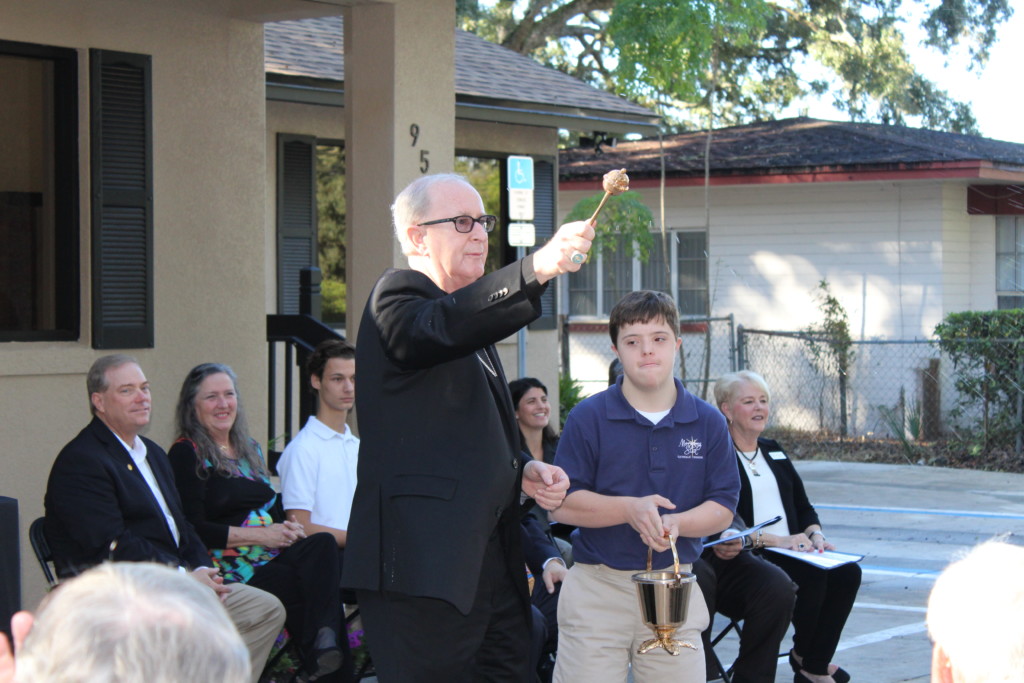
Bishop John Noonan blesses a new transition facility for young adults with special needs at Morning Star Catholic School in Orlando.
In recent decades, advances in medicine and early intervention programs have made their lives richer and longer than ever. And that has created a new set of questions for parents like Breske, whose special-needs children will need to prepare for life as adults.
Public policy is starting to adapt. Recent federal legislation created savings accounts that can help adults with special needs pay their living expenses. New Florida laws promote college and career-training programs. And schools, both public and private, have expanded programs aimed at preparing students like Bobby to get part-time jobs and care for themselves.
The elder Breske was helping unveil a renovated house at Morning Star. The structure once housed nuns on the 56-year-old school site, but it's been converted to help students in its young-adult transition program learn how to cook, clean and live independently. Recent changes to Florida educational choice programs mean similar programs could soon be growing at private schools around the state.
"We all know we're going to away one day," Breske said, describing the anxiety many parents feel as their special needs children grow older. "And what's going to happen to them?"
Camille Gardiner, who also has a son with Down syndrome, said parents like her were less likely to face that question a generation ago. In the 1970s, children born with Down syndrome were only expected to live into their 20s. Now, their life expectancy is about 60. As a devout Catholic, she said, "I have come to realize that being pro-life does not end at the birth of a child. In many ways, that's where it starts."
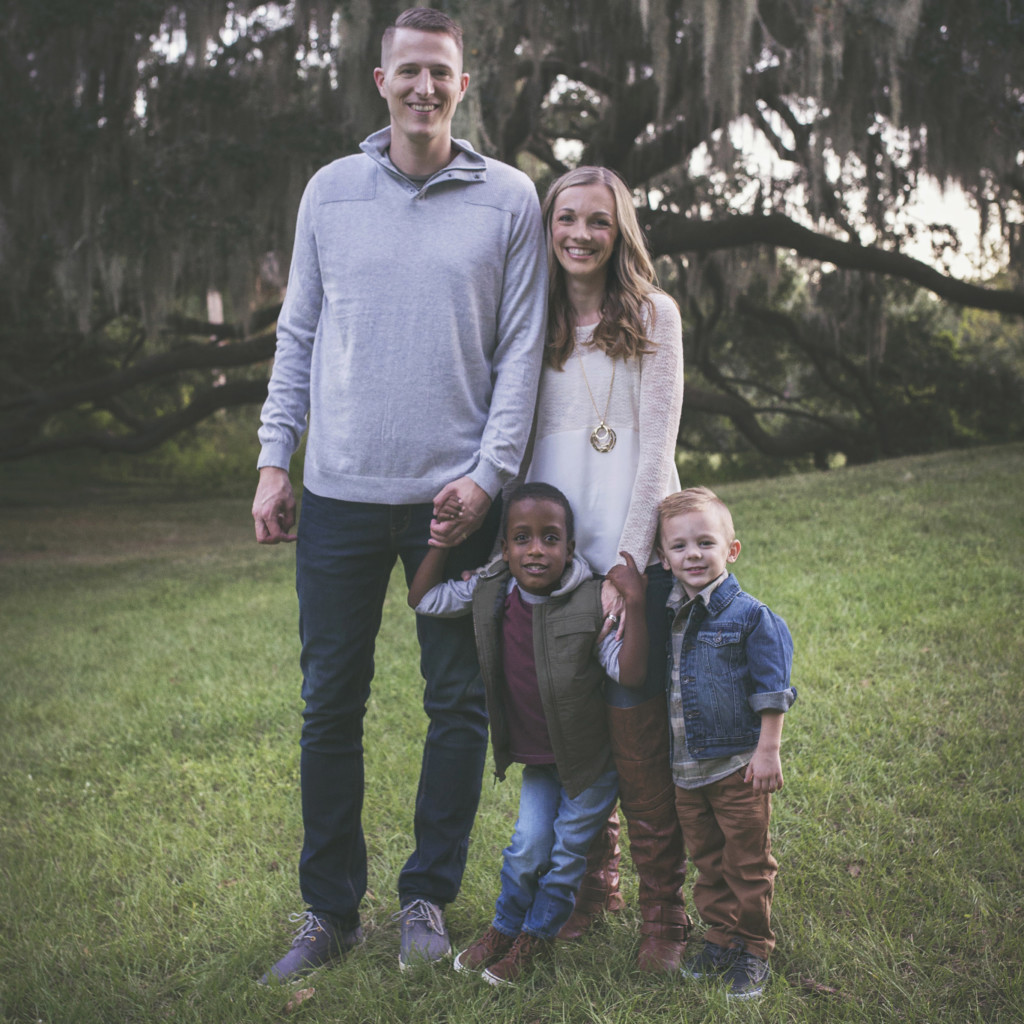
The Kuhn family. Photo used with permission.
For nearly three years, starting before his third birthday, Malachi lived in an orphanage in Adama, in central Ethiopia. Born with spina bifida, a birth defect that causes leg weakness and limits mobility, he had to crawl across the orphanage's concrete floors.
The orphans shared clothes from a communal closet and he rarely wore shoes causing his feet to become covered with callouses. At night he slept in a crib in a shared room with five other orphans. They ate communal meals prepared by their caretakers over a wood-burning fireplace. With his doctor more than an hour away in Addis Ababa, the capital, he rarely had access to much-needed medical attention.
His caregivers did their best with what little resources they had, but Malachi was only surviving. It seemed impossible that he would one day stand on his own — much less walk, or go to school.
All of that changed last year, when Malachi arrived in Florida where he now lives with two adoptive parents, and, with the help of a revolutionary scholarship program, has begun pursuing an education.
Kamden Kuhn and her husband, Mitchell, decided to adopt a child before they were married eight years ago. Their faith inspired them to seek out a child in need from a developing country.
"God has rewarded us," she said. "We can attempt to show love in a similar way."
The Kuhns spent the next two years on a waiting list for a healthy infant. As they waited, they realized they'd drifted from their mission to adopt a child in need.
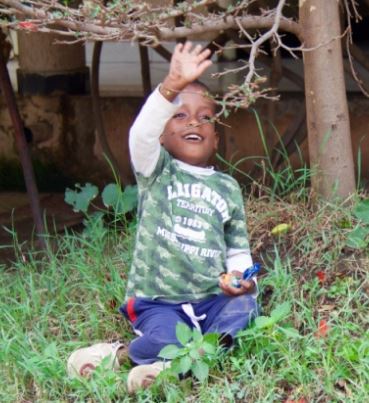
Malachi waves goodbye after the Kuhn's first visit to Ethiopia. Photo used with permission.
Each month the adoption agency sent them a "waiting child list" full of older children who were struggling to find homes. One month, they received a description of a four-year old boy with spina bifida named Malachi.
The Kuhns talked to parents with children with special needs to learn about educational opportunities, insurance and medical care. One family friend told them about the Gardiner Scholarship, a state education savings account program for children with special needs. (Step Up for Students, which publishes this blog and pays my salary, helps manage the accounts of students on the Gardiner Scholarship program.)
 Priorities. The Pinellas County school district plans to increase its focus on lifting achievement among low-income black students. Tampa Bay Times.
Charter schools. The Pinellas school board announces another, last-ditch attempt to save two foundering charter schools. Gradebook.
College courses. Manatee County principals would have the final say on whether high school students can enter college-level courses under a revised student-progression plan. Bradenton Herald.
Special needs. A special needs preschool on the Space Coast plans to add a kindergarten. Florida Today.
STEM. How Monroe County is expanding access to computer science courses. Bridge to Tomorrow. Escambia schools run a computer science camp. Pensacola News-Journal.
(more…)
Charter schools should revamp their discipline practices to create better learning environments for "ALL students" — especially children with special needs, a range of education and civil rights advocates said today in a joint statement.
The groups, which include the main national charter school association, the association of charter school authorizers, the Black Alliance for Educational Options, and a legal advocacy group for special needs students — say they reject "a return to 'one-size-fits-all education'" but want charters to rein in suspensions and expulsions of children with learning disabilities and other special needs.
The public charter school sector has demonstrated great potential to create safe, caring and orderly schools that have good reason to be proud of the academic growth of their students. However, some charter schools are criticized for their student discipline practices — including suspension, expulsion, and other actions resulting in the removal of students from the classroom — that disproportionately exclude and impact students with disabilities.
Exclusion of students with disabilities, in particular those with emotional or behavioral disabilities, does not foster a positive school climate, nor does it help create the opportunity for a high quality education. Sacrificing the educational welfare of some children to achieve the academic progress of others is the wrong paradigm: the academic success of all children should be our priority.
Members of both chambers of the Florida Legislature voted unanimously this afternoon for a bill that would expand several educational options for children with special needs and improve private school students' access to college courses.
Among other things, the measure, which advanced without controversy, would broaden the possible uses for the state's popular school voucher program for special needs students.
If Gov. Rick Scott approves the revised HB 837, among other things: (more…)
Virginia's Terry McAuliffe has a chance to be the country's first Democratic governor to sign a law creating educational choice accounts for special needs students.
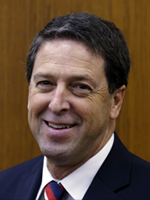
LaRock
The commonwealth's Senate approved a bill creating education savings accounts Monday on a 20-19 vote. The House of Delegates has already passed the measure, meaning it's headed to the governor's desk.
The Senate added a "re-enactment clause," meaning that even if McAuliffe approves it, HB 389 would need to clear Virginia's General Assembly a second time next year before taking effect.
Delegate Dave LaRock, the bill's House patron, said the new program would have the potential to change lives. (more…)
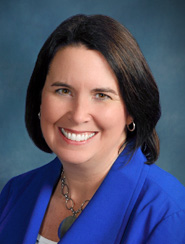
Sen. Stargel
SB 1062 by Sen. Kelli Stargel, R-Lakeland, cleared the Education Pre-K-12 Committee on a 9-1 vote on Tuesday. It would make it easier for students to receive John M. McKay Scholarships for Students with Disabilities, a popular voucher program.
Right now, with few exceptions, students with special needs are required to have enrolled in public schools or received specialized services under the state's Voluntary Prekindergarten program before they can apply for the scholarships, which serve more than 30,000 students this school year.
The lone committee member voting against the plan was Sen. Dwight Bullard, D-Miami, who noted parents can apply for Gardiner Scholarships, the state's newer education savings account program for special needs students, without first attending public schools. (Step Up For Students, which publishes this blog, helps administer the Gardiner program.)
Bullard said the requirement that students attend public schools before qualifying for McKay Scholarships was intended, in part, to ensure parents "understood the width and breadth of the programs at the public-school level that were available."
(more…)
Older students with special needs could use Florida's McKay Scholarships to pay for transition programs intended to prepare them for jobs, under legislation backed unanimously by a state House panel on Tuesday.
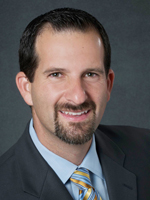
Bileca
HB 837, by Rep. Michael Bileca, R-Miami, would allow children between the ages of 17 and 22 to use the vouchers for "transition-to-work" programs.
A growing number of private schools that accept McKay scholarships have started post-graduate programs designed to prepare recent graduates for the workforce.
This year, lawmakers have filed multiple bills, including some expected to pass this week, aimed at expanding college and job-training programs for special needs students who finish high school. (more…)
Cierra Penson starts the week with her schedule planned out. Monday, she works at Publix. On Tuesday, she helps out at the Jacksonville Zoo. On Wednesdays, she'll join some classmates working on one of her school's business ventures: Barkin' Biscuits, a brand of dog treats now shipped around the country. The 19-going-on-20-year-old also juggles after-school guitar lessons, sessions with job coaches, and coursework aimed at teaching skills for adult life.
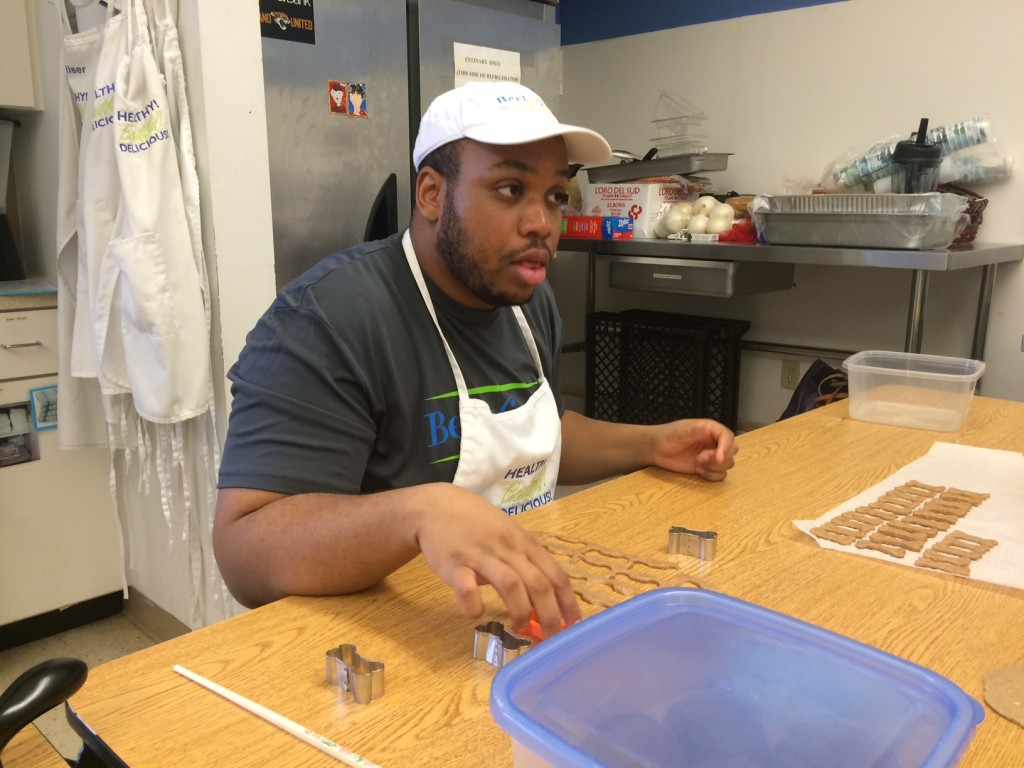
London Hurley works on Barkin' Biscuits, one of the in-house enterprises at the North Florida School of Special Education.
Sally Hazelip, the school's executive director, said teenagers and young adults with special needs "need to be as busy as we are." But holding down a full-time job can be stressful. So after students graduate — which for special needs students tends to happen between the ages of 18 and 23 — the school teaches skills, from time management to grocery shopping, that will help them thrive as adults.
In recent years, Florida lawmakers who saw the benefits of early-intervention programs and a proliferation of K-12 options for special-needs students began to focus on what would happen when those children got older. When the Legislature convenes this week, bills near the top of the agenda are aimed at expanding college and job opportunities for people with special needs.
The quest to help them achieve their potential doesn't end with a diploma. As Hazelip put it: "Our kids with special needs should have every opportunity that everyone else does." (more…)
Note: This week on the blog, parents who have chosen a variety of schooling options will be sharing their educational wishes for 2016.
by Lydia Burton
When I think of the wishes that I have for my child, so many of them revolve around his education. Not just the ability to tailor his education to his individual needs, to provide him with all of the resources that I possibly can, and to help him realize his full potential, but for other people outside of the special needs circle to truly understand why his individualized education plan is important, and to help stand up for it.
 I wish I didn't have to justify every choice that we make that falls outside of the traditional school system. Parents who decide that the public school system isn't a good fit for their child typically don't have any major issues with the system as a whole. It simply isn't the right fit for their child. When people take this as an attack on the system, what they don't realize is that, with or without accommodations, if a school isn't what's right for our children, we aren't going to place them there. (more…)

