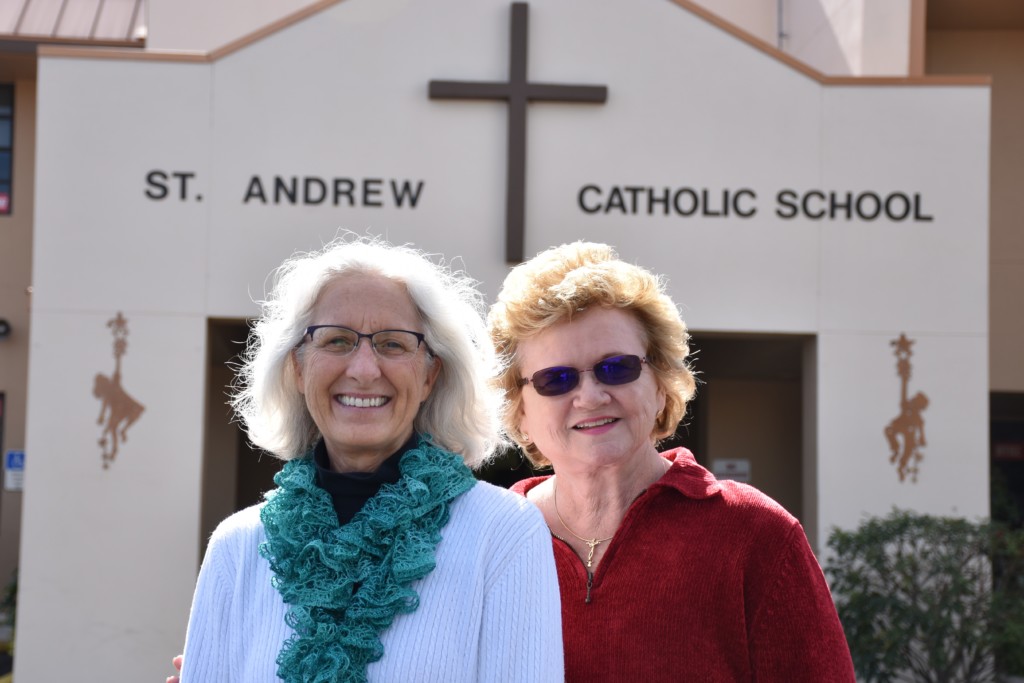
St. Andrew assistant principal Bambi Giles, left, and principal Judi Hughes worked together for more than four years in Lee and Collier county district schools
CAPE CORAL, Fla. – Judi Hughes is a serial retirer.
Nowhere is her quick wit more evident than when she explains why she came out of retirement a third time – after more than 40 years in the School District of Lee County – to be principal at St. Andrew Catholic School in this sprawling, sun-soaked suburban city.
“Irish Catholic guilt,” she says with a rhythmic chuckle, adding that she only had intended to help with the hiring process when the school drafted her.
Five years later, she’s still brimming with infectious energy that flashes from her baby blue eyes, and she’s found a way to marry her knack for building relationships with a natural instinct for being a private school administrator.
Some folks just aren’t meant to retire.
“I know!” she beams. “I’ve tried it a few times. I think I’m getting the hang of it now.”
Hughes did it all in Lee County public schools. A teacher in the county’s first middle school program, a principal, district director for elementary and secondary education. She opened a few schools, won blue ribbons and other awards, worked as a curriculum director in jails, retention centers, and drug rehabilitation centers before twice being coaxed out of retirement to start ninth-grade programs.
Now she’s the leader and beating heart of a thriving Catholic school – 315 K-8 students, up from 295 last year and 275 the year before – and she couldn’t be happier. Seventy-nine students use a Florida Tax Credit Scholarship for lower-income families. Step Up For Students, which hosts this blog, administers the scholarships.
“This place is just different, and it’s a pleasure,” she said during a recent tour. “These folks have known each other for years, but they welcome new people in. The understanding is that you join the culture of caring and building faith. Hearts and minds, it’s not just words in a mission statement. They pondered it. These teachers do more. They know every child by name.”
It’s no coincidence that Hughes and assistant principal Bambi Giles, who spent more than four years in Lee and Collier county schools, have hired educators with a similar public school background. Ten of the school’s 23 teachers, in fact.
It’s also no surprise that Hughes and those teachers have maintained their ties. For years, teachers at St. Andrews have participated in professional development with the Lee County district, learning about classroom management, teaching strategies and exceptional student education.
“Once you’re a member of the school district of Lee County, you’re part of our family,” said Lynn Harrell, executive director of leadership, professional development and recruitment for Lee County schools. “Judi was for lots and lots of years. That makes it just a little bit easier, just like in any family, to keep and maintain that relationship so that we’re working together. Because in the end, we’re all working for children.”
Hughes was a mentor to Harrell earlier in her career when Harrell was a school administrator. It’s just one of myriad relationships forged through years of work and trust and common goals.
“Our relationship with Lee County is really wonderful,” said Giles, noting the weight that Hughes’ name carries. “They are very professional. They’ll answer any questions. They’ll contact us. It’s never a problem.”
James Herzog, associate director for education with the Florida Conference of Catholic Bishops, is encouraged by this example of public-private school partnership.
“It shows that education is not an us-against-them proposition,” he said. “Instead it’s all about collaboration to benefit all of Florida’s school children. Hopefully we can encourage other schools and districts to work together.”
Every Wednesday at St. Andrew there is early dismissal for teachers to collaborate and do professional development.
“I just think that’s what runs everything,” Hughes said.
Some of those former public school educators at St. Andrew, like first-grade teacher Crystal Melton, get two emails every Monday morning about professional development offerings – one from Giles and one from a former public school mentor.
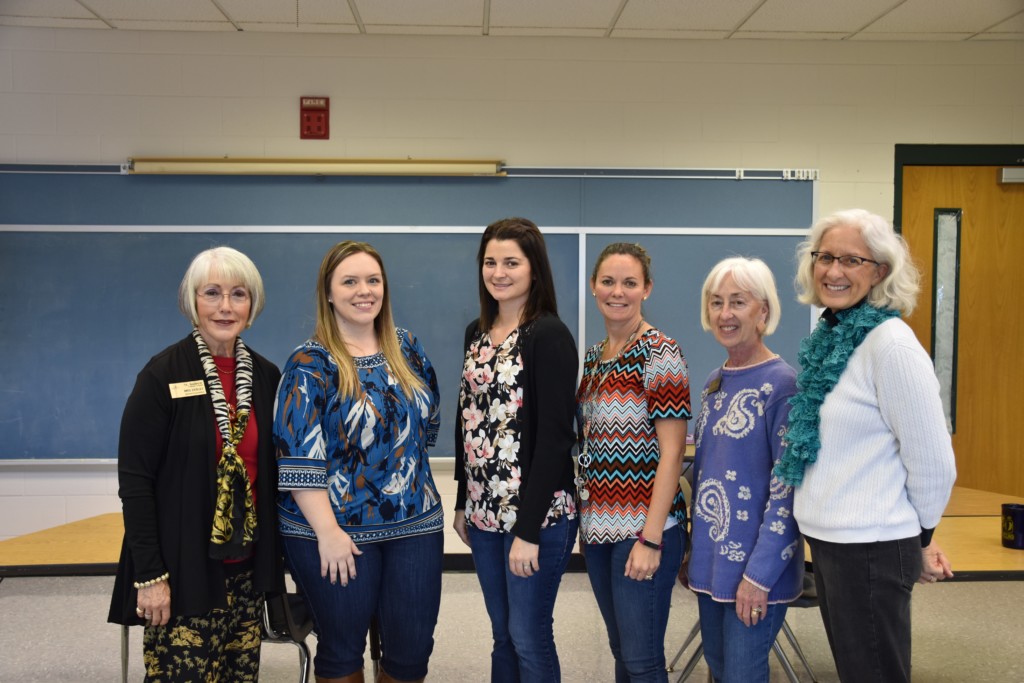
St. Andrew educators, from left, Sharon Zebley, Crystal Melton, Lisa Olson, Susie Loughren, Cathy Calcaterra and Bambi Giles, come together as a family to nurture students and each other.
This group-within-a-group of teachers has helped the members transition from public to private. They’re all grateful for the extensive training they received in the public school system, but they’re also quick to state their reasons for choosing to teach at a private school.
Music teacher Julius Davis simply feels more at home in a spiritual environment. Davis, in his first year at St. Andrew, said he feels “set free” to be himself and exude his principles. Christmastime was particularly satisfying after nearly 20 years in public schools.
“I grew up in a black Baptist church, and I’ve played (music) for Methodist churches,” he said. “Coming here, the emphasis on the spiritual, this is the first time I’ve been able to teach stuff I grew up with. I wasn’t allowed to do that in the public school.”
Others, like Melton, kindergarten teacher Susie Loughren, and fifth-grade teacher Lisa Olson, have children at St. Andrew. But while the family atmosphere contributes greatly to their happiness, their choice to teach in private school was more complex.
Loughren, in her second year at St. Andrew after seven years teaching in public schools, feels she can be more creative, has more freedom and less test anxiety.
“The administration trusts us that we’re going to do what’s best in the interests of those children,” she said. “So if something goes on in your classroom and you need to focus on a social, emotional skill, you take that liberty to do it. It’s not just about getting in the academic rigor. We do it on a daily basis, but we have the opportunity to stop and do those teachable moments.”
Hughes recognized that stress, saw the anxious teachers who were afraid to break from the mold, “afraid of their own shadow,” as she saw it. There was more and more emphasis on tests and fewer field trips.
At St. Andrew, she works to pump confidence and empowerment into her staff.
“I’m happy I made the choice to come here, because I didn’t end my teaching career at a time when things weren’t going as positively,” she said. “I felt the stress of the teachers and couldn’t do anything to help them. They were losing their identity, feeling like they don’t have any choice or any power.
“Here they are free to make sound educational choices. And they have to be sound, because they have to show how it’s going to help with the standards. We give them as much freedom as we can. And they really own part of this school.”
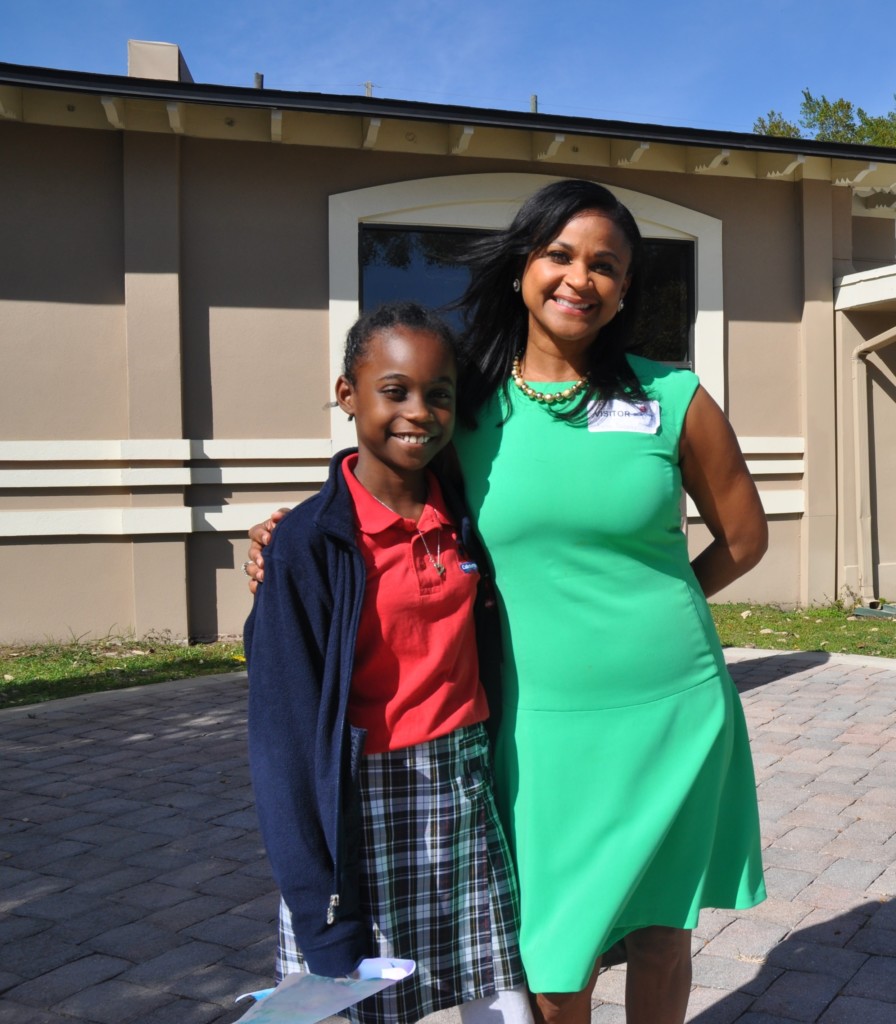
Renee Oliver greets her daughter, Zoe, after meeting with President Donald Trump at St. Andrew Catholic School in Orlando.
ORLANDO - Renee Oliver started sending her children to St. Andrew Catholic School in 2004. At the time, it drew Catholic families from surrounding communities in the western part of Orlando. But it remained financially out of reach for many who lived nearby.
Over the years, that's changed.
The nation's largest private school choice program has enabled schools like St. Andrew to open their doors to hundreds of families who couldn't previously afford tuition, including some from its predominantly black neighborhood of Pine Hills.
"The school community came to reflect the community that it was in," Oliver said.
She had to support her family on a single income after an on-the-job injury forced her husband out of work. Tax credit scholarships helped her send three of her five children to St. Andrew.
When President Donald Trump came to visit the school on Friday, she told him similar options should be available to all families.
Started in 2002, the tax credit scholarship is administered by Step Up For Students, which publishes this blog and pays my salary. It helps nearly 98,000 students across Florida — and the vast majority of students at St. Andrew — attend private schools.
While he hasn't backed a detailed plan, Trump made a pitch to expand similar programs across the country. Parents like Oliver joined him around a table with Sen. Marco Rubio. The president expressed interest in the lawmaker's efforts to create a nationwide tax credit scholarship.
At one point, Trump turned to Denisha Merriweather, a Florida scholarship alumna he highlighted during his recent address to Congress.
"We want millions more to have the same chance to achieve the great success that you're achieving, right now," he said.
***
Latrina Peters-Gipson, St. Andrew's principal, is a product of Catholic schools. She developed a love of education as a college student in New Orleans. Weeks into her first year as a full-time classroom professional, Hurricane Katrina struck. Her family lost almost everything. The storm destroyed the Hyatt hotel where her husband worked. The hotelier helped her family relocate to Orlando. (more…)
Public and private schools don't need to be at odds. They can work together to help children.
That's the message Latrina Peters-Gipson, the principal of St. Andrew Catholic School, is sending ahead of today's presidential visit.
From her column in this morning's Orlando Sentinel:
Education politics are sometimes divisive these days, but the reason I’m excited to welcome President Trump to our Orlando school on Friday is that what we do ought to bring us all together.
At St. Andrew Catholic School, a fixture in the Pine Hills neighborhood for more than a half-century, we believe that every child has the God-given ability to succeed in life. We also participate in a state scholarship program that opens our doors to students whose families couldn’t otherwise afford it. To that end, we see ourselves as partners with public schools in a shared commitment to lift every child to a life that offers better opportunities.
Gipson herself has a compelling story. She's a product of Catholic Schools herself, raised in New Orleans. She fell in love with early childhood education while volunteering in classrooms as a student at Southern University at New Orleans.
She lost everything when Hurricane Katrina struck the city, weeks into her first full-fledged teaching job. She and her family came to Orlando, where she volunteered, taught and eventually rose to administrative positions at Orlando-area Catholic schools, and has been principal St. Andrew since February 2015.
If only more partisans in the school choice debate shared her ecumenical outlook.
 Trump's visit: President Donald Trump visits St. Andrew Catholic School in Orlando today to promote his support for broader school choice. St. Andrew is part of the Notre Dame Alliance for Catholic Education academies, a national network working to revitalize urban Catholic education. About 85 percent of the 340 students in the pre-K through eighth-grade school use tax credit scholarships. Step Up For Students, which hosts this blog, helps administer the program. redefinED. WFTV. Politico Florida. Myrna Saint-Juste, who sent two children to St. Andrew Catholic School, and her son Marcus Millien, now a student at Bishop Moore High School, were asked to meet with President Trump today when he visits the school. She declined, but Marcus accepted. Orlando Sentinel.
Legislature and education: Legislators want to reduce testing, change the teacher bonuses program and improve the higher education system, among other things, during the legislative session that begins Tuesday. Here are previews of some of the issues being debated. Tampa Bay Times. Orlando Sentinel. Sun-Sentinel. The major players in the legislative session are profiled. Tallahassee Democrat.
Bills about teachers: Two bills filed by legislators would change the criteria by which teachers are eligible for bonuses from the state. A bill filed by Sen. Keith Perry, R-Gainesville, would lower the SAT and ACT test scores level a teacher would need to be eligible for the state's teacher bonus, and add several other tests that could be used. A bill filed by Sen. David Simmons, R-Altamonte Springs, would expand eligibility requirements to college GPA and to those graduates who commit to teaching in critical teacher shortage areas. Both would also allow school administrators to be eligible for bonuses. Gradebook. A bill introduced by Rep. Rene Plasencia, R-Orlando, would expand the path to teacher certification, including allowing charter schools to set up their own training programs that would have to be approved by the Florida Department of Education. Legislators want to make it easier to hire people who have expertise in a subject and can prove competency in the classroom but don't have an education degree. redefinED. Sen. Debbie Mayfield, R-Vero Beach, files a bill that would prohibit teacher retirements during the school year. Exceptions would be made for illnesses and disabilities. News Service of Florida.
Charter district: Three charter schools companies are competing to take over operations of the Jefferson County School District. They are: Somerset Academy Inc., which operates 16 charter schools in Miami-Dade and Broward counties; Lake Wales Charter Schools Inc., which runs six schools in Polk County; and EdFutures, which runs two schools in Volusia County. Superintendent Marianne Arbulu said the school board could make its selection by next week. Politico Florida. (more…)
Tomorrow, a presidential spotlight will shine on Florida's Catholic school renaissance.
President Donald Trump is set to visit St. Andrew Catholic School, a budding success story in Orlando's Pine Hills neighborhood.
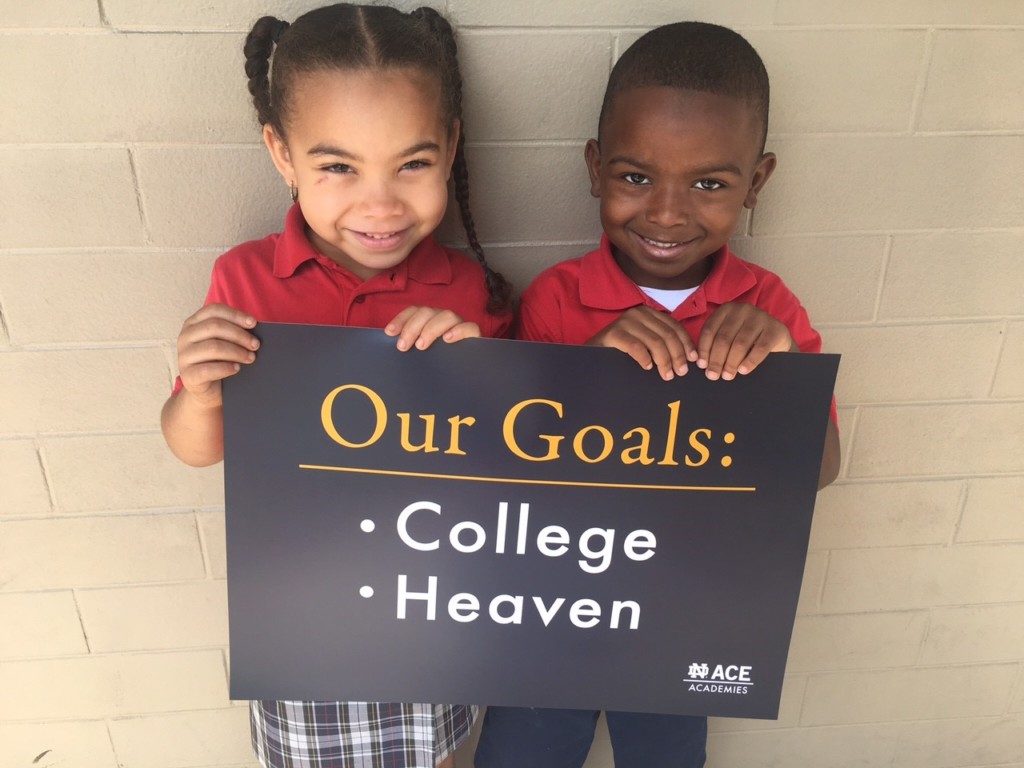
Students at St. Andrew Catholic School learn as early as kindergarten to prepare for college - and heaven.
It's one of four Greater Orlando Catholic schools that have joined the Notre Dame ACE academies, a national network that aims to revitalize urban Catholic education and lift academic outcomes.
Bucking trends elsewhere in the country, Florida’s Catholic schools are growing, slowly but steadily. National organizations have noticed. There are now seven ACE Academies in Florida, with more on the way. Other Catholic school networks, like Cristo Rey high schools, are expanding in the state.
Thanks to the nation's largest private school choice program, they're able to serve growing numbers of low-income and working class students.
Statewide, more than 98,000 students use Florida tax credit scholarships. The typical parent who uses a scholarship is a single mother earning less than $25,000 a year. Annual program evaluations show students who use the program tend to be among the most disadvantaged children in the state, and tend to struggle academically in public schools. After receiving scholarships, they make academic gains that match their national peers from all income levels. (more…)
Editor's note: This op-ed ran in today's Orlando Sentinel.
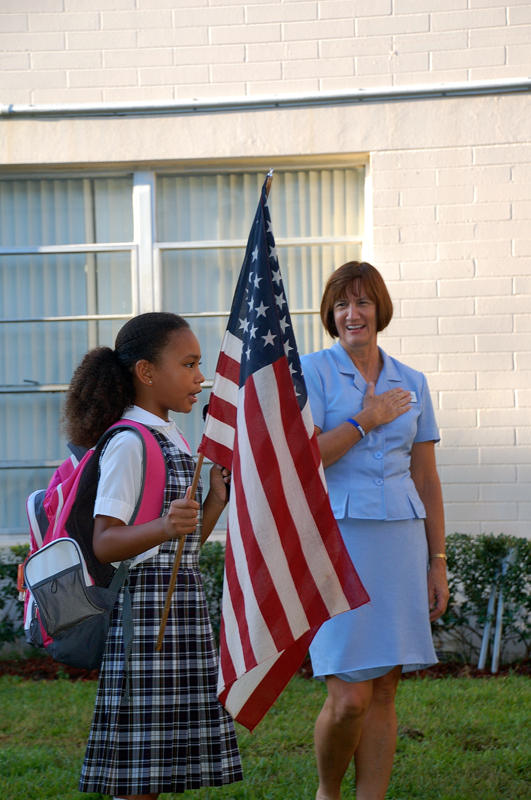
This photo is from the St. Andrew Catholic School website.
Florida allocates five different scholarships from prekindergarten to college that allow students to attend faith-based schools. They don't violate the U.S. Constitution because students choose, and government doesn't coerce.
Both factors were why, in 2002, the U.S. Supreme Court ruled that a Cleveland school voucher did not violate the Establishment Clause, even as 96 percent of the students chose faith-based schools. To the court, in the landmark Zelman v. Simmons-Harris case, the program met three critical standards that also apply to Florida: The primary objective is education; students can choose among secular and sectarian schools; and parents exercise an independent choice that is not steered by government.
The article "Many church schools get tax cash" in Sunday's Orlando Sentinel did not mention the Zelman case or that the Florida Supreme Court specifically avoided religion in 2006, when it overturned the private-school portion of the Opportunity Scholarship program. Consequently, readers might have thought that these programs are constitutionally suspect, when they are not.
The tax-credit scholarship is one of Florida's five scholarships. It strives to give low-income students access to the same learning options now available to more affluent families, via a $4,335 scholarship. This program complements other choice programs, such as magnet and charter schools, and is built on the truism that students learn in different ways. Last year, parents placed more than 1.2 million public-education students in schools other than their assigned district school.
In this new world of customized learning, encouraging differentiated instruction while maintaining quality control is a challenge. The tax-credit scholarship does this, in part, by requiring nationally norm-referenced tests that show these students are achieving the same gains in reading and math as students of all income levels. (more…)

