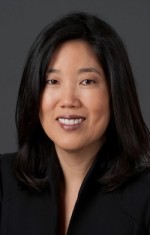
Rhee’s failing schools model for vouchers and tax credit scholarships misinterprets the relationship between students and schools. With rare exceptions, schools are not good or bad independent of the students they serve. Some schools are good for some students and bad for others. A state-designated “A” school can be a terrible match for a particular student, which means for that student the school is a failure.
In recent weeks, Tony Bennett, Florida’s new education commissioner, and Michelle Rhee, the CEO of StudentsFirst, offered conflicting rationales for supporting school choice. Bennett told participants at a National School Choice Week event in Tampa, Fla., that school choice is a necessary condition for equal opportunity and social justice. Low-income children should have access to the same options as the affluent, Bennett said, and this is why he supports providing low-income families with publicly-funded vouchers and scholarships to attend private schools.
StudentsFirst, on the other hand, released a state policy report card that docked Florida a few points for extending school choice to all low-income children. The group favors policies that restrict vouchers and tax credit scholarships to low-income students in state-designated “failing” schools. Within the choice movement, Rhee’s position is called the failing schools model.
Ten years ago, the failing schools model was the most favored, and it’s still popular with state legislators who see it as a politically safe compromise that allows parents to use vouchers only when their assigned district school is “failing.” But school choice, at its core, is about empowering parents to match their children to the schools that best meet their needs. Those judgments don't necessarily align with school-wide standardized test scores.
Rhee’s failing schools model misinterprets the relationship between students and schools. With rare exceptions, schools are not good or bad independent of the students they serve. Some schools are good for some students and bad for others. A state-designated “A” school can be a terrible match for a particular student, which means for that student the school is a failure. Bennett’s approach assumes the relationship between a student and a school is what succeeds or fails, which is why he thinks all parents should be empowered to access the schools that work best for their children.
The failing schools model also tends to inappropriately pit public versus private schools by implying private schools are better, which is not true. (more…)
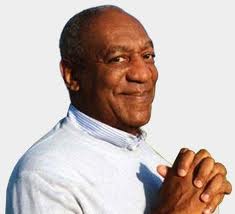 Bill Cosby has joined the board of directors of StudentsFirst, the education reform group founded by Michelle Rhee.
In a statement emailed to StudentsFirst supporters a few minutes ago, Cosby, a school choice supporter, wrote: "Enough is enough. I've seen the statistics on where American students rank in the world. I've heard the stories of children being sent off to schools that are nothing more than dropout factories, and our youth end up back out on the street uneducated and unprepared for life. I refuse to sit back and watch this happen. That's why I'm joining the board of StudentsFirst and will be working alongside you and StudentsFirst members across the nation to put children's needs first."
According to Education Week, StudentsFirst named other board members today, including Connie Chung, Joel Klein, Roland Martin and Jalen Rose.
Diane Ravitch called Cosby's move "the worst news of the day."
"This is a coup for her (Michelle Rhee) in her efforts to demean our nation’s teachers and promote the privatization of American public education," she wrote on her blog. "He is clearly uninformed about what she is doing. If you know how to contact him, do so. This is not in character for him."
When Michelle Rhee visited a Miami charter school on Thursday to announce that Florida would be the first state to partner with her Students First initiative, it may have been easy for most observers to focus on the star power of the event and not the venue. But the reason that Rhee and newly elected Florida Gov. Rick Scott chose the Florida International Academy for their joint announcement is the same reason why the school’s waiting list for seats has more than 200 names.
The school reaches out to an impoverished community, where all students are children of color and nearly all qualify for free or reduced-price lunch, and it delivers on results. In 2002, the state of Florida gave the school a failing grade, based on its dismal core performance in reading and writing. Today, that school has an A grade with a nearly identical demographic, and the majority of its students are now meeting high standards in those subjects.
How it got there exemplifies what Rhee and Scott and President Obama and Arne Duncan have been insisting on: Customizing a public education that best meets a child’s needs, and giving disadvantaged children more educational alternatives than they might otherwise have.
For Florida International, that means following the state’s curriculum standards but constantly redesigning the instruction based on its students’ needs, targeting teaching strategies to the individual student, if necessary, and revisiting those strategies every week, according to Principal Sonia Mitchell, who spoke with redefinED Friday. (more…)

