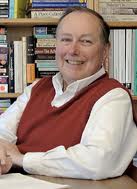
 Editor's note: School choice isn't just an American debate, and it's not just at issue now. Noted school choice scholar Charles Glenn offers redefinED readers some historical context. This is the first in a three-part series.
While protections for educational freedom emerged from political struggles in a few countries – notably in Belgium, with the independence movement of 1830, and in the Netherlands, with the political mobilization of the Protestant and Catholic “kleine luyden” later in the 19th century – these were exceptional until after the Second World War.
It was only in reaction to the totalitarian regimes of the 20th century that the international community became aware of the need to put in place protections for the freedom of families to choose an alternative to government-sponsored schooling. Communist and fascist regimes sought to carry out more thoroughly what had already been implicit in the educational programs of mildly progressive governments of the late 19th century, but in a way that stripped the mask from the elite presumption to reshape the children of the common people.
The post-war movement to define human rights included the right to educational freedom, defined as “the liberty of parents . . . to choose for their children schools, other than those established by public authorities . . . and to ensure the religious and moral education of their children in conformity with their own convictions.” This right is by no means self-evident even in democratic regimes, where ‘progressive’ elites may think it their duty to use the educational system to make children better than their parents.
The words left out of the quotation above, “which conform to such minimum educational standards as may be laid down or approved by the State,” leave the door open for governments to impose requirements upon non-government schools which would make it impossible for them to maintain the distinctive character sought by parents. There is clearly an obligation upon contemporary governments to take steps necessary to protect children as well as to ensure the public interest is served by all elements – private as well as public – of the educational system. The education of the next generation is a matter of public concern and should be guided, in a democratic system, by shared assumptions about the common good . . . within limits reflecting the pluralistic nature of society. (more…)
Subsidiarity is an organizing principle rarely discussed outside the Catholic Church and the European Union, and it's a shame so few academics and advocates of school choice in the United States talk about it. It is a principle that is skeptical about the ability of large bureaucracies to trump smaller units to function for the common good. At this past weekend's inaugural international school choice conference in Fort Lauderdale, an Italian researcher introduced the concept to describe why a stubborn region in his country could not accept the government's insistence that public education must be centrally administered. A sympathetic audience nodded in approval, but there was no obvious sign that the conference understood that its mission was just given political order.
If there was, it could have better informed the rhetorical jousting match that happened minutes later between Stanford University political scientist and union scourge Terry Moe and United Federation of Teachers vice president Leo Casey. For Moe, author of Special Interest: Teachers Unions and America's Public Schools, the problem of public education is one of structure, organization. "Nobody has a coherent vision of the whole, and no one is organizing schools in the best interest of kids," he said. Casey countered that Moe favors market-driven and top-down "punitive" reforms that diminish an institution of public education built from the ground up in a model of civil society.
Would that it were so. If we're to take Casey at his word, then his union would favor the public support of an educational enterprise built in the American tradition of association and social charity with minimal interference from a higher order of government and bureaucracy, the kind of effort facilitated by charter school and school voucher policies. Moe was right to call out the union's insincerity in promoting transformative reform and its role in maintaining a structure of public education that is largely unresponsive to the unique needs of schoolchildren. But, except for calling for an end to the collective bargaining of work rules among public school teachers, he stopped short of defining how we can reorganize our governance of public education.
If the principles of subsidiarity were more commonly dispatched in our nation's school reform debates, it could inspire more competing ideologies to find common ground and it could expand our definition of what we consider "public." We have wrung our hands over what could have stopped the closure and consolidation of 49 Catholic schools in Philadelphia, but we have failed to collectively acknowledge that the urban Catholic school meets the original definition of the "common school" better than many schools that today we call public. The Philadelphia families whose households have been upended by the news have ordered their lives around the social capital they've invested in these schools, and the school closings leave fewer stakeholders who share the common goal of reaching out to the city's most disadvantaged.
Former assistant education secretary Bruno V. Manno once wrote that subsidiarity is not only a principle of justice, but one of empowerment . "The doctrine of subsidiarity values both individual liberty and community," Manno said. "It is a way of formulating and pursuing true social order. Even though groups have varying interests, subsidiarity implies that common ends are not antithetical to the pursuit of particular interests."
For states to grasp Moe's plea to develop "a coherent vision of the whole," they'll have to see how traditional schools, parochial schools, charter schools and virtual schools can maximize their unique characteristics and organize around the common goal of a quality education for all. In many ways, that will force us to grasp political concepts foreign to our ears. But in other ways, it simply defines what we've been searching for all along.

