
Editor’s note: This morning’s post is a response from Step Up For Students’ manager of external affairs Keith Jacobs to a letter to the editor published last week in the Florida Times Union.
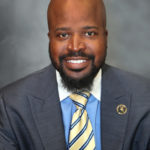
Keith Jacobs
The Feb. 14 letter to the editor, “Public schools need to be fully funded,” represents how education choice opponents put antiquated ideologies ahead of the needs of the families they pretend to support. It used buzzwords such as “systemic racism” and “white supremacy” meant to indict education choice. That is historically inaccurate.
Yes, systemic racism has plagued our nation, but not for the reasons the letter communicates. Systemic racism is interwoven into the fabric of public education because it was a linchpin in establishing it over 400 years ago, when only white males were permitted to attend.
“Separate but Equal” denied Blacks and other minorities access to the same educational access and resources their white counterparts had. Even after the landmark decision of Brown v. Board, systemic racism persists today when low-income students of color are denied access to public schools based on their ZIP code and socioeconomic status.
Providing Black families the opportunity to exercise education choice means giving them the chance to opt out of a system that historically has worked against them. Perhaps that’s why surveys repeatedly have shown majority support for education choice among Black parents, usually at higher rates than the general public. Perhaps they know what’s best for their children.
As a Black man, education choice provided me the opportunity to attend the best schools that had seemed unattainable without the financial resources, and become a first-generation college graduate.
Instead of funding systems, we need to fund students, and give their families the choice of how best to educate them.
 “History will show that this is the downfall of public education.”
That was Florida Sen. Perry Thurston (D-Fort Lauderdale) last week, responding to legislation that would expand opportunities and provide flexibility for low-income families. Many opponents of school choice share his sentiments. It’s a misconception of choice used to deny equity in education to the country’s most disenfranchised populations – low-income and Black families.
In recognition of Black History Month, we must take a historical approach to analyze the long and hard struggle for equity and equality in public education for Blacks.
The first recorded notion of a free public school was in the 17th century, and it was later proposed to use taxpayer dollars for education long before our country was founded. This was also during a time when the first enslaved Africans were shipped to Virginia in 1619 and threatened with death if they even attempted to become literate. As a Black man, I feel compelled to highlight that this injustice, coupled with over three centuries of systemic oppression, should have been deemed the downfall of public education.
Too often, opponents of education choice deny or ignore the fact that a government-funded public education system was established to exclude enslaved Africans, women and low-income families. In fact, public education originally was established to teach Puritan values and reading the Bible to sons of white, elite families.
This newly created system of public education required an additional 350 years to ensure Blacks could even attend school with their white counterparts, with a government content with “separate but equal.” There was no choice. There were no options for an equitable school experience. Blacks were forced to learn in schools with insufficient financial support and negligible resources. This gave birth to the opportunity gaps we see today.
As a result, Blacks had to use ingenuity and scarce resources to establish schools, including historically Black colleges and universities to address the growing need for knowledge in agriculture. They were created out of necessity, not choice. Prominent Black leaders from these institutions, such as W.E.B. DuBois and Booker T. Washington, had to advocate for equity and equality rights in a public education system that should have been afforded to them.
This is not entirely different from the education choice advocacy we see today. Black and low-income families are advocating to lawmakers for an equal opportunity in education.
The government has had more than 400 years to address the funding equity for predominantly Black and low-income neighborhoods, and the quality of the education has suffered. Conversely, government funding combined with education choice has yielded positive results. A 2019 Urban Institute study found that tax-credit scholarship students are up to 43% more likely than their public-school peers to enroll in four-year colleges, and up to 20% more likely to earn bachelor’s degrees.
In addition, a 2020 study by the National Bureau of Economic Research of the impact of the Florida Tax Credit Scholarship found positive impacts even on public schools – that as the program for students in private schools expanded, students who remained in public schools also benefited: “In particular, higher levels of private school choice exposure are associated with lower rates of suspensions and absences, and with higher standardized test scores in reading and math.”
But opponents ignore this because it demonstrates that when parents have a sense of empowerment, they are more engaged, and their kids have more positive experiences and success in school. Choice provides parents the opportunity to find schools that best match their children’s learning needs.
Florida school districts provide public education to the students within their assigned zones. It’s a right established by the state constitution. But the assumption that traditional public education customizes – or has ever customized – the learning experience for every child it serves is misguided.
In his eloquent response to Sen. Thurston at the Feb. 3 Senate Education Committee hearing, Jon Arguello, a member of the Osceola County School Board, argued that not every public school can meet the unique needs of every child in the district – just as the senator cannot satisfy the needs of every voter in his district. Some students need options and flexibility in their learning experience.
Unfortunately, education choice opponents will have you believe that only traditional public education can ensure that all students are adequately served with resources that are equitably distributed. The unfortunate reality is that the areas where these families reside are not equal, and neither are the resources.
That’s a big reason why 1.5 million students in Florida are exercising some form of choice. Families have explored charter schools, magnet schools, and voucher programs that have provided more options for students.
Our society has such a sordid history of discriminatory practices and systemic racism in education that it’s absurd to decry parental choice as the “downfall of public education.” For many low-income and Black Americans, the system has never had anywhere to go but up. The populations that historically have benefited from public education will continue to be successful, because they already have the means to exercise choice.
We must level the playing field so that every child will have the opportunity to succeed regardless of socio-economic status.
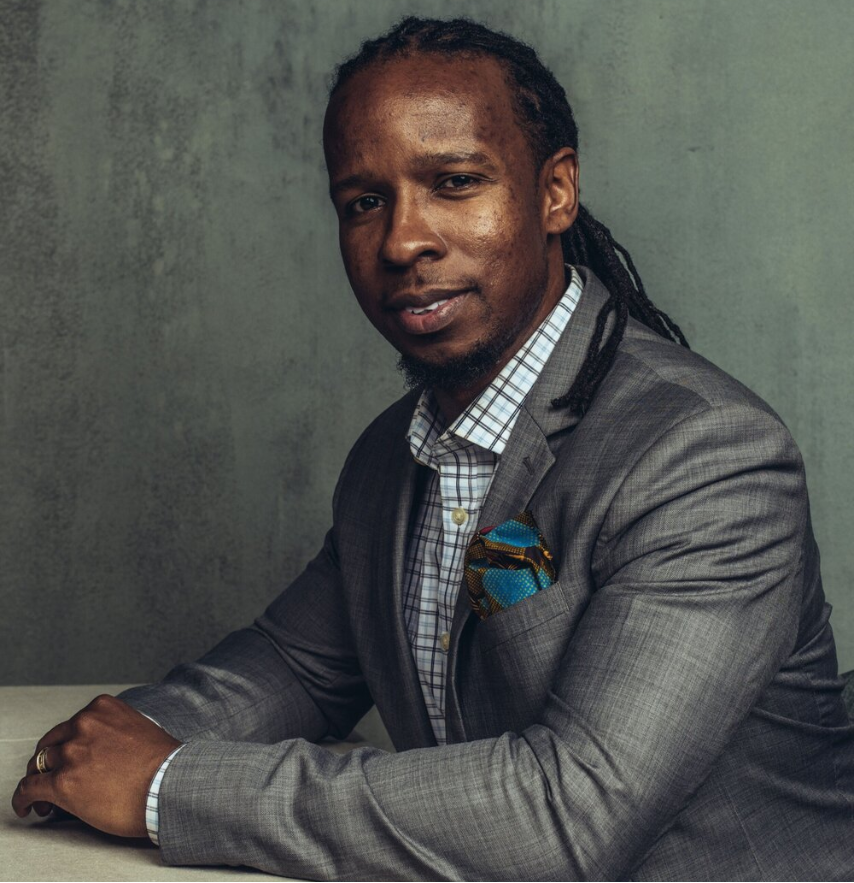
Ibram X. Kendi, best-selling author and Founding Director of the Antiracist Research and Policy Center at American University, became at age 34 the youngest recipient of the National Book Award for Nonfiction for “Stamped from the Beginning: The Definitive History of Racist Ideas in America.” Kendi is a former assistant professor of African American history at the University of Florida. PHOTO: Stephen Voss
When I was a teacher union president in the early 1990s, I gave an interview with our local newspaper in which I criticized the educational inequalities that were being exacerbated by public magnet schools. Many found my criticisms hypocritical because I was an education choice advocate who had helped launch one of our community’s first magnet schools a decade earlier and had enrolled my two children in a magnet school.
But not all education choice programs are inherently good. Those that perpetuate and increase inequalities undermine public education and the public good. My criticisms in that interview were not aimed at education choice in the abstract, but rather in how education choice was being implemented in our community.
I thought about that interview and the controversy that ensued as I was reading Ibram X. Kendi’s new book, “How To Be An Antiracist.” Kendi is a Florida A&M graduate (Go Rattlers!) and a professor at American University in Washington, D.C., where he teaches history and international relations. He is also the founding director of American University’s AntiRacist Research and Policy Center.
Kendi is a systems thinker. To Kendi, racism isn’t about white people disliking black people, or light-skinned blacks feeling superior to dark-skinned blacks. Racism is a set of systemic policies and practices that use race to perpetuate power inequities. Groups use racism to help maintain their social, political, and economic advantages.
Kendi defines anti-racism as actively working to dismantle those systemic policies and practices that use race to perpetuate power inequalities. And he says there is no neutral ground. All of our policies and actions are either racist or anti-racist, including our nonactions. Nonaction in the face of racism is racist because it allows systemic racism to persist.
“There is no such thing as a nonracist or race-neutral,” Kendi writes. “Every policy in every institution in every community in every nation is producing or sustaining either racial inequity or equity between racial groups.”
As a systems thinker, Kendi supports racial discrimination when it is used to undermine systemic racism by redistributing power in ways that create greater equity: “If discrimination is creating equity, then it is anti-racist. If discrimination is creating greater inequity, then it is racist. Someone reproducing inequity through permanently assisting an overrepresented racial group into wealth and power is entirely different than someone challenging an inequity by temporarily assisting an underrepresented racial group into relative wealth and power until equity is reached.”
Kendi’s take on the systemic nature of racism and anti-racism are not new. The Black Power movement in the 1960s and ‘70s was built on a similar analysis, as articulated by activists such as Malcolm X, Kwame Ture (Student Nonviolent Coordinating Committee), Omali Yeshitela (International People’s Democratic Uhuru Movement), and Bobby Seals and Huey Newton (Black Panther Party).
What is unique, at least to Kendi, is his personal journey. The path he describes in his book suggests he arrived at his understandings through personal experiences and the insights they fostered rather than an in-depth study of Black Power literature. His openness about his struggles to develop a satisfactory understanding of his relationship to racism as a young black man is refreshing and enlightening, although not without criticisms.
Thanks in large part to the ongoing advocacy of long-time educator and community organizer Owusu Sadaukai, or Howard Fuller as he is best known in the education choice community, today’s education choice movement is deeply grounded in an anti-racist and anti-poverty agenda. The movement has largely embraced Fuller’s social justice rationale for education choice and consequently focuses much of its energy on restructuring public education in ways that expand opportunities for low-income, minority, and special needs children and their families.
Without ever having met Fuller, Polly Williams, or other social justice warriors in the early education choice movement, my concerns in the early 1990s about how public magnet schools were increasing inequality aligned with Fuller’s agenda and eventually led me and many other left-of-center progressives to join the social justice wing of the education choice movement.
If Black Power advocates from Kwame Ture (Stokely Carmichael) to Ibram X. Kendi are correct in identifying racism as the systemic use of race to perpetuate social, economic, political, and education inequities, how can my fellow progressives continue to defend public education policies and practices that advantage the powerful while systemically disadvantaging low-income people of color? How can they oppose Fuller’s social justice approach to education choice and still be anti-racist?
These are questions more progressives need to consider. They can start by reading Kendi’s book.

