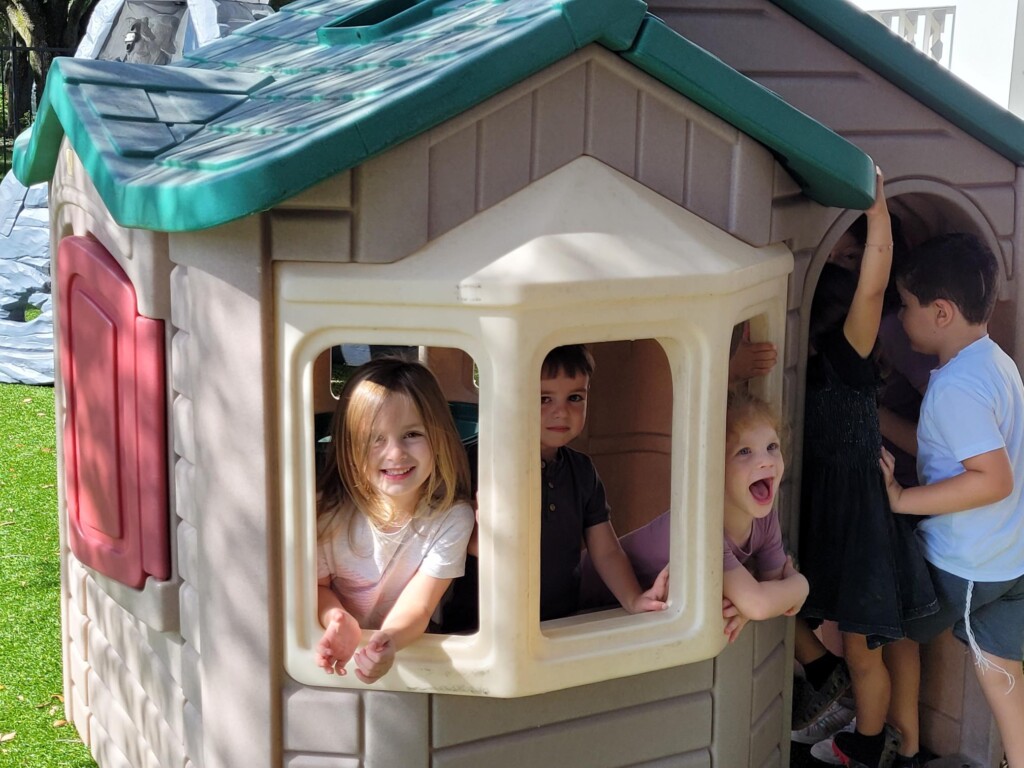
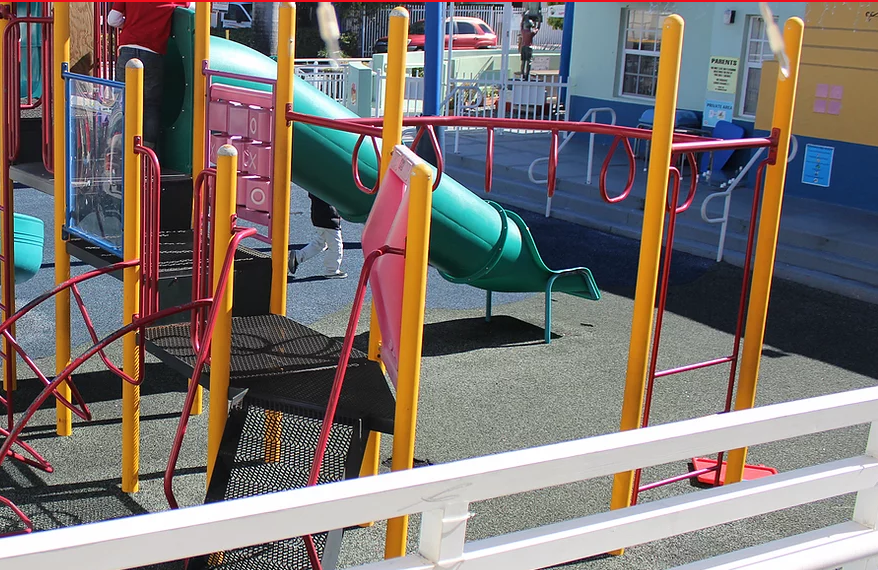
Students enjoy recess at Tampa Torah Academy.
TAMPA, Fla. — With 16 dormer windows that peek out from all sides of the roof and a wrap-around porch, the building looks more like a place to relax than study. Shaded by a canopy of oaks, the only noise comes from chirping birds and water spraying from a fountain in a nearby pond.
“It’s very quiet out here,” said Rabbi Ariel Wohlfarth, one of two deans at Tampa Torah Academy, which opened two years ago in a building that once housed a day care center and community clubhouse for a leafy suburb of Tampa.
But through the front door was a buzz of activity. During a recent visit, kindergarten students seated at two tables worked on crayon  drawings of their families. In another, a teacher prompted third graders to examine the text of “Charlotte’s Web” for clues about the characters. In a third room, older boys listen to a rabbi explain the importance of Israeli kings’ reigns as historical markers. Nearby, older girls learn the origin story of the prophet Samuel.
The school, whose mission is to offer an authentically Orthodox Jewish education, is one of only four Jewish day schools in the Tampa Bay area. Jewish day schools are booming in South Florida, and the greater Tampa Bay area is also seeing a resurgence after years of decline.
A report released this year by Teach Coalition and Step Up For Students showed that the number of Jewish schools in Florida nearly doubled over the past 15 years, boosted by parents using state school choice scholarships and the migration of families from New York.
The report attributes much of the enrollment decline in the Tampa Bay region to the 2010 closing of Pinellas County’s only Jewish day school. A casualty of the Great Recession, Pinellas County Jewish Day School could not secure enough operational funding from donors affected by stock market woes. At the same time, many families hit by the recession could no longer afford tuition, so enrollment dropped from more than 200 to 140.
The closing left the state’s second-largest Jewish population with few options: Hillel Academy in Tampa, which offers a track for Orthodox students but is also open to non-Jewish students, and Hebrew Academy of Tampa, a Montessori school for students in preschool through eighth grade. A charter Hebrew language school offered a Judaic after-school program but closed in 2013 after one year.
Eventually, the dearth of choices prompted parents seeking an Orthodox education for their children to contact Yeshivas Chofetz Chaim, also known as the Rabbinical Seminary of America. Based in Queens, New York, the organization starts Orthodox Jewish day schools across the United States. The organization had established successful schools in Orlando and Boca Raton.
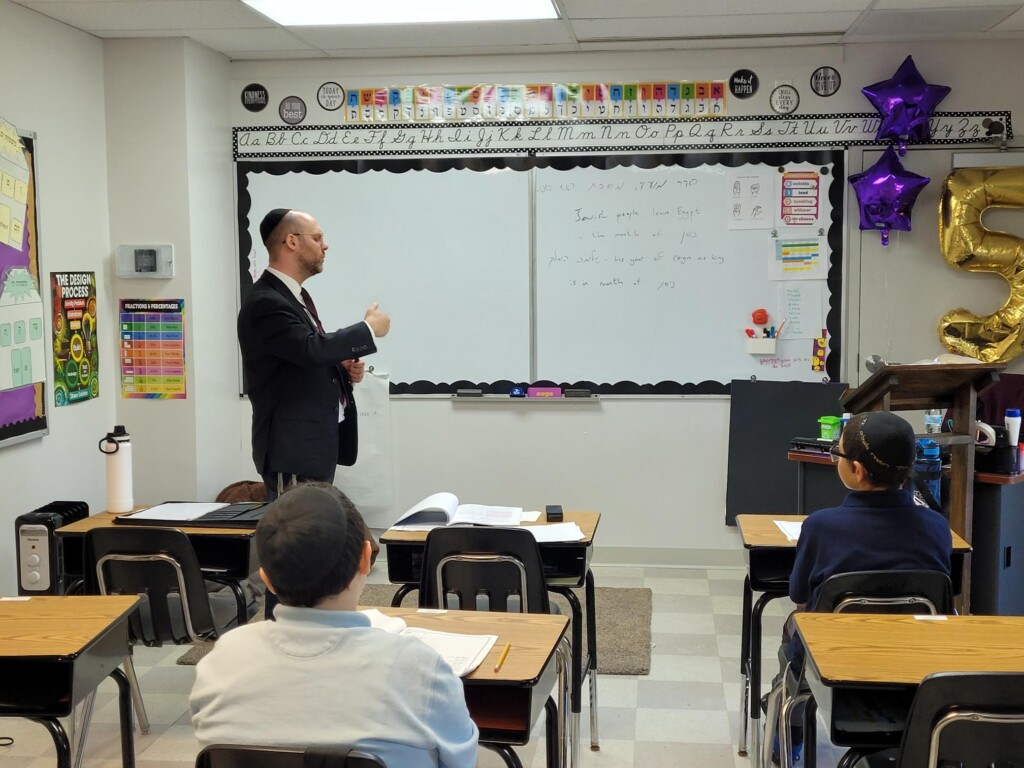
A boys' Torah class learns about Jewish history.
“In most communities, there’s usually a Jewish day school that creates an environment that is completely Jewish,” said Rabbi Jeremy Rubenstein, who along with Wohlfarth is co-dean of Tampa Torah Academy. “And parents were looking for that, and it didn't exist in Tampa.”
So, in 2022, Rubenstein, his wife, their kids, and eight other families moved to the Tampa Bay area to start an Orthodox school. A property search revealed the 10,000-square-foot building in a Tampa suburb that a day care center had recently vacated. After extensive renovations, they opened the school to 33 students in preschool through seventh grade. The wives of those who moved to Florida comprised most of the school staff. Two years later, school leaders added an eighth grade.
Tampa Torah Academy now has 80 students from more than 30 families. Some live within 15 to 20 minutes of the school, but most live closer to Tampa’s core. Some even come from Clearwater, a 36-mile trip that can expand to a two-hour drive during rush hour. Others drive up from Sun City Center in the southernmost part of the county, which is 40 miles from the school.
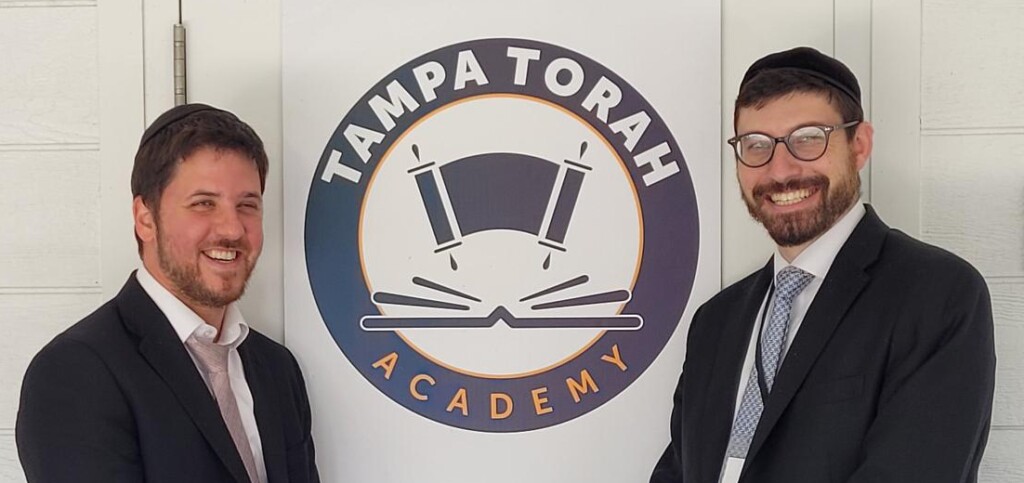
Rabbi Jeremy Rubenstein, left, and Rabbi Ariel Wohlfarth are the deans of Tampa Torah Academy.
Leaders contracted with a busing service this year to provide transportation.
“We have students coming from all different, all sorts of places,” Rubenstein said.
This year, leaders expanded again, with high school programs for boys and girls. The boys are meeting at a Tampa Kollel and the girls at Tampa Torah Academy. Like the other Jewish schools, Tampa Torah Academy accepts Florida’s school choice scholarships.
“Switching our kids from public schools to TTA was one of the best decisions we made,” parent Danny Betesh said in a school video. “We love the fact that our kids came to TTA because of how warm it is, how they know everyone. They know the staff; they know the kids from all the grades…they feel like a family.”
Local Jewish leader Jeffrey Berger welcomes the expansion of education opportunities for Jewish families and says the uptick in school growth is expected as Jewish families move in from other states.
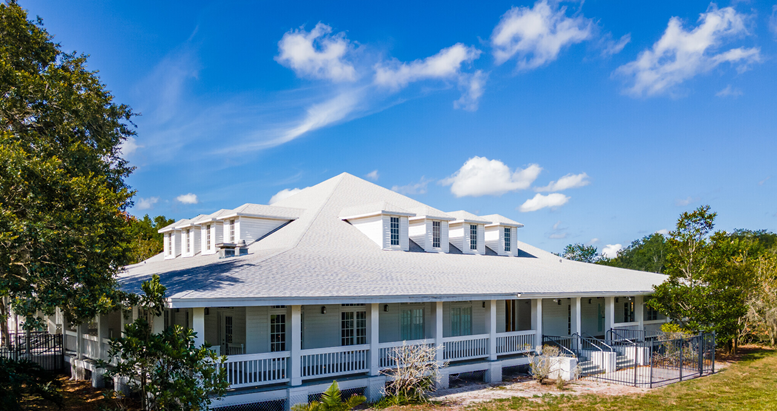
Tampa Torah Academy
Before Tampa Torah Academy opened, “we had a gap in certain segments of the community,” said Berger, a retired real estate attorney and president of the Tampa Jewish Community Centers & Federation. “There was a need for their brand of Orthodox Judaic religious institution.”
He said Hillel Academy, which opened in 1970, plans to open a high school next year. Tamim Academy of Pinellas, which opened this year at the Chabad of Pinellas, also fills a void that existed for too long in that area.
Berger said he was excited to see 100 people turn out at a recent open house for Tampa Torah Academy. He believes families will continue to be drawn to the area for its warm climate and lower cost of living than its northern neighbors.
“The availability of scholarship money has certainly made all private schools more affordable, and I think Jewish day schools are a part of that,” he said. “Affordability is a big issue for a lot of people across the board, including those who want their children to have a Jewish education.”
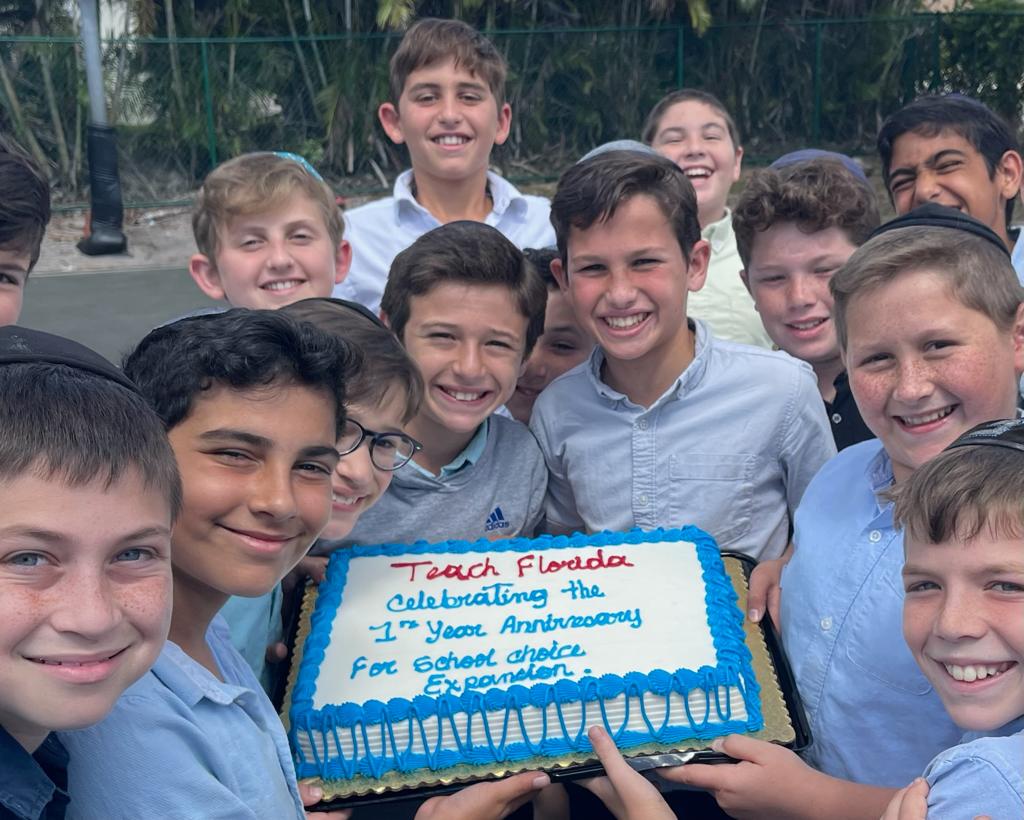 Editor’s note: You can watch a livestream of the celebration here.
Like most birthday parties for 1-year-olds, this one had cake. It featured remarks from guests who were impressed with the past 12 months of growth. It included predictions about continued growth.
What was unusual about this birthday party was that its purpose was to mark the first anniversary of a piece of landmark legislation – Florida House Bill 7045, the nation’s largest expansion of education choice.
“Amazing things are happening, and we’re here to celebrate those amazing things,” said Daniel Aqua, the executive director of Teach Florida, a division of Teach Coalition, a national Jewish organization that promotes secure, strong, and affordable nonpublic schools.
The organization sponsored the event, held at Yeshiva Elementary School in Miami, to thank lawmakers and others who supported the bill and to encourage support for expansion.
Speakers included state Rep. Randy Fine, R-Palm Bay; state Rep. James Bush III, D-Opa Locka; Jim Rigg, superintendent of schools for the Archdiocese of Miami; Dr. Martin Karp, a former vice chairman of the Miami-Dade School Board; and John F. Kirtley, chairman of Step Up For Students, the nation’s largest scholarship funding organization and the host of this blog.
Fine, who sponsored HB 7045, retold a story he has shared on the House floor about his reasons for championing education choice.
“This is the story of two 13-year-old Jewish boys,” he said. The first boy “was the only Jewish boy who went to his government-run school. People would tease him and pick on him. They would beat him up.”
Fine said the bullying escalated to the point that it was no longer safe for the boy to eat lunch in the cafeteria or use the student restrooms. The boy begged his parents to “get me out of this school.” His parents were great parents, Fine said, but “they didn’t have a lot of money.” The boy “had to tough it out” but later graduated and enjoyed a successful career.
Fine said the second boy told his parents that a student had made an anti-Semitic comment, but the school didn’t do much to help. The boy’s parents had money and were able to transfer him to a school where he thrived.
“The first boy was me,” Fine said. “The second boy was my son.”
He added: “That’s not the world we should live in. We should not live in a world where you have to be rich to have options.”
Fine used the story to illustrate his belief that education choice programs should be further expanded to be accessible to all families.
“Every family needs to have the same options,” he said.
Bush, who was one of five House Democrats who supported the Republican majority in voting for HB 7045, thanked all those who supported it.
“I believe we must empower our parents so that they will have the opportunity in the future to determine what is best for their child and their student, and I believe that one size does not fit all,” he said, pointing out that the legislation gave 3,900 students in his district the opportunity attend a school that can address their specific needs.
Rigg, who moved to south Florida from Chicago after the bill had been approved, said it is gratifying to be part of a state that affirms parents’ right to make decisions for their children.
“I’m thrilled to see what happened when our wonderful choice programs were expanded even further,” he said, referring to House Bill 3, which granted automatic eligibility to dependents of law enforcement officers and was approved during the 2022 session.
Kirtley, who helped found the education choice movement in Florida two decades ago, said choice has improved Florida’s overall performance over the past 20 years, even though it drew strong opposition in the beginning.
He recalled how the state’s redefinition of public education prompted a 2014 court challenge. A massive rally two years later clearly showed how popular choice had become for families when more than 10,000 supporters arrived at the state Capitol in Tallahassee to defend their rights.
Kirtley pointed to the crowd's diversity, which represented a variety of races, faiths, and philosophies.
“Your Orthodox community responded. You joined 10,000 people to march and protest this lawsuit, he said. “You are on the edge of a revolution. You are revolutionaries.”
The lawsuit failed in two lower courts and was rejected by the Florida Supreme Court in 2017. Despite the win, Kirtley encouraged audience members to continue to advocate for their right to make the best educational choices for their children.
“We won, but we’ve got to be vigilant,” he said. “We can’t relax.”
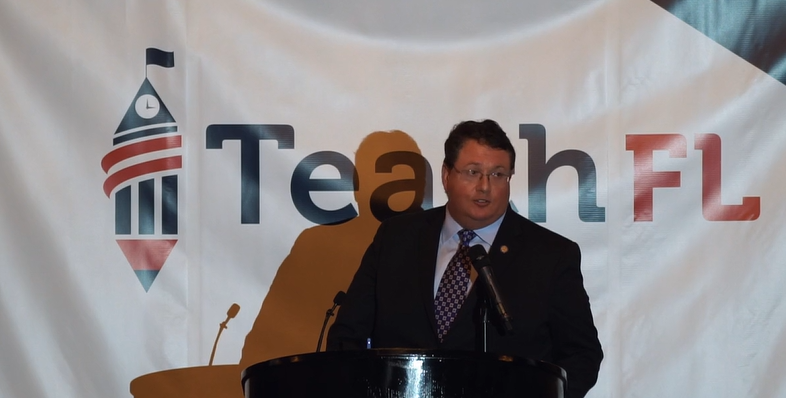
Florida state Rep. Randy Fine reported at the annual Teach Florida breakfast that half of all students attending Jewish schools in Florida receive state scholarships due to the Legislature's recent expansion of the program.
More than 600 people joined Teach Florida’s board and staff for the organization’s annual legislative breakfast this week at the Signature Grand in Davie, Florida.
Attendees included state legislators, elected local officials and members of the Jewish day school communities of Miami-Dade, Broward and Palm Beach counties. The focus of the event, which began in 2017, is to celebrate the organization’s legislative victories in securing government funding for families sending their children to Jewish day schools.
To see a video recap of the event, click here.
Speakers included Allan Jacob, a South Florida physician and chairman of Teach Florida; Daniel Aqua, Teach Florida’s executive director; state Rep. Randy Fine, R-Palm Bay; and Florida Senate President Wilton Simpson, R-Spring Hill; as well as Carol Lasek, a local lay leader, and Rabbi Elie Estrin, a chaplain in the Air Force Reserve and parent of a Florida choice scholarship recipient.
During the event, the organization named Fine its Legislator of the Year and gave Simpson its School Choice Champion Award. Fine sponsored HB 7045, the largest expansion of education choice in the nation. Simpson was a strong supporter of the bill, which the Senate ultimately approved, and Gov. Ron DeSantis signed into law this past spring.
“By fixing our education system, by putting parents in charge, by getting bureaucrats out of the way, we’re not only going to solve the problem of opportunity for our children, but we’re also going to solve the problem of crime and other problems that exist in our society,” Simpson said.
Fine pointed out that thanks to the expansion, 50% of students attending Jewish schools are receiving state scholarships.
Estrin shared the story of his son, Nissi, who was born with life-threatening health issues. Now 6, Nissi is benefiting from a Family Empowerment Scholarship for Students with Unique Abilities.
“Every child deserves a school that can provide him or her with their unique needs,” Estrin said. “Every parent deserves the right to make that choice. We hope that our legislators find inspiration in Nissi’s story and continue increasing educational options for all of Florida’s children.”
Jacob said this year’s event drew supporters from Orlando as well as South Florida. He said Florida’s scholarship programs allow schools to provide high quality education and improve the quality of life for the entire Jewish community.
“We are always giving support to the politicians who advocate for school choice,” he said. “It’s the most significant issue in the Jewish community in Florida.”
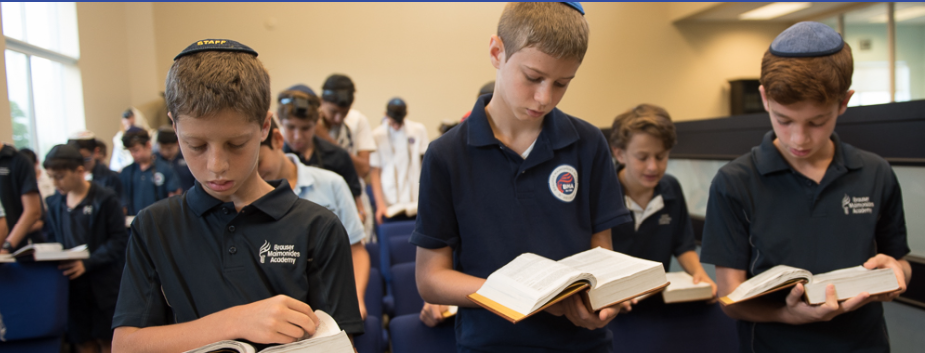
About 28% of students at Brauser Maimonides Academy, a Fort Lauderdale Modern Orthodox school, attend on state scholarships.
As school leaders nationwide began the 2020-21 academic year still dealing with the coronavirus pandemic that abruptly shuttered their campuses last spring, enrollment declined in many district schools, especially those in states where brick-and-mortar schools remained closed.
Though Florida opened all district schools to full-time, in-person instruction, they too saw enrollment declines, as did some private schools as parents turned to homeschooling and learning pods. Florida Catholic schools, which in previous years had held their own thanks to the availability of state school choice scholarships, experienced declines during 2020-21 as well.
The Sunshine State’s Jewish schools stood out as an exception to the rule.
Except for some that continued to limit instruction to remote learning, Jewish schools reported sharp increases this academic year, and the trendline shows no signs of a downturn as school leaders prepare for the fall.
Figures from the Florida Department of Education show steady growth at Jewish schools over the past three years, with enrollment at 10,623 in 2018-19, 11,549 in 2019-20 and 12,482 in 2020-21. The number of schools also rose from 50 to 64 during that same time.
“Enrollment is certainly up, and many schools have waitlists,” said Daniel Aqua, executive director for Teach Florida, an advocacy group for Jewish schools. He attributed the growth to an influx of Jewish families moving from other states as well as the fact that many Florida couples are having more children.
While some individual schools reported dips, “it’s a booming year next year” across the board, Aqua said, citing two possible explanations: Florida companies that have said they’ll allow their employees to continue to work remotely post-pandemic and the fact that many Jewish families in the northeast are looking for relief from harsh winters, expensive housing costs, high taxes and rising school tuition.
But quality of life isn’t the only enticement. Florida’s robust education choice scholarship program also beckons more folks to the Sunshine State. According to Teach Florida, 40% of students receive state scholarships, including the Florida Tax Credit Scholarship administered by Step Up For Students, which hosts this blog.
The organization recently gathered more than 2,000 signatures on a petition supporting HB 7045, legislation that would provide school choice scholarships for more families.
Eli Hagler, executive director at Brauser Maimonides Academy, a Fort Lauderdale Modern Orthodox school that serves students from nursery school to eighth grade, said interest from people across the country in moving to South Florida has gotten out of control in the past couple of months. He said the school, which has about 28% of its 526 students on state scholarships, already has received 200 applications, double what it normally receives at this point in the year. More than 50 of those applications are for kindergarten seats.
“We’re dealing with five to 10 years of growth happening in 12 months,” he said. “While it’s a good problem to have, it’s a real problem that needs to be addressed. We can’t admit every kid.”
He said the school’s leaders are doing all they can to maximize their space.
“We’re putting up walls; we’re taking down walls,” Hagler said.
“It’s a wonderful opportunity for a family who otherwise may struggle to put their kids in a qualified day school,” he said.
So why not send the kids to a charter school or a district school?
“To a Jewish family, a Jewish education is necessity, not an elective,” Hagler said.
In addition to the core academic classes, Jewish schools teach students Hebrew, Jewish religious law, and culture. A recent Facebook video shows the recent schoolwide observance of Yom Hazikaron, Israel’s national remembrance day for all Israeli military personnel who died in the struggle that led to the establishment of the state of Israel and for those later killed while on active duty in Israel’s armed forces.
The Jewish Academy, serving students in preschool through eighth grade in the Fort Lauderdale suburb of Hollywood, also is experiencing growth. It has expanded so much that leaders are planning to open a high school. In February, the academy was 95% full of returning students, prompting school officials to hold a lottery to fill the remaining seats.
Head of school Rabbi Chaim Albert said Florida’s income-based scholarship, which cuts the tuition by nearly half, has played a significant role in allowing families, many of whom are first-generation Americans, to provide a Jewish education for their children.
“They are the tree of life that creates hope where otherwise there was darkness,” Albert said. “They create opportunity for those that are in the greatest need and they breathe life into our community and into our children. The scholarships are the single most impactful ray of light that has reached our community in the 25 years I have been in education. We simply could not run our school without the help these scholarships have provided.”
Happy Kids Childcare & School is one of dozens of options for Miami Beach families in search of preschool programs for their children. A new program aims to make such programs possible for more kids.
Known as paradise for the uber rich, Miami Beach has become the first city in Florida to provide enhanced pre-kindergarten services to its youngest residents.
City commissioners during the summer quietly approved a $250,000 yearlong pilot program that would provide scholarships to supplement the state-funded voluntary pre-kindergarten program for Miami Beach residents. The program is set to begin in August 2021.
"I'm really proud when I think about how we were the first city in Florida to offer this kind of program," said Miami Beach City Commissioner Steven Meiner, who championed the proposal along with commissioners Rickey Arriola and Mark Samuelian. "We pride ourselves on taking the lead."
The new program represents a partnership between the city and Teach Florida, a statewide education choice advocacy group for Jewish schools. Participation, however, is open to any student who lives in the city limits of Miami Beach regardless of religion or family income. Education providers outside the city limits also can participate by accepting scholarship funds that follow eligible families.
Scholarships are valued at up to $2,700 per child, and the extension is not allowed to overlap the three hours of VPK funded by the state. All providers must by certified by the Florida Department of Children and Families.
Teach Florida executive director Daniel Aqua said the program was a response to repeated studies showing the benefits of early childhood education and the role it plays in long-term educational success. The state program pays for only three hours of learning per day, creating hardships for families who can’t afford wrap-around care. The scholarship will pay for a 2.5-hour daily extension for each participating child.
“One operator with whom we spoke said that some families must pick their children up at noon when VPK ends,” Aqua said. “That simply doesn’t work for parents.”
Aqua said Teach Florida chose Miami Beach as the pilot site because of its extremely high cost of living, which has pushed out many young families, and because it has a history of support for education. The city already funds arts and sciences programming and recently paid to add mental health counselors in public schools.
According to the cost calculator Expatistan.com, it costs $5,111 per month for a family of four to live in Miami, where the cost of living is 74% higher than other U.S. cities.
“Friends are moving out of Miami Beach,” said Meiner, who with his wife is raising a 13-year-old son and an 8-year-old daughter. “This is a good way to incentivize living in Miami Beach.”
The one-year pilot is being funded through the city’s $327.6 million general fund budget. If city leaders choose to extend it, long-term funding could come from the Miami Beach Convention Center Hotel, expected to open by 2023 and which will earmark a portion of tax revenues for education.
Providers have been opting into the program and parents will be able to apply starting this month, with scholarships awarded to eligible students by lottery. With a program cap of $250,000, there is funding for about 92 scholarships, since the program funds a maximum of 2.5 hours per day for 180 school days at $6 per hour, Aqua said.
The scholarship program drew praise from area Catholic education leaders.
“The early years are the influential years and provide the building blocks for learning in elementary and secondary school,” said Kim Pryzbylski, superintendent of schools for the Archdiocese of Miami in a joint statement with Doreen Roberts, principal at Holy Family Catholic School in North Miami. The statement emphasized the importance of the amount of quality time pre-k students receive and said the program’s additional funding would enable teachers to focus more on language, social and readiness skills vital to success in kindergarten and beyond.
The program puts Miami Beach in elite company across the nation. Cities like Denver and New York City have offered universal pre-kindergarten for several years. The Denver program has proven so popular that voters voted to extend it. Both of those cities began with 4-year-olds and have since been expanded to include 3-year-olds.
“Ideally, this program will continue and expand, especially as the Convention Center funding comes online,” Aqua said.
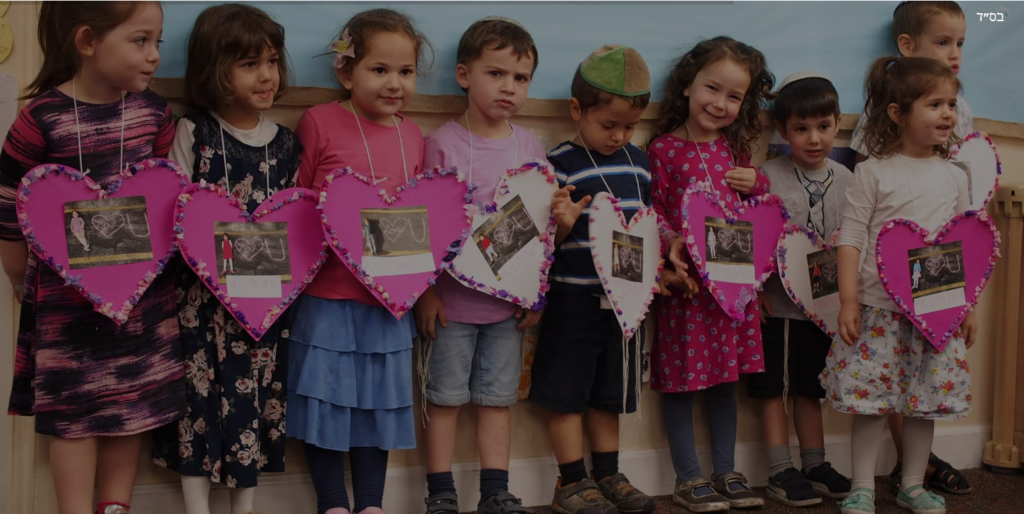
Hebrew Academy Community School began the 2020-21 school at near maximum capacity thanks to an influx of 60 new families, many from out of state.
At Hebrew Academy Community School in the North Broward County city of Margate, students in early childhood classes are learning about germs by spreading glitter glue on their hands and washing it away. In the upper grades, socially distanced students wearing masks are watching out for each other’s health. Meanwhile, school staff members are welcoming new families with care packages of challah bread and wine for the Sabbath.
A recent post on the academy’s Facebook page to launch the 2020-21 year is evidence of a new excitement at the Early Childhood-Grade 8 Jewish school founded in 1987: “From Los Angeles to Crown Heights and beyond, we are thrilled to have so many fresh faces to greet each day!”
Hebrew Academy has good reason to be thrilled. Originally serving four early childhood youngsters in the living room of a young Jewish couple, the school now boasts a 32,500-square-foot main building and a 5,000-square-foot state-of-the-art gymnasium. More than 375 children are enrolled this year, each one benefiting from school leaders’ belief that all Jewish children should have access to Torah learning.
“We’re pretty much at maximum capacity,” said development director Rabbi Shloime Denburg, who enrolled 60 new students this year. “We’re seeing a lot of families from New York and New Jersey. For the first time, we’re also getting calls from California.”
This influx of interest from Jewish families outside of Florida isn’t limited to Hebrew Academy Community School. Even as enrollment plummets at other private schools across the state, Jewish schools are experiencing massive growth, according to Mimi Jankovits, executive director for Teach Florida, part of the national Teach Coalition advocacy organization for Jewish schools.
Jankovits cites a variety of reasons for the expansion: a lower cost of living, less crowding, a better climate. Not to mention the wide variety of Jewish schools available and the fact many participate in the state’s K-12 scholarship program.
“Whatever your philosophy is, there’s probably a school for you here,” Jankovits said, adding that even if some families don’t need the financial assistance state scholarships offer, it’s reassuring to families to know Florida is friendly to school choice.
“We are excited Florida can offer people moving here these opportunities to get scholarships if they need them,” she said.
Brauser Maimonides Academy in Fort Lauderdale started the school year with about 70 new students.
“That’s the most we’ve ever brought in,” said Eli Hagler, executive director of the Modern Orthodox school. In just five years, Hagler said, school enrollment has increased from 350 to 550 students.
A lot of those families have migrated to South Florida from outside the state.
“I’ve spoken to a lot of people from New York and New Jersey. Companies are going virtual and staying virtual, and so people are looking to get out,” he said.
Like Jankovits, Hagler pointed to lower living costs and scholarship opportunities as magnets drawing Jewish families to Florida. He also praised new legislation that allows more families to qualify and no longer requires them to reapply each year for the Florida Tax Credit Scholarship, a program administered by Step Up For Students, which hosts this blog.
“We don’t view private Jewish day school as a choice,” Hagler said. “It’s a necessity.”
Annual tuition at Brauser Maimonides ranges from $9,475 for 2-year-old nursery students to $18,780 for middle school students. That’s significantly lower than tuition at a Jewish day school in New York, which can cost $30,000 per year.
Student enrollment also is up at Hebrew Academy in Miami, a surprise for school leaders who had expected to see enrollment drop due to COVID-19. But more than 70 new families replaced those who decided not to re-enroll.
“All of a sudden we had these New York families,” said dean of admission Ami Eskanos. “They started referring their friends. One of our alums transplanted back down here, and she started showing homes to all of these New Yorkers coming down, and they started referring people. They just kept referring one another.”
Although most Jewish families are relocating to South Florida, other parts of the state also are experiencing an influx of new residents from the Northeast eager to find seats for their children in Jewish schools.
“We started 10 years ago with 12 kids and are almost at 110 this year,” said Rabbi Avraham Wachsman, dean at Orlando Torah Academy, a Jewish preschool and day school serving Orlando and Greater Central Florida.
Wachsman recently has received inquiries from families in New York, New Jersey and Pennsylvania.
“You hear so much about shrinking schools, but we have the opposite,” he said.
Quality of life and lower tuition are among the main factors that are driving relocation, Wachsman said. Along with one additional benefit.
“I’m from Milwaukee,” he said. “I’ve done my 30 years’ time in the snow.”
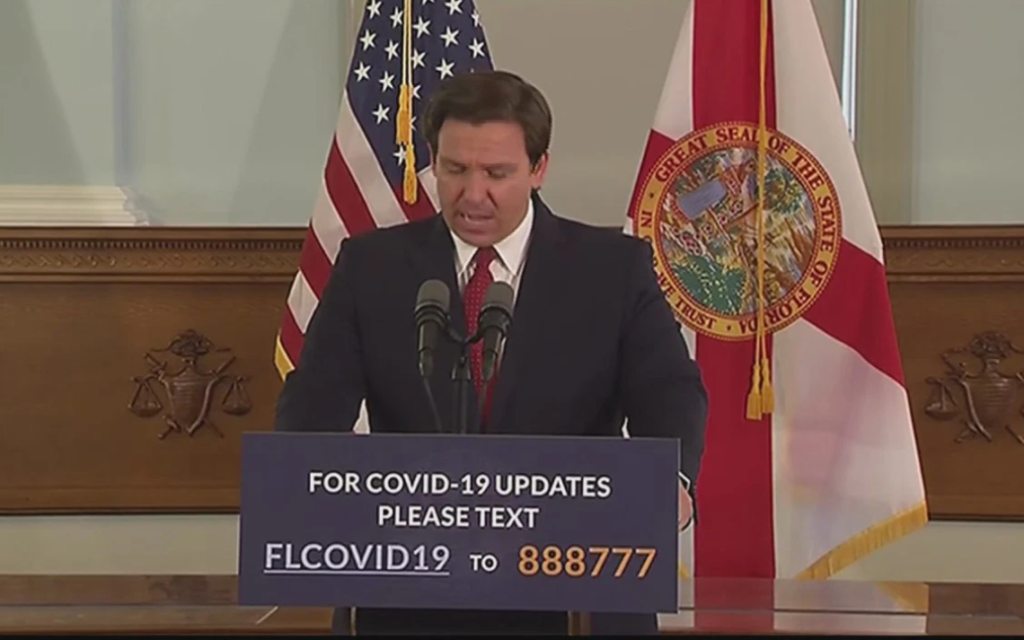 Ana Ceballos, News Service of Florida
TALLAHASSEE -- Private schools and Florida universities might see drops in enrollment as the coronavirus continues to hammer the economy, members of a panel focused on reopening the state’s education system said Wednesday.
School-choice advocates said in a conference call they worry families might no longer be able to afford private school tuition for their children and that struggling companies could decide to cut back on donations to Florida’s school voucher programs.
“The private schools, particularly the scholarship schools, are going to be facing some unprecedented crises,” said Mimi Jankovits, the executive director of Teach Florida, an advocacy group for Florida Jewish day schools.
Syd Kitson, chairman of the state university system’s Board of Governors, also said there could be a drop in enrollment in Florida universities.
“Fall semester enrollment may be reduced, as returning students, particularly from at-risk populations, decide to stop or postpone work on their degree due to personal hardships or other concerns,” Kitson said.
School enrollment concerns surfaced during the first conference call held by an education working group that is part of Gov. Ron DeSantis’ Re-Open Florida Task Force.
Jankovits, a member of the working group, urged it to look into the issue, worrying that some public schools may not have the immediate capacity to handle an influx of students leaving private schools.
“I am not sure at all that if thousands of kids show up at various public schools, if the schools would have the capacity or the staff to handle all these new children,” she said.
Education Commissioner Richard Corcoran reassured Jankovits that the state will monitor the available scholarship dollars and demand for scholarships over the next three months, adding that the revenue for the programs has not “seen a decline as of yet.”
Florida has a series of voucher-type scholarship programs, including the Florida Tax Credit Scholarship Program, which has helped send more than 100,000 students a year to private schools. Under that program, businesses receive tax credits for contributions they make toward scholarships.
During Wednesday’s conference call, the working group also floated a number of ideas that could show what may be in store for children when they return to classrooms. Campuses are shuttered for the rest of this school year to try to prevent the spread of the coronavirus, with DeSantis ordering students to continue distance learning.
“Our main focus is to get schools open,” Corcoran said. “We know that by opening schools it has a tremendous emotional impact and a tremendous physical impact, an economic impact on our citizens and our businesses.”
The panel said that it would be a good idea to use the summer months to help students who may have fallen behind while learning online.
John Hage, the chief executive officer for Charter Schools USA, said charter schools are planning on doing summer camps --- virtual and in person --- to prepare some students who struggled with distance learning for the fall semester.
If children come back to classrooms in the fall, Hage said charter schools plan on having robust cleaning scheduled and maintaining social-distancing measures.
Social distancing protocols could include having some students learn at school and others at home as well as “utilizing open spaces differently,” Hage said.
“We are also experimenting with camera technology that allows us to tell the temperature of students to alert us” to anybody who might have a fever, he added.

