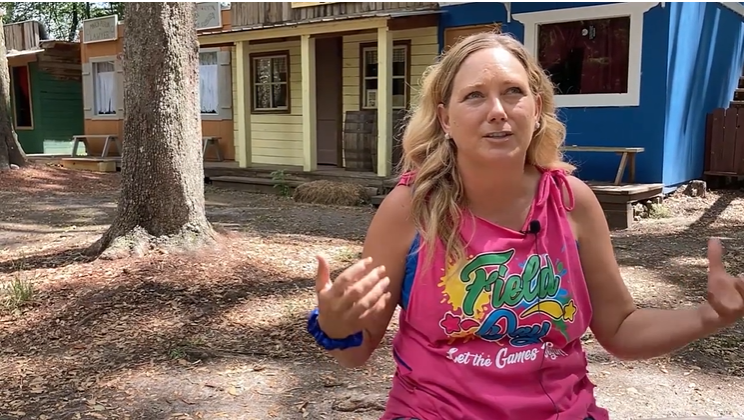
Tracy Kirby, founder of Kirby Homeschool Co-op in rural Williston, Florida, is one of several educator-entrepreneurs featured in a new report from a combined team of researchers at Step Up For Students and EdChoice.
Editor’s note: This commentary from Ronda Dry, senior director of customer experience at Step Up For Students, appeared Tuesday on floridapolitics.com. You can read more about Kirby and entrepreneurial-minded teachers like her here.
Florida has been a national pacesetter for a quarter century when it comes to thoughtful public education policy. But here’s a remarkable trend that’s been mostly off the radar: the accelerating extent to which Florida’s expansion of education choice is benefiting not only students and families, but educators.
Tens of thousands of Florida educators are now teaching in private, charter and virtual schools that didn’t exist a generation ago. Even more compelling: The growing number of former public-school teachers who left their classrooms to start innovative private schools and, more recently, their own micro-schools, hybrid home-schools, and home-school co-ops.
One former district Teacher of the Year started a micro-school based on a cross-curricular approach called arts integration. A former statewide ESE Teacher of the Year cofounded a school for students with autism. It can serve about 50 students but two years in, with zero marketing, 200 families applied.
Yet another highly decorated former public-school teacher co-founded a 400-student school in Tampa that, four years later, established a second 400-student campus in Jacksonville.
Education choice enabled all of them.
Florida’s income-based school choice scholarships are now worth about $7,700 each — and available to roughly 70% of students. Education savings accounts for students with special needs are worth about $10,000 each.
Empowering families with the ability to customize their children’s education creates demand for schools and services that meet their needs. Educators are in turn empowered to meet that demand.
To continue reading, click here.
 Anybody watching the scrum over the tax credit scholarship bill in Florida has been treated to quite the display of dueling op-eds.
Educators (like here and here) have been among those weighing in against the bill and/or the scholarship program, which is administered by Step Up For Students, which co-hosts this blog. But it's noteworthy, given prevailing narratives, that a number of educators have been on the pro-parental choice side, too.
Their views and backgrounds are diverse (see here), so pigeonhole at your peril. But several respectfully stressed that support for expanding school choice does not pit public vs. private.
Wrote Stacy Angier, principal of Abundant Life Christian Academy in Margate, in the South Florida Sun Sentinel:
"Our scholarship parents tell us, all the time, that their children are doing better, that their children love school now. I don't bring this up as a knock on their former schools. It doesn't mean our school is better; it means we're different - and for individual students, different may be better."
Wrote Steve Knellinger, lead administrator at St. Petersburg Christian School, in the Tampa Bay Times:
"We view public schools in Pinellas County as partners, not adversaries. We believe we are helping them, and they are helping us. If students want to attend a traditional neighborhood public school, or a fundamental school, or a magnet school, because that's where they're most likely to find success, why not? At the same time, if students who are not successful in public schools can find success at a private school like ours, why not?"
Wrote Nadia Hionides, principal of The Foundation Academy in Jacksonville, in Context Florida:
"I know that the more choices we offer, the more opportunities there are for children to succeed. Only in the diversity that is offered by all of these choices, public and private, can we possibly meet the endlessly diverse needs of all our children."
Several of the op-eds also have this thread in common: Respect for parents' ability to know what is best for their kids. (more…)
 The Association of American Educators
The Association of American Educators (AAE) is a non-union professional service organization for teachers. The AAE does not promote strikes or boycotts, does not engage in collective bargaining and does not engage in political activity unrelated to education. It does provide member benefits such as liability insurance, grants and resources such as job listings, lesson plans and other teaching materials.
 AAE doesn't have an official opinion on school vouchers, but it does survey members to see how they feel about education reform issues. Its most recent survey, released this week, reveals 59 percent of members support a Milwaukee-style voucher program for low-income students while 72 percent support Arizona’s Empowerment Scholarship Accounts (ESA) model. Regarding public school choice, 82 percent support open enrollment programs.
The survey only listed questions regarding school choice programs of limited scope and size, so it is possible members would be less supportive of more expansive voucher and scholarship programs. That said, the support among professional service organization teachers is roughly similar to that of the general public and several times more favorable than teachers in general.
Does the AAE attract teachers who are more likely to be open to school choice in the first place? Or does the AAE’s culture of professionalism encourage more open minds regarding school choice? These are matters worth exploring in the future.
Twenty years ago, Dennis DiNoia taught middle school math in typical classrooms, in typical Florida public schools. Now his classroom is a local church, or bookstore, or online. Students come from public schools, private schools, and homeschooling co-ops. Lessons are based on a curriculum he designed and put on video.
 DiNoia even has a toehold in the growing market of charter school consulting, explaining math and test-taking skills to students and teachers at a conversion charter school in Hawaii.
School choice has opened up a whole new career track for DiNoia, allowing the business school graduate to earn enough money to remain in a profession he loves while giving him the satisfaction of helping students master his favorite subject.
“A lot of people don’t go into teaching because they don’t think they can make a living at it,’’ said DiNoia, a father of three who lives in Sarasota, Fla. “If you go into it with that mindset, you’ll be right.’’
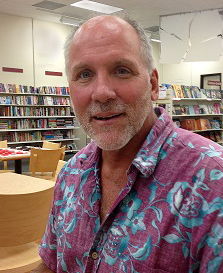
Dennis DiNoia
DiNoia went into the field thinking that one day he would have a successful business. Apparently, he was right, eventually figuring out how to grow his tutoring company from a sideline that supplemented his district paycheck to a full-time endeavor to support his family.
It serves as yet another example of how having more education options not only meets the different needs of children, but can benefit educators, as well.
“Everybody has different vehicles to educate students,’’ said Clayton Snare, a former principal who worked with DiNoia in the Pinellas County, Fla., school district. “Some people are good in a classroom. Some people are better online. Others are better one on one.’’
DiNoia “defined what I thought a successful teacher was all about and it truly starts with developing a rapport with your students,’’ Snare said. (more…)
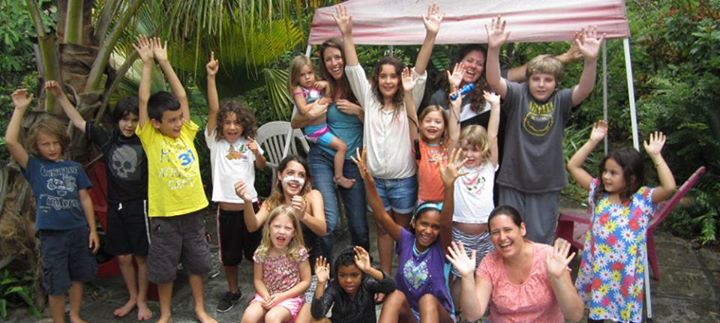
Last day of school this year at Sunset Sudbury School in Davie, FL.
Editor's note: Dionne Ekendiz founded the Sunset Sudbury School in South Florida. In her own words, here's why she did it.
I always wanted to become a teacher and make a difference in the lives of children. I truly believed in public education and wanted to be part of making it better. But like many “smart” students, I was dissuaded from that career path, especially by my math and science teachers. They encouraged me to do something “more” with my life, so I went off to MIT and pursued a degree in engineering. After 12 years as an engineer, computer programmer, and project manager in the corporate world, I finally had the confidence and courage to make a change. Others thought I was crazy to leave a great career, but I was driven to pursue my own passion.
I entered a master’s of education program and sought to get the most of my experience there. When I heard about a professor who was conducting research in the “best” public schools in the area, I volunteered to be his graduate assistant. This took me into the schools twice a week. I loved working with the students, but there were things I didn’t like about the environment. One of the most disturbing was how teachers and aides would yell at students to “stay in line” and “don’t talk” in the hallways. Those were the times that schools felt most like prisons to me. But still, I believed a good teacher could learn to control his/her students in a more humane way, so I didn’t let it bother me so much.
A year into my education program, I gave birth to my first child. Watching her grow and learn on her own, especially during her first years, made me see the true genius inside her. Indeed, it is a genius that exists in all children. She was so driven to master new skills like walking, talking, and feeding herself. I was always there with love, support, and encouragement, but my instincts told me to stay out of her way as much as possible and let her own curiosity guide her. Because of my own experiences with schooling and well-meaning teachers, I was determined to let my daughter make her own choices. I knew that with curiosity and confidence intact, she could do and be anything she wanted to.
It slowly dawned on me that everything I was learning about teaching was contrary to the philosophy I was using in raising my own daughter. The goal of teachers, in the traditional setting, is to somehow stuff a pre-determined curriculum into students’ heads. Some teachers do it more gently than others and make it more fun, but the result is the same. Teachers must stifle their students’ own interests and desires to meet the school’s agenda. Simply put, regardless of how nice a teacher is, s/he must coerce students into getting them to do what s/he wants them to do. What I was once willing to do to other people’s children, I wasn’t willing to do to my child. That was a huge wake-up call for me. (more…)
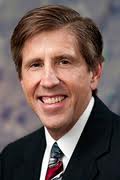
Tuthill
Editor's note: This is the fourth and final post in a series on the future of teachers unions.
Over the last 20 years, the federal government and state governments have used standards, assessments and regulatory accountability to assert more top-down control over classroom teachers. As state-mandated teacher evaluation and merit pay systems have become ubiquitous, the level of teacher disempowerment and alienation has soared, and teacher unions have hunkered down and become even more defensive and conservative.
School choice is the way out - not only because it is breaking down public education’s 19th Century industrial management model, but because teacher unions are so economically tied to this model they are fighting to preserve it, even though it is bad for teachers and students. Ironically, teacher union dues today are used to perpetuate a dysfunctional management system, and to protect teachers from being abused by this same system. It’s crazy.
I say this as a former teacher union leader.
I started teaching in fall 1977. In January 1978, I sat at a table with other teachers and heard a divorced mother with two young children tearfully tell us she had rejected her boss’ sexual advances and now he was ending her employment contract. At the time, we didn’t have a union or a union contract.
I was 22 years old and became a union organizer while sitting at that table. We organized ourselves, collected cards and successfully petitioned the state to hold a collective bargaining election. We won a court case management had filed to block the election. Then we won the election and bargained and ratified a contract that included protections against arbitrarily firing employees.
In 1984, I joined a more mature union (and the school choice movement) when I moved to St. Petersburg, Fla. to help start one of the state’s first magnet schools. The Pinellas Classroom Teachers Association had been a professional association for several decades before turning into an industrial union in the late 1960s. By 1984, its collective bargaining agreement had been in place for more than a decade, and it had established a collaborative working relationship with management.
After the intensity of building a union from scratch, PCTA felt stagnant. The union was part of district management. It did a great job protecting teachers from the abuses of a politically-managed bureaucracy, but there was no energy or vision for progress. PCTA’s only internal and external message was, “We need more money.”
Pinellas teacher salaries increased by an average of 45 percent from 1981 to 1986, yet teachers were still miserable. More money was great, but they wanted greater job satisfaction. Individuals become teachers because they want to make a meaningful contribution to children’s lives, but that’s difficult - and often impossible - in a mass production bureaucracy that treats teachers like assembly line workers and students like identical widgets.
We attempted reform from within. (more…)
Editor's note: This is the third of four guest posts on the future of teachers unions.
by Gary Beckner
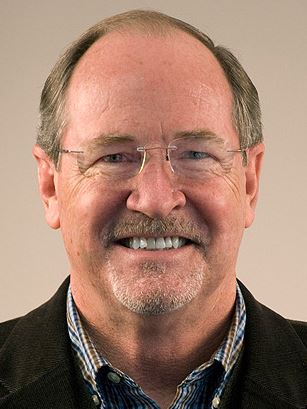
Gary Beckner
We are at a critical crossroads on the path to education reform in America. Stakeholders from all walks of life and political stripes are beginning to understand that in order to compete in a global economy we must focus on choice and technology to prepare our students for the future.
Likewise, we must also recognize that in order to drive needed change in instruction we must also examine how the teacher workforce is represented. Just as a one-size-fits-all system is not working for students, a labor union model solely fixated on protecting the status quo is no longer serving the needs of all educators in a modern workforce.
Choices in education have opened up avenues for advancing the teaching profession like never before. Virtual schools, technology, and non-traditional charter schools allow teachers to set new schedules and adapt their vision for education to a school that meets their specific needs. These innovations have brought new experienced professionals into the profession and have allowed other talented educators the ability to stay on in different capacities.
According to a membership survey by the Association of American Educators, the non-union teacher organization that I lead, teachers support laws that advance choice and promote options. For example, 68 percent of member educators support an Indiana law that provides a tax credit to parents who send their children to a private or parochial school of their choice. Similarly, 74 percent of survey respondents support Arizona's Empowerment Scholarship Accounts, which allow parents of special-needs students to use state education dollars in a school that meets the student's needs.
Despite this groundswell of support from educators themselves, the nation’s largest teacher unions, the National Education Association and the American Federation of Teachers, continue to stand in the way of commonsense education reform for the sake of preserving their own monopoly. Not only is this harmful to America’s students, it degrades the professionalism of one of the most revered career choices. (more…)
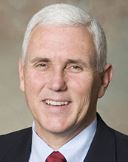
Gov. Pence
Speaking to school choice die-hards Monday, Indiana Gov. Mike Pence took aim at a common criticism of expanded learning options and encouraged supporters to make teachers part of their case.
“Let’s be very clear in this debate … iron sharpens iron,” Pence told several hundred people gathered at the fourth annual American Federation for Children summit in Washington D.C. “When you empower parents to choose the public, the charter, the private school of their choice, all of education gets better because of competition.”
Pence, one of several keynote speakers for the two-day event, reeled off a suite of ed stats from Indiana. Since the introduction of that state’s voucher program two years ago, test scores and grad rates have continued to rise while achievement gaps have continued to narrow, he said. “The progress we’ve made recently doesn’t appear to be slowing down” because of more choice, he said.
Pence signed an expansion of the voucher program into law earlier this month. He told the AFC audience he’s going to continue to push for more school choice and other reforms because, in part, “I believe in Indiana’s teachers.”
He noted his wife is a teacher, and said some of their best friends are public and private school teachers.
“America has some of the best teachers in the world. Some of the most courageous, decent, caring, selfless men and women in our society are in classrooms today. I submit to you that as we move forward in this debate, we need to speak (about) teachers,” he said. “We believe in giving parents choices because we want them to be able to choose the best school for their children, knowing the teachers will rise to the challenge, as they’ve certainly done in Indiana.”
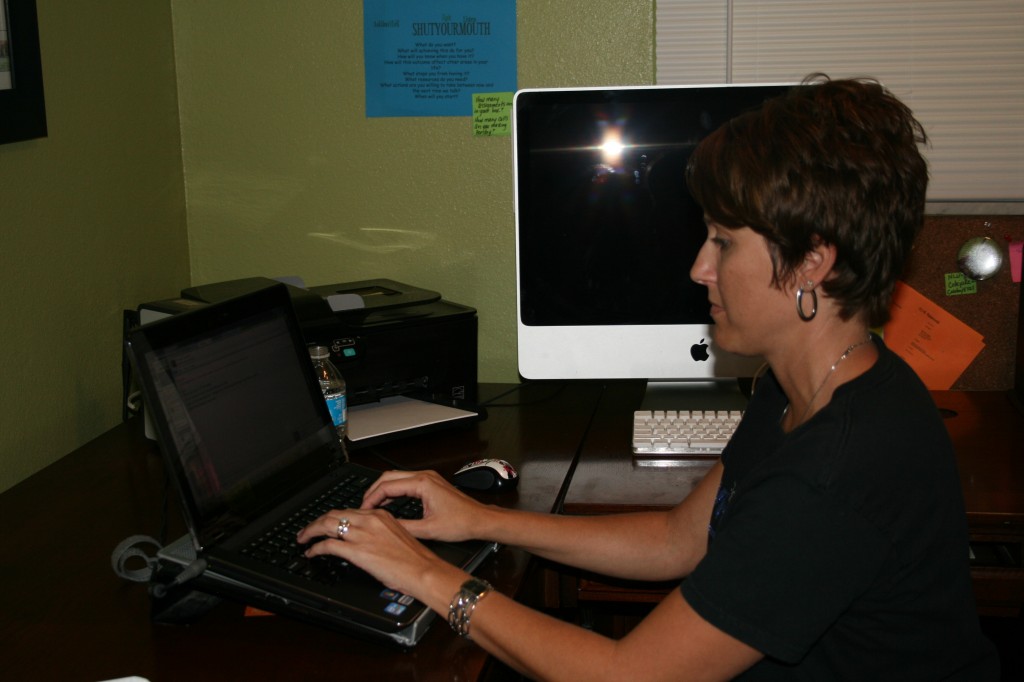
Wife and mother Carlene Meloy left the Pinellas County school district nine years ago for a teaching job with Florida Virtual Schools. There were some trade-offs, but after four years "I don't think I would ever go back.''
When Carlene Meloy answers her front door on a recent weekday afternoon, she looks like any other stay-at-home mom in blue jeans and a T-shirt.
Husband Chris is away at work. In a few hours, their two kids will be home from school. Until then, a barefoot Meloy juggles laundry and dinner with her other job as a teacher at Florida Virtual School.
“I can grocery shop in the morning,’’ she said, and be back in front of her computer in time for a 1 p.m. high school leadership class. If her daughter, Camryn, needs to go to the community center for a theater class, “I can use the Wi-Fi’’ to stay connected to students.
It’s that flexibility that convinced Meloy, 38, to leave the local school district four years ago and work for the nation’s largest online education program.
Meloy is among a growing number of educators across the country that has discovered school choice is an opportunity not only for parents and students, but for teachers, too. No longer are their options defined by school boards or unions – or traditional school calendars.
Today, teachers willing to embrace choice and, maybe, take a bit of a risk, can find satisfying careers in charter schools, private schools and online education. The bonus: a job that gives them more of a say in customizing lesson plans, including ones that adhere to personal religious beliefs; and access to cutting-edge technology that, to some extent, allows them to set their own schedules.
“Now that I look back, I realize I felt stuck,’’ Meloy said of her old job, where she often had to rush from her fourth-grade classroom to take her son, Cole, to baseball practice. “I really do not have the stress that I did in a brick-and-mortar school.’’ (more…)
Parents aren’t the only ones driving the expansion of school choice. Growing numbers of teachers and principals are opting for alternative settings, too.
Their voices should be a bigger part of the education debate. So, beginning Monday, we’re rolling out an occasional series of stories simply called, “Teachers and Choice.”
The stories aren’t hard to find, especially here in Florida. A full 43 percent of students in the Sunshine State now attend something other than their zoned schools. A slew of teachers are now teaching them there. In charter schools alone, the number of teachers has doubled in the past five years – to more than 10,000. Over the same span, the number in Florida Virtual School has tripled - to nearly 1,500.
One of my favorite high school teachers spent 30 years in public schools but now heads a private school in Jacksonville. When U.S. Sen. Marco Rubio visited a Christian school in Tampa the other day, he spoke to teachers who migrated from public to private. On the phone this week, I talked to a teacher in Tallahassee who switched to a charter despite less pay. The freedom to be creative, she said, more than made up for it.
The subject of Monday’s feature by redefinED’s Sherri Ackerman is Carlene Meloy, who works for Florida Virtual. I won’t spoil it by disclosing details, but this quote serves as a nice tease: “Now that I look back,” she said of her old school, “I realize I felt stuck.”
Just like parents, teachers offer myriad reasons for their choices. Along with the benefits, there are complications, tradeoffs, and unknowns. We’ll do our best to explore them.
You can help us. Let us know if you see issues in this realm that are worth spotlighting, or teachers and principals worth profiling. We also welcome guest posts that further this conversation. You can reach me at rmatus@sufs.org, and Sherri at sackerman@sufs.org.

