Florida Catholic schools are embracing Common Core academic standards and seriously considering whether to take the coming state tests aligned to them. In the meantime, their leaders say, 30 to 40 Catholic schools want to administer the FCAT in 2014, in what would be a trial run for potential transition to Common Core testing.
“Our mission is the same, public or Catholic school, to create productive citizens in our world that actually have the skills in life they need,” Alberto Vazquez-Matos, schools superintendent for the Diocese of St. Petersburg, told redefinED. “We’ll all be raising the standards and talking the same academic language.”
The push by Catholic schools towards common standards - and perhaps common tests - is an interesting counterpoint to the debate that followed last week’s comments by Gov. Rick Scott. Scott re-opened the door to a long-running conversation about voucher and tax-credit scholarship programs by saying he wants to see students in those programs take the same tests as their public school peers.
Right now, the state does not require tax credit scholarship students to take the FCAT, but they are mandated to take another comparable, state-approved test such as the Stanford Achievement Test or Iowa Tests of Basic Skills. Disabled students who use McKay vouchers to attend private schools are not required by the state to take any such tests.
This year, Catholic schools in Florida enroll 7,673 tax credit scholarship students. (The scholarship program is administered by Step Up for Students, which co-hosts this blog.)
Scott’s comments sparked suggestions from some school choice critics that private schools were dodging comparisons to public schools. But Florida’s Catholic schools have been quietly moving towards Common Core for more than year. In fact, all 237 Catholic schools in Florida will be rolling out a “blended’’ version of the language arts standards, right along with public schools, in 2014. (more…)
 On top of the world. Gov. Rick Scott calls the PIRLS results (an international assessment that shows Florida fourth-graders are second only to their peers in Hong Kong in reading) “great news for Florida as our state becomes a hub for global commerce.” Jeb Bush says Florida students are “again busting all the myths.” No more Flori-duh, writes EdFly Blog: “Florida has gone from one of the worst reading states in the nation to one of the top reading nations in the world. And just last month I read a story about Jeb Bush’s education reforms in Reuters, which concluded: 'But a close examination raises questions about the depth and durability of the (education) gains in Florida.' Think we’ll see a follow-up?” More from Florida Today, Associated Press, Bloomberg, Eduwonk, Jay P. Greene’s Blog. (Image from questprblog.com)
FCAT for voucher kids? Gov. Scott seems to suggest that in comments to reporters Tuesday. Here’s the clip (starts at about the 13-minute mark). Coverage from Gradebook, WTSP, Orlando Sentinel, Associated Press, News Service of Florida. The governor will be speaking in Tampa tonight, at the annual donor dinner for Florida’s tax credit scholarship program (which is sponsored by Step Up For Students, which co-hosts this blog).
Race to the Top. Miami-Dade wins this round, reports the Miami Herald.
Conversion. The Broward County school board considers creating a countywide K-12 digital arts magnet in an effort to help a low-performing middle school meet accountability standards, reports the Sun-Sentinel.
Protection. From the Orlando Sentinel: "After listening to nearly six hours of testimony on both sides of the issue, the Orange County School Board added protections for gay, lesbian and transgender students and staff to the district's nondiscrimination policy early Wednesday."
Wait a minute. The Polk County school board and new superintendent John Stewart may delay the opening of six district-run charter schools for at-risk students, reports the Ledger.
School-to-prison pipeline. On the NAACP's agenda in Duval. Florida Times Union.
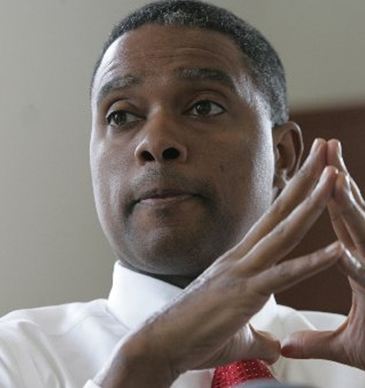 Gerard Robinson. The former Florida education commissioner, who stepped down three months ago, will be among the panelists next week responding to a new Brookings report on standardized testing and the Common Core. More here.
DOE responds to Tampa Bay Times contracting story. I can't remember the last time DOE did a point-by-point, line-by-line rebuttal to a story. Press release here.
Career academies. Get a nice write-up in the Gainesville Business Report.
Testing. New Duval Superintendent Nikolai Vitti removes some internal standardized tests from the district schedule, prompting praise from teachers union president Terrie Brady, reports the Florida Times Union.
FCAT. Will any private schools that accept tax credit scholarships give it? Asks Gradebook.
Contract talks. Continue next week in Palm Beach County after nearly falling apart last week, reports the Palm Beach Post’s Extra Credit blog.
Schools put kids in reach of convicts. Tampa Bay Times columnist Sue Carlton.
 Do critics have a double standard when it comes to scrutinizing school choice options like charter schools and vouchers? Florida Education Commissioner Gerard Robinson suggested as much in an interview published today by the Tampa Bay Times’ Gradebook education blog.
In response to a question from the Times editorial board, Robinson noted that charter schools that struggle academically and/or financially can be shut down (in Florida, that has happened many times) but that same ultimate penalty is rarely leveled at traditional public schools (off hand, we can’t think of any examples in Florida). “For the bad charter schools that aren’t working, they should close,” Robinson said. “But for the traditional schools that have also failed a number of our kids, we don’t see the same level of righteous indignation.”
Robinson has deep roots in the school choice movement, having once served as president of the Black Alliance for Educational Options. And interestingly enough, the editorial board's questions focused mostly on choice options. Here are some other excerpts:
On testing accountability in voucher schools: “The private school curriculum isn't aligned to what we test on the FCAT (the Florida Comprehensive Assessment Test). So you're comparing apples to oranges. At the same time, there are the Stanford tests, there are Iowas, there are other tests you can take. So I'm not against assessment. What I am saying is, simply saying because they don't take the FCAT therefore they're not accountable is not correct.... “
On charter schools vs. magnet schools: “Charters and magnets both are theme schools. Charters and magnets both are public. And charters and magnets both take money. You often find magnets cost more than charters. But yet people say charters take money from public schools. People say charters are creaming the best and brightest kids. I can tell you from looking at the scores, that's not the case. And yet the magnet schools … are taking the best and brightest students … Magnet schools historically have been the largest public school choice program in the country, but also been more exclusive than other programs. And yet, all the angst we put on charters.”
On closing the achievement gap: “I've often said what you don't have is a political gap problem as much as you have a political crap problem. … If white kids are reading better than black, Latino, Hispanic or Native American kids, that's not a reading problem. We know what it takes to get kids proficient in reading. The question is, are we willing to make the tough decisions, political decisions, to get the right resources - human and financial - into the schools or after-school programs … to make it happen?”

