Editor's note: Here's our latest round-up of interesting stuff from other ed blogs.
Rick Hess Straight Up: Self-Pitying Tantrums Are Poor Way for Educators to Win Friends, Influence People
 Fact 1: Teachers feel like they're getting a bad rap in the public discourse.
Fact 2: I've long since stopped reading the comments proffered on RHSU.
What in the world do these two statements have to do with each other? I think it's simple. Self-proclaimed advocates of educators and public education have become so vitriolic, mean-spirited, arrogant, and unreasoning that it's becoming inane to anyone who's not a fellow true believer. This means that they're poorly positioned to convince Americans, and painfully uninteresting to anyone who doesn't agree with them already. ...
I was enamored by the self-identified teacher who wrote, "I honestly wonder what you're doing, writing about a profession that you so clearly despise. I also wonder about the integrity of Education Week, since it keeps publishing more and more hit-pieces by people like you, who openly brandish his anti-union, anti-public education, and anti-public school teachers attitudes, just to satisfy the whims and expectations of sponsors such as the Gates foundation and others...Unlike hacks like you, we can not charge over time, or demand to be payed [sic] by the column, or the word. You sir, are the worst kind of demagogue, attacking a noble profession, while disguising your broadsides as concerns over our benefits." Another wrote, "Well, Rick anyone can blog on and on about the virtues of deceit. Pity the folks in Wisconsin who couldn't quite get it together to alter the lopsided equation." Truthfully, I'm not even sure what this means. Full post here.
Cato@Liberty: State Rep. Balks at Voucher Funding for Muslim School
Just as Louisiana’s legislative session was wrapping up earlier this month, state Rep. Kenneth Havard refused to vote for any voucher program that “will fund Islamic teaching.” According to the AP, the Islamic School of Greater New Orleans was on a list of schools approved by the state education department to accept as many as 38 voucher students. Havard declared: “I won’t go back home and explain to my people that I supported this.”
For unreported reasons, the Islamic school subsequently withdrew itself from participation in the program and the voucher funding was approved 51 to 49. With the program now enacted and funded, nothing appears to stand in the way of the Islamic school requesting that it be added back to the list, and it is hard to imagine a constitutionally sound basis for rejecting such a request.
This episode illustrates a fundamental flaw in government-funded voucher programs: they must either reject every controversial educational option from eligibility or they compel taxpayers to support types of education that violate their convictions. In either case, someone loses. Either poor Muslims in New Orleans are denied vouchers or taxpayers who don’t wish to support Muslim schools are compelled to do so.
It doesn’t have to be that way. Read post here. (more…)
 Florida: The state's top education official offers a strong pitch for continued expansion of school choice options despite recent scrutiny of charter schools. (redefinED) The state Board of Education overrules several school districts that opposed new charter schools. (Orlando Sentinel)
Louisiana: One local school district plans to open a virtual school to compete for home schoolers. (Baton Rouge Advocate) Meanwhile, this district seeks to opt out of the state's new voucher program. (Baton Rouge Advocate) So does this one. (Monroe News Star) Charter schools get a thumbs up from Democratic U.S. Sen. Mary Landrieu. (Baton Rouge Advocate)
Alabama: Charter schools bill, watered down after vigorous opposition from state teachers union, is dead. (Montgomery Advertiser)
Massachusetts: State lifts temporary moratorium on new charter schools. (Boston Globe) (more…)
New Jersey: At the American Federation for Children national summit, N.J. Gov. Chris Christie invokes civil rights  era imagery to make his case for vouchers. (Associated Press) Louisiana Gov. Bobby Jindal tells choice advocates they have "truth and the American people on (their) side." (abcnews.com) Newark Mayor Cory Booker decries an education system that "chokes out the potential of millions of children." (redefinED) Beyond the headlines, choice supporters also talk accountability. (redefinED)
Alabama: Embattled charter school bill is watered down again before passage. (Associated Press)
New Hampshire: Charter schools in the state are expanding rapidly. (Concord Monitor)
Montana: Vouchers and tax credit scholarships become an issue in the race for governor. (Billings Gazette)
California: Two dozen high-performing traditional public schools in Los Angeles seek to become charter schools. (Los Angeles Times) (more…)
 Last year, Indiana stole the spotlight for school choice. This year it was Louisiana. And next year, if Virginia Walden Ford has anything to do with it, it just might be Arkansas.
“Miss Virginia,” the heart and soul of the Opportunity Scholarship voucher program in Washington D.C., moved back to her home state of Arkansas last summer and slipped a bit off the national radar. But she didn't go to retire. She’s meeting with parents, talking with lawmakers – and making bold predictions.
Vouchers and tax credit scholarships in Arkansas are now “being seriously discussed,” Walden Ford, 60, said in a phone interview with redefinED. “I believe in 2013 there will be school choice legislation that will pass in this state.”
After three decades in the nation’s capital, Walden Ford said she wanted to be closer to her family (her mother is 90). But the daughter of public school educators also wanted to take the knowledge gained from 15 years of grassroots activism in D.C. and apply them to Arkansas, a state that does not have a voucher or tax credit program but may be ripe for a strong move in that direction.
Among the reasons: The University of Arkansas has a young but hard-charging Department of Education Reform, with nationally known voucher experts like Jay Greene and Patrick Wolf. The state’s leading newspaper, the Arkansas Democrat Gazette, has a reform-minded publisher. The state is earning a reputation, through indicators like Education Week’s Quality Counts report (where it ranked No. 5 this year) of being a state on the move. And constitutionally, it does not appear to have the legal hurdles that could snare choice programs in other states.
“The people here in reform in Arkansas are much further ahead than I had anticipated,” Walden Ford said. “I fought the D.C. fight so … I’m very much a realist. But this is what I’m seeing. I’m quite excited about it. I don’t think it’s going to be easy … but it’s on the minds of people now, legislators and citizens, that we have to change something.”
Are Democratic legislators among them? (more…)
 Louisiana: Gov. Bobby Jindal signs off on far-reaching changes in education, including creation of a statewide voucher program. (Associated Press) The state teachers union vows to file a lawsuit challenging the program's constitutionality. (New Orleans Times Picayune) Meanwhile, another bill to expand school choice - with a program similar to tax credit scholarships - quietly moves forward. (New Orleans Times Picayune)
North Carolina: Charter school enrollment surges in Charlotte. (Charlotte Observer)
Tennessee: Gov. Bill Haslam raises concerns about a bill limiting the number of foreign workers at charter schools. (Associated Press)
Colorado: Choice supporters file legal briefs in case against voucher program created by the Douglas County school district. (ourcoloradonews.com)
Alabama: This school board opposes a bill that would allow creation of charter schools. (waaytv.com) So does this one. (al.com) (more…)
 Louisiana: Senate approves statewide voucher program on a 24-15 vote. (New Orleans Times Picayune) The vote was bipartisan, again. (redefinED) Gov. Bobby Jindal succeeds in a sweeping education overhaul. (Associated Press)
South Carolina: Former Florida Gov. Jeb Bush will be the keynote speaker at an education reform summit later this month.
Pennsylvania: Flier flap in state House race tied to voucher battle. (philly.com)
Alaska: School choice expansion effort stalls. (Juneau Empire)
Arizona: Gov. Jan Brewer vetoes expansion of education savings accounts. (Arizona Republic)
Connecticut: Democratic Gov. Dan Malloy points to the rift over education reform between two of his party's biggest constituencies, African Americans and teachers unions. (CT News Junkie)
Mississippi: House education committee narrowly votes down charter school expansion bill. (Associated Press) It gets real ugly afterwards. (Memphis Commercial Appeal)
Tennessee: Charter school diversity blooms. (Nashville Tennessean)
New Jersey: State Department of Education is set to consider 32 new charter school applications. (Newark Star-Ledger)
Georgia: More families are considering on-line learning options. (Macon Telegraph)
(Image from politico.com)
 The Louisiana Senate made national headlines this week with its historic 24-15 vote in favor of a statewide voucher program. But once again, media coverage ignored a key development: The vote was bipartisan.
Seven of 15 Democrats, including four black Democrats, voted in favor of HB 976, which also expanded other school choice options. That's on top of 12 Democrats who voted for the bill in the House. All of them did so despite tremendous pressure not to stray from the traditional party line or from historic allies like the Louisiana teachers union.
Despite all the Democratic votes, the union stuck to the story: The voucher agenda was pushed by out-of-state influences, the conservative American Legislative Exchange Council and Wall Street - a nefarious cabal out to "rob local funds from our neighborhood schools."
Widely repeated lines like these are what prompted redefinED this week to spotlight a couple of Florida folks who support vouchers and tax credit scholarships. One is a St. Petersburg, Fla. pastor who also happens to be a Democrat and the head of the local NAACP. The other is a Sanford, Fla. dad whose podcast interview I posted this morning. "I'm just a dad looking to do the best for his son," Mike Enters told me.
The debate over school choice is more dynamic and nuanced that its loudest critics want you to believe. And it's more interesting than what you'll read in the papers.
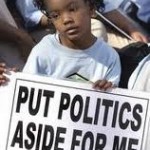 Families who benefit from expanded school choice options – charter schools, virtual schools, vouchers, tax credit scholarships – are increasingly being portrayed as pawns in a coordinated campaign to privatize public schools. That’s especially troubling given that the voices of those families are so rarely included in the conversation.
The latest example: Statements from a movement to end high-stakes, standardized testing.
United Opt Out National, which led an effort over the weekend to “occupy” the U.S. Department of Education in Washington, D.C., says it wants to “end Wall Street Occupation of Education.” Among its goals: An end to "the use of public education funds to enact school 'choice' measures influenced and supported by the corporate agenda."
This story in The Florida Independent about the group’s efforts (a Miami-Dade teacher/parent is among the group’s leaders) focused most specifically on its concerns about for-profit charter schools. But by referencing vouchers and tax credit scholarships, the story suggested those options were also part of a plot to undermine public schools.
That kind of characterization about school choice is happening more and more as newspapers and TV stations echo the emotional story line that gets repeated the most. (more…)
 Louisiana: State Superintendent John White: Teachers are soldiers in fight for social justice. (Baton Rouge Advocate) State House passes bill for program similar to tax-credit scholarships. (New Orleans Times Picayune.) Voucher and charter school proposal rolls through state Senate committee. (Shreveport Times.)
South Carolina: State House passes major expansion of school choice, including tax credit scholarships for low-income students and students with disabilities. (Associated Press)
New Hampshire: State House passes tax credit scholarship bill, but Gov. John Lynch has "real concerns." (Nashua Telegraph)
Oregon: Op-ed: Expanding school choice will promote student responsibility. (News and Herald) (more…)
 Louisiana is the center of the school choice universe right now. Last week, the state House passed a bill that creates a statewide voucher program for low-income students (expanding the one now limited to New Orleans). And this week, it passed a bill that creates a statewide tax-rebate scholarship (which is something like a tax credit scholarship).
The Louisiana campaign has been “historic” and “rewarding,” Eric Lewis, director of the state chapter of the Black Alliance for Educational Options, says in this podcast. The choice programs, which are expected to clear the Senate and be signed into law by Gov. Bobby Jindal, are “going to greatly change the landscape of education in Louisiana,” he says.
Clearly, though, the debate isn’t over. The bill that includes the voucher program leaves creation of accountability provisions to the Louisiana Department of Education and Louisiana Board of Elementary and Secondary Education. BAEO supports some type of regulatory action, Lewis says, for private schools that don’t show academic gains for voucher students.
“We want parents to be able to exercise choice, and we want to empower them to do so,” he says. “But we also want to make certain that while we’re fighting to pull the poor kids out of failing public schools, we’re not putting them in a situation where they’re entering sub-par private schools.”
“What we will want to see is the department and the Board of Elementary and Secondary Education set up some process where, if at some point in time, after some given period of time, schools are not able to show growth with the kids, then some measure needs to be put in place to recompense that,” Lewis continues. “There needs to be some type of threshold where you know it’s clear that it’s not working with a particular school, and so kids shouldn’t continue to matriculate within that school.”
Lewis also credits the 12 Democrats, including six black Democrats, who voted for vouchers despite what he calls “incredible heat.” One political blog said the 12 “Jindal Democrats” were motivated by politics, money, re-election, selfishness, fear and “general spinelessness.”
“It was intense,” Lewis says. “I applaud all 12 of them for standing up for kids, and standing up for what they felt was right.”

