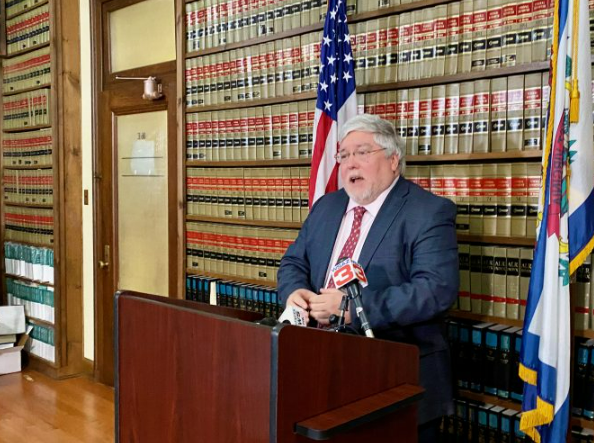
West Virginia Attorney General Patrick Morrisey on Tuesday said the decision of a Circuit Court judge is “flawed in many ways” and “renders harm” to families expecting to receive Hope Scholarships to support education choice for their children.
Editor’s note: This article appeared Tuesday on wvmetronews.com.
West Virginia’s Supreme Court justices are considering whether scholarships for students leaving public schools will erode the constitutionally-required education system — or whether the state can meet its obligation to support the public school system and then go farther by providing even more options for families.
Over a little less than an hour, justices on Tuesday heard arguments on multiple sides of that issue. Kanawha Circuit Judge Joanna Tabit earlier halted the scholarships, concluding that the program creates “an incentive to leave the public school system, reducing its enrollment and funding.”
The question before the justices is how the Hope Scholarship interacts with the West Virginia constitutional mandate to provide “a thorough and efficient system of free schools.”
Justices interjected to ask some questions, as they always do, but generally they let the arguments flow. The justices who asked the most questions were Beth Walker and Haley Bunn, focusing sometimes on precedent that could shape interpretation of the case and also asking more specifically about the workings of the Hope Scholarship law.
After the case was over, both supporters of the Hope Scholarship and those challenging it put out statements expressing confidence in the court system’s consideration.
“We have a very strong case, and the argument is very clear: The decision of a Kanawha Circuit Court judge is flawed in many ways and only renders harm to the thousands of families set to receive funds from the Act,” stated Attorney General Patrick Morrisey, whose office was defending the program on behalf of the state.
“I strongly support the right of parents to choose the best education possible for their children and will fight to prove the Act provides constitutionally for that right.”
To continue reading, click here.
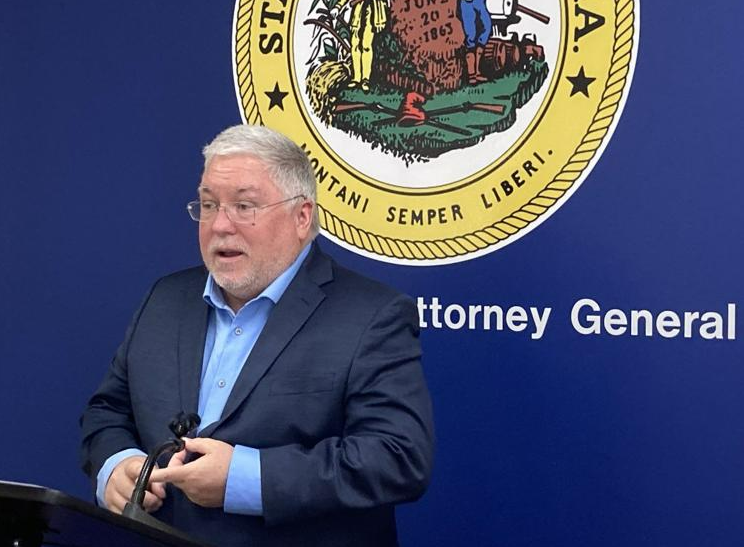
In a statement issued earlier today, West Virginia attorney general Patrick Morrisey said the decision by a Circuit Court judge is “flawed in many ways,” causing harm to thousands of families seeking educational options for their children.
Editor’s note: This article appeared today on weirtondailytimes.com.
With oral arguments before the West Virginia Supreme Court of Appeals set for Oct. 4, Attorney General Patrick Morrisey filed his opening brief in the challenge to a permanent injunction blocking the state’s new Hope Scholarship program.
In a press release Wednesday, Morrisey said his office filed its opening brief with the state Supreme Court in a case brought by parents in January challenging the constitutionality of the Hope Scholarship, providing the document to reporters.
The Intermediate Court of Appeals denied a motion last month to stay a ruling by Kanawha County Circuit Court Judge Joanna Tabit in July that granted a temporary and permanent injunction preventing further implementation of the Hope Scholarship program, calling the law “null and void.”
“The decision by a Kanawha Circuit Court judge is flawed in many ways and only does one thing: render harm to the thousands of families set to receive funds from the Act,” Morrisey said in a statement. “This is about the rights of those parents to choose the best possible education for their children, and the Act is a vehicle to make that happen.”
The state Supreme Court issued an order Aug. 18 expediting the case, setting deadlines for scheduled briefs from the plaintiffs and defendants throughout September and oral arguments scheduled in October. However, three out of five of the high court’s justices declined to issue a stay of the circuit court ruling blocking the Hope Scholarship from being implemented.
The Hope Scholarship — called an educational savings account by supporters and a voucher program by opponents — gives parents the option to use $4,600 of their per-pupil expenditure from the state School Aid Formula for educational expenses, such as private-school tuition, home tutoring, learning aides and other acceptable expenses.
The program is limited to students in the public school system but opens up to all public, private, and home school students in 2026.
To continue reading, click here.

West Virginia Academy, one of four new charter schools in the state, offers educational opportunities to children starting at age 2. In five years, when the academy has grown to a full K-12 school, curriculum across nursery, primary and secondary schools will be integrated with all students served on the same campus.
Weeks into the start of a new school year that saw the launch of the first approved public charter schools in West Virginia, a report on the schools’ progress returned good news.
As of Friday, Eastern Panhandle Preparatory Academy had enrolled 330 students; West Virginia Academy had enrolled 470 students. The state’s two statewide charter schools, West Virginia Virtual Academy and Virtual Preparatory Academy of West Virginia, boasted 261 students and 192 students, respectively.
While enrollment at the statewide charters is below projected figures released in June by the Professional Charter School Board, chairman Adam Kissel proclaimed the last 30 days “the most successful month in the history of education freedom in West Virginia.”
“We should be happy about that,” Kissel said.
James Paul, the board’s executive director, said he expects enrollment to slowly increase, particularly at the virtual schools.
“The two virtual schools have seen their enrollments pick up over the last two meetings that we’ve had here with the PCSB,” he said. “They are slightly behind projections that they have provided in the early spring, but there has been significant growth.”
West Virginia’s charter school efforts received a significant boost in 2021 with the passage of House Bill 2012, which allowed up to 10 charter schools to open in the state every three years. The legislation also created the West Virginia Professional Charter School Board, empowering it to report to the state Board of Education but exist separately from the Department of Education, to authorize high-quality public charter schools throughout the state.
At the time, West Virginia Sen. Patricia Rucker, chair of the Senate Education Committee, said charter schools would give parents more choice in their children’s education.
“Just like there can be a new public school that we open up in a county, a public charter school is another public school,” Rucker said. “The money is still staying within the public school system, and we are still educating our students who are enrolled in public education.”
Charter school legislation in the state has had a rocky history. A bill allowing the creation of charter schools in West Virginia was at the center of a statewide teachers and service personnel strike in 2019. The strike contributed to defeat of the bill during the 2019 legislative session, but it was later passed during a special session.
Kissel, the charter school board chair, said he expects additional charter school applications will be submitted to fill the remaining available eight slots. He said he is aware of at least three parties who wish to start a public charter school in the state.
“Last year, we got some (applications) right up to the deadline, so we’ll just have to see,” Kissel said.
 Editor’s note: This article appeared Thursday on wvmetronews.com.
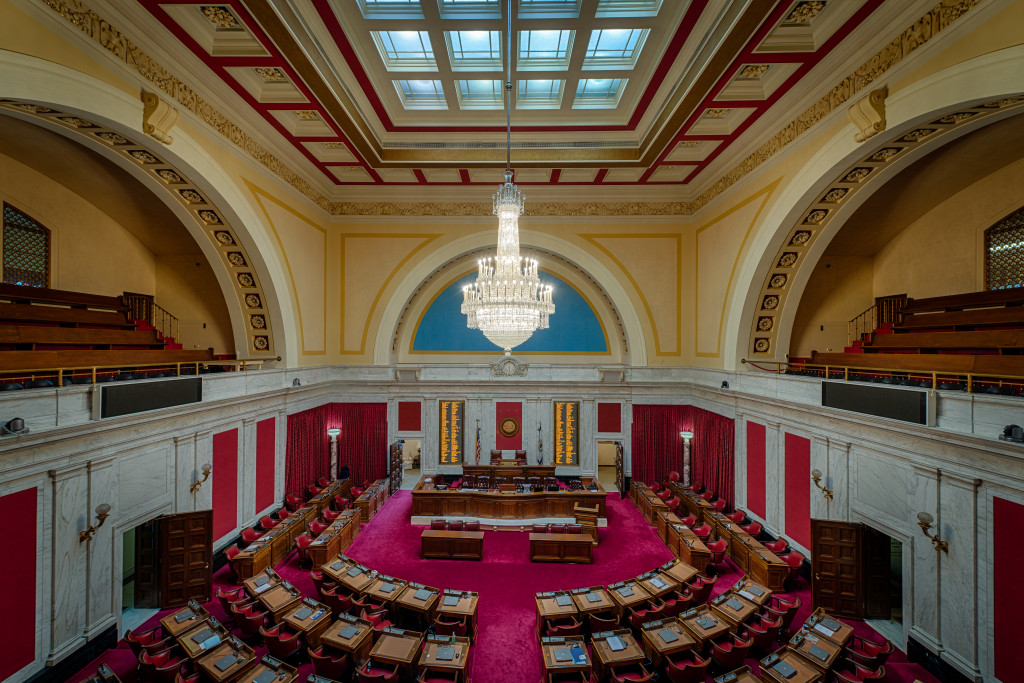
West Virginia’s Supreme Court has taken over consideration of whether a scholarship for students leaving the public school system violates the state constitution.
A majority of justices rejected a motion to stay a lower court’s decision to halt the Hope Scholarship, but the Supreme Court did agree to consider the issue swiftly. Justices set oral arguments for Oct. 4.
The issue had been the first big case before West Virginia’s new intermediate court of appeals. Now the Supreme Court will hear the appeal instead. Those decisions were expressed in an order released by the Supreme Court.
Lawyers representing the families suing to keep the scholarship from going into effect praised the Supreme Court’s order, saying it now means courts at all levels have agreed that the scholarship should not be implemented while its constitutionality is in question.
Supporters of the Hope Scholarship had asked for the money to flow, pending appeal and expressed disappointment over the Supreme Court’s order today because it means that money still won’t go to families at the start of this school year. More than 3,000 students had been awarded the scholarship, which could have been used for education expenses this fall.
Judges on the intermediate court earlier this month rejected the request for stay, so the scholarship dollars have remained on hold. Today’s order released by the Supreme Court indicated two justices, Tim Armstead and Haley Bunn, supported the stay — but a majority of justices ruled otherwise.
To continue reading, click here.
For the 2022-23 school year, there were 119 private schools in West Virginia serving 14,513 students. Average private school tuition for elementary schools was $6,358 and $6,617 for high schools.
Editor’s note: This commentary from Kerry McDonald, senior education fellow at the Foundation for Economic Education, appeared Tuesday on the foundation’s website.
West Virginia has experienced a dramatic expansion of educational freedom over the past year, from the state legislature passing a near-universal education savings account program called the Hope Scholarship to loosening state compulsory school attendance laws for participants of learning pods and microschools.
The Hope Scholarship program, which several thousand families were planning on using for the first time this upcoming academic year to help them exit an assigned district school, is currently ensnared in a legal battle, but the enthusiasm for greater education options and the embrace of innovative K-12 learning models continues unabated.
Once hovering near the bottom of states for education choice and innovation, West Virginia has soared close to the top. In addition to expansive education choice policies, the state has seen the growth of microschools, learning pods, homeschooling collaboratives, and low-cost private schools that are meeting parent demand for more education possibilities.
“We’re seeing traditional homeschool co-ops and even private school leaders transition into learning pods, microschools, and hybrids with more of a focus on flexibility because they see the need and realize they are the ones with the expertise to meet the demand,” said Jamie Buckland, a West Virginia homeschooling mom and advocate with West Virginia Families United for Education.
“This is opening access to children whose parents have always been reliant on public school because they weren’t positioned to offer a sustainable alternative on their own.”
To continue reading, click here.
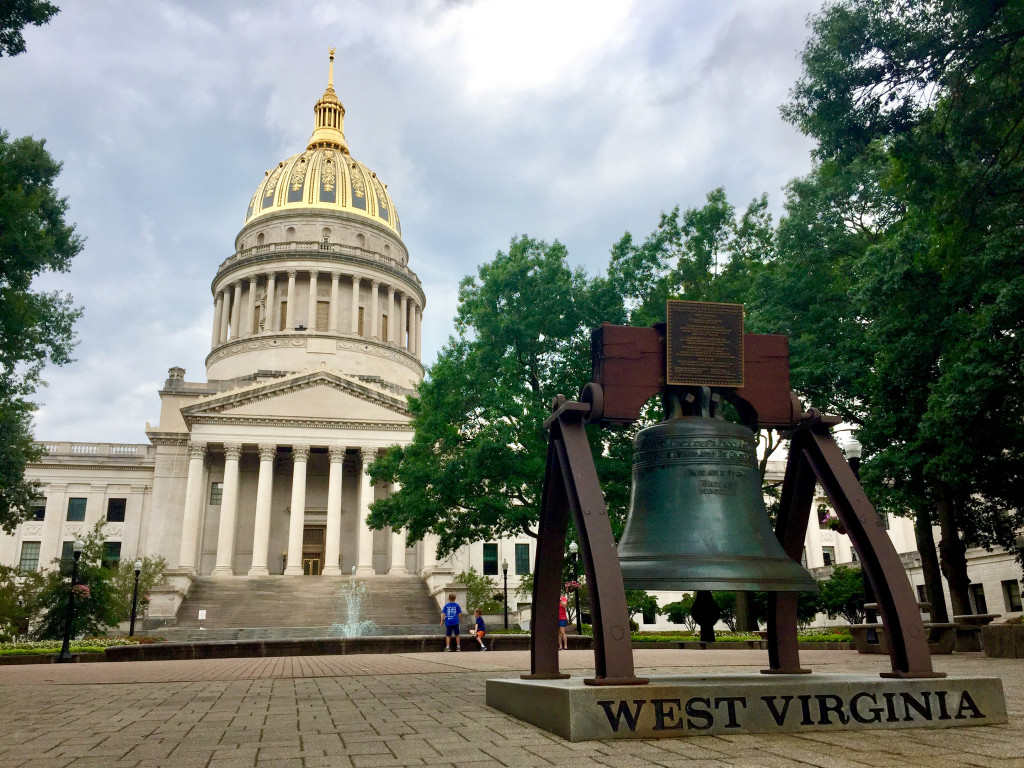
Editor’s note: Garrett Ballengee, founding executive director of the Cardinal Institute for West Virginia Policy and a reimaginED guest blogger, provided this commentary exclusively for reimaginED.
Ups and downs. Steps forward and steps backward. Optimism and despair. Order and chaos.
For anyone working in education policy and education reform, those words and the feelings they conjure are all too familiar. Specifically, for those with a stake in West Virginia’s game-changing Hope Scholarship program, presently embroiled in its own maelstrom of litigation, the vagaries of education choice legislation can be gut-wrenching.
Meanwhile, thousands of West Virginia children and families have been left staring into the education abyss of “Well, what now?”
That abyss resembles well-paid lawyers and well(ish)-dressed union bosses fighting to keep kids in a school their parents clearly don’t like, or want, while grabbing opportunities out of the hands of some of the poorest kids in America.
Late Tuesday, in a 2-1 decision, West Virginia’s Intermediate Court of Appeals failed to stay (basically, “stay” is legalese for “lift”) an injunction against the Hope Scholarship that had been put in place by the Kanawha County Circuit Court. For all intents and purposes, the program has been frozen since the circuit court placed the injunction on July 6, barely a month before some West Virginia schools open their doors.
It is important to note that more than 3,000 children already had been approved for the scholarship program for its inaugural 2022-23 school year, so parents were hoping that a stay would allow the duly-passed Hope Scholarship to continue uninterrupted while it worked its way through the courts.
Alas, it was not meant to be.
When it was passed in 2021, the Hope Scholarship program was the gold standard in private education choice. Ninety three percent of West Virginia’s students would be eligible to receive 100% of the state funding allotted for their child. Local and federal funds would remain in the traditional public school district.
For the 2022-23 school year, the first year Hope would be in operation, the funding amount would be approximately $4,300. Up until this point, the country has never witnessed anything close to such an expansive education savings account program. This was a major leap forward for education choice.
Beyond the expansiveness of the program, the Hope Scholarship was, and is, a big deal for many reasons. First, West Virginia was the home of the “Red for Ed” movement. The movement began in West Virginia in 2018 with teachers in every school district walking out and leaving kids with no school for two weeks.
Red for Ed was supposed to be a political shockwave that would serve as a reminder that unions are ever-watchful, powerful, and with demands that must be met. West Virginia shrugged.
Second, West Virginia had never in its history had a school choice program. The state was a veritable education choice desert – no charter schools were allowed until 2019, 30 years after some states opened charter schools, and no private education choice programs existed until Hope in 2021.
Families were stuck with the school to which they were assigned unless they had the financial means – like lawyers and union bosses – to purchase an alternative education option. The prevailing wisdom in many education reform circles was that progress must be gradual with one small reform building on another, largely for pragmatic political reasons.
West Virginia blew that idea out of the water. The trajectory from the education choice environment of 2019 to where the state is today resembles going from “caveman make hot fire” to “warp drive” in three short years.
One could be forgiven for adopting the cynical view that those who wished to stop families from accessing a school choice program like Hope waited until such litigation would throw the ultimate wrench into planning for the 2022-23 school year.
So, what now?
Many families are scrambling to re-enroll their kids in public schools, the option they felt wouldn’t be best for them in the first place, while others are looking for scholarships or other types of financial aid to tide them over until the litigation meanders its way through the courts.
Encouragingly, some West Virginia education choice advocates are offering creative solutions for families. The Mountaineer spirit shall overcome. And, West Virginia Attorney General Patrick Morrisey has stated his intention to expeditiously file the state’s appeal to protect Hope all the way to the Supreme Court of Appeals.
It’s impossible to say how this saga will play out or when it will end, but we do know thousands of families had been given the ability to choose something different for their child. They looked at the status quo and said, “Thanks, but no thanks. I think something else is better for my child.”
Families were given hope, and once hope has been given, there is no turning back. As art historian Fritz Knapp once remarked, “… hope is best gained after defeat and failure, because then inner strength and toughness is produced.”
Indeed, West Virginia has – and will have – hope.
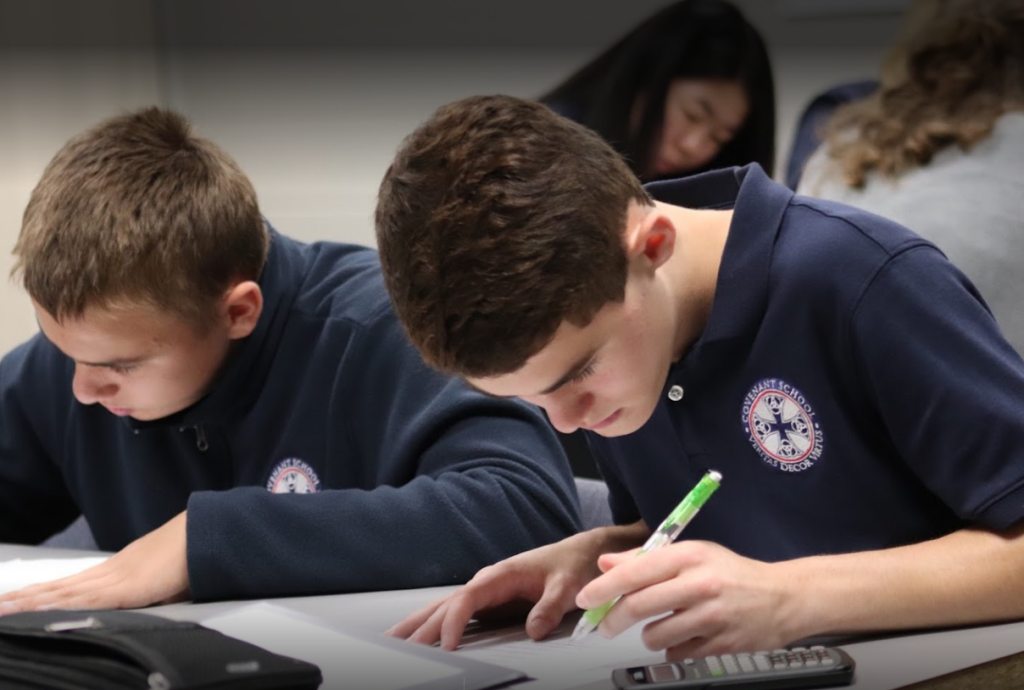
Covenant School in Huntington, West Virginia, is one of 119 private schools in the state that serve more than 14,500 students. Covenant provides academic rigor and “grace-infused discipleship,” deriving goals, content and methods from the great tradition of classical and Christian culture.
Editor’s note: Read more about the court denial here.
With only three weeks remaining before classes resume, more than 3,000 West Virginia families remain in limbo after a state appellate court refused to intervene in a lower court’s ruling that halted the newly approved Hope Scholarship education savings account program and declared it unconstitutional.
The Intermediate Court of Appeals of West Virginia’s order issued Tuesday evening denied the state attorney general’s request for a temporary stay in the case, which would have allowed the scholarship program to continue during the legal challenge. Judges voted 2-1 in favor of denial.
The order came after the state appealed the decision of Kanawha Circuit Judge Joanna Tabit, who ruled on July 6 that the Hope Scholarship program violates the West Virginia Constitution and its article on funding public education.
The lawsuit was filed by Mountain State Justice, a progressive public interest law firm.
The state Attorney General’s Office responded to the circuit judge’s ruling with a motion for a stay on July 19. State Attorney General Patrick Morrisey argued Tabit’s decision undermined “parents’ freedom to choose how they educate their children” with fall classes set to begin the following month. According to the state Treasurer’s Office, around 3,000 children have received approval for Hope Scholarship funding.
Morrissey, who called the circuit judge’s decision “legally incorrect,” expressed disappointment about the appellate court ruling but promised to press on.
“It’s disappointing the Intermediate Court did not see that the lower court’s injunction will undermine the fundamental freedom of parents to choose the best education for their children,” Morrisey said in a statement. “The thousands of families who are set to receive scholarship money from the Act will now be in limbo trying to figure out what’s going to happen to their children’s education.”
Education choice advocacy groups echoed Morrisey’s comments and vowed to continue defending the program, billed as one of the nation’s most expansive education savings account programs. The Hope Scholarship, which the state Legislature approved in 2021, allows parents to use about $4,300 of the state’s school funding formula allocated to each student to pay for private school tuition and other pre-approved programs outside of district schools, such as homeschooling and tutoring.
The program was available only for public school students this year but would be open to all eligible public, private and homeschool students by 2026.
“Thousands of families have been negatively impacted and are having to change their plans just as the school year is about to start,” said Amanda Kieffer, communications director for the Cardinal Institute of West Virginia, a think tank that supported the law.
“This stay would have given them relief. However, we are hopeful that the Hope Scholarship will be revived through the appeals process. We will continue to do all we can to help families navigate the uncertainty this causes.”
Jamie Buckland, an education consultant for West Virginia Families United For Education and homeschool mother of four, said she can recall conversations about the need to improve public education from 2007. Since that time, two of her children have graduated.
"What improvements are being made? How long do they need us to wait" How hard should it be to provide a quality education for your child when you live in West Virginia?" she said. "Holding children captive in a system that is not meeting their educational goals when a reasonable pathway to an improved learning environment is at their fingertips, it's beyond me. We finally gave these West Virginia parents and grandparents whose grit and hard work is second to none a choice, and to see that being threatened, it's so frustrating." Buckland said her organization will continue to "walk this road with our families ensuring they know their options and have the information they need to make decisions in the midst of this disappointment."
Morrisey, West Virginia’s attorney general, indicated in a tweet Tuesday night that the office would appeal the denial of the stay.
“We are hopeful the West Virginia Supreme Court will view this case differently. The plaintiffs’ arguments are not particularly strong— the Hope Scholarship is constitutional,” he said.
Morrisey later tweeted encouragement, writing, “For those who get despondent about lower court decisions (state or federal in nature) you should know that in the West Virginia v. EPA case history, we lost four times at the D.C. Circuit. More importantly, we went 2-0 at the U.S. Supreme Court. You need to win when it counts!”
Public interest law firm Institute for Justice, which is intervening on behalf of two families who received scholarships, has vowed to work with the state and appeal the denial to the state’s high court.
“We will apply to West Virginia Supreme Court today and ask the court to expedite it,” IJ spokesperson Conor Beck said.
The American Federation for Children, a national education choice advocacy group that strongly denounced the circuit judge’s ruling in the case, pledged its support for the affected families.
"Families have had enough. Parents see right through the lame arguments repeated ad nauseum by power-hungry teachers’ unions,” said Corey DeAngelis, AFC’s national director of research. “Education funding is meant for educating children, not for protecting a particular institution. We will win this war the government school monopoly waged on parents.”
Meanwhile, a retired professional wrestler and mixed martial artist who is launching a private school in West Virginia isn’t waiting for the legal battle to play out. Daniel Puder, president of Montgomery Prep Academy, recently offered to pay full tuition for 25 students who were awarded Hope Scholarships.
“Does it cost us money? Sure,” Puder said. “It’s going to cost us anywhere from $150,000 to $200,000 this year. It’s going to be expensive. But why? I wish I had (this) when I was a kid and had a challenge like some of these other kids are going through.”
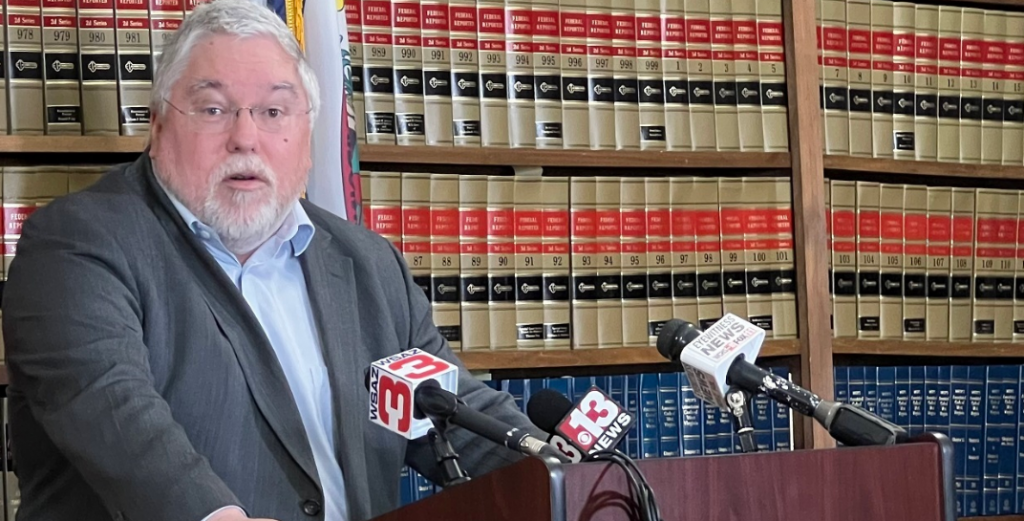
West Virginia Attorney General Patrick Morrisey's office filed a motion with the state’s Intermediate Court of Appeals July 19 for a stay pending appeal of the preliminary and injunctive relief recently granted against the Hope Scholarship Act.
Editor’s note: This article appeared Tuesday on wvmetronews.com.
CHARLESTON, W.Va. — The Intermediate Court of Appeals of West Virginia has denied a stay request related to the state’s education voucher program.
The court issued an order on Tuesday following the West Virginia Attorney General’s Office’s appeal against a decision on the Hope Scholarship program, an effort allowing parents to secure public funds for private education endeavors.
State lawmakers approved the program’s creation last year; the initiative allows families to create education savings accounts for children before their enrollment in kindergarten programs. The students would have to be enrolled in a public school during the year preceding the period of interest. Families could use the money for tuition, extracurricular activities and fees.
Kanawha Circuit Judge Joanna Tabit halted the program on July 6, stating the Hope Scholarship violates the West Virginia Constitution and its article on funding public education.
The state Attorney General’s Office filed a motion for a stay on July 19. State Attorney General Patrick Morrisey argued Tabit’s decision undermined “parents’ freedom to choose how they educate their children” with fall classes set to begin the following month. According to the state Treasurer’s Office, around 3,000 children have received approval for Hope Scholarship funding.
Greenbrier Circuit Judge Jennifer Dent took Chief Judge Dan Greear’s seat following his recusal. Greear previously worked as an attorney for the state Legislature, which included serving as counsel to House of Delegates Speaker Roger Hanshaw, R-Clay, who is named in the lawsuit. Greear previously noted he had contact with the state Attorney General’s Office in this role.
To continue reading, click here.
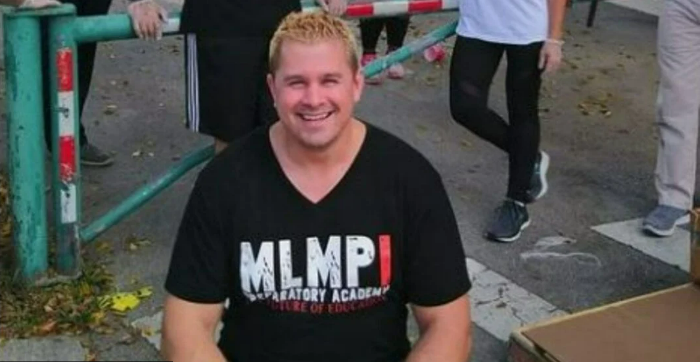
Professional wrestler turned private school owner Daniel Puder is determined to create options that best serve students and families in West Virginia despite a court ruling that has halted implementation of a West Virginia education savings account program.
A retired professional wrestler from Miami is poised to prove that innovation and compassion are worthy opponents to a court battle playing out in West Virginia over one of the nation’s most expansive education saving accounts programs.
Longtime youth advocate and undefeated professional mixed martial arts fighter Daniel Puder, who owns private schools in Florida and serves as president for brand-new Montgomery Preparatory Academy in the West Virginia suburb of Montgomery, has pledged to cover tuition for 25 students who had expected to receive Hope Scholarships before a circuit judge ruled the new program unconstitutional.
“This injunction saddens me, and our team is committed to supporting the families of West Virginia,” Puder said in a news release issued by the school.
Describing the injunction as “an obstacle,” the release states that if carried out, the ruling will negatively affect the education of thousands of West Virginia youths.
“Daniel Puder is determined to change the system and create an option that best serves students and families,” the release continues. “This scholarship is providing great hope for families, and we are committed to the future of education in the great state of West Virginia. We will be opening the doors of Montgomery Prep Academy with or without the Hope Scholarship funding.”
Puder realizes the 25 scholarships he’s making available fall far short of helping all 3,000 students who were offered assistance when the program first became law. But Puder told MMA News, an online outlet from the world of mixed martial arts, he is using all the assets he can to help.
“Does it cost us money? Sure. It’s going to cost us anywhere from $150,000 to $200,000 this year,” Puder said. “It’s going to be expensive. But why? I wish I had (this) when I was a kid and had a challenge like some of these other kids are going through.”
The reprieve has 16-year-old Jason Criner literally jumping for joy.
“This will change everything about my schooling,” said Jason, who had been approved for a scholarship. A solid B and C student, Jason, along with many of his classmates, often were left to fend for themselves at their district school during the height of the pandemic when teachers were absent.
Jason’s mother, Jamie, couldn’t be happier with Puder’s generosity.
“Jason stayed in school, but the majority of the time had nothing to do,” she said. “The only classes he consistently had were JROTC and band. Eventually, he knew his teachers weren’t going to be there, so he just went in late.”
On the verge of dropping out despite his desire to pursue a technical education path, Jason is excited that Montgomery Prep will allow him to fulfill his dream of becoming a diesel mechanic or underwater welder.
“My (former) school made me feel like a nothing, and this has given me hope to continue my goals,” he said.
Puder isn’t alone in his desire to provide a ray of hope in a difficult situation. Vandalia Community School, a privately owned microschool in Charleston, has pledged to cover the amount of the scholarship to offset tuition for families who had been impacted by the judge’s ruling.
Longtime education choice advocate Jamie Buckland, a consultant for West Virginia Families United for Education who has been working to raise awareness of the new Hope Scholarship program, praised Puder and Vandalia for their willingness to help families affected by the ruling.
“Offering these scholarships demonstrates Daniel and his team see this for what it is, a fight to transform K-12 education in the Mountain State,” said Buckland, who homeschools her four children. “We are so thankful to be allies with the folks from MPA and with leaders from Vandalia Community School in Charleston, West Virginia, who are offering similar relief for families.”
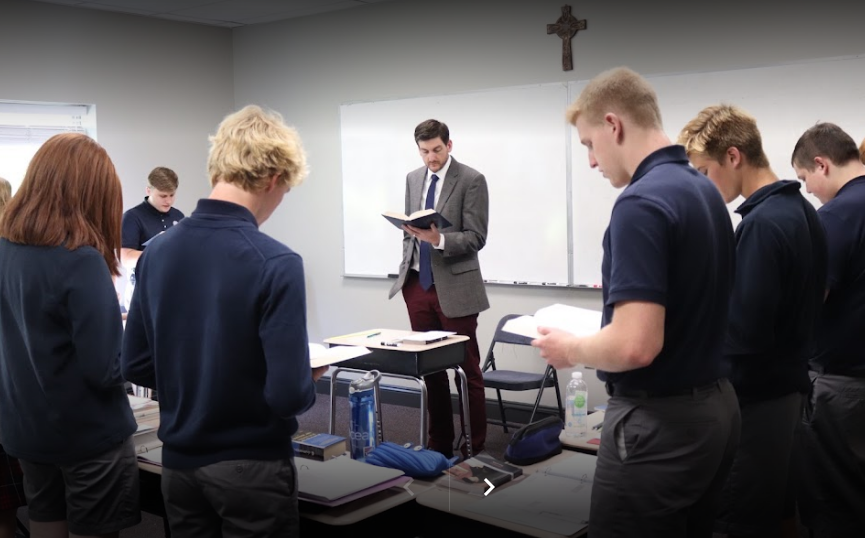
Covenant School in Huntington, West Virginia, one of 119 private schools in the state, is a non-denominational classical Christian K-12 school that derives its educational goals, content and methods from traditions of classical and Christian culture.
Unwilling to leave more than 3,000 families in limbo when school begins next month, West Virginia state officials are asking an appeals court to let the Hope Scholarship programs continue while a court battle plays out over one of the nation’s most expansive education savings account programs.
West Virginia Attorney General Patrick Morrisey filed a motion to stay a circuit judge’s ruling that the new Hope Scholarship is unconstitutional.
“The district court acted without jurisdiction, awarded relief that no party had requested, agreed with baseless claims, and speculated harms into existence,” the motion states, adding that allowing the order halting the program would harm the 3,200 families who signed up for the program.
“A validly enacted law will stand mute because the Legislature’s policy judgments ‘troubled’ a single judge, and students across the State will be stripped of educational opportunities for at least a year. On the other hand, a stay will not hurt Respondents because the Act does not disturb public school funding for the upcoming academic year.”
The motion followed a July 6 order from Kanawha Circuit Judge Joanna Tabit that declared the new law establishing education savings accounts “null and void.” Tabit concluded after hearing a challenge to the law that the scholarship violates the state constitution by diverting funding away from the public education system.
The ruling forced the program, which allowed awarded families to access $4,300 per student this year to spend on approved education expenses, to an immediate halt. As a result, families began scrambling for alternatives with only weeks left before the 2022-23 school year begins.
West Virginia education choice advocates are hopeful the stay will be granted so families can move forward with their plans.
“We are happy to see the Attorney General and the Institute for Justice continue to fight for families by requesting a stay of the injunction,” said Andrew Bambrick, outreach education coordinator for Cardinal institute for West Virginia, a nonprofit organization that supported the new law. “We hope that the Appellate court will see the injury this injunction causes to over 3,000 students and grant the stay allowing the program to continue so these families can access the options that they need.”

